
You can spot the thin crystal guides fast. They throw 15 stones at you, call all of them “powerful,” and leave you with the same problem you had five minutes ago: what should you actually buy, carry, or keep by the bed tonight?
For most people, the best healing crystals to start with are clear quartz, amethyst, rose quartz, black tourmaline, smoky quartz, citrine, and selenite. That shortlist covers the reasons people usually shop for healing stones in the first place: calm, comfort, grounding, clarity, a little lift, and a simple cleansing ritual.
I learned this the clumsy way. The first mixed crystal set I bought looked gorgeous and felt oddly serious, like I was assembling a tiny spiritual toolkit. Two stones got used. One lived in my coat pocket for weeks. The rest turned into shelf decor. Pretty, yes. Helpful, not much. The fix was not “buy better crystals.” It was choosing a crystal for a job.
- Which crystal makes the most sense for your actual goal
- Which stones are worth starting with and which can wait
- How to choose a form you will use instead of admire from across the room
- How to avoid fake, overtreated, or awkward buys
- How to use and care for crystals without turning the ritual into homework
- Where crystal practice stops and medical claims should stop too
Fast Pick: start here if you want the short answer
| Crystal | Best for | Best first form | Skip it if… |
|---|---|---|---|
| Clear quartz | Versatility, clarity, all-purpose use | Tumbled stone or small point | You want one very targeted emotional tone |
| Amethyst | Calm, sleep ritual, decompression | Palm stone | You want something more grounding than soothing |
| Rose quartz | Self-love, comfort, heart-centered work | Palm stone or jewelry | You want firmer boundary energy |
| Black tourmaline | Protection, grounding, energetic boundaries | Rough chunk | You want a softer emotional feel |
| Smoky quartz | Grounding with a lighter touch | Tumbled stone | You want a classic “comfort” crystal |
| Citrine | Optimism, motivation, brighter mood | Small polished piece | You want a sleepy bedtime stone |
| Selenite | Cleansing rituals, altar or shelf use | Charging plate or wand | You want something rugged for pockets |
The table is not trying to be mystical. It is trying to save you from buying five stones when one good fit would do.
What are the best healing crystals for most people?
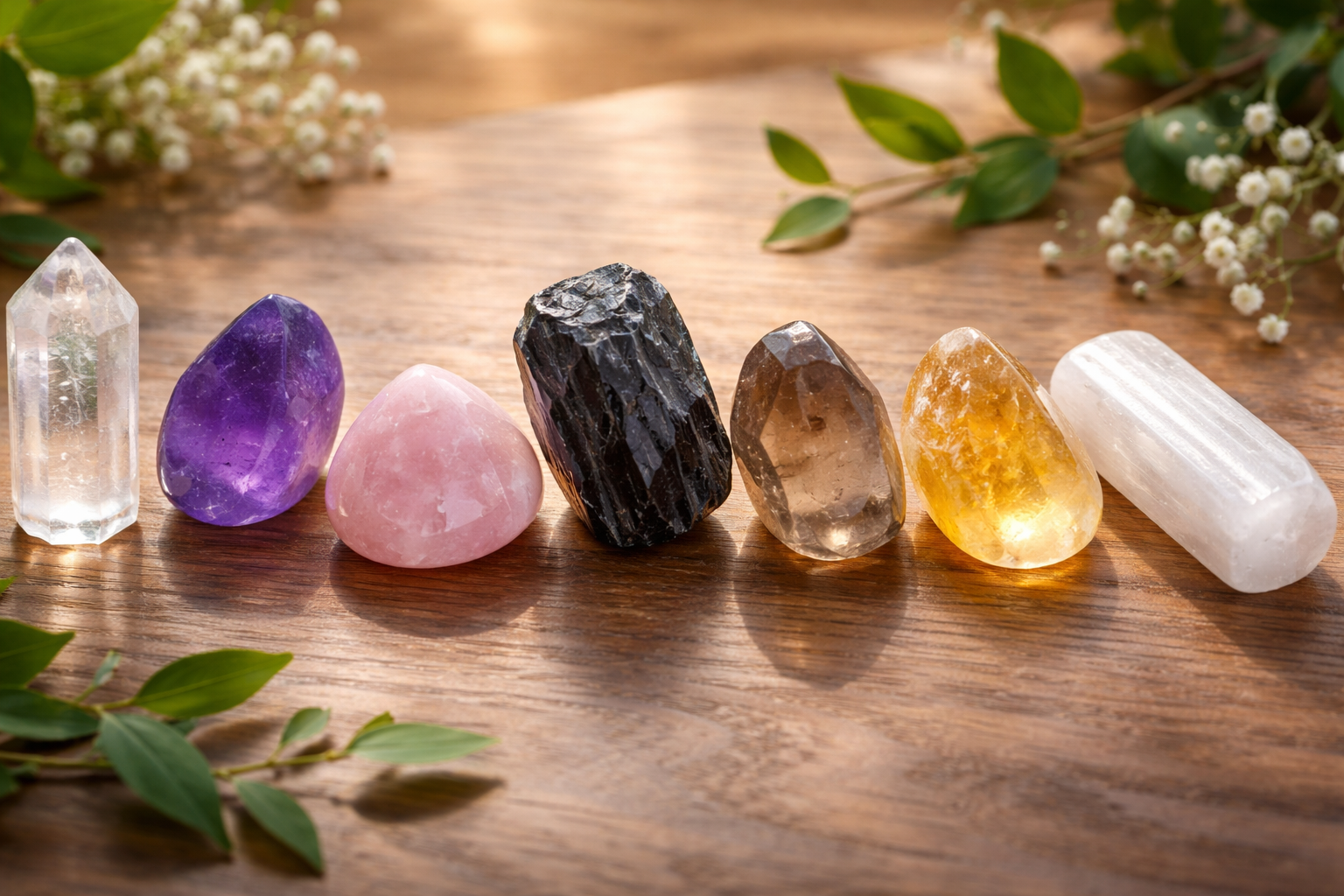
If you want a shortlist that covers almost every beginner use case, start with seven stones.
Clear quartz is the all-rounder. It suits people who want one stone that can move between meditation, desk use, pocket carry, and general intention setting without feeling locked into one narrow mood.
Amethyst is the easy answer for calm. It fits evening routines, sleep rituals, and those restless “my brain won’t shut up” moments better than almost any other common stone.
Rose quartz is softer. It is the crystal people reach for when the issue is tenderness, self-love, grief, or that scraped-raw feeling after a rough conversation.
Black tourmaline is the opposite of vague. It is what I reach for when the goal is boundary, not comfort. Desk overload, tense rooms, too much screen time, travel days, messy energy. That is black tourmaline territory.
Smoky quartz grounds without feeling heavy. If black tourmaline seems a little too stern for you, smoky quartz often lands better.
Citrine brings lift. Not the fake “good vibes only” kind. More like a brighter, cleaner emotional temperature when you feel flat, stuck, or mentally dusty.
Selenite is less of a carry stone and more of a ritual helper. It works well on a shelf, altar, or bedside table and many people use it alongside other crystals during cleansing or charging rituals.
Fast pick: If you want one crystal only, go with clear quartz for versatility or amethyst for calm. If your days feel jangly and crowded, black tourmaline beats both.
The main trap here is treating “healing” like one giant bucket. It isn’t. Emotional healing, grounding, sleep, protection, and clarity are different jobs. Good crystal choices start looking obvious once you separate the job.
Choose by intention and narrow the shortlist fast
When readers get stuck, it is usually because they are shopping by popularity. Popularity is not a plan. Intention is.
Need calm, sleep, or mental quiet? Start with amethyst. If the tone you want is gentler and more heart-centered, shift to rose quartz.
Need grounding or protection? Start with black tourmaline. If you want grounding without that heavier, guarded feel, try smoky quartz instead.
Need clarity or one all-purpose stone? Clear quartz makes the most sense. It is the “I don’t want to overthink this” option and that is not a bad thing.
Need lift, optimism, or momentum? Citrine is the better match. People often search for “best crystal for happiness” when what they really want is a stone that feels brighter and more energizing than the calm stones.
Need a ritual companion for the rest of your collection? Selenite belongs here. It is not the strongest first buy for most people, though it becomes useful fast once you have two or three stones.
Here is the cleanest rule I know:
- If your goal is emotional softness, choose amethyst or rose quartz.
- If your goal is boundaries, choose black tourmaline or smoky quartz.
- If your goal is still fuzzy, choose clear quartz.
- If your mood feels flat and heavy, choose citrine.
I also like the one-stone rule for beginners. Pick one primary crystal and use it for a week before adding another. That sounds almost too simple and yet it works. You learn faster when your ritual is boring enough to repeat.
People often search for “best crystals for anxiety,” “best crystals for sleep,” or “best crystals for beginners.” Those are useful shopping phrases. They just need translating. Sleep points to amethyst. Self-love points to rose quartz. Protection points to black tourmaline. Beginner-friendly usually means quartz-family stones in easy forms, not some rare flashy thing with a dramatic sales pitch.
Compare the top crystals and their tradeoffs before you buy
A crystal can be good and still be wrong for you. That is the piece a lot of guides skip.
| Crystal | Why people love it | Tradeoff | Best first use |
|---|---|---|---|
| Clear quartz | Flexible and easy to assign any intention | Can feel too general if you want a distinct emotional tone | Pocket stone, desk point, meditation |
| Amethyst | Calming and familiar | Not ideal if you want protection or upward energy | Bedside, palm stone, evening ritual |
| Rose quartz | Warm, gentle, good for emotional healing | Too soft in tone for people who need stronger boundaries | Jewelry, palm stone, self-love ritual |
| Black tourmaline | Clear protective role | Less versatile for emotional soothing | Doorway, desk, bag |
| Smoky quartz | Grounded without feeling severe | Less iconic, so beginners overlook it | Pocket carry, workday support |
| Citrine | Light, momentum, warmth | Listings can be sloppy about treatment | Desk, morning ritual |
| Selenite | Beautiful, clean ritual energy | Soft and fragile | Shelf, charging plate, wand |
Think of it like shoes. Slippers, running shoes, and hiking boots can all be “good shoes.” That tells you almost nothing. The right pair depends on where you are going. Crystals work the same way. Clear quartz is versatile like a good trainer. Black tourmaline is more like a boot. Rose quartz is not weaker than tourmaline. It is just built for a different walk.
The physical side matters too. The Gemological Institute of America lists rose quartz at Mohs 7. That hardness is one reason quartz-family stones such as clear quartz, amethyst, smoky quartz, and rose quartz tend to be forgiving first buys. They handle daily life better than softer stones do.
Citrine deserves its own warning label. In its buyer’s guide for citrine, GIA notes that natural citrine is rare and much of the market uses heat-treated material. So if a citrine listing is glowing orange, strangely uniform, and sold like treasure from a dragon’s cave, slow down a bit. It may still be a fine decorative piece. It just might not be what the name suggests.
Remember: the dramatic stone is not always the better one. For a first purchase, usability beats prestige almost every time.
Pick the right crystal form so you actually use it
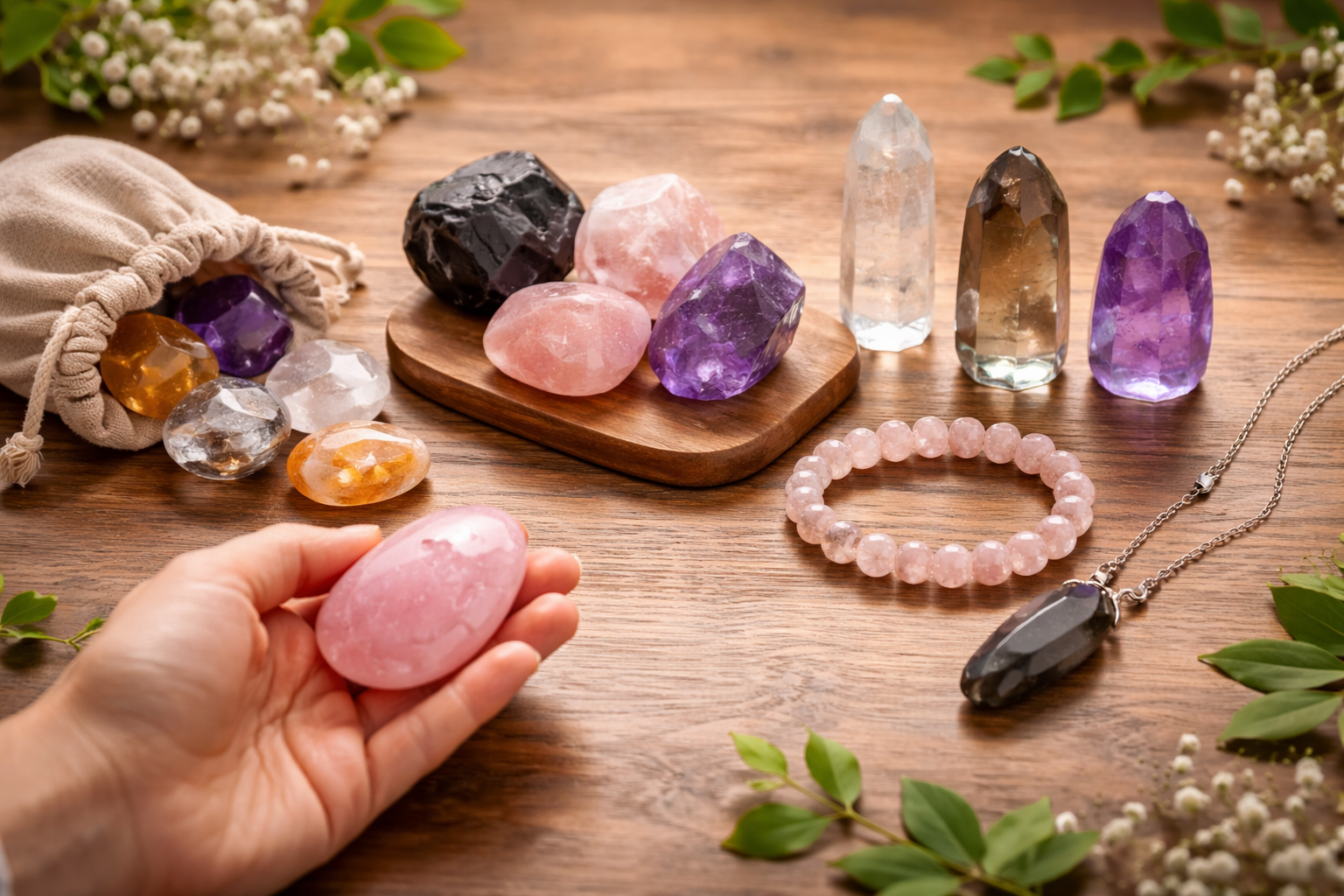
Form is where good intentions go to die. A crystal can be a perfect symbolic match and still become useless because it is too big, too delicate, or too awkward for the way you live.
Tumbled stones are the easiest first buy. They fit in a pocket, pouch, or bag and they are comfortable to hold. If you want a low-fuss daily companion, start here.
Palm stones and worry stones are better for stress relief crystals and meditation. They give your hands something to do, which matters more than most people think. Touch is part of the ritual. A smooth palm stone creates a repeatable cue and that cue is half the magic for many people.
Raw chunks work well in spaces. Black tourmaline by the front door or next to a laptop makes more sense as a chunk than as a tiny polished pebble that disappears into a drawer.
Towers and points are visual. They work nicely on desks or altars and can feel more intentional in a room. They are less practical for carry.
Jewelry is what I recommend to readers who know they will forget a loose stone. A rose quartz bracelet, a smoky quartz pendant, or a small clear quartz necklace keeps the crystal close without making you remember a pouch.
If you want a simple starter set, use the three-stone formula:
- One calming stone: amethyst or rose quartz
- One grounding stone: black tourmaline or smoky quartz
- One flexible stone: clear quartz
And if you are shopping without naming brands, this is the shortlist of what to look for:
- Tumbled clear quartz: pocketable, labeled clearly, not glassy and unnaturally flawless
- Amethyst palm stone: smooth enough to hold for several minutes without fidgeting
- Black tourmaline rough piece: stable base and enough size to sit where you need it
- Selenite plate: flat, clean edges, meant for shelf or altar use rather than carry
The wrong form turns a crystal into clutter. The right form turns it into a habit.
Buy smarter and avoid fake, fragile, or overhyped picks
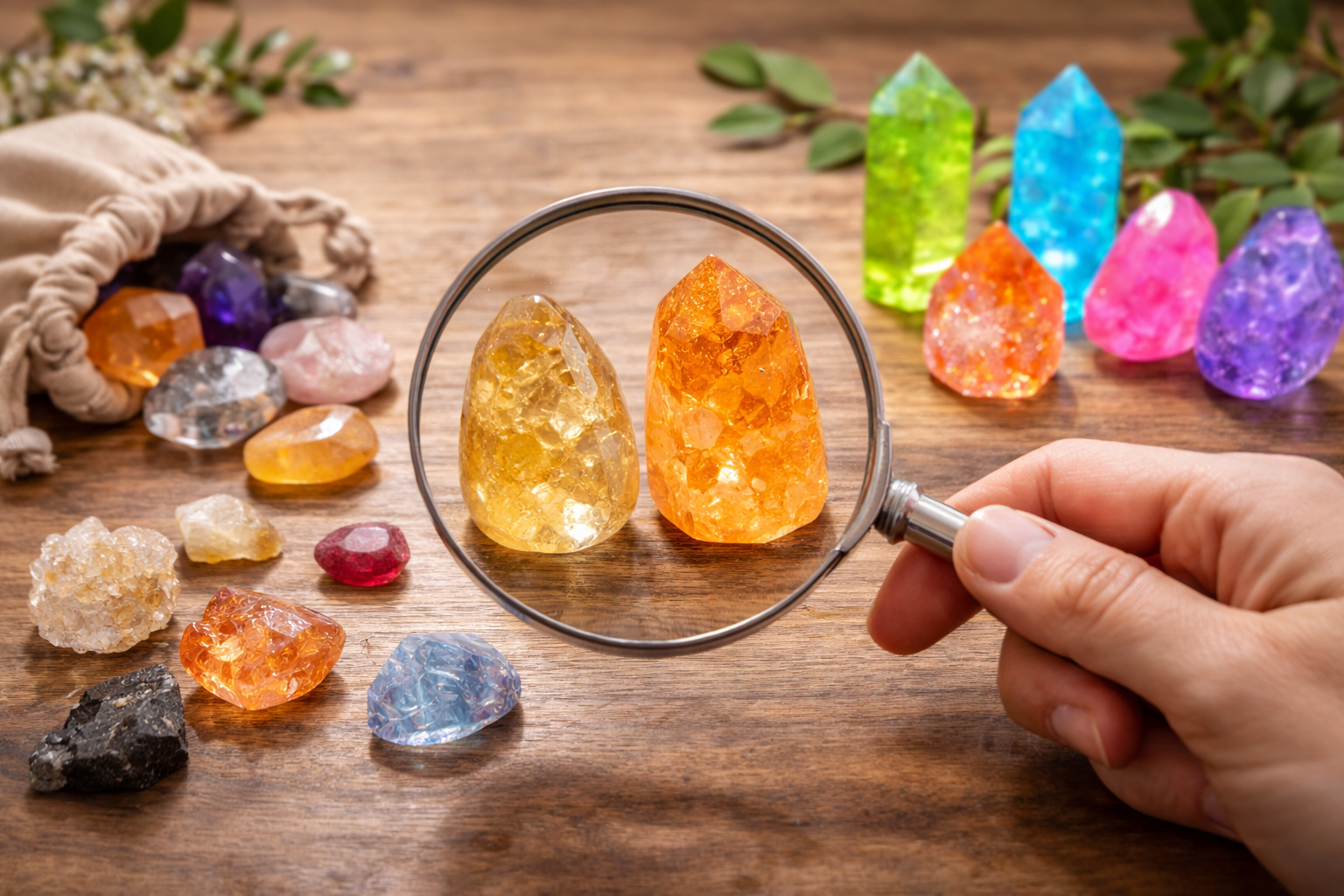
A good crystal listing should tell you what the stone is, whether it is natural or treated, what form you are getting, and roughly what size range to expect. That is the baseline. Once a listing gets vague and mystical at the same time, my trust drops fast.
Watch for these buying mistakes:
- Buying by color alone and ignoring the mineral name
- Assuming “rare” means better
- Paying for a giant set before knowing which stone you will use
- Missing treatment disclosure on stones such as citrine
- Choosing delicate stones for rough daily carry
What a decent listing tells you
- The exact stone name, not just “healing crystal”
- The form: tumbled, raw, palm stone, tower, bracelet
- A size range in inches, millimeters, or grams
- Whether the stone is natural, dyed, heated, or man-made
- Enough photos to show shape variation and surface texture
Citrine is the obvious example because sellers get loose with it. GIA’s citrine guide makes the market reality plain: much “citrine” is heat-treated material. That does not make it useless as a spiritual object. It does mean you should not pay fancy-story prices for a stone just because the listing sounds breathless.
Imitations show up in other places too. Neon-bright colors can point to dye. Perfectly uniform “natural” stones can be suspicious. Resin and glass copies exist. Sometimes the clue is not one dramatic tell. It is the whole picture feeling a bit off. Too glossy. Too identical. Too magical, frankly.
If you are a beginner, do not chase specialty stones yet. Skip the urge to build a crystal museum in one order. Buy one or two stones you can name, understand, and use. That is a better collection than a pile of mystery pebbles in velvet bags.
Use your crystal in a simple way that supports the goal
You do not need a thirteen-step ritual. You need a use pattern you will repeat without bargaining with yourself.
Hold one stone and name one job
Pick a crystal and give it a single role. Amethyst for winding down. Black tourmaline for workday boundaries. Rose quartz for softening after conflict. Clear quartz for focus. Keep the wording plain. “Help me feel grounded in this room” works better than a paragraph of lofty intention that you will never say twice.
Place it where the friction happens
If sleep is the issue, put the crystal by the bed. If your shoulders rise every time you sit at the desk, place black tourmaline or smoky quartz there. If you want a little more steadiness when you leave the house, carry a tumbled stone or wear crystal jewelry. The best place for a stone is not where it photographs well. It is where your pattern breaks.
Repeat the same ritual until it sticks
Use the same stone for a week. Hold it for two or three minutes. Breathe. Put it back in the same place. That tiny rhythm matters. Some readers think crystals “work” because of metaphysical energy. Some think they work as mindfulness anchors. Plenty of people hold both ideas at once. Either way, consistency does the heavy lifting.
Pro tip: if stress is your main issue, a palm stone usually beats a decorative cluster. It gives your hands a job. Your nervous system notices that.
If you enjoy chakra healing language, you can layer that in. Rose quartz often gets linked to the heart chakra. Amethyst is often tied to the crown or third eye. Clear quartz gets used as an amplifier across chakra work. That framework can be meaningful. Just keep it useful. If the symbolism is not changing what you do, it is just extra wallpaper.
Clean, store, and handle crystals without damaging them
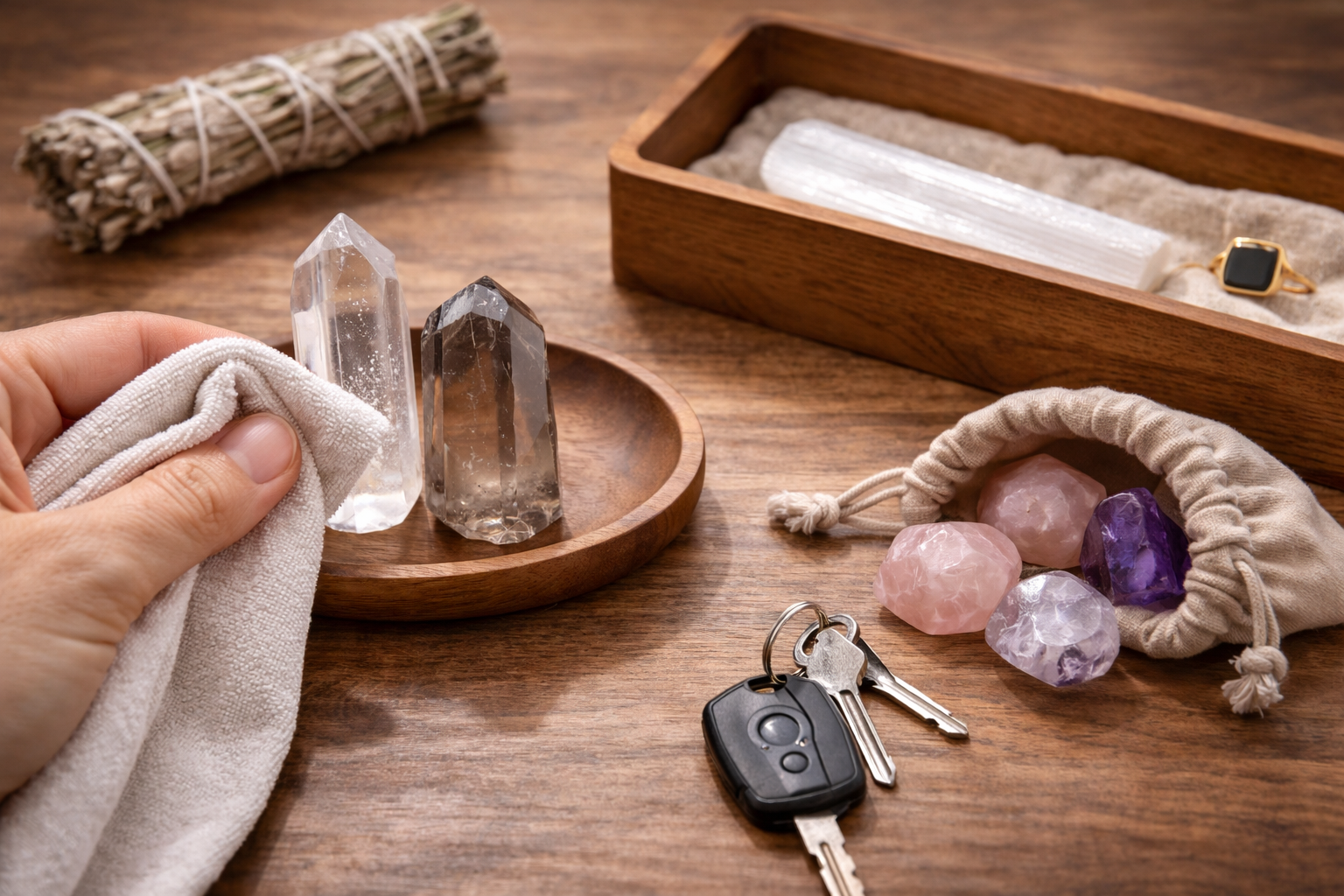
There are two different jobs here and people mash them together all the time: energetic cleansing and physical care. Treat them as separate.
Physical care comes first because a chipped or crumbling crystal is not more spiritual. It is just chipped or crumbling.
The Gemological Institute of America lists quartz-family stones at Mohs 7, which makes clear quartz, rose quartz, smoky quartz, and most amethyst pieces fairly forgiving for everyday handling. They are still not indestructible. They just do not need babying.
Selenite is different. The Ohio Department of Natural Resources describes selenite as a form of gypsum with hardness around Mohs 2. That is soft. Soft enough that rough handling, friction, and moisture are bad ideas. So if you want a crystal for a pocket or handbag, selenite is the wrong tool.
| Stone type | Safer cleaning choice | Store like this | Skip this |
|---|---|---|---|
| Quartz-family stones | Soft cloth and gentle wipe | Tray, pouch, or dish | Throwing them loose with keys |
| Selenite | Dry cloth only | Shelf or box with padding | Soaking, scrubbing, rough travel |
For energetic cleansing, keep it beginner-safe. A dry cloth, a quiet moment in moonlight, smoke cleansing if that fits your practice, or placing stones on a shelf with intention is enough. I would not dunk every crystal in water just because a social post said so. That is how good stones get ruined for no gain.
One more practical note: separate harder crystals from delicate ones when you store them. A small pouch or divided tray keeps them from knocking into each other and saves a lot of annoying little chips.
Know what crystals can help with, and what they should never replace
Crystal practice can be meaningful. That is true whether you think in terms of ritual, symbolism, energy work, prayer, meditation, or simple sensory grounding. What it should not become is a substitute for treatment.
A 2025 PubMed-indexed study looked at healing crystals and found no anxiolytic effect beyond placebo. That does not mean people are lying when they say a stone helps them feel calmer. It means the calm may come from expectation, ritual, touch, attention, and belief rather than from a measurable anti-anxiety effect in the crystal itself.
That distinction matters because it lets you keep what is useful without making claims that do not hold up. A crystal can still help you pause, breathe, reset, and mark intention. It can still become part of a bedtime ritual or a grounding routine. It just should not be sold, or treated, as a cure.
The U.S. Food and Drug Administration warns that unproven products marketed for disease treatment can delay proper care. That is the line to keep in view. If you are dealing with severe anxiety, depression, trauma, insomnia, pain, or anything that feels bigger than a ritual can hold, crystals belong beside professional care, not in place of it.
Important: the safest way to talk about crystals is this: they can support reflection, comfort, intention, and routine. They do not diagnose, treat, or cure disease.
That line actually makes the whole practice feel cleaner. You get to keep the beauty, the ritual, the symbolism, the self-awareness, and even the tiny joy of choosing a stone that feels right without turning the whole thing into shaky medicine.
FAQ
Can you use more than one crystal at the same time?
Yes. Two or three is a sensible limit for most beginners. A good combo is one calming stone, one grounding stone, and one flexible stone such as clear quartz. Once the mix gets crowded, the ritual usually gets fuzzy too.
Can you sleep with crystals under your pillow?
You can, but choose the form carefully. A small smooth amethyst or rose quartz works better than a jagged chunk or a heavy point. If anything feels distracting, move it to the bedside table. Close still counts.
Do you need to cleanse crystals every day?
No. Cleanse them when the ritual helps you reconnect with the stone or after heavy use if that matters in your practice. Daily cleansing tends to become busywork. Weekly, monthly, or simply “when it feels needed” is more than enough for most people.