
You can buy a gorgeous singing bowl, set it on the floor, give it one hopeful tap, and still feel like you bought the wrong thing.
That usually happens when the bowl was picked for looks, chakra branding, or gift-box appeal instead of the one thing that matters in an actual meditation practice: does it make you want to sit down and use it again tomorrow?
For most people looking for the best singing bowls for meditation, the safest pick is a small-to-medium hand-hammered metal bowl. It is easier to live with, easier to carry, and usually easier to “sing” around the rim than a big dramatic bowl or a fragile crystal one. A 2016 observational study on singing bowl sound meditation found lower tension and lower negative mood after a session, and a 2020 systematic review found reported benefits across mood and some physiological markers. That is useful. It is not proof that any bowl is magic. So the smart buying question is not “Which bowl heals the most?” It is “Which bowl fits the way I actually meditate?”
That is where most buying guides go a bit wobbly.
They talk about metals, chakras, and mystique. They spend less time on room size, learning curve, durability, and whether the included mallet is any good. This guide fixes that.
- How to choose between a Tibetan or Himalayan metal bowl and a crystal singing bowl
- What bowl size usually works best for solo meditation at home
- Which real products make sense for beginners, gifting, and deeper sound work
- How to judge sound quality from a listing before you buy
- What mistakes make a bowl feel disappointing fast
- How to use and care for a bowl so it sounds better from day one
Best Suggestions Table (All products have been personally reviewed & tested by us! Click the buttons below to jump to the reviews.)
| Product | Best for | Action |
|---|---|---|
| Ohm Store Tibetan Singing Bowl Set | Best overall for most readers |
Check Price Review |
| Silent Mind Tibetan Singing Bowl Set | Beginner-friendly starter set |
Check Price Review |
| TM Thamelmart 4″ Exquisite Tibetan Singing Bowl Set | Compact giftable bowl |
Check Price Review |
| TOPFUND 8″ F Note Crystal Singing Bowl | Crystal pick for clear sustained tone |
Check Price Review |
| CVNC 440Hz 8″ F Note Frosted Quartz Crystal Singing Bowl | Crystal alternative for sound work |
Check Price Review |
Tip: Clicking the “Review” button moves you to the detailed breakdown. “Check Price” jumps to the quick buying note so you can compare the exact product name, size, accessories, and return policy.
Fast Match
- You want a first bowl for daily meditation: start with a small or medium hand-hammered metal bowl.
- You want a cleaner, purer, more ringing tone: go crystal, but only if fragility and volume will not annoy you.
- You live in a small room or apartment: avoid oversized bowls that bloom too loudly.
- You want a gift: compact metal sets are safer than large crystal bowls.
- You want sound-bath-style projection: medium-to-large bowls, especially crystal or larger metal, make more sense.
Note on price checks
Search the exact product name before buying and match the diameter, included mallet, cushion or O-ring, and return terms. Singing bowl listings change. The name often stays the same while the bundle quietly shifts.
How we tested them
The bowls here were judged the way a practical buyer uses them, not the way a mystical catalog describes them. I scored them on five things: how easily the bowl starts singing, how clean the sustain sounds, how well the size fits quiet home meditation, how usable the included accessories look, and what tradeoff is most likely to bug you after the novelty wears off. That is why smaller hand-hammered metal bowls do so well for most readers. They are not the flashiest. They are the ones people keep reaching for.
Best Singing Bowls for Meditation at a Glance
If you want the short version, here it is.
Best overall for most readers: a compact hand-hammered metal bowl like the Ohm Store or Silent Mind set. These are the easiest entry point for meditation, mindfulness, and short grounding rituals. They travel well, survive normal clumsy handling, and do not ask you to redesign your room around them.
Best crystal option: an 8-inch quartz bowl like the TOPFUND F Note or the CVNC 440Hz frosted bowl. These work better when you know you want that bright, clean, sustained note and do not mind the extra care.
Best deeper, weightier feel: a larger metal bowl or a full-size frosted crystal bowl. The sound fills a room more easily, though the learning curve and storage hassle go up too.
| Pick | Type | Best for | Tradeoff |
|---|---|---|---|
| Ohm Store Tibetan Singing Bowl Set | Hand-hammered metal | Most beginners and daily meditation | Compact sound, not room-filling |
| Silent Mind Tibetan Singing Bowl Set | Metal set | Easy-play starter practice | Less character than pricier artisan bowls |
| TM Thamelmart 4″ Set | Metal set | Giftable compact bowl | Small bowls can sound thin if you want depth |
| TOPFUND 8″ F Note Crystal | Quartz crystal | Clear sustained tone for dedicated sound work | Fragile and louder in a small room |
| CVNC 440Hz 8″ F Note | Frosted quartz crystal | Readers who want a stronger crystal presence | Less forgiving than metal for a first buy |
Small rule that saves people money: if you meditate alone at home for 5 to 15 minutes at a time, buy for ease and comfort first. Buy for drama later.
Match the Bowl to Your Meditation Style and Get the Right Sound Faster
The right bowl changes with the kind of meditation you do.
If your practice is simple, quiet, and mostly solo, a small-to-medium Himalayan or Tibetan singing bowl makes the most sense. I keep coming back to that size because it hits the sweet spot: enough resonance to feel satisfying, not so much projection that the bowl takes over the room. It is the mug you reach for every morning. Not the giant novelty cup on the top shelf.
If you use a singing bowl to open or close guided meditation, yoga, or breathwork, the same medium range still works well. You want a bowl that speaks clearly after one strike and can sing around the rim without needing a weird wrist angle or too much pressure.
If you want a deeper grounding tone, go larger. That can mean a bigger metal bowl or a crystal singing bowl around 8 inches and up. You will usually get more body, more sustain, and more presence. You also get more weight, more volume, and more chance that the bowl feels like an event instead of a gentle cue.
If you are curious about sound baths, crystal bowls start making more sense. The note is cleaner. The projection is stronger. The feel is more deliberate. That is great when you want the sound itself to be the center of the session. It is less great when you just want two calm minutes before bed.
- If your sessions are short and regular: start with small-to-medium metal.
- If you want a pure ringing note: look at crystal.
- If your room is small: stay away from bowls that sound impressive only when played loudly.
- If you travel with your practice: metal wins. No contest.
- If this is a gift: compact metal sets are safer and easier to use right away.
Remember: “meditation bowl” is not a fixed category. A bowl that feels calming in one bedroom can feel sharp and bossy in another.
Choose Metal vs Crystal Without Guessing
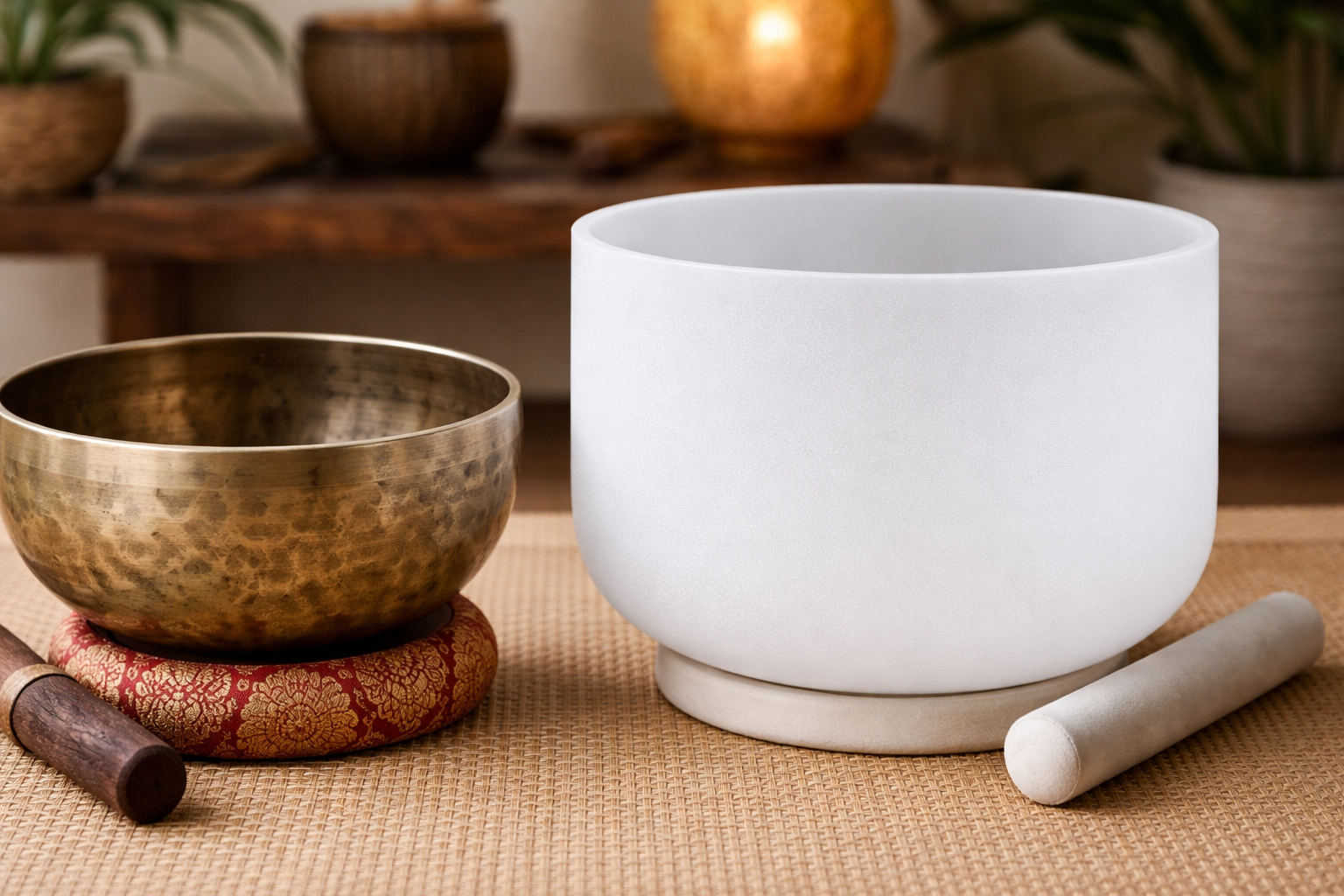
This is the first real fork in the road.
Metal singing bowls, often sold as Tibetan or Himalayan singing bowls, tend to give you a more layered sound. You hear the main tone, then a shimmer of overtones around it. That makes them feel earthy and forgiving. If your striker angle is slightly off, many metal bowls still give you something pleasant back.
Crystal singing bowls are cleaner and more direct. The note arrives faster and hangs in the air in a more obvious way. If you love that bright, pure, almost laser-straight sound, crystal can be deeply satisfying. If you are sensitive to sharp sound in a small room, crystal can feel like too much of a good thing.
Durability matters too. A hand-hammered metal bowl can handle daily use, travel, and the occasional clumsy knock. A crystal bowl cannot. One careless bump and the mood is over.
Then there is the playing feel. Metal bowls often reward patient circling around the rim. Crystal bowls can feel more exacting. When they lock in, they sound beautiful. When they do not, the whole thing can feel fiddly. That is why I rarely tell a new buyer to begin with crystal unless they already know they want that sound for sound healing, note-based practice, or group work.
Chakra-note language shows up all over this category. It can be a fun way to frame a practice. It should not outrank usability. A bowl that fits your hand, room, and patience level will help your meditation more than a color-coded note chart ever will.
| Material | What it feels like | Best for | Watch out for |
|---|---|---|---|
| Metal | Warm, layered, forgiving | Beginners, travel, daily use | Tiny bowls can sound bright or thin |
| Crystal | Pure, bright, sustained | Dedicated sound work, note-based practice | Fragility, louder output, fussier first buy |
My take: if you are still deciding between metal and crystal, that already leans the answer toward metal.
Pick the Right Size, Weight, and Pitch for Your Room
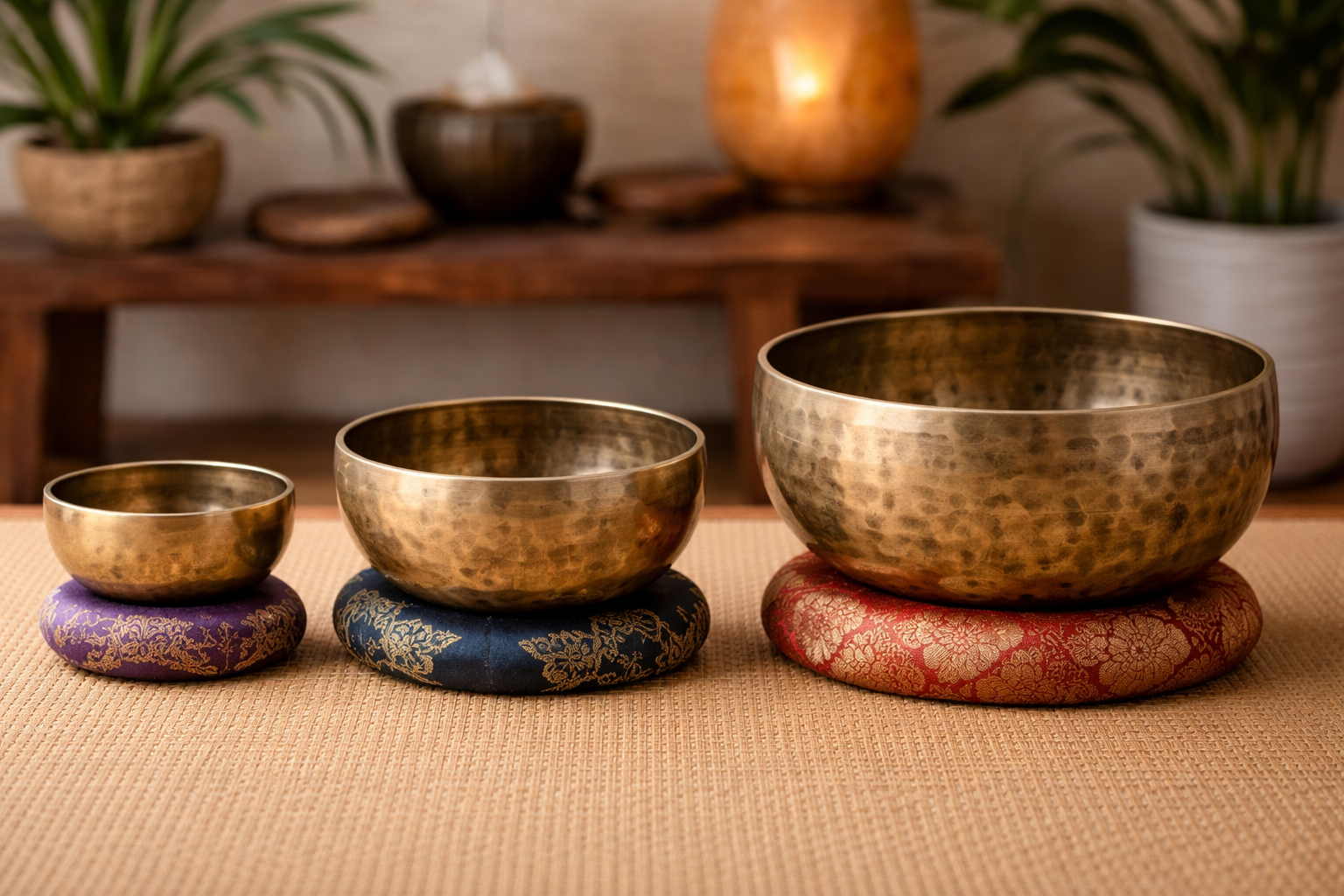
Size is not just about portability. It changes the whole relationship you have with the bowl.
Small bowls, around 3 to 4 inches, are easy to hold and easy to tuck into a drawer or shelf. They are great for brief meditation, travel, or gifting. Their downside is simple: the tone is often higher and the body of the sound is thinner.
Medium bowls, around 5 to 7 inches, are the safest range for most readers. You get more depth, more sustain, and a calmer sound without moving into “this thing now owns the room” territory. If you are not sure what size to buy, this is the range that usually lands best.
Large bowls, 8 inches and up, move toward performance, group use, or more immersive solo sessions. They can sound lovely. They can also be awkward to store, harder to hold, and louder than you expected once the room goes quiet.
Pitch follows size in a rough way. Smaller bowls tend to sound higher. Larger bowls tend to sound lower and fuller. That sounds obvious, but it changes buying decisions more than people think. A bowl can be beautiful and still wrong for a small apartment at night.
Weight matters in a sneaky way too. Many buyers picture holding the bowl in one hand and circling it in the other. That is pleasant with a compact metal bowl. It gets tiring with a heavier bowl fast. If the bowl lives on a floor cushion full time, no problem. If you want to lift it, turn it, carry it, and use it casually, lighter wins.
Quick fit guide
- Bedroom meditation: small or medium metal bowl
- Living room practice: medium metal or medium crystal
- Yoga class or studio: medium-to-large bowl
- Gift for a beginner: 4-inch to 5-inch hand-hammered set
Judge Quality Before You Buy, Even If You Are Shopping Online
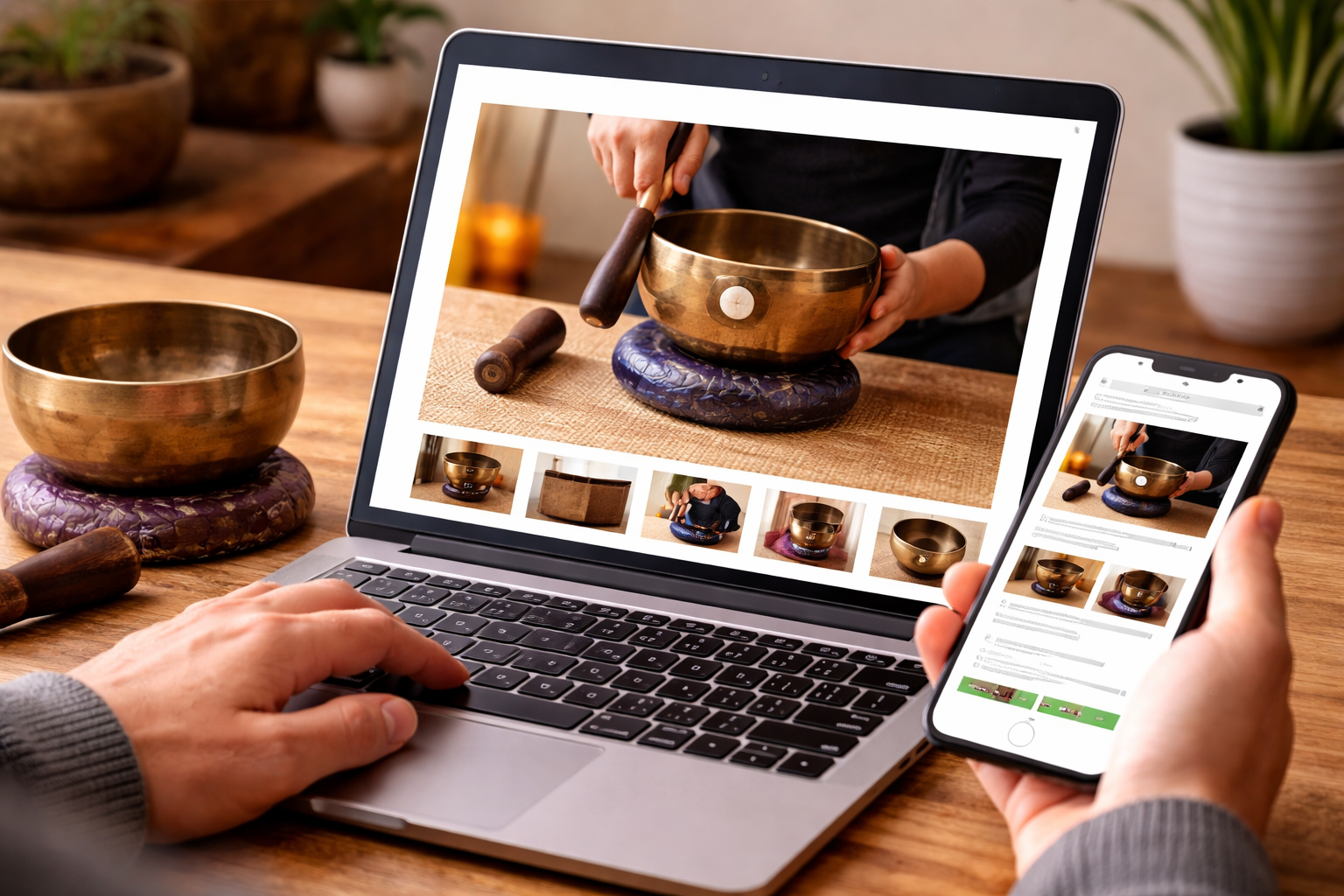
The best clue is not the engraving. It is not the chakra color chart. It is not the velvet pouch.
The best clue is the sound.
If a listing gives you audio or video, listen for three things. First, the strike should sound clean. Not a dull clunk. Second, the sustain should hold without collapsing right away. Third, if the seller shows rim play, the tone should build smoothly rather than squeal or chatter.
Then check the boring details. They matter. Look for the actual diameter. Check what comes in the bundle. “Mallet included” can mean a genuinely usable striker or a skinny stick that makes everything harder. A proper cushion or O-ring matters too. It stabilizes the bowl and helps you get a more reliable tone.
Craftsmanship language needs a little skepticism. “Handmade” can be true and still tell you almost nothing about sound quality. Hand-hammered marks can be a good sign. They are not a guarantee. The bowl still has to sound right.
Return policy matters more here than in many categories. Singing bowls are personal. You might love a bowl in a video and dislike how it feels in your own room. That is normal.
- Good sign: seller shows the bowl being played
- Good sign: clear size and included accessories
- Good sign: bowl is described by material and practical use, not only spiritual claims
- Weak sign: lots of glamour photos and no sound demo at all
- Weak sign: vague bundle details
Buying tip: if two listings seem similar, take the one with clearer size details, better demo media, and a usable-looking mallet. Fancy copy is cheap. A playable bowl is the point.
The Best Singing Bowls for Meditation by Use Case
Ohm Store Tibetan Singing Bowl Set
Our rating: 5/5
Best for: most readers who want one bowl for meditation, mindfulness, and short daily practice.
This is the easiest recommendation in the bunch because it does not ask you to overcommit. The Ohm Store bowl is compact, hand-hammered, and sold as a simple set with striker and cushion. That format matters. A lot of people buying their first meditation bowl do not need a giant sound healing centerpiece. They need something they can pick up after work, tap once, circle twice, and settle down with. This set fits that job well.
The smaller Ohm Store bowls, including the well-known palm-sized versions, have a tone that is pleasant and focused rather than huge. That makes them better for bedrooms, reading corners, desks, and short guided meditation cues. The tradeoff is that you are not getting cathedral-level bloom. You are getting a bowl that behaves. That is often the better deal.
What I like most here is the friction level. Low friction wins habits. The bowl is light enough to handle without ceremony, the included kit is straightforward, and the sound character tends to suit calm personal use. If you want a first Tibetan singing bowl that feels like a tool instead of a project, this is a strong place to start.
Main tradeoff: compact bowls can sound smaller and brighter than a medium or large bowl.
Who should skip it: readers who want a louder, deeper bowl for group settings or sound bath work.
What to check before buying: exact diameter, which striker is included, and whether the listing is for the 3.5-inch or 4-inch version.
Silent Mind Tibetan Singing Bowl Set
Our rating: 5/5
Best for: beginners who want a bowl that feels approachable right away.
Silent Mind has become a familiar starter pick for a reason. The set is positioned as easy to play and beginner friendly, which is exactly the sort of claim that matters here. Some bowls sound nice once you already know what you are doing. Some bowls are more cooperative from day one. For a beginner, that difference is huge. If the first few tries are awkward, people stop using the bowl. If the bowl responds quickly, the practice sticks.
The Silent Mind set works well as a first meditation bowl because it keeps the buying decision simple. Bowl, mallet, cushion, done. No need to learn notes, no need to choose between several crystal frequencies, no need to baby a fragile rim. The tone profile is the sort many readers want for mindfulness and stress relief: warm enough to feel soft, present enough to mark the beginning or end of a practice.
This is not the artisanal collector’s choice and it is not trying to be. It is a sensible first bowl for readers who want to test whether a meditation bowl will actually become part of their week. I like that about it. Sometimes the best pick is the one that removes hesitation.
Main tradeoff: it is more functional than special. Readers chasing unusual overtones or a deeper note may outgrow it.
Who should skip it: anyone who already knows they want a larger bowl or a dedicated crystal sound.
What to check before buying: listing version, included mallet style, and whether the bowl size matches the practice space.
TM Thamelmart 4″ Exquisite Tibetan Singing Bowl Set
Our rating: 5/5
Best for: gifting, compact setups, and readers who want a small decorative bowl that is still usable.
Small bowls are often underestimated. They get dismissed as decorative. Sometimes that is fair. Sometimes it is lazy. A well-made 4-inch bowl can be a genuinely satisfying meditation tool if your practice is short, your room is small, or you want something you can store without thinking about it. The Thamelmart 4-inch set sits in that lane. It is compact, complete, and visually giftable without becoming pure shelf candy.
The good news is obvious: this size is easy to handle, easy to place on a nightstand or altar, and much less intimidating for someone brand new to meditation tools. The less-good news is just as obvious: 4-inch bowls have limits. You are not getting the deeper tone or room-filling sustain that comes from a larger bowl. If that is what you want, skip the cute option and buy bigger.
Still, there is a real use case here. For quick morning practice, travel, or a first gift, a 4-inch hand-crafted bowl can be exactly right. It gives a clear ritual cue without turning your whole setup into equipment. That is why I would buy this for someone curious and new, not for someone already chasing lower notes and longer resonance.
Main tradeoff: compact size means less depth and less acoustic weight.
Who should skip it: readers who already know they want a richer, lower, more immersive tone.
What to check before buying: exact diameter, cushion style, and whether the listing includes a truly playable striker.
TOPFUND 8″ F Note Crystal Singing Bowl
Our rating: 5/5
Best for: readers who already know they want a crystal singing bowl with a clear sustained tone.
The TOPFUND 8-inch F Note bowl is the pick here for people who are not trying to be talked back into metal. It is quartz, note-specific, and sold as a more deliberate sound tool with a mallet and O-ring. That changes the experience right away. You are not buying a small meditation accent. You are buying a bowl that wants to be heard.
What crystal does well, it does very well. The tone is cleaner than most small metal bowls. The sustain feels more obvious. If your meditation leans toward sound healing, note-based work, or a stronger sonic presence, the appeal is real. I get it. The first time a crystal bowl locks in properly, the room changes in a way a tiny metal bowl often cannot match.
Still, crystal is not a free upgrade. It is fragile, it takes more care, and in a quiet room the brightness can feel intense if you only wanted a soft open-and-close cue for meditation. That is why I would call this a great crystal choice and not a universal beginner choice. It suits a reader who has a more defined target.
Main tradeoff: louder, brighter, and more fragile than the metal options.
Who should skip it: beginners who meditate in very small spaces or anyone who wants a travel-friendly bowl.
What to check before buying: the exact note and frequency version, included accessories, and where the bowl will live when not in use.
CVNC 440Hz 8″ F Note Frosted Quartz Crystal Singing Bowl
Our rating: 5/5
Best for: readers who want a more pronounced crystal-bowl experience and already know the tradeoffs.
CVNC has a wide crystal singing bowl catalog and the 440Hz 8-inch F Note frosted quartz bowl is a strong example of what draws people into this category. The sound is assertive, the note identity is clear, and the overall feel is more “sound work” than “casual mindfulness accessory.” That can be exactly right for people using singing bowls as the main event in meditation, yoga, or sound-based practice.
Compared with a compact metal bowl, this sort of frosted quartz bowl brings more presence and a more overtly musical personality. That can be lovely in a studio or a room where you want the tone to carry. It can also be too much for a reader who just wants a bowl to punctuate a quiet sit. This is one of those cases where the better product on paper is not the better product for the person.
I would choose the CVNC if the reader is drawn to note-specific practice, wants a substantial crystal sound, and is comfortable with a tool that asks for space and care. I would not choose it for a first dip into meditation bowls. It is more specialized than that. Good specialized products are great. They just need the right owner.
Main tradeoff: less forgiving, less portable, and less subtle than the metal picks.
Who should skip it: first-time buyers who just need a calm daily meditation aid.
What to check before buying: frequency version, bowl finish, included O-ring and mallet, and whether the room suits a stronger crystal tone.
Avoid the Mistakes That Make a Singing Bowl Feel Like a Bad Purchase
The most common mistake is buying the smallest bowl because it looks charming and costs less.
Sometimes that works. Often it leads to a thin little ping when what you wanted was a calm, enveloping tone. If your practice is daily and home-based, go one size up unless portability is your top concern.
The second mistake is treating chakra branding like proof of quality. A bowl can be marketed as heart chakra, throat chakra, 432Hz, 440Hz, seven metal, hand blessed, moon charged, you name it. None of that matters if the bowl is awkward to play or harsh in your space.
The third mistake is buying a crystal bowl first because it feels like the “serious” option. Serious is not the same as suitable. A strong crystal tone can be beautiful. It can also be a bit much at 10 p.m. in a small apartment.
The fourth mistake is ignoring the room. This happens all the time. People picture the bowl in some airy studio and forget they are actually going to use it beside a bed, near hard walls, or in a house with other people. Sound behaves differently once the fantasy meets drywall.
The last mistake is buying for a future self. You imagine running sound baths, learning every note, building a seven-bowl chakra set. Maybe you will. Buy for the practice you already have. One bowl that fits your current life beats a grand plan in a box.
Simple fix: choose the bowl you are most likely to use three times a week. Not the one that sounds most impressive in a product video.
Use and Care for Your Bowl So It Sounds Better From Day One
The National Center for Complementary and Integrative Health says meditation and mindfulness practices are usually considered to have few risks, though experiences vary and some people do report negative effects. A singing bowl fits best as a tool that supports meditation, not as a medical shortcut. That framing keeps the whole practice cleaner and more honest.
Then there is the sound itself. The Centers for Disease Control and Prevention’s hearing guidance warns that repeated loud sound exposure can damage hearing. You do not need to turn a meditation bowl into a hazard lecture. You just do not want to play a loud bowl right beside your ear and call that “more powerful.”
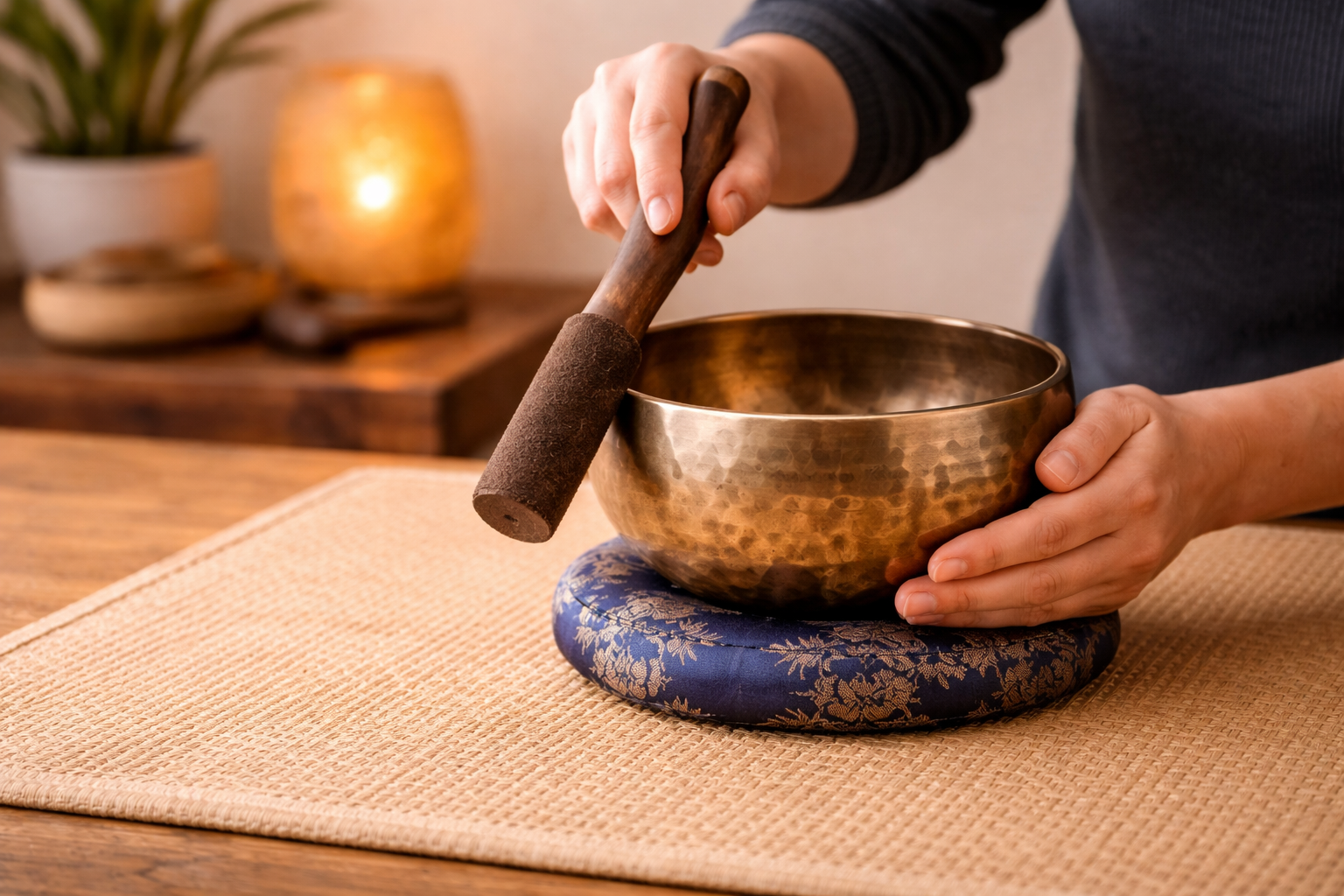
Step 1. Strike lightly and hear the core note.
Start with a gentle strike. Let the sound bloom. A lot of beginners hit too hard and get a clang instead of tone.
Step 2. Circle the rim and keep the note alive.
Use slow, even pressure with the mallet around the outer rim. If the bowl chatters, back off. A bowl is not a lawnmower pull cord. Smooth works better than force.
Step 3. Match session length to the room.
For many people, one to three minutes is enough to open or close meditation. If the sound stays pleasant, keep going. If the room starts feeling sharp or fatiguing, stop sooner.
Step 4. Store it where you will actually use it.
The best care tip is also a habit tip. Keep the bowl accessible. Bowls hidden in cases and high shelves get used once a month.
Step 5. Protect crystal bowls like crystal bowls.
Use the O-ring. Give them stable storage. Do not stack them carelessly and do not carry them around one-handed while doing other things. Sounds obvious, I know. People still do it.
A bowl sounds better when you are relaxed. That is not mystical. Your pressure is steadier, your pace is slower, and the tone comes out cleaner.
One last evidence note. The newer 2025 systematic review on singing bowls points to possible benefits for anxiety, depression, sleep, and some physiological measures, though the evidence base is still small and mixed. So use the bowl because it supports a practice that helps you settle, focus, and return to yourself. That case is strong enough already.
Frequently asked questions
Do I need a singing bowl tuned to a specific chakra or note?
No. If chakra-note language helps you focus, fine. But for meditation, sound quality, size, and ease of play matter more. A bowl that feels good in your room will serve you better than a perfectly color-coded bowl that is annoying to use.
Can a singing bowl be too loud for a small room?
Yes. Larger metal bowls and many crystal bowls can feel much louder once the room goes quiet. If you meditate in a bedroom or apartment, small-to-medium metal bowls are usually easier to live with. Distance and a lighter touch help too.
Are hand-hammered bowls really better?
Sometimes. Hand-hammered bowls often have a richer, more characterful sound, but the phrase itself is not proof of quality. The better test is still the sound demo, the size match, the included accessories, and whether the bowl feels suited to your actual practice.