
If you’ve opened a handful of crystal guides and every one of them says “black tourmaline, citrine, jade, tiger’s eye,” you’re not imagining it. The list is familiar because those are genuinely strong picks, but the generic answer leaves out the part that matters: which stone fits the actual job in front of you. For most people searching for the best crystals for protection and good luck, the smartest starting point is black tourmaline for firm boundaries, green aventurine for broad luck and fresh openings, citrine for abundance and confidence, tiger’s eye for brave action, and jade for steadier prosperity with a protective feel.
That sounds simple enough, until you try to choose one.
Protection can mean “I feel drained around people.” It can also mean “my house feels jangly and stressful” or “I want a calmer spiritual practice.” Luck can mean opportunity, money, confidence, timing, or just getting out of your own way. If you lump all of that into one fuzzy category, every crystal starts to look like a medium-size shoe. Technically wearable, not actually fitted.
What you’ll get from this guide
- Which crystal is best when the real need is protection, luck, prosperity, or confidence
- How to choose one stone without getting lost in a 12-stone shopping spiral
- Which pairings make sense when one crystal feels too broad
- How to wear, carry, or place crystals so they fit normal life
- What to watch for when buying citrine, jade, tourmaline, and quartz pieces
Fast Match: start here if you want one quick answer
| If your main goal is… | Start with… | Why it fits |
|---|---|---|
| Boundaries and protection from draining energy | Black tourmaline | It is the clearest “barrier” stone in this group |
| General luck and fresh opportunities | Green aventurine | Easy, broad, and beginner-friendly |
| Abundance, confidence, and money goals | Citrine | It is the most prosperity-coded pick in crystal practice |
| Courage, focus, and luck through action | Tiger’s eye | Best when luck needs backbone |
| Steady prosperity with a softer protective feel | Jade | Calmer, older, and less “push hard” than citrine |
The Best Crystals for Protection and Good Luck at a Glance
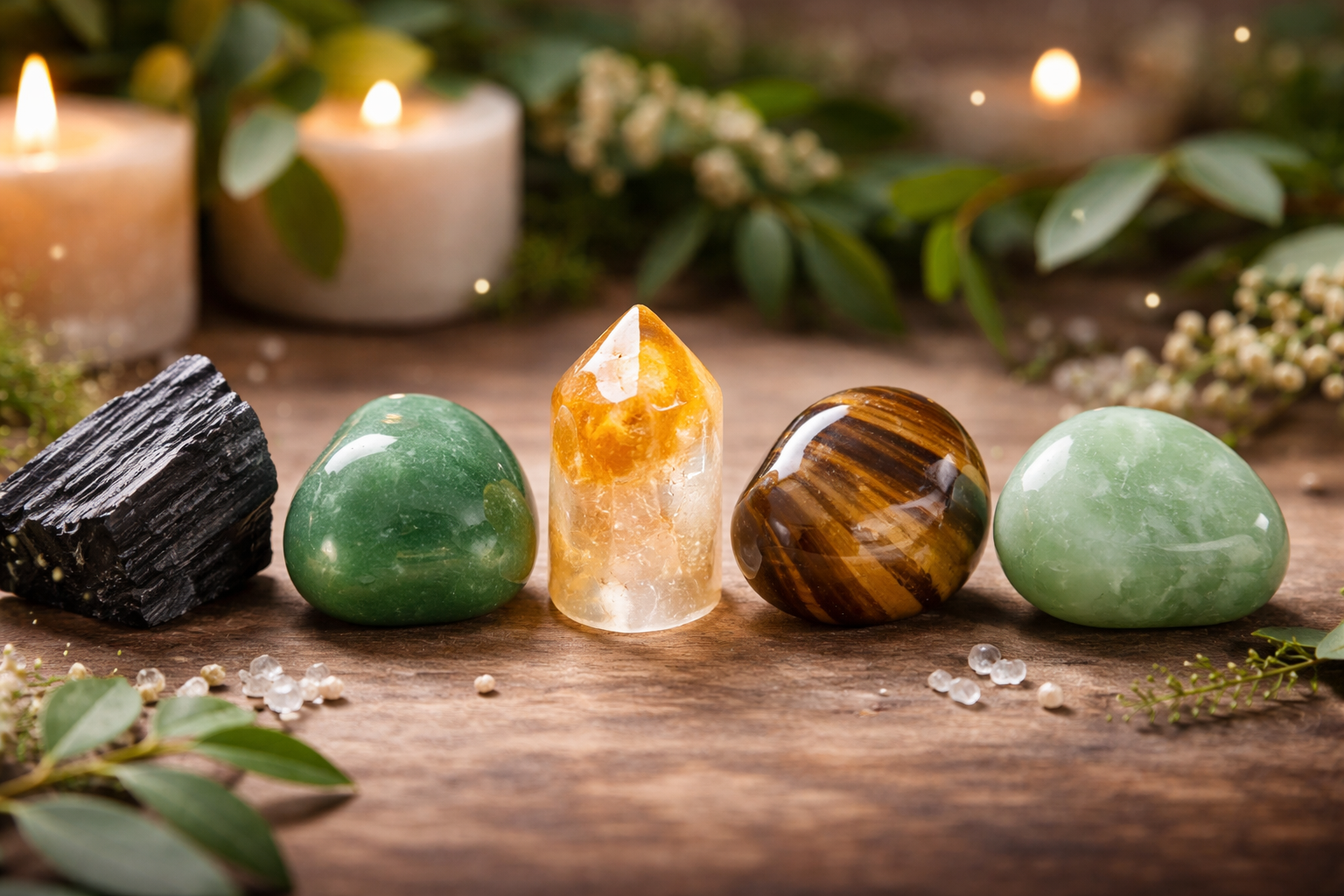
If you want the short list without the fluff, start here. Black tourmaline is the best overall crystal for protection. Green aventurine is the easiest overall crystal for good luck. Citrine is stronger for abundance and confidence than for vague “good vibes.” Tiger’s eye is better when luck needs courage and follow-through. Jade is the calmer prosperity stone, and it often feels less pushy than citrine.
I keep coming back to one simple rule: pick the crystal by the job, not by the pretty description. That’s where most crystal lists wobble. They tell you what the stone means, but not when it wins against another option sitting right next to it.
| Crystal | Best for | Where it beats the others | Best first format |
|---|---|---|---|
| Black tourmaline | Strong protection and boundaries | Best when people or places leave you wiped out | Pocket stone or front-door piece |
| Green aventurine | General luck and opportunity | Most flexible “start here” luck stone | Bracelet or tumbled stone |
| Citrine | Abundance, confidence, momentum | Best when money or growth is the real goal | Desk piece or bracelet |
| Tiger’s eye | Courage, focus, action | Best for interviews, decisions, and nerve | Pocket stone or bracelet |
| Jade | Steady prosperity and protective luck | Best when you want calm, durable prosperity energy | Pendant or small home piece |
If black stones all blur together in your mind, this guide on which black crystal fits which kind of protection is worth bookmarking. Black tourmaline is not interchangeable with obsidian or smoky quartz, and that distinction changes your pick fast.
Remember: “Luck” is not one thing. Opportunity luck, money luck, and confidence-based luck often point to different stones.
How to Choose the Right Crystal by the Kind of Protection or Luck You Actually Want
Before you buy anything, name the problem in plain English. That step alone clears up half the confusion.
If your issue is people overload, start with black tourmaline or smoky quartz. If your issue is feeling scattered and afraid to act, tiger’s eye is usually the better fit. If your issue is stalled money goals or low confidence around growth, citrine makes more sense than green aventurine. If you want broad luck without narrowing it to money, green aventurine is the softer and easier first choice.
Protection also splits into two lanes. One lane is firm, grounded, “leave my field alone” energy. That is where black tourmaline shines. The other lane is calmer and more spiritual, the kind people want near meditation, sleep, or a gentler practice. That is where amethyst often feels better.
Luck splits too. Green aventurine is the open door stone. Citrine is the get-moving stone. Jade is the stay-steady stone. Tiger’s eye is the stop-freezing-and-do-it stone.
Use this quick decision rule
- If you feel invaded, pick black tourmaline.
- If you feel stuck, pick green aventurine or citrine.
- If you feel afraid to act, pick tiger’s eye.
- If you want calmer prosperity with less hustle energy, pick jade.
- If you want soothing spiritual cover, pick amethyst.
One more thing. Start with one primary need. When people buy three luck stones, two protection stones, and a random quartz point “to amplify everything,” the setup gets muddy. Not dangerous, just muddy. The cleaner the intention, the easier the crystal is to use with any consistency.
If your real goal is abundance rather than generic luck, this piece on matching abundance crystals to the goal goes deeper into that split.
The 8 Best Crystals for Protection and Good Luck, Matched to the Job
Black tourmaline is the strongest all-round pick for protection. When a space feels tense, when a conversation leaves you wrung out, or when you want a simple barrier stone at the door, this is the one I would reach for first. It has that “boots by the door” practicality. Not fancy, just effective.
Green aventurine is the easiest luck stone to recommend to almost anyone. It is broad enough for fresh opportunities, better timing, and a bit more openness, but not so broad that it says nothing. If someone wants a first lucky crystal and doesn’t want to overthink it, this is often the cleanest answer.
Citrine is better framed as an abundance and confidence crystal than a generic lucky charm. That distinction matters. The Gemological Institute of America notes that most citrine on the market is heat-treated amethyst, and it also places citrine in the quartz family at Mohs 7 hardness. So from a practical angle, citrine is common, wearable, and sturdy enough for everyday use. From a symbolic angle, it suits money goals, momentum, and self-belief more than random “good luck.”
Tiger’s eye is what I suggest when luck needs backbone. Interviews, first dates, negotiations, presentations, tough decisions, all of that sits nicely in tiger’s eye territory. It has a focused, forward-moving feel. Not airy luck. Action luck.
Jade brings a different mood. The Gemological Institute of America describes jade as a trade term that can cover nephrite, jadeite, and in some cases green omphacite, and it commonly sits around Mohs 6 to 7. In practice, jade feels steadier than citrine and less “go get it now.” If your taste runs toward quiet prosperity, good judgment, and a settled home feeling, jade often lands better.
Smoky quartz is protection with a grounding slant. I like it for periods where stress is high and everything feels buzzy. It doesn’t give me the same firm stop-sign feeling as black tourmaline, but it often feels easier to live with day to day.
Amethyst is softer protection. When people say they want shielding but don’t want anything heavy or severe near the bed or meditation space, amethyst usually makes more sense than the hard-edged barrier stones. It can also pair well with luck stones without making the whole setup feel like armor.
Clear quartz is the utility player. In crystal practice, people use it as an amplifier or support stone because it can sit beside almost anything. I would not make it the first and only pick for protection and luck, but it is handy when you already know the main stone and want one flexible helper.
My honest ranking for first-timers: black tourmaline for protection, green aventurine for luck, citrine for abundance, and tiger’s eye for confidence. If you start there, you’re already ahead of most scattershot crystal buys.
Two quick honorable mentions. Pyrite is popular for wealth-focused setups, though I see it as narrower than citrine. Obsidian is powerful for clearing and protection, though it can feel sharper and less forgiving than black tourmaline for beginners who just want a daily companion stone.
If you want a broader meanings map instead of a single category guide, this crystal meanings guide lays out how these symbolic differences play out.
The Smartest Crystal Pairings When One Stone Feels Too Broad
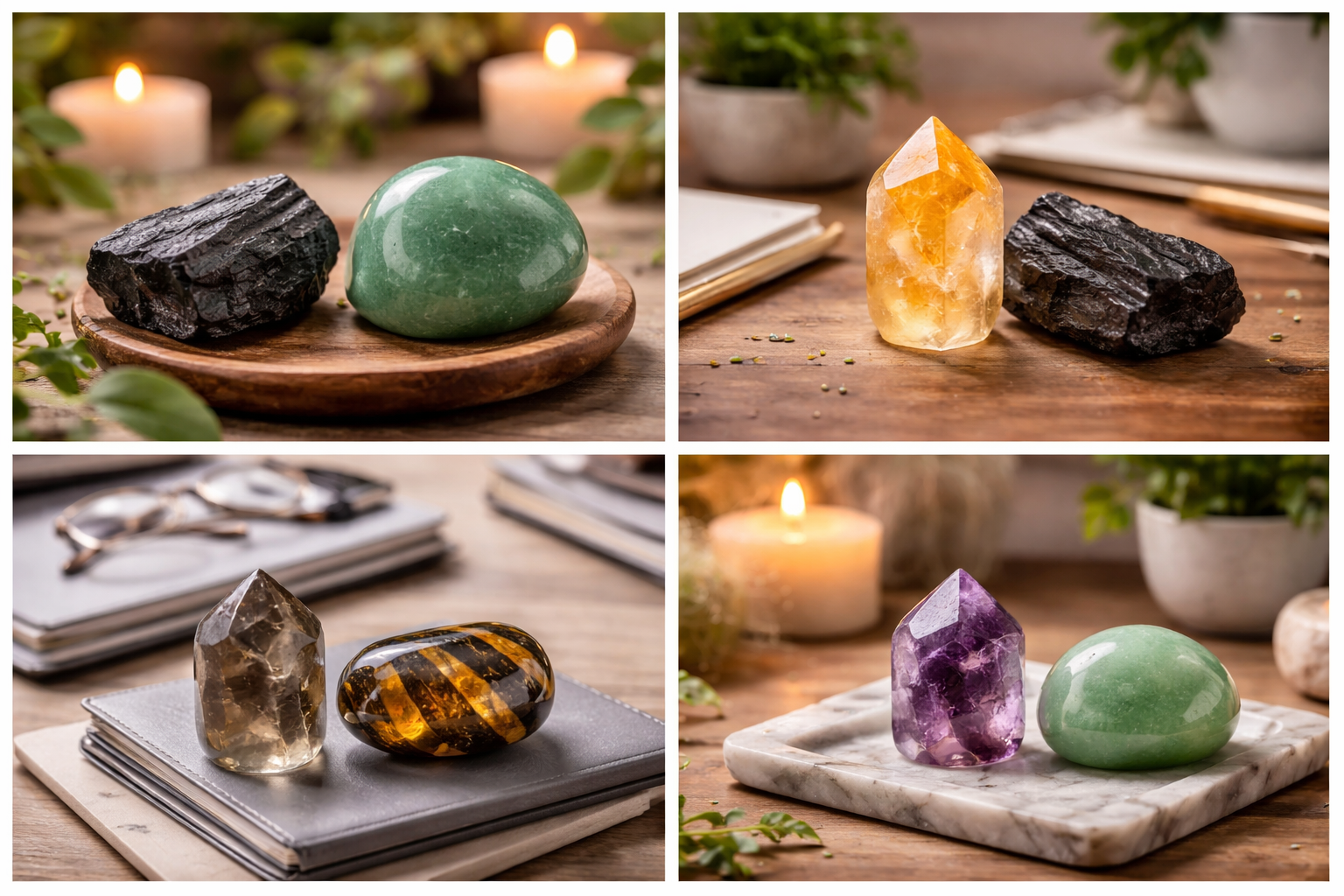
One stone is enough for plenty of people. Two stones is the sweet spot when you want both shielding and movement. Past that, the whole thing can start to feel like a playlist with five songs talking over each other.
Black tourmaline + green aventurine is the cleanest pairing for everyday life. Tourmaline handles boundaries. Aventurine handles openings. This combo works well for new jobs, new routines, busy offices, or any season where you want fresh chances without feeling exposed.
Black tourmaline + citrine is more pointed. I think of it as “protect the energy, then move the money goal.” Good for work desks, business planning, or phases where your attention keeps getting yanked away from growth. It is less gentle than aventurine, and more focused.
Smoky quartz + tiger’s eye is underrated. You get grounding from smoky quartz and nerve from tiger’s eye. That combination is great before public speaking, career jumps, or hard conversations you’ve been dodging.
Amethyst + jade is quieter. It suits home spaces, reflective periods, and readers who like the protective side of crystal work but don’t want anything that feels harsh. Calm protection, calm prosperity. A good pair for a bedroom dresser or a small living-room shelf.
A pairing rule that saves a lot of wheel-spinning
Pick one stone for safety and one stone for movement. Safety might mean boundaries, grounding, or calm. Movement might mean luck, abundance, or courage. That structure is much easier to live with than stacking three stones that all claim to do “everything.”
If you’ve ever worn two crystals together and the setup felt off, not wrong, just off, the issue is usually clutter rather than a mystical conflict. This article on crystal pairings to avoid gets into those mismatches without turning it into drama.
Where to Wear, Carry, or Place Crystals So They Fit Daily Life
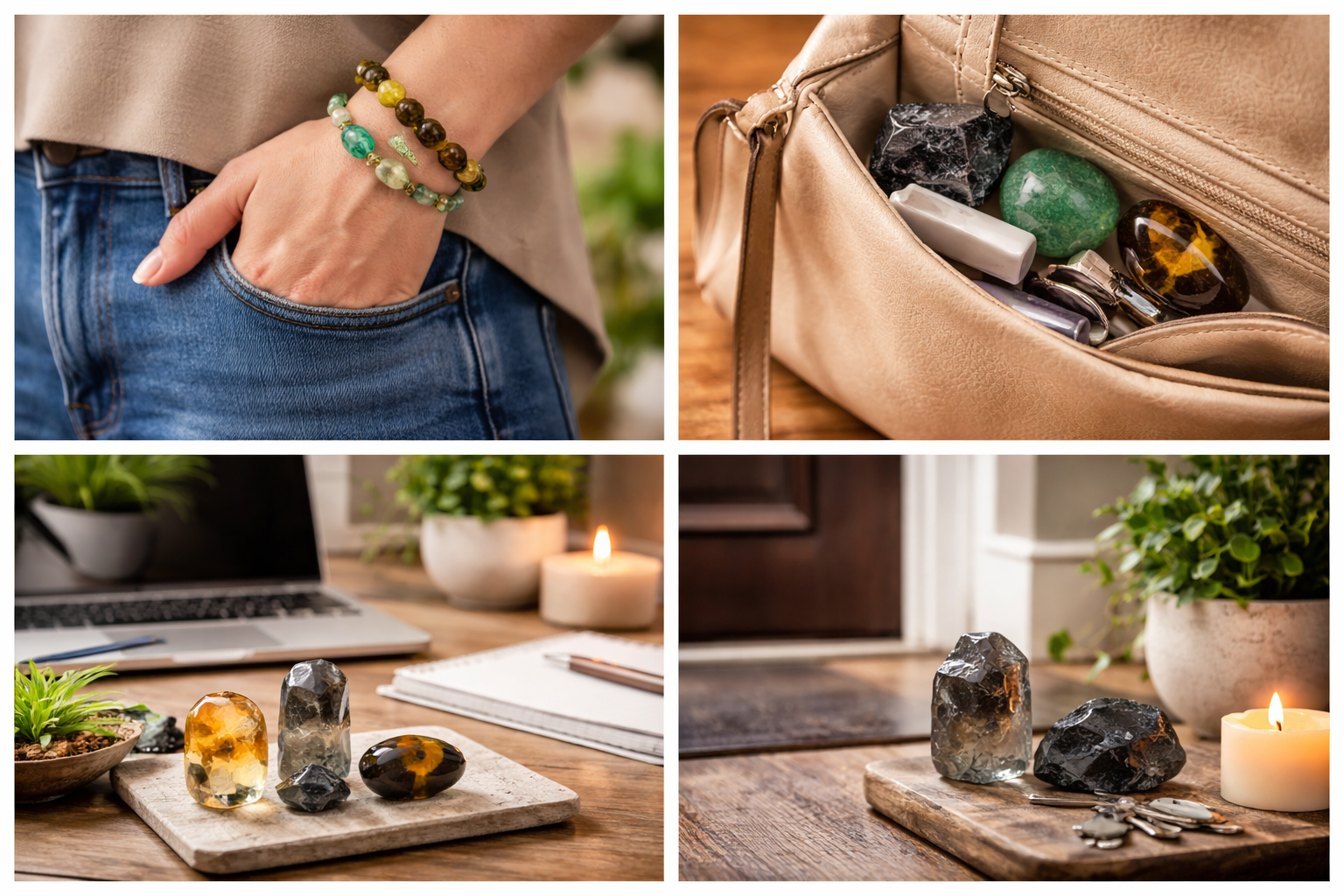
The best stone is the one you actually keep near you. That sounds obvious, but it kills a lot of bad buying decisions.
Wear it for steady contact. Bracelets and pendants make sense when you want the crystal in your field all day and you already wear jewelry. Green aventurine, citrine, tiger’s eye, and jade all work well here. Black tourmaline can too, though some people prefer it off the body and closer to the bag, desk, or doorway.
Carry it when you want low-effort use. Tumbled stones are underrated because they are dead simple. Slip one into a pocket, pouch, or bag compartment and forget about it until you need it. For interviews or stressful meetings, tiger’s eye or black tourmaline as a pocket stone is hard to beat.
Place it where the problem happens. If work drains you, put citrine, tiger’s eye, or black tourmaline at the desk. If the house feels tense, place black tourmaline or smoky quartz near the entryway. If bedtime needs calm more than hard protection, amethyst or jade usually makes a nicer bedroom choice.
When I’ve tried to force one crystal to cover every room and every mood, it usually turned into décor with aspirations. Crystals work better when they have a job and a place.
Note: A crystal in the “wrong” place is not a disaster. It just may not be pulling its weight there.
For a room-by-room setup, this guide to protective crystals for home, sleep, and boundaries is a strong next read.
How to Buy Crystals Without Overpaying or Picking the Wrong Format
Buy the format you will actually use. That is the first filter, and it beats almost every romantic product description.
If you never wear bracelets, skip the bracelet. If you want something near the door, buy a small standing piece or a rough chunk. If the crystal is for work, a desk stone or palm stone often makes more sense than a pendant you’ll tuck under a sweater and forget.
Then look at disclosure. Citrine is the big one here. As noted earlier, most commercial citrine is heat-treated amethyst according to GIA. That does not make it fake. It means the seller should say what it is. Good sellers describe treatment plainly instead of wrapping it in mystical copy and hoping you won’t ask.
Jade deserves the same kind of caution, though for a different reason. Since “jade” can refer to more than one material, clarity matters. If a seller knows whether the piece is jadeite or nephrite, that is a good sign. If the listing is vague in every direction, I would keep scrolling.
Durability matters too. Quartz-family stones like citrine and amethyst are practical daily companions because Mohs 7 holds up well for ordinary wear. Jade is durable in daily life too. Soft stones and fragile carvings are lovely, but they are not always the best first buy for a pocket, bag, or rushed morning routine.
A simple buying checklist
- Pick the job first
- Pick the format second
- Look for clear treatment disclosure
- Choose durability that suits daily use
- Skip listings that talk in circles and say almost nothing about the stone
The Mistakes That Make Crystal Work Feel Random or Disappointing
The most common mistake is choosing by hype. A stone gets praised enough times online, and suddenly it seems like the right pick for every person and every problem. That is how people end up buying citrine for “luck” when what they really needed was black tourmaline for boundaries, or buying black tourmaline for every room in the house when what they wanted was calmer sleep.
The second mistake is stacking too many intentions into one setup. Protection, luck, love, money, intuition, sleep, creativity, confidence, all in one bracelet stack. It looks impressive, but it often feels mushy. One main need and one supporting need is plenty.
The third mistake is asking the crystal to do the human part. Tiger’s eye can be a brilliant support stone for courage. It cannot send the email for you. Citrine can sit on the desk all week. It cannot replace budgeting, pricing, or actual work. That sounds blunt, but it makes crystal use better, not smaller.
There is also a trust point worth stating clearly. A 2025 PubMed-indexed study found that healing crystals did not outperform placebo for anxiety symptoms. So crystals should not be framed as medical care or as treatment for mental health conditions. They make more sense as symbolic tools, ritual objects, reminders, or focus anchors within a belief-based practice.
That does not cheapen the experience. Plenty of meaningful practices work through attention, symbolism, memory, and behavior. A stone you carry on purpose can still change how you move through the day. It just changes the claim from “this cures” to “this supports.”
The mistake to avoid most: choosing “luck” when the real problem is weak boundaries. Fix the leak before you decorate the room.
How to Cleanse, Charge, and Care for Your Crystals Without Damaging Them
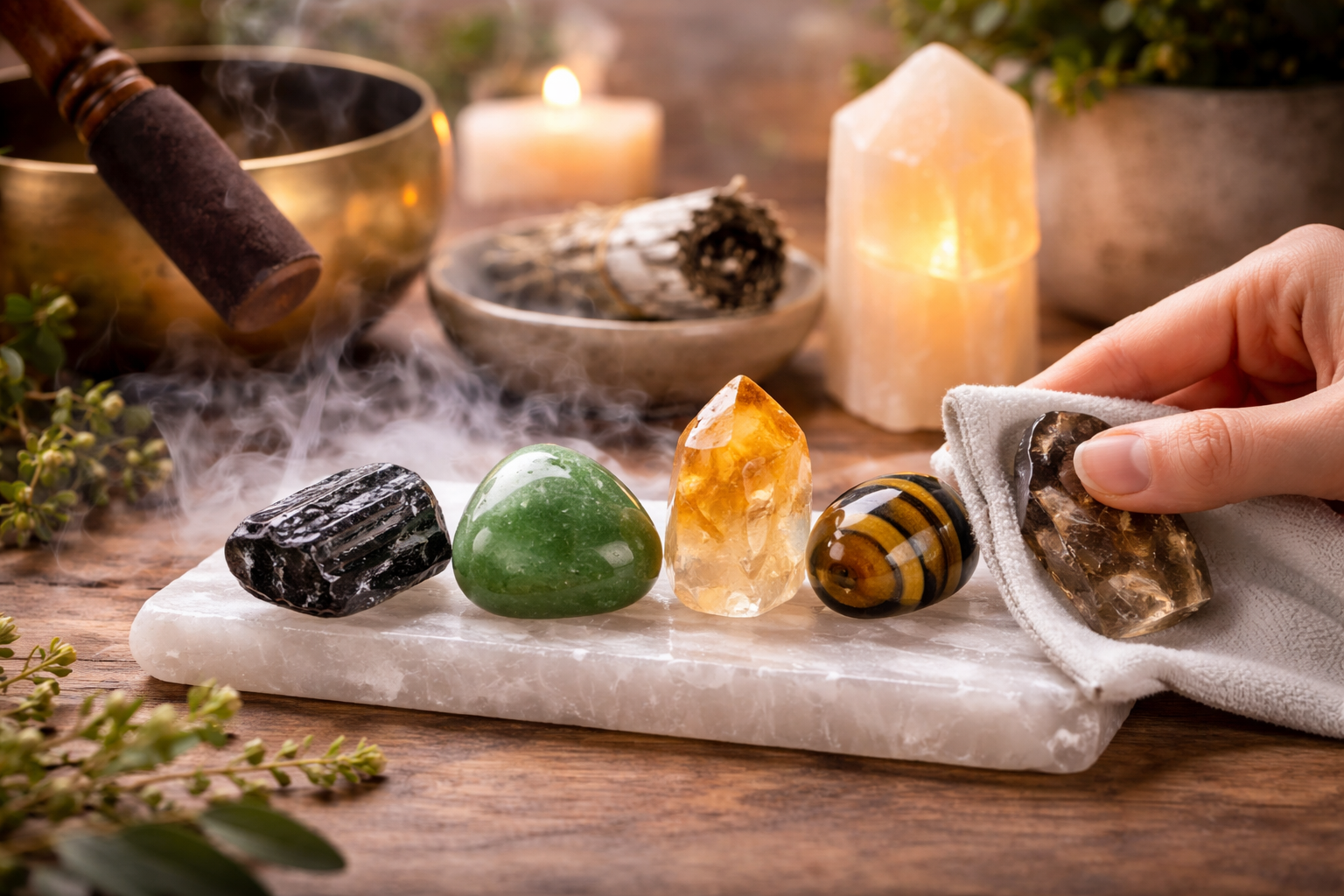
Start gentle. That one rule solves a lot.
Use low-risk cleansing methods first. Moonlight, sound, a little smoke, or resting a stone near selenite are popular because they are easy on the crystal and easy on you. If your practice is more symbolic than ritual-heavy, even a quiet reset with intention can do the trick.
Separate energetic cleansing from physical cleaning. Dust, skin oil, and fingerprints are practical issues. Energy work is a different lane. For physical cleaning, the GIA care guide for tourmaline recommends warm, soapy water and warns against ultrasonic and steam cleaners. That is a good reminder that not every stone likes the same treatment.
Match the method to the stone. Quartz-family stones are sturdy, but that does not mean every crystal wants a rough routine. When in doubt, go softer. You rarely lose anything by being gentler with your pieces.
I also think people overdo charging. If a crystal feels flat, clean it, reset the intention, and put it back to work. You do not need a lunar production every time a tumbled stone has a stressful week in your coat pocket.
If you want a fuller menu of methods, this guide on safe ways to cleanse crystals without damaging them goes step by step.
Good default routine
- Wipe or wash the crystal gently if it is physically dirty
- Use a soft energetic reset such as sound, smoke, or moonlight
- Name the job again in one sentence
- Put the crystal back where that job actually happens
FAQ
Can one crystal really cover both protection and good luck?
Yes, but it works best when the crystal sits closer to your real need. Green aventurine is the broadest single pick if you want luck with a light protective feel. Jade can also bridge both sides. If protection is the bigger issue, start with black tourmaline and add a luck stone later instead of asking one crystal to do every job at once.
Is green aventurine or jade better for good luck?
Green aventurine is better for open-ended luck, fresh opportunities, and a first beginner pick. Jade is better when you want steadier prosperity, a calmer feel, or a stone that leans more toward long-game stability than quick openings.
Does citrine need to be natural to count?
No. Since most citrine sold today is heat-treated amethyst, the better question is whether the seller is clear about it. For most readers, honest disclosure matters more than chasing a rare version they do not need. If the stone suits your goal and the listing is transparent, that is a solid place to start.