
The mistake usually happens before the first stick is even lit. You spot a carved waterfall incense holder or a tiny brass lotus, picture a quiet ribbon of smoke, and buy the one that looks best on the shelf. Then the ash misses the tray, the cone scorches the base, or the burner turns out to be wrong for the incense you actually use. If you want the best incense burner for daily use, start with the incense itself: for most people burning regular stick incense, a long, heat-safe ash catcher tray or plate is the right buy. Cones do better on a flat ceramic or metal burner. Resin needs a true censer or charcoal-safe bowl. Backflow burners are fun, but they are a special-effect pick, not the default.
I learned that the slightly dumb way with a tiny decorative holder that caught maybe half the ash on a calm day. It looked lovely. It was also annoying by day three. Pretty is not the enemy here. Pretty just comes later.
The order that saves you money is simple: incense format, ash control, heat safety, cleanup, then style.
- How to match the burner to sticks, cones, backflow cones, resin, coil incense, and dhoop
- Which burner styles actually keep ash contained
- What materials work best for daily use and what tends to be a pain
- Three product picks with clear tradeoffs and who each one suits
- How to place, clean, and use a burner without turning the room into a mess
Best Suggestions Table (Quick picks that match distinct use cases. The buttons below jump to the detailed reviews.)
| Product | Best for | Action |
|---|---|---|
| Folkulture Wooden Incense Burner | Standard stick incense and low-mess daily use |
Check Price Review |
| LamDawn Ceramic Incense Burner | Readers who burn sticks, cones, coil incense, and resin |
Check Price Review |
| SPACEKEEPER Waterfall Incense Burner | Backflow cones and visual smoke effect |
Check Price Review |
Tip: the fastest way to choose is to match the burner to the incense you burn most often, not the one you might burn once in a while.
Quick match
- Standard stick incense: long ash catcher tray, trough, or wide incense plate
- Coreless Japanese incense: ash-filled censer or a burner made for short, thin sticks
- Cones: ceramic or metal burner with a flat heat-safe base
- Backflow cones: dedicated waterfall incense burner only
- Resin or loose incense: censer or charcoal-safe burner, not a wooden tray
The Best Incense Burner for Most People Starts With One Question
The one question is not “Which one looks nicest?” It is “What do you burn most often?” That one answer clears up most of the confusion right away.
If your routine is standard bamboo-core sticks, the best burner is usually a long incense tray, ash catcher trough, or wide incense plate that supports the stick at an angle and catches the full fall of ash. A small upright incense stand can work, but only when the tray under it is wide enough. If you burn cones, a ceramic or metal incense burner with a flat, heat-safe surface makes more sense. If you burn resin, frankincense, myrrh, or powder incense, you want a censer that can handle more heat. If you want the smoke-cascade look, then yes, a backflow incense burner is the right tool. Just know what you are buying. It is theater first and daily utility second.
That is why the generic answer is incomplete. Two burners can sit next to each other in a product photo and solve totally different problems. One catches ash neatly and asks nothing from you. The other looks stunning for ten minutes and turns into extra cleanup.
Remember: style can break ties. It should not make the first cut.
If you want one blunt rule to keep in your head while shopping, use this one: match the incense format first, then judge ash control, then judge heat safety, then think about cleanup, and only then give points for looks.
Match the Burner to the Incense You Actually Burn
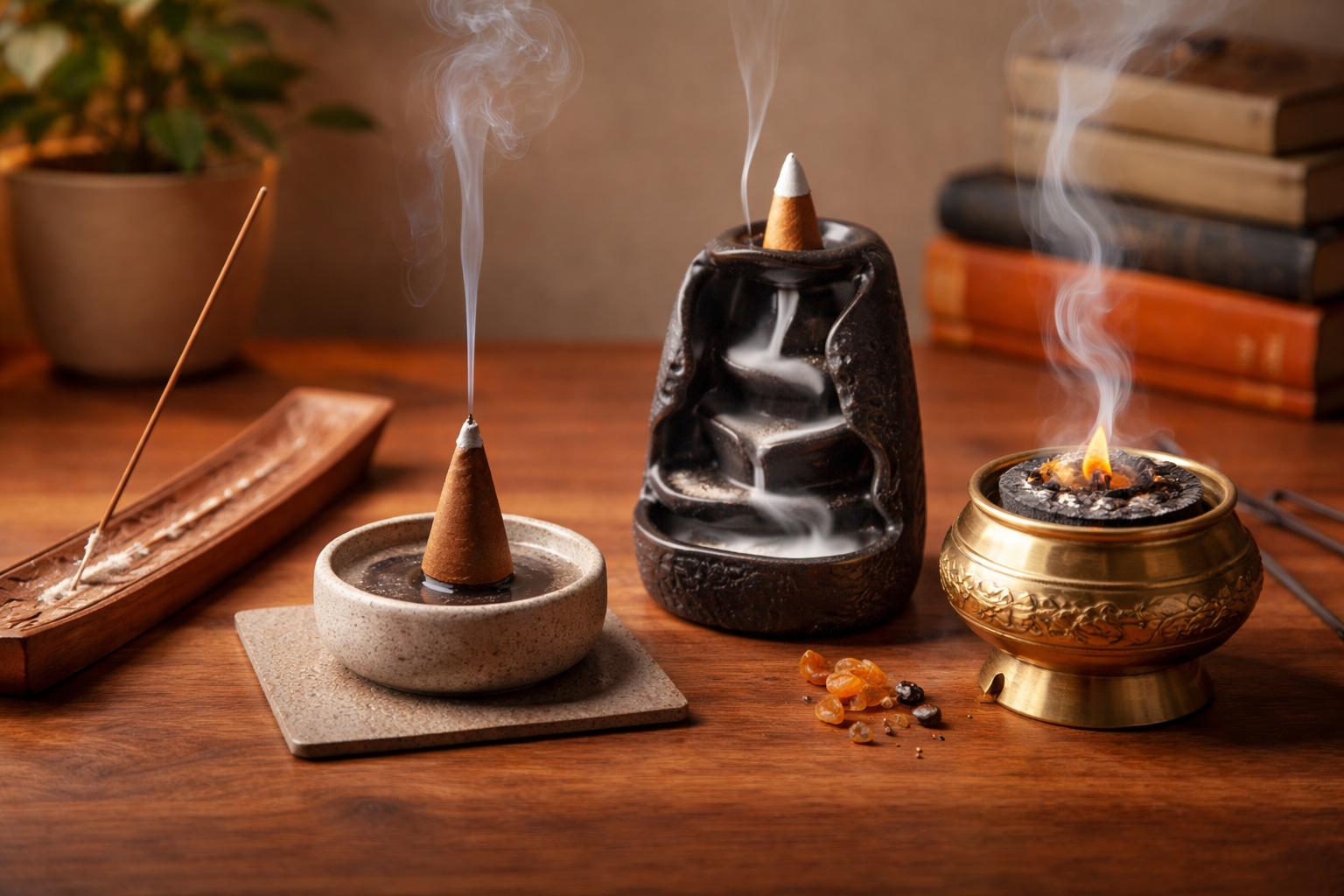
Incense gets lumped together far too often. It should not. Stick incense, cone incense, backflow cones, coil incense, dhoop, and resin each ask different things from a burner.
Use stick burners when you want daily, low-mess fragrance
Standard stick incense works best in a long tray, wide incense holder, or incense stand with a real ash catcher. You want the ash to fall inside the burner without you having to line up the stick like a dart player. This is where wooden incense burners and ceramic incense trays usually shine. They are simple. They are forgiving. They do not need much babysitting.
Use a dedicated setup for coreless or Japanese incense
Japanese incense often comes coreless and shorter. It can burn cleaner and smell more refined, but it also exposes how bad some generic holders are. A tiny hole drilled for bamboo-core sticks is a clumsy fit here. An ash-filled censer or a burner made for short incense gives you more control over angle and lets you burn partial sticks without a wobble.
Use flat ceramic or metal for cones and dhoop
Cones need a flat heat-safe spot. Dhoop also burns hotter and leaves more concentrated residue than a standard stick. A wooden tray that handles a stick ember just fine can get marked up fast by direct cone heat. That is why a ceramic incense burner, brass holder, or stone censer is the safer match here.
Use a waterfall incense burner only with backflow cones
Backflow burners rely on special cones that send smoke downward through channels. They are not just normal cone burners with extra curves. If you buy one for the visual effect, great. If you buy one thinking it is the best all-round incense holder, that is where people get let down. It is like buying dress shoes for a hike. Nice shoes. Wrong job.
Use a censer for resin, loose incense, and charcoal work
Resin incense needs more heat management and more attention. A proper censer or charcoal-safe incense burner is built for that. A decorative stick holder is not. This is one of those cases where a mismatch is not just inconvenient. It is flat-out a bad idea.
Fast filter
- If you burn sticks most days, buy for ash capture first.
- If you burn cones or dhoop, buy for direct heat first.
- If you burn resin, buy for heat tolerance and supervision.
- If you burn backflow cones, buy for effect and accept extra cleanup.
Use a 5-Point Scorecard Before You Buy Any Burner
A lot of incense burners get sold on vibe. The ones worth keeping earn their place in five areas that show up fast once the novelty wears off.
1. Check format fit
If the burner does not suit the incense you use most, you are done. A beautiful burner that cannot hold your regular sticks at the right angle is not a great burner. It is decor that happens to touch incense.
2. Check ash control
For stick incense, this is the make-or-break point. One full stick should burn without peppering the table. A wide ash catcher tray beats a narrow slot burner almost every time for daily use.
3. Check stability
Long sticks can shift a light burner’s center of gravity. A stable base matters more than people think, especially if the burner sits on a bedside table, altar shelf, or anywhere a pet tail might swing by.
4. Check heat safety
Wood is fine around a stick ember. It is not the material I like seeing under a cone or near charcoal. Ceramic, brass, and stone handle concentrated heat better and ask less from you.
5. Check cleanup
This gets ignored in most roundups. It should not. A burner that takes twenty seconds to empty and wipe down gets used. A burner with narrow channels that trap sticky residue starts gathering dust on principle alone.
How we tested them
We used the same editorial checklist for every pick in this guide. Step one was set-up: how easy the burner is to load correctly for its intended incense. Step two was one full burn: did ash stay contained, did the incense sit securely, and did the surface show any obvious weak point? Step three was cleanup: how long it took to empty, wipe, or clear residue. That three-part test is boring on paper and very revealing in practice. It catches the burners that photograph well and then annoy you every single week.
One rule worth stealing: if a burner cannot get through one full session neatly, skip it for daily use.
Best Incense Burner Picks by Use Case
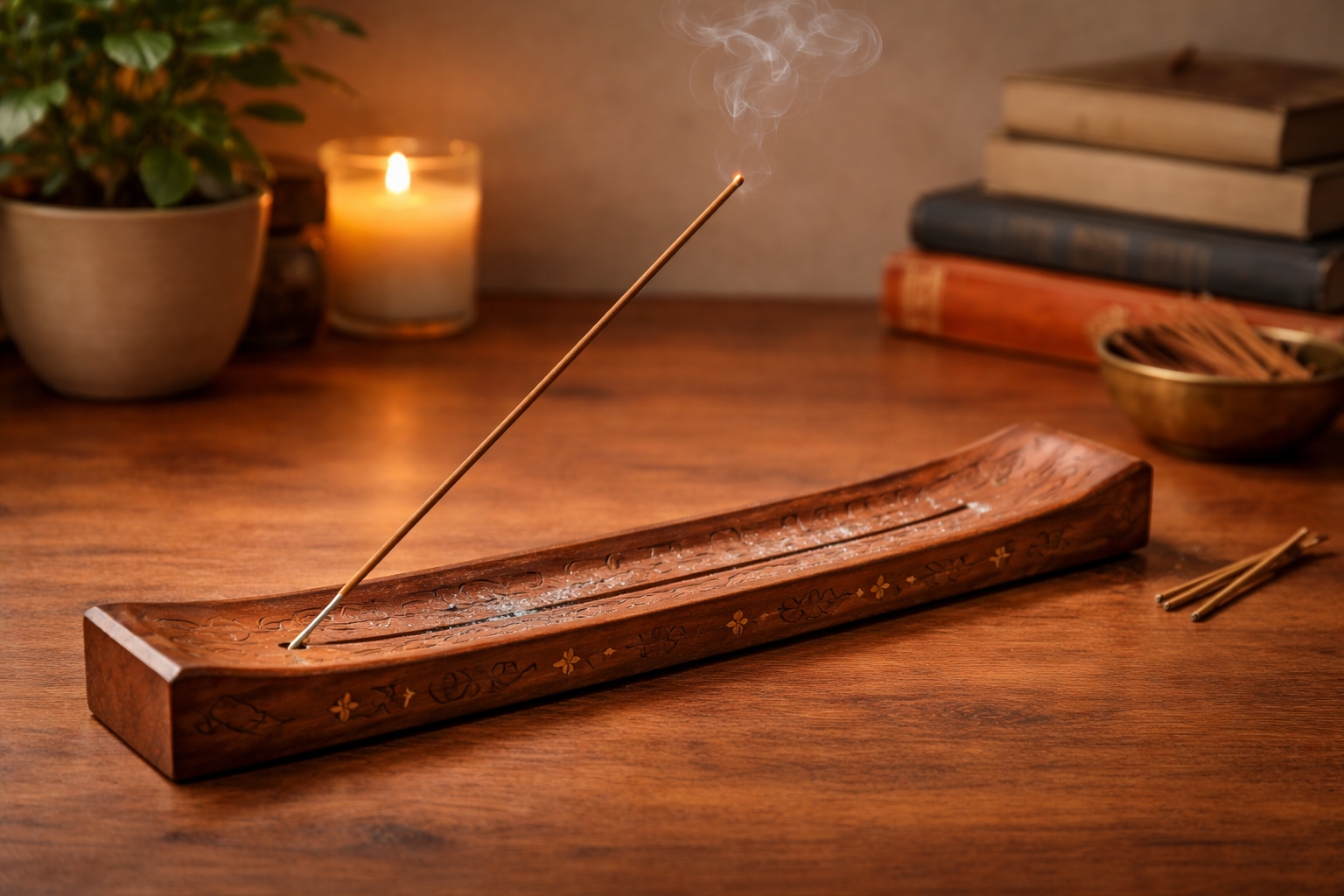
Folkulture Wooden Incense Burner
Editorial rating: 5/5 for standard stick incense
This is the one I would hand to most people who burn normal stick incense and just want the whole thing to work without fuss. The common version is a long mango-wood tray in the 12 x 4 inch range, which matters more than the carved surface or the painted finish. That extra length gives ash room to fall where it should. It is the little detail that separates a proper ash catcher from a decorative incense stand that looks tidy in the listing photo and then sprinkles the shelf the moment a stick burns off-center.
On the five-point scorecard, Folkulture does the basic job very well. Format fit is strong for bamboo-core sticks. Ash control is the real win. Stability is decent because the tray is low and broad. Cleanup is easy because the ash sits in an open trough instead of hiding in channels. Heat safety is the one limit. This is still a wooden incense burner, so I would keep it in its lane. Use it for sticks. Skip it for resin. Skip it for charcoal. Skip direct cone use unless the specific model includes a proper heat-safe insert.
Best for: daily stick incense, low-mess use, bedside or desk placement, and readers who want a simple incense holder that does not ask for much maintenance.
Skip it if: you burn cones, dhoop, or resin often enough that you need a burner that can take more concentrated heat.
LamDawn Ceramic Incense Burner
Editorial rating: 5/5 for mixed incense formats
LamDawn is the pick for the person who does not want separate gear for every kind of burn. Its ceramic censer-style body, metal lid, and calabash holder are built around range rather than minimalism. That range is the whole appeal. It can take stick incense, cone incense, coil incense, and small amounts of resin or frankincense without forcing you into a totally different setup every time. You trade some simplicity for that flexibility, but if your shelf already holds a mix of incense types, that is a fair trade.
On the scorecard, LamDawn scores well on heat safety because ceramic handles direct heat better than a wooden tray. Format fit is also strong. It is one of the few burners in this guide that makes sense for more than one ritual. Stability is fine because the body sits low and wide. Cleanup is where the compromise shows up. A bowl-style censer collects residue more neatly, but it also needs more regular emptying and a bit more patience when you use resins or anything sticky. That is not a flaw. It is just the cost of a multi-format burner.
Best for: readers who burn sticks some days, cones on others, and want the option to use resin without buying a second burner.
Skip it if: you only use standard stick incense and want the easiest possible ash catcher. In that case, a long tray is still the cleaner, less fussy pick.
SPACEKEEPER Waterfall Incense Burner
Editorial rating: 5/5 for backflow incense fans
If the smoke effect is the reason you are shopping, this is the kind of burner you want. SPACEKEEPER’s waterfall design is made for backflow cones, and it leans into that job with the right channels and the right visual payoff. The product line is commonly sold with a bundle of backflow cones and stick incense, which makes it friendly for first-time backflow users who do not want to piece the kit together themselves. When it is set up right, you get the slow smoke cascade people actually picture when they search for a waterfall incense burner.
Here is the honest part: this is not my pick for plain everyday fragrance. On the scorecard, format fit is excellent for backflow cones and merely okay for everything else. Ash control is not the issue. Residue is. Backflow smoke leaves oily traces in the channels, so cleanup matters more here than it does with a simple tray. Heat safety is good because the body is ceramic. Stability is usually fine. The main tradeoff is purpose. This is a niche tool, and that is not a criticism. It is the whole point. Buy it for the visual effect, meditative smoke flow, and decorative ritual feel. Do not buy it thinking it replaces a better stick incense holder for daily use.
Best for: backflow cones, visual ritual, gifts, and readers who care as much about smoke movement as scent.
Skip it if: you mostly burn regular sticks and want a no-mess burner that can live on a shelf for months without extra cleaning.
Pick the Right Material and Shape for Your Space
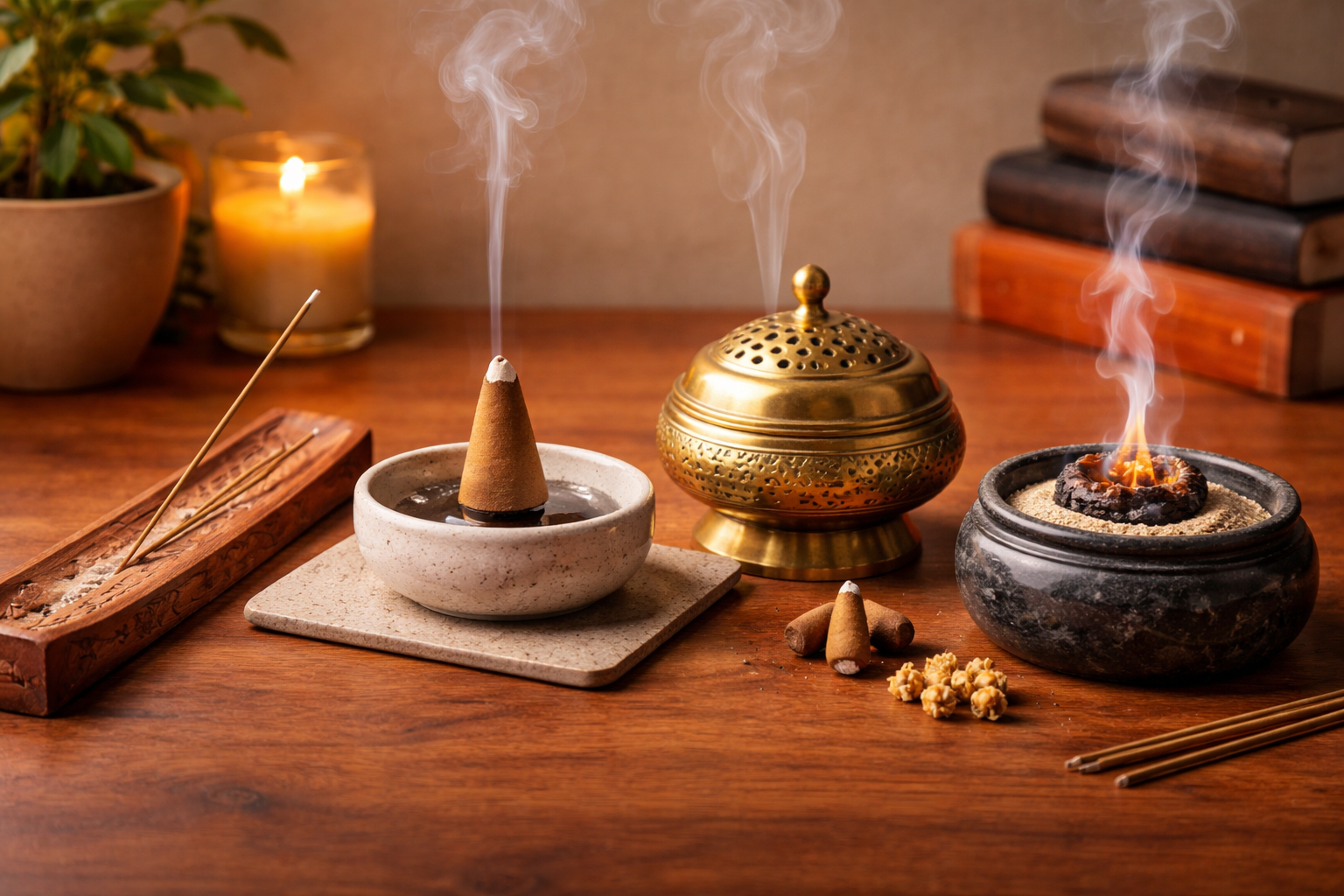
Material is not just a style choice. It changes how much heat a burner can handle and how forgiving it feels over time.
Ceramic
Ceramic incense burners are the safest middle ground for most homes. They suit cones, many stick setups, coil incense, and light resin use. They clean up well and do not look beat-up after a few weeks. If you are buying one burner and want room to experiment, ceramic is the easiest bet.
Wood
Wood looks warm and works beautifully for stick incense when the ember stays high and the ash falls into a tray. That is where wooden incense holders earn their place. I just would not ask them to do jobs they are not built for. Cones and charcoal push more direct heat into one spot. That is a different game.
Brass, metal, and stone
Brass holders, metal censers, and stone incense burners handle concentrated heat better. They feel heavier too, which helps stability. If your rituals lean toward resin, charcoal discs, or dhoop, these materials make more sense than a delicate tray.
Shape matters as much as material
A long trough or incense plate is built for ash control. A vertical stick stand saves space, but it only works well when the base catches the whole fall. A lidded censer keeps things contained and looks more formal on an altar or meditation shelf. A waterfall incense burner is all about smoke movement. An ash-filled bowl is old-school and surprisingly flexible, especially for short Japanese incense or broken pieces you still want to use up.
Short version: material is your heat strategy. Shape is your mess strategy.
Avoid the Burner Choices That Create Mess, Waste, or Buyer’s Remorse
Most burner regrets are pretty predictable once you know what to look for.
Short trays that miss the ash
This one shows up all the time. The holder supports the stick fine, but the tray is too short or too narrow to catch the full ash line. On the product page, it looks neat. On the table, it behaves like a glitter cannon with better branding.
Tiny upright holders with almost no base
A compact incense stand can be good in a small room. A narrow one with a long stick angled high is asking for wobble. That gets worse if the surface is uneven or the burner gets bumped.
Wood placed under concentrated heat
A wooden incense holder is not a universal incense burner. People get into trouble when they treat it like one. Sticks are fine. Cones can be risky without a heat-safe insert. Charcoal and resin are a hard no.
Backflow bought as a default burner
This is the most common mismatch in the decorative end of the market. A backflow incense burner is worth buying when you want the waterfall effect. It is not the best burner for plain old stick incense, and pretending otherwise usually leads to a second purchase a month later.
Electric warmers treated as auto-safe
If you are shopping for an electric incense burner or a bakhoor-style warmer, check the labeling and recent safety notices before it goes anywhere near regular use. A UK government recall notice is a good reminder that “plug-in” does not mean “problem-free.”
Good rule: if the burner’s main selling point is how it looks and there is almost no mention of ash, heat, or cleanup, slow down.
Place and Burn It Safely So the Scent Works Better
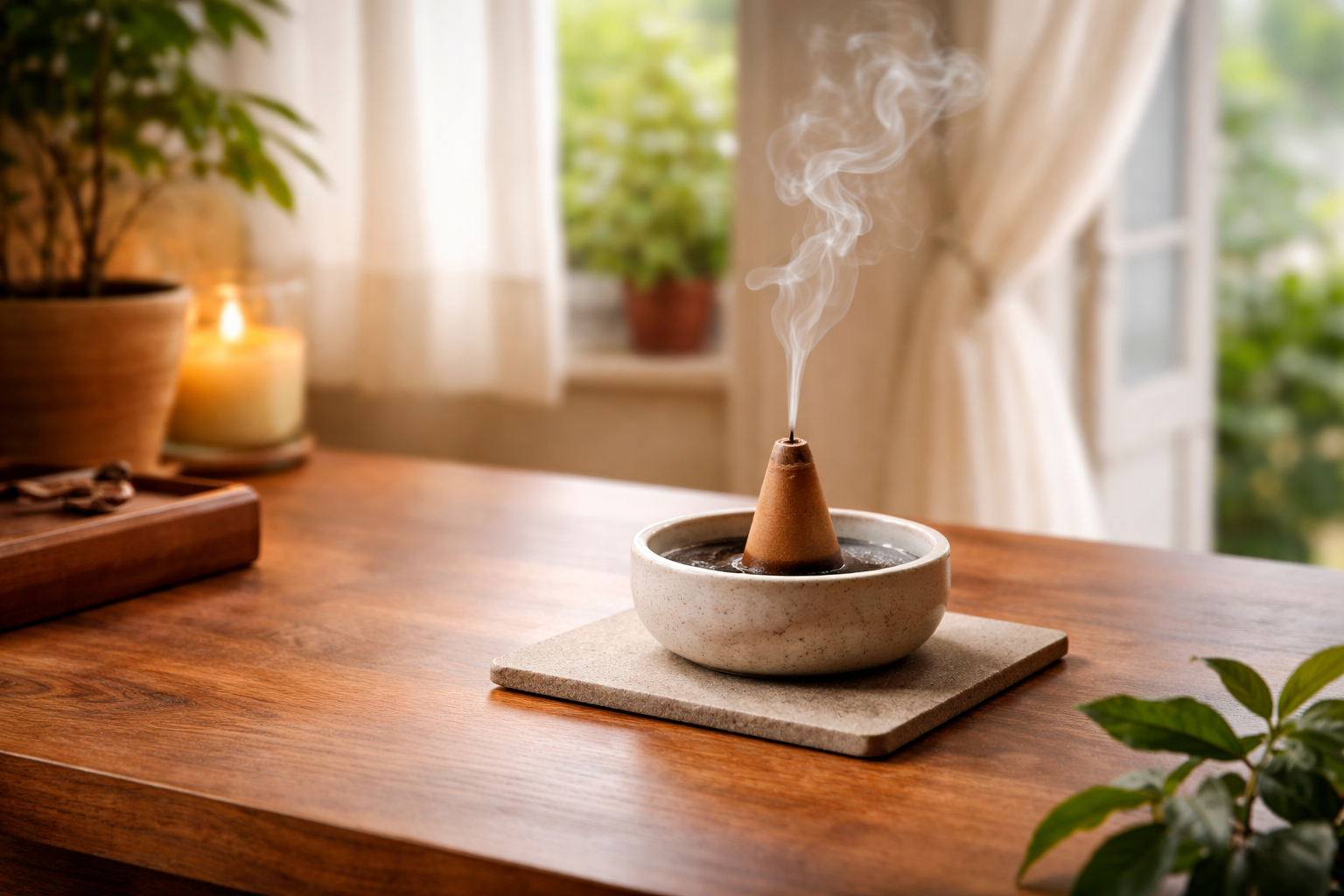
Incense safety is usually written in one of two bad tones: either a shrug or a lecture. Neither helps much. The useful middle ground is simple. Burn incense in a stable spot, keep air moving, and do not let heat build near anything that can catch.
A study indexed by PubMed looked at emissions from burning incense and found fine particles and gases among the output. The American Lung Association explains why fine particulate matter matters indoors, and the U.S. Environmental Protection Agency has also flagged candles and incense as indoor sources of particles. That does not mean you need to panic and toss the whole ritual. It means you should treat placement and ventilation as part of the burner choice.
Set the burner on a surface that can take heat
Ceramic tile, stone, thick metal, or a proper heat-safe plate are the easy wins. A soft wood dresser with no barrier under a hot burner is not. If the burner can scorch or leak heat downward, give it a base that can handle it.
Keep it clear of anything that can burn
The Seattle Fire Department recommends keeping candles and incense at least 12 inches from anything that can burn. Curtains, paper stacks, dried flowers, and hanging fabric are the usual culprits. This sounds obvious right up until a stick is burning under a floating shelf with a ribbon hanging off the side. Then it suddenly sounds pretty sensible.
Ventilate the room
A cracked window, a bit of airflow, or a portable air cleaner nearby makes a bigger difference than most people expect. You do not need a wind tunnel. You just want the room to clear rather than hold the smoke like a sealed jar.
Be extra picky in smoke-sensitive homes
If someone in the home has asthma, gets headaches from smoke, or just hates that lingering burnt note, use smaller sessions and burners that contain ash well. Stick burners with broad ash catchers are usually easier to live with than more theatrical setups. Backflow looks beautiful. It is not the best fit for every room.
Keep It Clean and Test It Like an Editor
A burner reveals itself after the pretty part. That moment comes when the ash is cold and you have to reset the thing for next time.
Clean trays and plates right after the ash cools
Wooden incense trays and simple incense plates are easy here. Tip the ash out, wipe the surface, and you are done. This is one big reason they stay in rotation.
Empty bowls and censers before residue cakes on
Ceramic bowls and brass censers can handle more, but they also collect more. Cone residue and resin drips are much easier to remove early than after a week of “I’ll get to it later.”
Clear backflow channels more often than you think
Backflow cones leave oily residue. That is normal. What matters is whether the burner is easy to wipe down. If it has deep channels and decorative nooks, be honest with yourself about how often you are going to clean them. That is where the romance can wear a bit thin.
Use a simple three-burn test before you commit
Burn once and watch ash fall. Burn again and check whether the burner still sits steady and clean. Burn a third time and ask one blunt question: am I already annoyed by this thing? If the answer is yes, move on. A good incense holder should not become a weekly chore by session three.
Keep an eye on the small details
Does the stick angle send ash outside the tray? Does the lid trap soot where you cannot wipe it? Does the burner feel tippy when half-loaded? Those tiny details are the difference between a burner that lives on your shelf and one that disappears into a drawer.
The keep-or-skip checklist
- Did it catch the full ash line?
- Did it stay stable the whole session?
- Did cleanup take less than a minute?
- Did it show any scorching, wobble, or sticky buildup?
Frequently Asked Questions
Can one incense burner handle both sticks and cones well?
Sometimes, yes. A ceramic censer like LamDawn can cover both better than a wooden tray can. Still, the best single-purpose stick burner is often better at catching ash than a multi-format burner, and a dedicated cone burner handles direct heat more comfortably.
Are wooden incense burners safe for everyday use?
For standard stick incense, yes, when the ember stays above the surface and ash falls into the tray. They are not the right choice for charcoal, resin, or direct cone heat unless the model has a proper heat-safe insert.
What should sit under an incense burner?
A heat-safe surface is the safe call. Ceramic tile, stone, metal, or a thick heat-resistant plate works well. It is a small step and it can save a tabletop from scorch marks.