
You can spot the moment a crystal search starts to go sideways. A few tabs open, ten pretty pyramid stones on the screen, and every one of them claims calm, healing, protection, abundance, or “energy amplification.” The pile gets bigger, but the choice gets worse.
Here is the clean answer: the best pyramid crystals for healing are Clear Quartz for all-purpose use, Amethyst for calm and meditation, Rose Quartz for emotional healing, Black Tourmaline for grounding and boundaries, Obsidian for deeper clearing, Citrine for momentum and abundance, Fluorite for mental clarity, and Selenite for cleansing and altar work. For one safe first pick, go with Clear Quartz.
That answer still needs context, though. “Healing” is a huge bucket. A stone that helps when you feel scattered is not doing the same job as a stone that feels soft, heart-led, and comforting. I learned that the mildly annoying way, by buying a handful of beautiful pyramids, using two of them once, and then reaching for the same plain Clear Quartz piece on my desk for weeks because it fit more moods and asked less of me.
- Which pyramid crystal is the best default pick
- Which stone fits calm, love, clarity, protection, or abundance
- How Clear Quartz, Amethyst, Rose Quartz, and black stones differ
- How to use a crystal pyramid without turning it into a big production
- What to buy, what to skip, and which stones need gentler handling
At a glance: pick the crystal by the job
| When the goal is… | Best first pick | Why it works well |
|---|---|---|
| General healing or one flexible starter stone | Clear Quartz | Broad, easy to use, durable enough for daily handling |
| Calm, meditation, sleepy evening energy | Amethyst | Quieting tone, good for bedside or sitting practice |
| Emotional healing, self-kindness, tenderness | Rose Quartz | Softer feel, good for heart work and gentler rituals |
| Grounding, protection, stronger boundaries | Black Tourmaline | Steady and practical, especially near a desk or entryway |
| Clearing heavy moods or sharper shadow work | Obsidian | Feels stronger and less cuddly than Tourmaline |
| Focus, study, mental sorting | Fluorite | Good match for desks and work sessions |
Simple rule: one pyramid, one intention, one next action.
Note: Crystal healing sits in the spiritual and ritual lane, not the medical one. Use these stones as supports for reflection, meditation, and habit cues, not as a stand-in for medical or mental health care.
The best pyramid crystals for healing at a glance
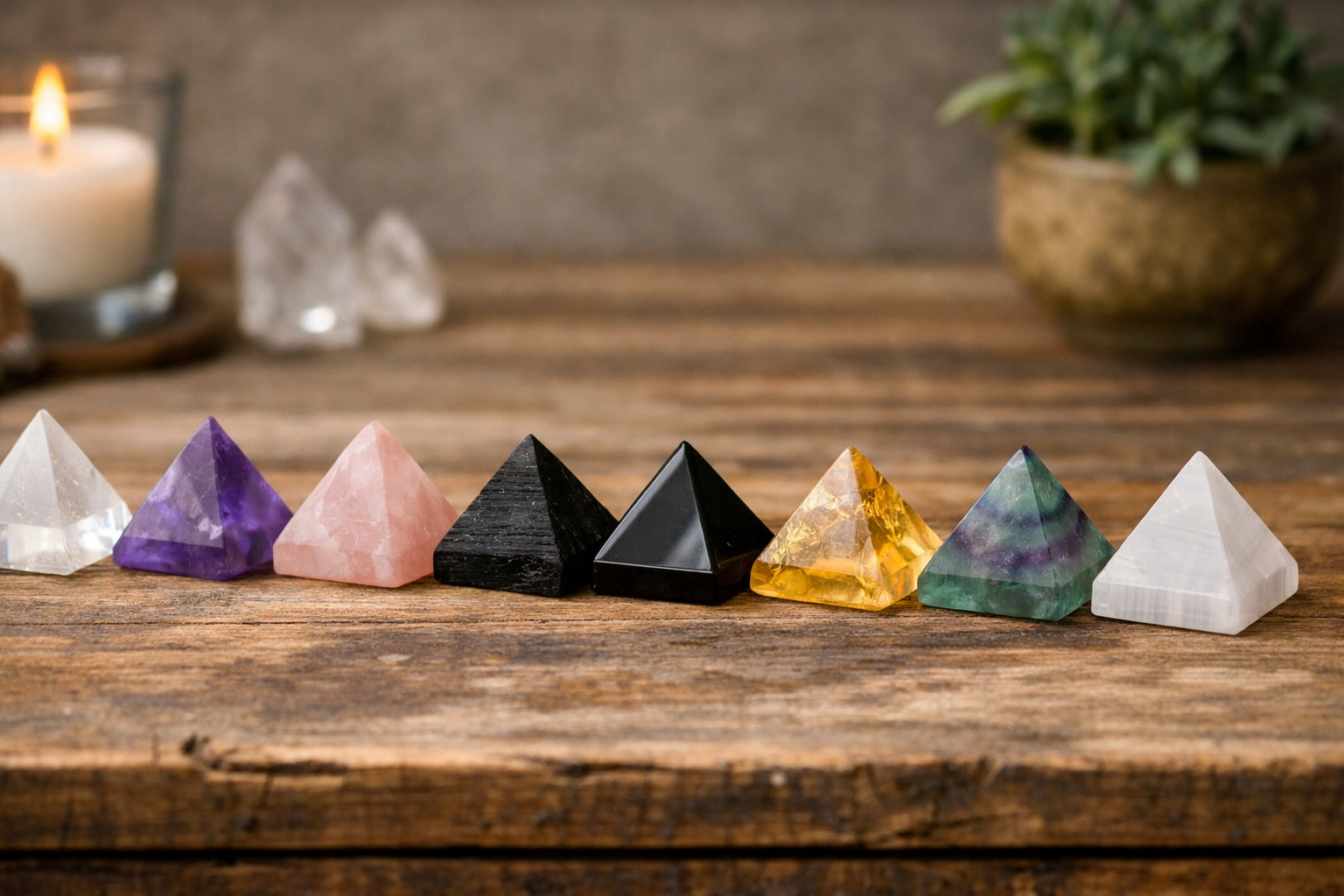
The pyramid shape has a simple appeal. Four sides rise to one point, and that shape makes people treat the stone like a focused signal instead of a loose pebble. In spiritual practice, that apex is often used as a visual cue for direction, attention, and intention. That does not make the shape scientifically proven as a healing machine. It does make it easier to work with, which matters more than many crystal lists admit.
For most people, these are the best pyramid crystals for healing:
- Clear Quartz: best overall and best beginner pick
- Amethyst: best for calm, meditation, and easing mental noise
- Rose Quartz: best for emotional healing, softness, and self-kindness
- Black Tourmaline: best for grounding and steady protection
- Obsidian: best for stronger clearing and heavier emotional work
- Citrine: best for momentum, confidence, and abundance work
- Fluorite: best for focus and sorting a busy mind
- Selenite: best for cleansing and altar support
That is the shortlist. You really do not need a twenty-stone pyramid collection to get this right.
When the goal is broad or you are buying a first crystal pyramid, Clear Quartz earns the default spot because it is flexible. It can sit on a desk, anchor a short meditation, work as the center of a crystal grid, or hold a written intention under the base without feeling mismatched. It is the plain white T-shirt of crystal pyramids. Not flashy, but weirdly useful.
Remember: broad is not always better. A more targeted stone often feels “stronger” only because it matches the job more cleanly.
Choose the right pyramid crystal by the job it needs to do
The most useful shift is this: stop asking which pyramid crystal is “best,” and start asking what it needs to do. Healing sounds tidy, but it usually hides five different needs.
Calm and decompression. Go with Amethyst first. This fits restless evenings, overthinking, meditation, or a bedside ritual that should feel quieter, not louder.
Emotional softness and heart work. Rose Quartz usually fits better. Think heartbreak, self-kindness, feeling emotionally scraped raw, or wanting something gentler than a heavy black stone.
Clarity and mental sorting. Fluorite is a smart pick. It suits study spaces, journaling, planning sessions, and that messy-brain feeling where everything is floating around at once.
Grounding and protection. Black Tourmaline is steadier. It is often the better first protective pyramid because it feels rooted, and it works well near a front door, work desk, or anywhere your nervous system feels a bit fried. For a deeper grounding route, a guide to grounding crystals for calm, protection, and focus goes further into the black-stone family.
Momentum and abundance. Citrine suits this lane. Not because it showers money from the ceiling, obviously, but because it carries a brighter, more active tone that many people like for confidence, goals, and moving stuck energy.
There is a practical rule buried in all of this. When you feel frazzled, buzzy, or over-open, start with grounding before amplification. When you feel flat, tender, or low on warmth, choose a softer stone before grabbing the toughest protector on the shelf.
Buying by color alone is like buying “good shoes” without saying whether the job is hiking, office work, or a wedding. The shoe might be lovely. It can still be wrong.
Fast decision rule
Ask three things:
- What is the goal?
- What is getting in the way?
- Where will the pyramid actually live?
The 7 best pyramid crystals for healing, ranked by intention
1. Clear Quartz pyramid
Best for all-purpose healing, flexibility, and first-time buyers. Clear Quartz is the crystal I keep coming back to when a specific stone feels too narrow. It works for meditation, intention-setting, desk placement, and crystal grids without asking you to lock into one mood. It is also a safer buy from a durability angle, which matters more than people think once a pyramid starts living on a tray, desk, or nightstand instead of a velvet photo prop.
Skip it when you already know the goal is very specific and you want a stronger emotional tone. A broad stone can feel too neutral when what you need is comfort or grounding.
2. Amethyst pyramid
Best for calm, meditation, mental quiet, and sleep-adjacent rituals. Amethyst is one of the easiest pyramid stones to place by a bed, in a reading nook, or on a meditation shelf because the vibe is simple and familiar. It tends to suit people who are not lacking “healing” so much as lacking quiet. For sleep-specific picking, the guide to crystals for sleep ranked by what keeps you awake gets much more specific.
Skip it when the issue is weak boundaries or feeling emotionally flooded by other people. Calm is not the same as protection.
3. Rose Quartz pyramid
Best for emotional healing, self-kindness, grief-adjacent tenderness, and relationship rituals that need warmth more than force. Rose Quartz is softer, but softer is not the same as weaker. It is the stone I would choose when the room needs compassion more than cleansing. A broader guide to healing crystals for stress, sleep, love, and protection pairs Rose Quartz with the other stones it tends to work beside.
Skip it when you need harder edges. Rose Quartz is not built for boundary work.
4. Black Tourmaline pyramid
Best for grounding, protection, and “please stop absorbing every room” energy. Tourmaline tends to feel steadier than dramatic. I like it near doorways, work desks, and shared spaces where the job is simple: cut noise, calm the field a bit, and help you stay in your own lane.
Skip it when the goal is heart-opening or comfort. It can feel too stern for that.
5. Obsidian pyramid
Best for deeper clearing, sharper self-honesty, and shadow-work style rituals. Obsidian can feel more intense than Tourmaline, and that is both the draw and the catch. Some people love that directness. Others buy it because it sounds powerful, then stop using it because it feels heavy at the exact moment they needed something gentler.
Skip it when you are brand new and already feel emotionally overloaded. A protection guide like protective crystals for home, sleep, and boundaries helps sort the black-stone choices better than a generic list does.
6. Citrine pyramid
Best for momentum, confidence, and abundance work. Citrine is often where pyramid crystal advice drifts into pure sales talk, so keep the claim modest: it is not a money magnet, but it can be a bright ritual anchor for goals, work energy, and forward motion. A focused guide to the best crystal for manifestation digs into that lane in a much cleaner way.
Skip it when you need grounding first. A bright stone can feel a bit too caffeinated for someone who already feels spun up.
7. Fluorite pyramid
Best for clarity, studying, planning, and getting your thoughts back in a row. Fluorite works well on a desk, by a notebook, or near a workspace where the ritual is tied to focus. It is one of the better choices when “healing” really means “my mind feels like a browser with thirty tabs open.”
Skip it when you need rough daily handling. Fluorite looks polished and sturdy, but it is softer and more brittle than quartz.
Where Selenite fits
Selenite deserves a mention even though I would not rank it as the best all-round healing pyramid. It shines in cleansing rituals, altar work, and pairing with other stones. It is less of a “do everything” pick and more of a support piece.
Clear Quartz, Amethyst, Rose Quartz, and protective stones compared
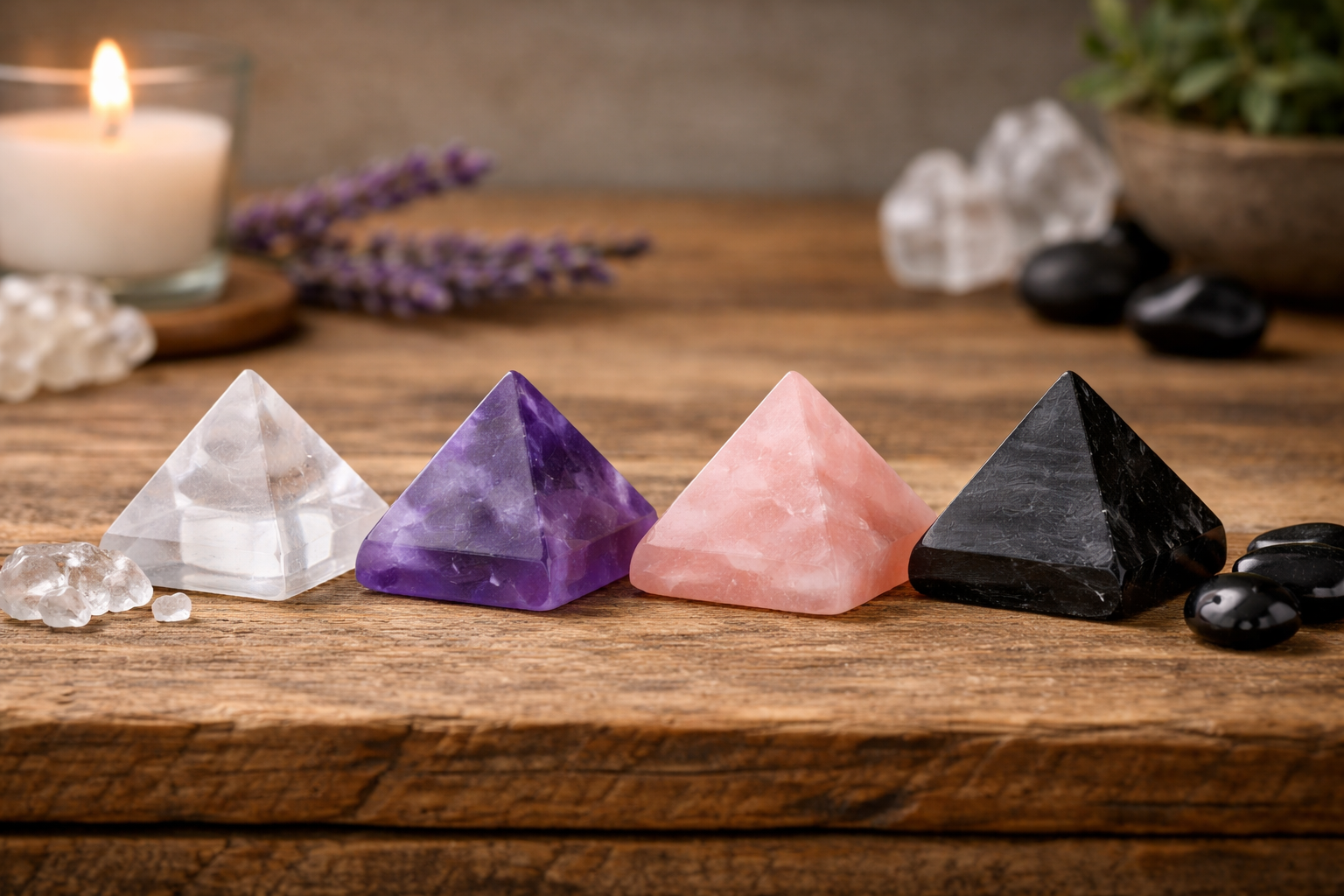
Most people do not get stuck between seven stones. They get stuck between four: Clear Quartz, Amethyst, Rose Quartz, and some black protective option.
| Stone | Best for | Emotional tone | Watch-out |
|---|---|---|---|
| Clear Quartz | Flexible, all-purpose use | Neutral to bright | Can feel too general |
| Amethyst | Calm, meditation, mental quiet | Cool and soothing | Not a boundary stone |
| Rose Quartz | Heart work, tenderness, emotional healing | Warm and soft | Too soft for stronger protection jobs |
| Black Tourmaline | Grounding and steady protection | Firm and rooted | Can feel serious when comfort was the need |
| Obsidian | Stronger clearing and shadow work | Deep and intense | Too much for some beginners |
Choose Clear Quartz when you want one pyramid that can move between roles. It is broad on purpose.
Choose Amethyst when the real issue is static. Racing thoughts, evening restlessness, overfull mental shelves, that kind of thing.
Choose Rose Quartz when you need softness, not force. This one is for emotional warmth, not psychic armor.
Choose Black Tourmaline when the room, your day, or your nervous system feels too open. It is usually the easiest black-stone recommendation to live with.
Choose Obsidian when you know you can handle a sharper mirror. I would not hand it to every beginner, and that is a useful distinction, not a knock on the stone.
One-line rule: broad = Clear Quartz, calm = Amethyst, heart = Rose Quartz, boundary = Black Tourmaline.
Use a pyramid crystal in a way that actually supports the goal
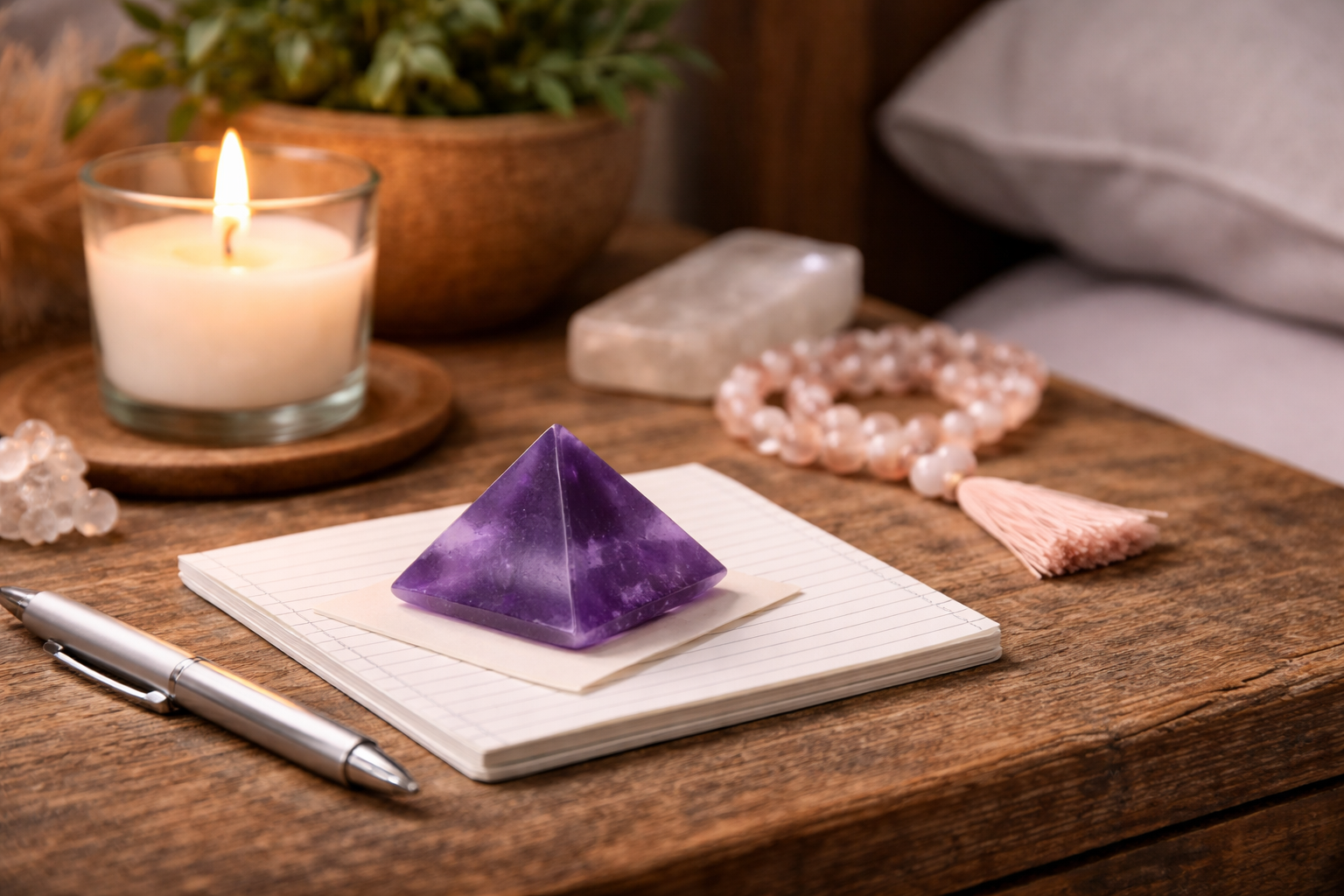
A crystal pyramid becomes more useful when it is tied to a repeatable act. Without that, it turns into decor with a backstory.
The easiest way to use one is this:
Step 1. Name one outcome. Keep it small. Better sleep. Clearer thinking before work. Softer self-talk. Stronger boundaries in one room.
Step 2. Place the pyramid where the habit happens. Bedside for calm, desk for focus, altar for ritual, entryway for grounding, grid center for intention work.
Step 3. Pair it with one action. Three slow breaths. A journal line. Five minutes of sitting. One sentence written on paper under the base.
This pairing matters because the practice, not the object alone, is usually what changes your day. The National Center for Complementary and Integrative Health notes that mindfulness-based practices may help with anxiety and depression and may reduce insomnia, so a crystal pyramid makes more sense as a visual and tactile anchor for a calming routine than as a stand-alone fix.
Placement is not mystical rocket science either. Put the pyramid where it can do its job.
- Bedside: Amethyst, Rose Quartz, or Selenite
- Desk: Clear Quartz, Fluorite, or Black Tourmaline
- Entryway: Black Tourmaline or Obsidian
- Altar: Selenite, Clear Quartz, Amethyst
- Crystal grid center: Clear Quartz is the easiest anchor
I have found that visible beats elaborate. A simple pyramid next to the thing you already do gets used. A beautiful one packed away for “special ritual time” often does not.
A simple 3-minute routine
Hold or face the pyramid, breathe slowly for one minute, say the intention once, then take one small action that matches it. That tiny action is the part most people skip, and it is the part that keeps the ritual from feeling fuzzy.
Buy a pyramid crystal that fits your practice, not just your shelf
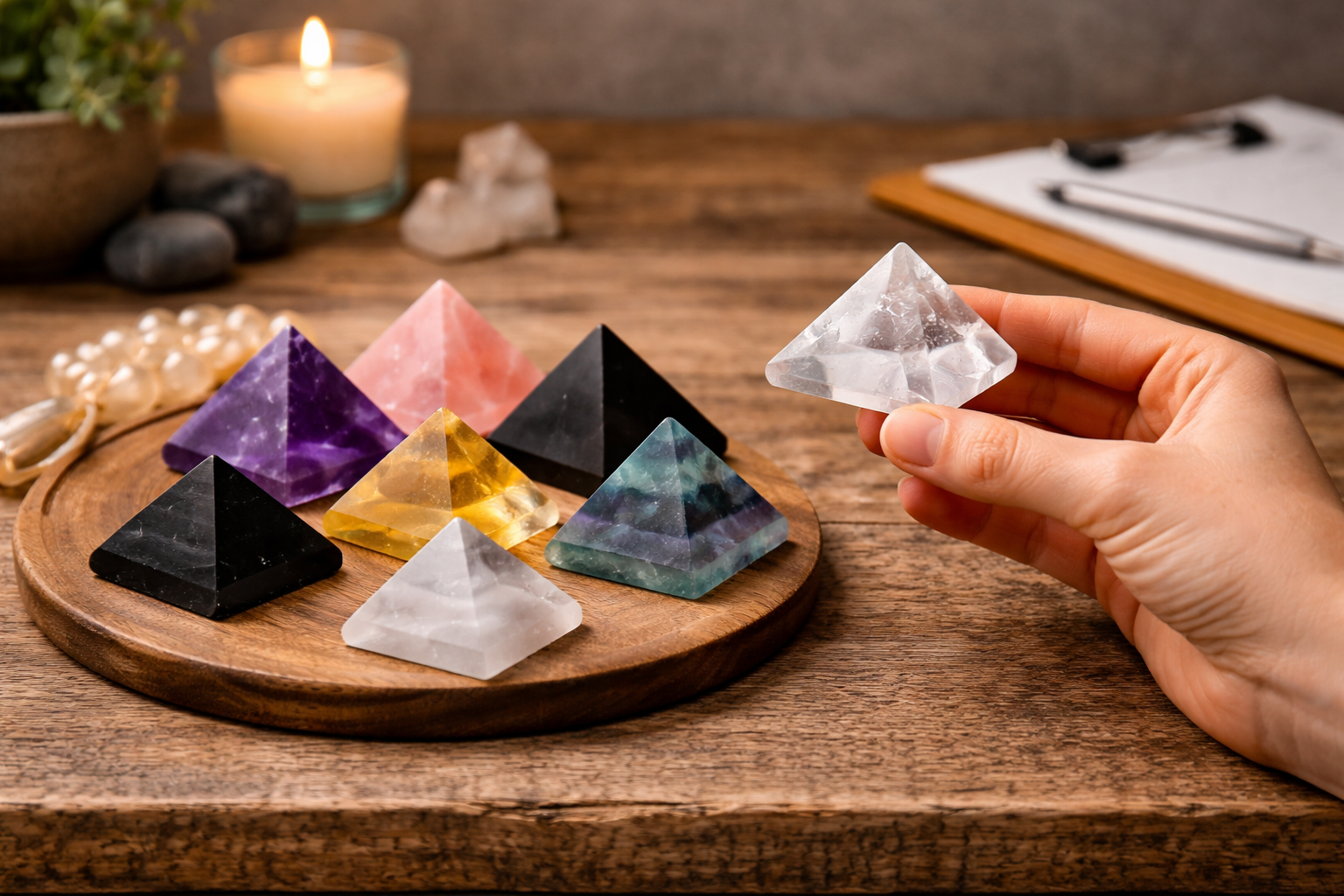
This is where people lose the plot. They buy the prettiest pyramid, or the biggest one, or the one with the most dramatic product photos, and then wonder why it never becomes part of their day.
Start with these buying checks:
- Job fit: match the stone to the goal first
- Stable base: the pyramid should sit flat without wobbling
- Material clarity: the seller should state the stone, not hide behind vague spiritual language
- Usable size: small to medium usually works better for desks, nightstands, and grids
- Finish: natural-looking polish is usually better than flashy coatings or mystery shine
Natural crystal pyramids and orgonite pyramids are not the same thing. A natural pyramid is carved or polished from stone. An orgonite pyramid is usually a resin composite with metal shavings and crystal pieces inside. That does not make orgonite bad. It does mean you should not compare it head-to-head with a natural Rose Quartz or Clear Quartz pyramid as if they are the same category. They are not.
Quartz-family stones have a real edge for beginners because they are easier to live with. The Gemological Institute of America explains that quartz is rated 7 on the Mohs hardness scale, so Clear Quartz, Rose Quartz, and Amethyst usually handle normal desk life and light movement better than softer stones do.
That is why my default buying advice is a little unglamorous. Get a natural Clear Quartz or Amethyst pyramid with a flat base, clean polish, disclosed dimensions, and no weird aura coating. It will probably outlast the more delicate option you were half-buying for the photo.
Watch for this: dyed colors, mystery coatings, no listed stone type, or a listing that mixes “orgonite,” “healing crystal,” and “EMF” into one big soup. That kind of copy gets slippery fast.
Common mistakes that lead to vague results or bad picks
Buying by popularity. Just because Clear Quartz shows up everywhere does not mean it is the right first stone for a tender, heart-heavy season. Sometimes Rose Quartz is the cleaner answer. Sometimes Black Tourmaline is.
Using too many pyramids at once. Five stones on one tray can look lovely, but they often blur the ritual. Start with one main pyramid. Learn what it feels like to use it for a week. Then add only when a second job shows up.
Picking an intense stone when you needed a gentler one. This happens a lot with Obsidian. People buy the “strongest” protective crystal, then quietly stop touching it. Strength is only useful when it fits your state.
Putting the pyramid somewhere pretty but useless. A crystal hidden in a cabinet cannot cue a habit. Put it where the routine already happens.
Confusing symbolic support with guaranteed results. A crystal can help frame a ritual, mood, or intention. It cannot do your journaling, hold a boundary conversation, or replace actual care. Blunt, yes, but it saves a lot of disappointment.
Ignoring the care needs of softer stones. Selenite and Fluorite are where this bites people. Both can look polished and sturdy right up until they chip, scratch, or lose their clean edges faster than expected.
A better first setup
One pyramid, one spot, one simple use. That setup sounds almost too plain, but plain tends to stick.
Care, safety, and evidence limits every healing crystal article should state
Here is the part many crystal roundups blur or skip.
On the evidence side, a 2025 placebo-focused study indexed on PubMed found that healing crystals did not show anxiolytic effects beyond placebo. That does not mean the ritual around a crystal is worthless. It means the article should stay honest: pyramid crystals can support reflection, meditation, mood-setting, and habit cues, but they should not be sold as clinically proven treatment.
On the care side, stone hardness matters. GIA’s durability guidance puts quartz at 7, which is one reason Clear Quartz, Amethyst, and Rose Quartz are such forgiving first buys. Selenite is the opposite kind of stone. Geology.com lists gypsum, the mineral family that includes selenite, at Mohs hardness 2, so a Selenite pyramid is better on an altar or shelf than loose in a bag or sliding around a cluttered desk.
Fluorite sits in the middle, and it fools people because it looks crisp and glossy. Mindat lists fluorite at Mohs hardness 4 and notes its brittleness and perfect cleavage, which is a tidy mineral way of saying: do not treat a Fluorite pyramid like a Quartz one.
A few safety notes are worth saying out loud:
- Do not use crystal practice as a replacement for medical or mental health care.
- Place heavier pyramids on stable surfaces, especially near beds or shelves.
- Handle Selenite and Fluorite more gently than Quartz-family stones.
- Be skeptical of sweeping EMF claims attached to resin pyramids unless there is something stronger than testimonials behind them.
A good healing crystal article should make room for both things at once: spiritual meaning and factual limits. That is not cold. It is cleaner.
FAQ
Are pyramid crystals better than tumbled stones for healing?
Not better across the board, just different. Pyramid crystals are easier to place on a desk, altar, or grid center, and the shape gives many people a stronger sense of direction and focus. Tumbled stones are easier to carry and hold. For a stationary ritual, the pyramid usually feels more intentional.
Are orgonite pyramids the same as natural crystal pyramids?
No. A natural crystal pyramid is made from one stone, carved and polished into shape. An orgonite pyramid is usually resin mixed with metal shavings and crystal pieces. They should be treated as separate categories when choosing one.
Which pyramid crystal is best for beginners?
Clear Quartz is the easiest first pick for most beginners because it is flexible, easy to place in different routines, and tougher than softer stones like Selenite or Fluorite. Amethyst is the better first pick when the main goal is calm and meditation.