
Most beginners make the same mistake when they learn how to use crystals for healing: they buy a mixed bag, line the stones up on a shelf, wait for something dramatic to happen, and then feel a bit daft when nothing does.
The cleaner answer is simpler. Pick one crystal for one job, cleanse it, give it a clear intention, and use it in one repeatable way. Carry it, wear it, meditate with it, or place it where the stress shows up. That is enough to start.
The fuzzy part is “healing.” A stone for sleep is not always the right one for grief. A crystal for comfort is not the same as one for grounding. Once you sort the job first, the rest gets easier fast.
Here’s what this guide will help with:
- Choosing a first crystal without overbuying
- Matching the crystal to calm, grounding, comfort, protection, or clarity
- Using crystals in a way that fits daily life
- Cleansing and storing them without wrecking softer stones
- Knowing when a ritual is helpful and when it is not enough
At a glance: the fastest way to start
| If the main goal is… | Start with… | Easiest first use |
|---|---|---|
| Calm and bedtime tension | Amethyst | Nightstand or 5-minute wind-down hold |
| Tenderness and self-love | Rose quartz | Pocket carry or journaling companion |
| Grounding and boundaries | Black tourmaline | Desk, bag, or front door placement |
| Softer grounding | Smoky quartz | Carry during busy days |
| General clarity or flexible use | Clear quartz | Hold during intention-setting |
| Cleansing support and altar use | Selenite | Keep in one safe place, not a rough pocket |
Quick rule: one crystal, one intention, one easy method. That tiny bit of restraint saves a lot of confusion.
What Crystal Healing Can and Cannot Do
The National Center for Complementary and Integrative Health notes that some mindfulness-based practices may help reduce anxiety symptoms, though more research is still needed. That is a useful frame for crystal work. The stone itself is not proven medical treatment, but a steady ritual around it can give your mind something to hold onto.
That is why crystal healing often feels best when you treat it as a support tool. It can help you slow down, focus your attention, anchor a breath practice, or mark the shift from a tense day into a calmer evening. It can also become a private symbol for a feeling you want more of: steadiness, softness, courage, rest.
What it cannot do is replace proper care for ongoing anxiety, pain, depression, trauma, or physical symptoms. If a crystal becomes a quiet prompt to breathe, journal, or sleep more gently, great. If it starts carrying the whole load, the practice gets wobbly.
In plain English, crystal healing works best as a ritualized reminder. It is less “magic rock fixes life” and more “this object helps me return to the state I want to build.”
Note: If a guide makes crystals sound like medicine with better branding, step back. The grounded version is stronger and a lot more honest.
Choose a Crystal That Matches the Feeling, Not the Trend
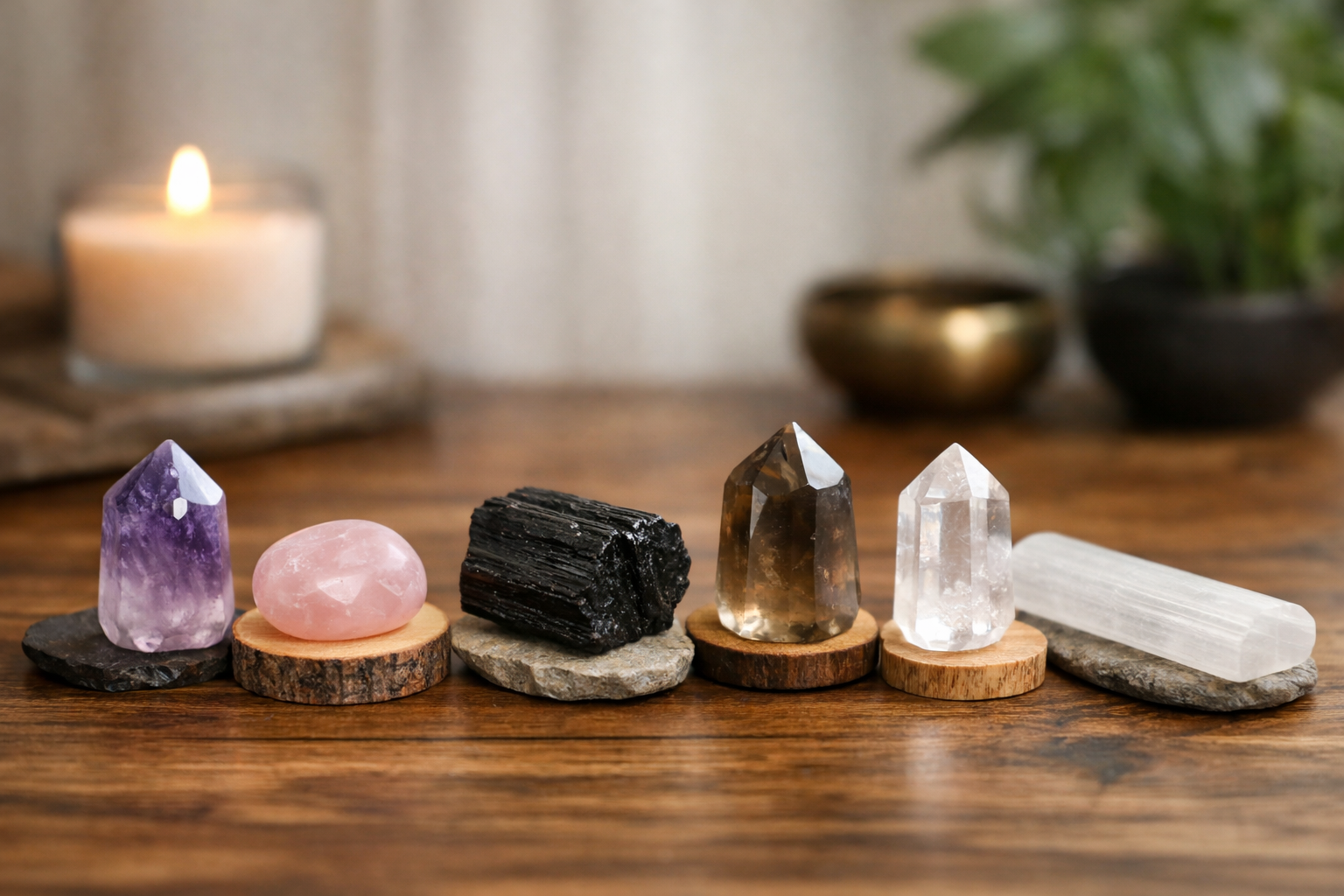
If the goal is fuzzy, the crystal choice gets fuzzy too. “Healing” is too broad to be useful on its own. A better starting question is: what feeling needs help right now?
Pick the job, then pick the stone
If your mind feels noisy and sleep feels thin, start with amethyst. If the day feels emotionally raw, rose quartz usually makes more sense. If the real problem is weak boundaries, crowded rooms, or a desk that feels tense, black tourmaline is the cleaner choice. If that feels a bit heavy, smoky quartz is softer and easier to live with. If the goal still feels broad, clear quartz is the least stressful all-rounder.
Selenite sits in a slightly different lane. I like it for altar work, bedside calm, and cleansing rituals, but not as a daily pocket stone. It is more like a white shirt than hiking boots. Lovely, useful, and not what you want for every task.
Use a small shortlist instead of a giant menu
The first time I tried to “cover all my bases” with crystals, I ended up using none of them. Too many choices turns a soothing ritual into admin. Start with one stone from this short list and stick with it for a week.
- Amethyst: calm, decompression, bedtime support
- Rose quartz: tenderness, self-love, emotional comfort
- Black tourmaline: protection, boundaries, grounding in busy places
- Smoky quartz: gentle grounding, steadiness, getting back in your body
- Clear quartz: flexible support when the intention is still forming
- Selenite: cleansing ritual, altar work, quiet room energy
For a broader starter shortlist, 7 Best Healing Crystals for Stress, Sleep, Love, and Protection lays the same stones out by real use case rather than by vague meaning.
Remember: the prettiest crystal in the bowl is not always the one that fits the job. Good taste and good fit are not the same thing.
Set an Intention That Gives Your Crystal One Clear Job
This is where many crystal guides go misty. “Program the crystal” sounds dramatic, but the practical version is simple: tell the stone what role it is playing in your routine.
Name the feeling you want more of
A vague intention like “heal me” is too big to feel. A sharper one gives the practice some traction. Try something like “help me soften before sleep,” “help me stay grounded in crowded places,” or “help me speak to myself with less bite.”
Say it out loud or write it down
Hold the crystal for a minute. Breathe in. Breathe out. Then say one sentence. That’s plenty. You can write it in a journal too if that feels less awkward. The point is not ceremony for ceremony’s sake. The point is clarity.
A useful formula is this: I am using this crystal to support ___ when ___. For clear quartz, that might be “I am using this crystal to support focus when my thoughts scatter.” For rose quartz, it could be “I am using this crystal to support gentleness when I start picking myself apart.”
Manifestation work fits here as well, but only when the goal is specific enough to hold. A tighter breakdown lives in Best Crystal for Manifestation: 7 Smart Picks by Goal, where intention gets tied to a clear outcome instead of floating off into wishful soup.
If you feel silly doing this, good news: that feeling fades. Most rituals feel odd for about three days. Then they either settle into your life or they don’t. No cosmic performance required.
Use Crystals in Ways That Fit Everyday Life
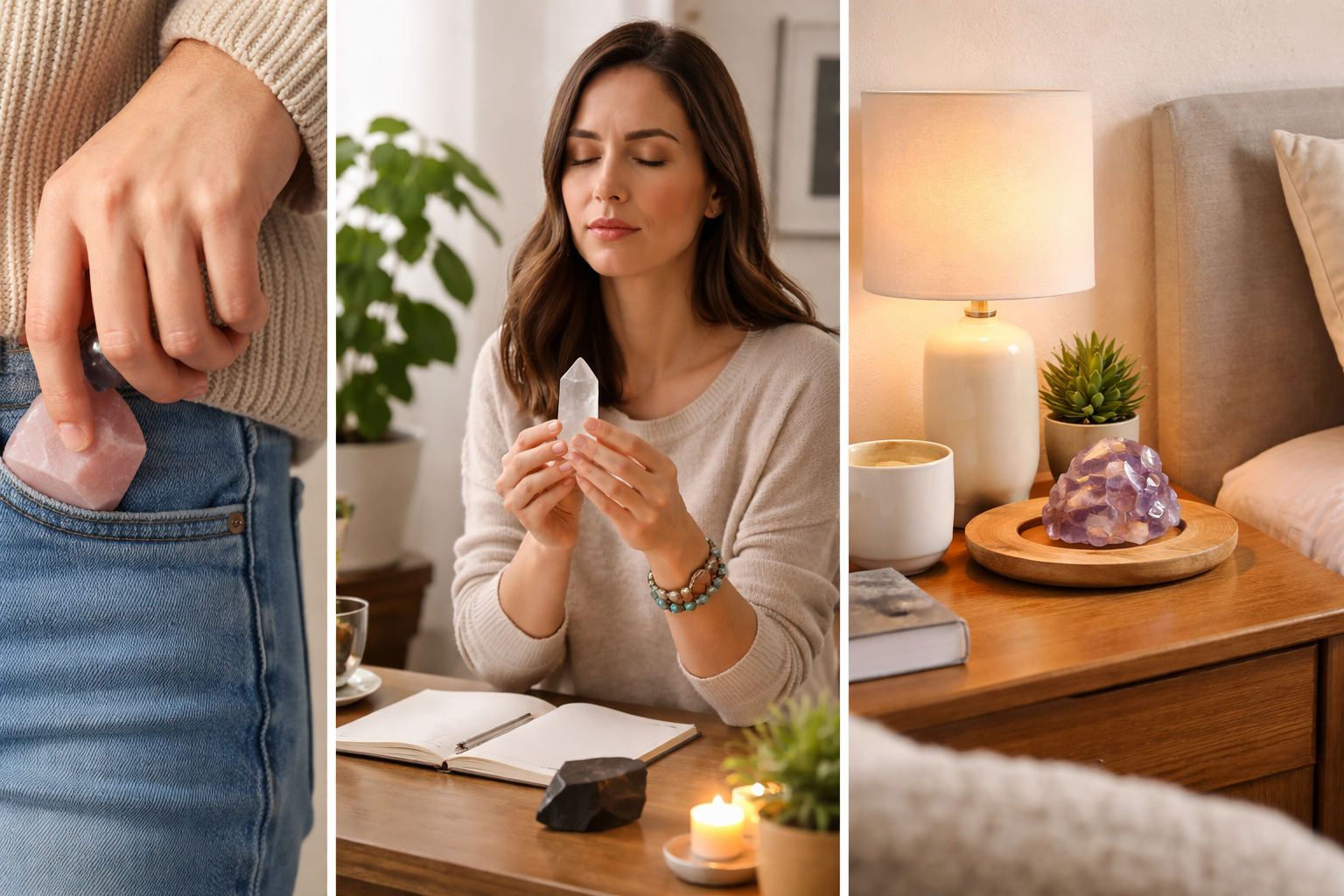
The best crystal method is the one you will repeat without creating extra friction. That rules out a lot of overly ornate advice.
Carry it and get a steady cue
A small tumbled stone or palm stone works well when stress hits in motion: commutes, meetings, crowded trains, family stuff, the general daily grind. Pocket carry is great for black tourmaline, smoky quartz, rose quartz, and clear quartz. You touch the stone, remember the intention, and get back on track.
Wear it and keep the reminder visible
Crystal jewelry is less about constant energy drama and more about visibility. A necklace or bracelet keeps the practice in sight. This method works well if the problem is not one big moment, but a pattern that keeps popping up throughout the day.
Hold it and create a pause
For meditation, breathwork, prayer, or journaling, holding a crystal helps narrow your attention. Clear quartz and amethyst are especially easy here. You do not need a long meditation. Five quiet minutes with one clear intention is enough to make the ritual feel real.
Place it and shape the room
Desk placement suits boundary stones like black tourmaline. Bedside placement suits softer stones like amethyst and rose quartz. An altar, shelf, or dedicated tray works well for selenite. Grid work can come later, but it is not the beginner move. Start with a single stone in a single place that has a single job.
Pro tip: If the day is chaotic, carry or wear the crystal. If the moment is reflective, hold it. If the room itself feels off, place it.
Place Crystals in Your Home, Workspace, and Sleep Space With Purpose
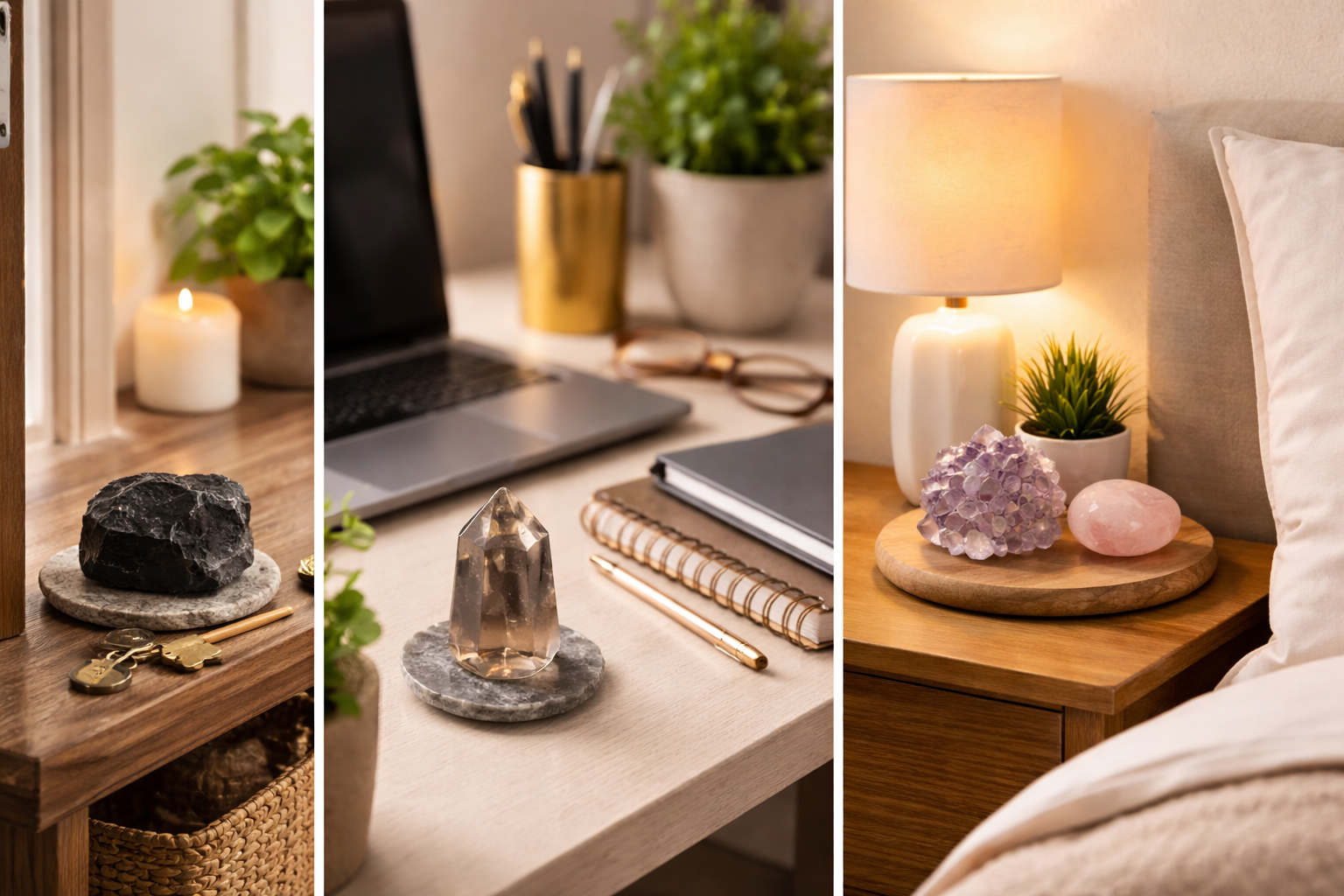
Placement works best when you stop thinking like a collector and start thinking like a problem-solver. Put the crystal where the friction happens.
Use the body, the bag, or the room
Those are the three zones that cover most real life. Body means jewelry or a pocket stone. Bag means something that travels with you and meets stress on the move. Room means a fixed placement near the source of the mood you want to shift.
Make the bedroom quiet, not buzzy
For sleep, softer stones win. Amethyst and rose quartz are usually safer first picks than anything that feels sharp, heavy, or overstimulating. A nightstand is usually better than under the pillow, especially if the crystal is chunky or if you are already a light sleeper.
If sleep is the main issue, a deeper stone-by-problem breakdown sits in Best Crystal for Sleeping? 7 Smart Picks by Sleep Problem.
Use entryways and desks for boundaries
Black tourmaline near a front door or desk is popular for a reason. It suits the kind of tension people actually complain about: draining visitors, busy workdays, or a room that never quite settles. When the job is protection rather than softness, Crystal for Psychic Protection: 7 Smart Picks by Situation sorts the stronger options by setting.
Keep it simple room by room
One stone per problem spot is enough. A desk stone, a bedside stone, maybe one at the front door. Once every shelf starts wearing crystals like costume jewelry, the placement stops meaning much.
Grounding stones deserve special mention here. Black tourmaline is the firm, boots-on choice. Smoky quartz is the quieter version. 7 Best Grounding Crystals for Calm, Protection, and Focus breaks down where each one fits best.
Cleanse, Charge, and Store Crystals Without Damaging Them
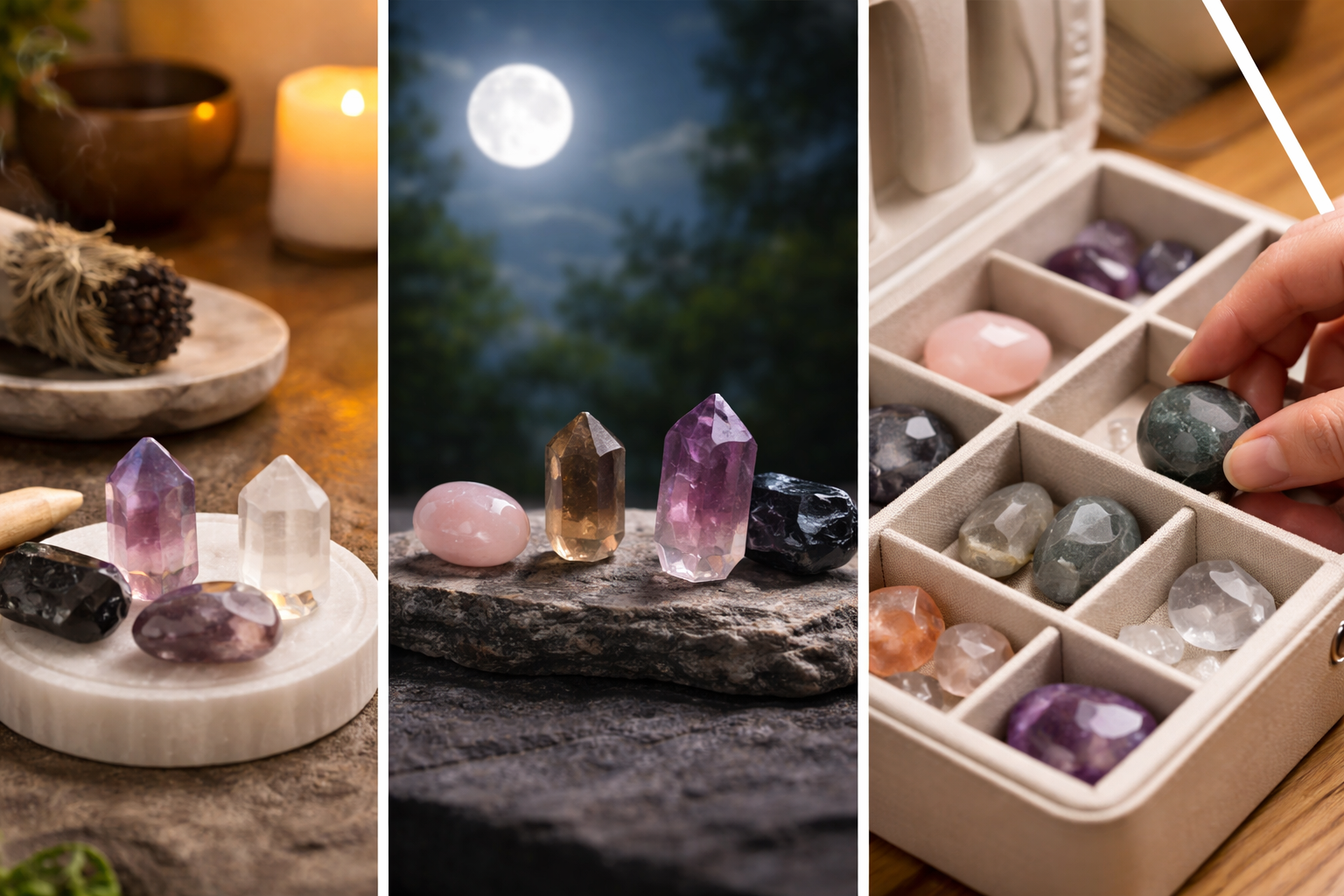
Cleansing gets talked about like it is one thing. It is really three: clearing the crystal after use, recharging the ritual around it, and storing the stone so it does not get scratched, chipped, or dulled.
Start with the safest cleansing methods
Moonlight, sound, a dry cloth, or resting a stone near selenite are easy beginner methods. They are low-fuss and they sidestep the damage that comes from treating water like a universal fix.
Smoke cleansing is fine for some homes, but not all. The U.S. Environmental Protection Agency notes that burning candles and incense can add particulate matter indoors, so sound, moonlight, or dry cleansing make more sense in smoke-sensitive spaces.
Do not treat water-safe as a casual guess
The Gemological Institute of America explains that Mohs hardness measures scratch resistance, not toughness. That matters because people often confuse “hard enough not to scratch easily” with “fine in water, fine in sunlight, fine in anything.” Those are different questions.
Selenite is the classic example. Geology.com lists gypsum, the mineral family that includes selenite, at Mohs hardness 2. That is very soft. It scratches easily, wears down easily, and is not the stone to rinse casually under the tap just because a random list said so.
Use event-based cleansing, not fake precision
Cleanse a crystal when it makes sense: after you buy it, after heavy emotional use, after lots of handling, after travel, or when the ritual around it starts to feel stale. A strict weekly schedule can work, but it is not holy law. The better cue is how the stone is being used.
Store crystals like objects, not abstractions
Palm stones and tumbled stones do fine in small pouches, trays, or divided boxes. Softer stones need a gentler spot. Keep selenite away from the rough tumble of keys and coins. Keep fragile points where they will not be knocked off a shelf by a cat, a sleeve, or your own clumsy elbow. Ask me how I know.
Remember: if you do not know whether a crystal handles water or sun well, skip both and use moonlight, sound, or a dry method.
Build a 7-Day Beginner Routine That You Will Actually Keep
A good first week should feel repeatable, not theatrical. Here is a version that works well because it asks almost nothing from you.
Day 1. Choose one crystal and clear the slate
Pick one stone based on the feeling you want help with. Cleanse it with a dry, low-risk method such as moonlight, sound, or a simple wipe-down.
Day 2. Give the stone one sentence
Hold it for a minute and set the intention. Write the sentence down if that helps. Keep it short enough to remember without checking your notes.
Days 3 to 5. Repeat the same method on purpose
Carry the stone in a pocket, wear it, or place it in one location. Do not switch methods every six hours. Repetition matters more than novelty here.
Day 6. Move the crystal if the context is wrong
If your black tourmaline at the bedside feels too stern, move it to the desk. If the rose quartz in your bag never gets touched, bring it to your journaling spot. Same stone, better context.
Day 7. Check what changed
Not “Did the crystal fix me?” More like: did it help me pause, breathe, speak to myself more kindly, or feel steadier in one recurring moment? That is the right scale to judge a beginner ritual.
Habit stacking helps. Tie the crystal to coffee, the commute, the first work block, evening journaling, or your bedtime lamp switch. A ritual that snaps onto a habit has a much better chance of surviving real life.