I still remember standing in front of a little bowl of tumbled stones at a shop, reading tiny labels that said “love,” “calm,” “protection,” and “clarity” as if that settled anything. It didn’t. Rose quartz sounded nice. Amethyst sounded sensible. Black tourmaline sounded useful. Clear quartz looked like the stone that got volunteered for every job.
So, what do different crystals mean? In plain English, different crystals usually stand for different kinds of support or symbolism, like calm, grounding, love, focus, confidence, or boundaries. Those meanings come from a mix of tradition, color symbolism, mineral identity, and how people use the stones in practice. They are not hard scientific facts, and they are not random either.
The part that trips people up is this: most crystal guides stop at the label. They tell you what a stone “means,” but not how to tell one soft, heart-opening stone from another, or when a protection stone is really a boundaries stone, not a sleep stone.
That’s where this gets useful.
- Which common crystal meanings matter most for beginners
- How to choose between stones that sound almost identical
- Why the same crystal can show up under three different meanings
- When color, chakra, and zodiac links help, and when they muddy the water
- How to use, cleanse, and store crystals without turning it into a whole production
At a glance: match the feeling to the stone
| If the main need feels like… | Start here | Why it fits |
|---|---|---|
| Racing thoughts or bedtime tension | Amethyst | Leans calm, reflective, and steady |
| Emotional rawness or self-kindness | Rose quartz | Feels softer and more tender than “protective” |
| Crowded rooms, weak boundaries, tense spaces | Black tourmaline | Best first lane for grounding and boundary support |
| One flexible stone for many jobs | Clear quartz | Broad, neutral, and easy to pair with intention |
| Confidence, momentum, follow-through | Citrine or tiger’s eye | Brighter, more active energy than calm stones |
Simple rule: start with the job, then the tone, then the form.
What Do Different Crystals Mean, Really?
Crystal meanings are shorthand. They give you a quick sense of what a stone is commonly associated with, not a legal contract about what it must do. When someone says amethyst means calm or rose quartz means love, they are pointing to a symbolic lane, not claiming the stone has one single fixed function.
That distinction matters because people use the phrase “crystal meanings” to mean three different things at once:
- Symbolic meaning, like rose quartz being linked with tenderness or emotional warmth
- Practical use meaning, like keeping black tourmaline by a front door because it feels grounding in a busy home
- Material identity, meaning what the stone actually is in mineral terms
That last part gets skipped all the time. The U.S. Geological Survey notes that quartz is one of the most common minerals in the Earth’s crust, and the Gemological Institute of America lists amethyst as a quartz mineral with Mohs hardness 7. Rose quartz sits in that same family too. GIA describes rose quartz as a quartz variety, which is handy because it reminds you that “meaning” and “material” are not the same thing.
So when people ask what do different crystals mean, the clean answer is this: they usually point to emotional themes, intentions, or ritual roles that people have built around the stone over time. The better answer is that a crystal meaning only becomes useful when you match it to a real need, not just a pretty label.
Note: “Love,” “protection,” and “clarity” are broad categories. They are useful, but broad. A good article should help you narrow them into something you can actually use.
A Simple Framework for Reading Crystal Meanings Without Memorizing 100 Stones
You do not need a giant crystal meaning chart in your head. You need a way to sort the words.
The easiest framework I know uses four filters: job, tone, context, and form. Once you start reading meanings through that lens, the fog lifts fast.
Pick the job
Ask what you actually want help with. Not what sounds spiritual. Not what looks pretty. What is the friction?
- Racing thoughts
- Weak boundaries
- Low mood or low momentum
- Self-criticism
- Lack of focus
- A room that feels jangly or off
“Protection” is a vague word. “I feel drained after every meeting” is a usable one.
Choose the tone
Two crystals can sit in the same broad category but feel different in tone. Rose quartz and black tourmaline can both be helpful when you feel exposed, but one feels soft and one feels firm. That’s a real difference.
- Soft tone: comfort, gentleness, emotional warmth
- Firm tone: boundaries, grounding, steadiness
- Bright tone: motivation, confidence, movement
- Clear tone: focus, reset, simplification
Match the context
A pocket stone does a different job from a bedside stone, and both are different again from a chunk you keep near the front door. If the job is “keep me from absorbing every mood in the office,” a delicate white altar stone is probably not the smartest first choice.
Pick the form
Tumbled stones are easy to carry. Palm stones work well when you need something to hold during a quiet moment. Rough pieces suit shelves, desks, and rooms. Jewelry helps when you want the reminder with you all day.
That is why the advice to “choose what calls to you” only gets you halfway there. Attraction is useful. It can point you toward a color, texture, or tone that feels right. But intention is what keeps you from buying six stones that all do almost the same job.
Once you know the meaning lane you need, the next step gets much easier. For a hands-on way to build an actual practice around one stone, how to use crystals for healing is a solid next read.
Pro tip: If you feel stuck between three stones, ignore the labels for a second and ask which one sounds most like the tone you need. That usually breaks the tie.
The 10 Crystal Meanings Most People Actually Need
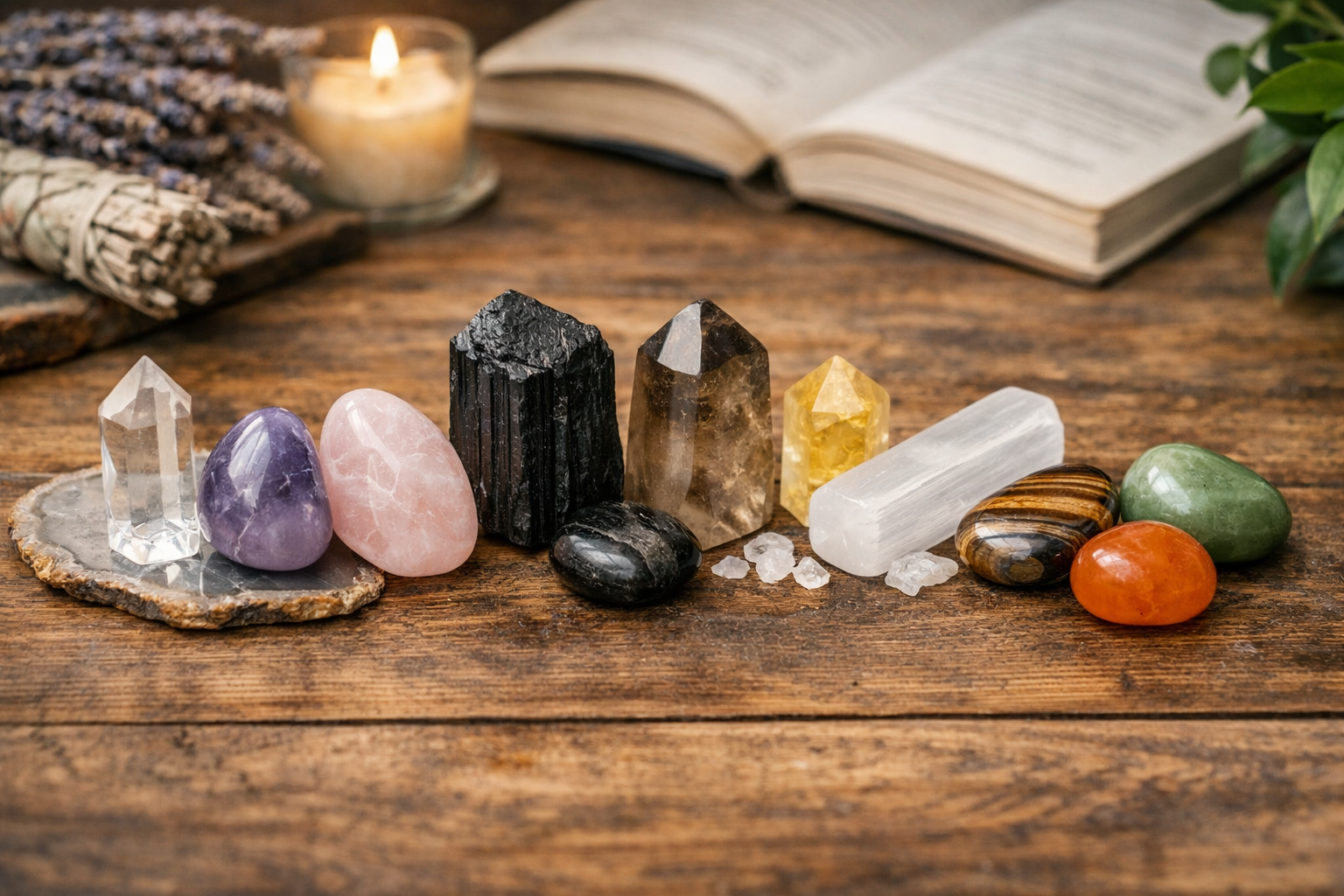
Most beginners do not need an A to Z crystal encyclopedia. They need the handful of stones that cover the jobs people search for over and over: calm, love, grounding, confidence, clarity, cleansing, and steadier focus.
| Crystal | Common meaning | Best for | Skip it if… |
|---|---|---|---|
| Clear quartz | Clarity, amplification, all-purpose support | You want one flexible stone | You prefer a more emotionally specific feel |
| Amethyst | Calm, reflection, decompression | Racing thoughts, sleep wind-down, meditation | You need energy or action, not softening |
| Rose quartz | Love, self-kindness, emotional warmth | Heartbreak, self-criticism, tenderness | You need firmer boundaries first |
| Black tourmaline | Protection, grounding, boundaries | Crowds, tense rooms, feeling drained | You want something softer for grief or comfort |
| Smoky quartz | Grounding, steadiness, release | A gentler alternative to black stones | You want an obvious “love” or “confidence” stone |
| Citrine | Confidence, optimism, forward motion | Momentum, visibility, brighter energy | You feel frazzled and need calming first |
| Selenite | Cleansing, quiet, clearing | Shelf, altar, room reset | You want a durable pocket stone |
| Tiger’s eye | Courage, focus, follow-through | Decision fatigue, confidence, work focus | You want a soft emotional stone |
| Green aventurine | Growth, fresh starts, hopeful movement | Resets, new chapters, lighter heart energy | You need strong grounding more than renewal |
| Carnelian | Drive, creativity, warmth | Action, making, speaking up, momentum | You are already overstimulated |
Clear quartz is the safest “one stone” answer because it does not box you in. When I test a new routine, clear quartz is often the control stone, not because it is better than everything else, but because it is broad and uncomplicated. If your intention is still fuzzy, this is a smart place to begin.
Amethyst earns its reputation. GIA describes it as the most valued quartz variety and lists it as purple quartz with Mohs hardness 7, which is useful because it is both familiar and fairly durable for normal home use. Symbolically, it usually sits in the calm, reflective lane, which is why it keeps turning up in sleep, stress, and meditation guides.
Rose quartz sounds sentimental in some guides, but the better reading is tenderness. GIA describes rose quartz as a pink quartz variety, and that simple material fact matters because it reminds you this is still quartz, just wearing a different mood. In practice, it is less about romance-only fluff and more about softness, comfort, and emotional repair.
Black tourmaline is usually the right answer when people say “protection” but mean “I need better boundaries.” It works well by a desk, entryway, or in a pocket when the day has that crowded, jangly feel. For a narrower protection path, best black crystal for protection goes deeper.
Smoky quartz does not get pushed as hard as black tourmaline, but it deserves more love. If black tourmaline feels a bit stern, smoky quartz often lands better. It still grounds, but it does not come in quite so hard.
Citrine is often filed under abundance, but that can flatten it. The more useful reading is movement. It suits confidence, brightness, and “I need to get going” energy. When the job is prosperity or forward motion, best crystals for abundance and prosperity is the cleaner next click.
Selenite tends to mean cleansing and clearing. That’s fair, but the important point is practical: it is better as a shelf, tray, or altar stone than a pocket workhorse. More on that in the care section.
Tiger’s eye leans toward courage and follow-through. It often fits people who do not need soothing as much as they need a nudge and a spine.
Green aventurine is one of those stones that sits between heart energy and fresh-start energy. Good when you want a lighter emotional reset, not just a hard reboot.
Carnelian is warmth and motion. Creativity, confidence, and getting your body and voice back online. Great when you feel flat. Wrong pick when you already feel buzzy.
If the main thing you want is not meaning in the abstract but a by-need shortlist, best healing crystals for stress, sleep, love, and protection narrows the field fast.
How to Choose the Right Crystal When Several Stones Sound Similar
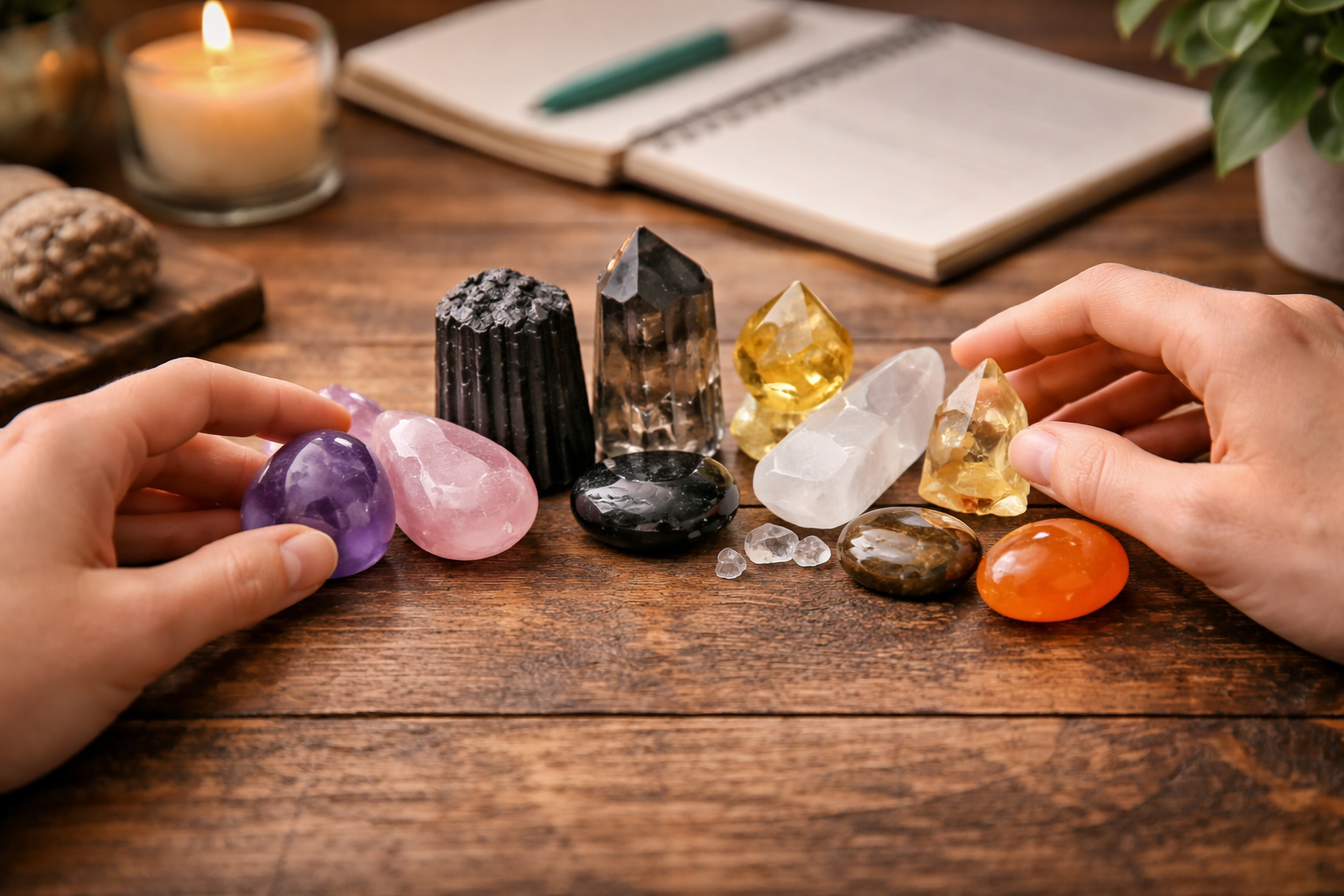
This is where most people wobble. Three stones all sound right. Two more look beautiful. Then you end up buying a mixed bag and learning almost nothing from it.
A better filter uses three questions.
Name the loudest problem
Not the most poetic one. The loudest one.
- If the issue is racing thoughts, start with amethyst.
- If the issue is self-criticism or emotional bruising, start with rose quartz.
- If the issue is feeling drained by people or spaces, start with black tourmaline.
- If the issue is stuck energy, start with citrine or carnelian.
Pick soft or firm support
This part is weirdly overlooked. Some stones feel like a blanket. Some feel like a doorstop. Both can help. But not in the same moment.
Amethyst vs rose quartz: both can help when you feel emotionally frayed. Amethyst is better when your mind needs to quiet down. Rose quartz is better when the problem feels raw, personal, or self-directed.
Black tourmaline vs smoky quartz: both sit in the grounding lane. Black tourmaline is the firmer first pick for boundaries. Smoky quartz is steadier and often less harsh-feeling if you want grounding without that “hard edge.”
Clear quartz vs citrine: both can fit clarity and forward motion, but clear quartz is more general and neutral. Citrine has more kick. If you are scattered, start with clear quartz. If you are sluggish, citrine often makes more sense.
Test one stone for seven days
One stone. One intention. One consistent use. Carry it, place it, or hold it the same way each day for a week. That gives you enough repetition to notice whether the meaning actually fits your life or just sounded good in a product description.
This is also where attraction gets a fair place. If you keep getting pulled toward a stone that does not “match” the chart, try it for the week. Sometimes the chart is broad and your real need is narrower. Sometimes you just like the color. Both happen.
Remember: start with the feeling, not the trend. The prettiest stone in the bowl is not always the one that suits the job.
For a calmer, feeling-first angle on the same choice problem, what crystals are good for anxiety shows how the same broad category splits into very different stone choices once the feeling gets specific.
Why One Crystal Can Mean Love, Protection, Clarity, or Something Else
If you’ve ever seen the same crystal listed under love, healing, peace, cleansing, and manifestation, you are not imagining things. That overlap is normal. Annoying, but normal.
It usually happens for four reasons.
Different traditions stack different meanings
Crystal symbolism did not come from one central book. Different teachers, shops, spiritual systems, and modern writers emphasise different traits. One guide will talk about rose quartz as romantic love. Another will frame it as self-love and emotional soothing. Both are reading the same soft, heart-led symbolism from different angles.
Color pulls meaning with it
Pink tends to pull people toward softness, affection, or heart-centered work. Purple often lands in calm, intuition, or reflection. Black often gets read as grounding or protection. That color language can broaden a stone’s meaning even before the mineral itself enters the conversation.
One stone can cover more than one emotional job
Clear quartz is the obvious example. It gets used for clarity, cleansing, amplification, and general support because it is broad. Rose quartz can mean love, but also comfort, gentleness, and emotional repair. Tiger’s eye can mean courage, focus, or protection because those jobs overlap in real life. A person who needs courage often also needs steadier focus.
Seller language gets sloppy fast
This is the part nobody likes saying out loud. Some crystal copy is thoughtful. A lot of it is padded. If every stone is described as powerful, cleansing, protective, healing, abundant, and spiritual, the meanings stop meaning much.
A better distinction is this:
- Broad support stones cover a wider lane. Clear quartz is the classic example.
- Targeted stones fit a narrower job. Rose quartz for tenderness is more targeted than “love” in general. Black tourmaline for boundaries is more targeted than “protection” in general.
Once you start reading the meaning as a job description instead of a slogan, the overlap becomes easier to sort.
How Color, Chakra, and Zodiac Associations Can Help Without Running the Show
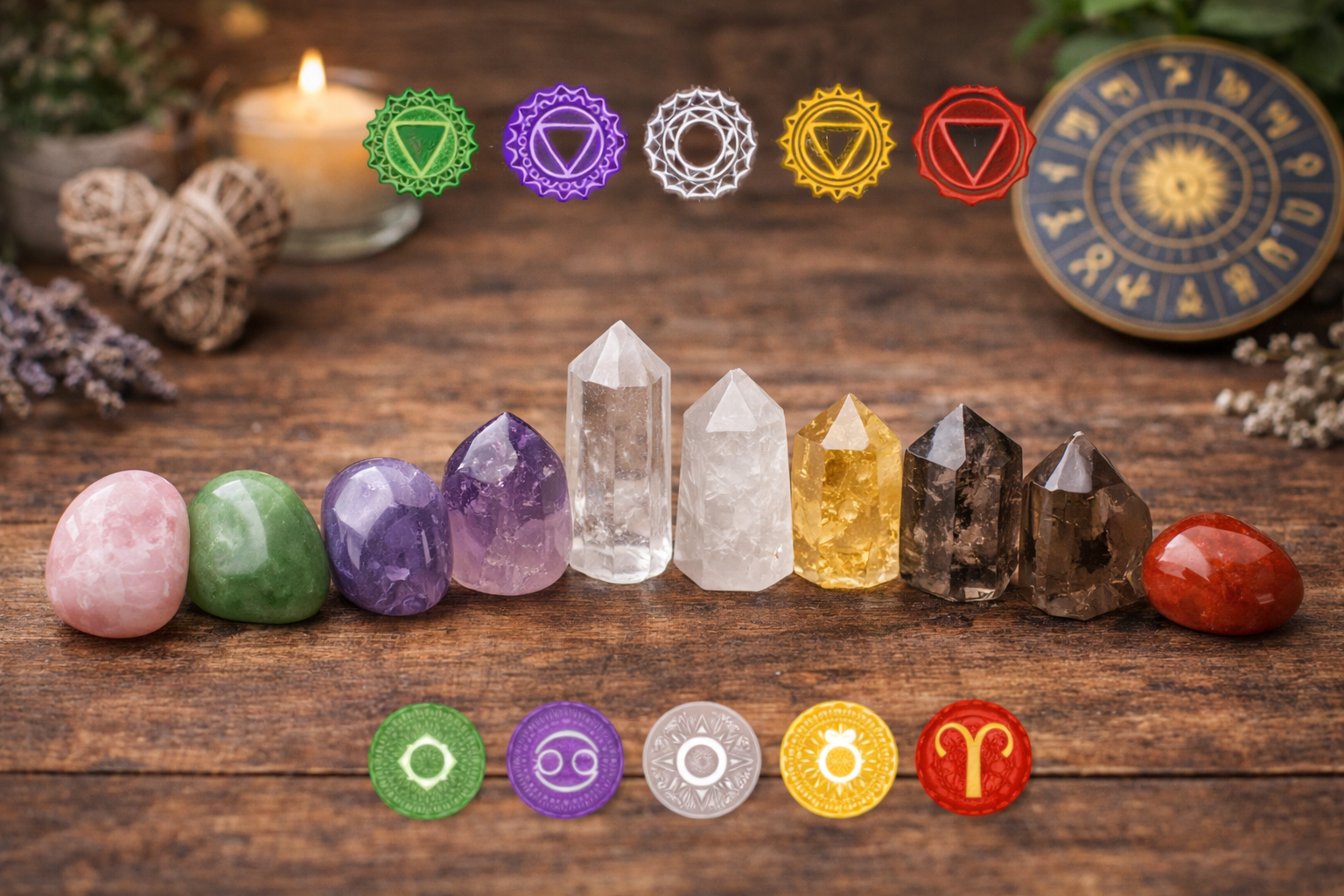
Color meanings, chakra links, and zodiac crystal lists are not useless. They are just not the best first filter for most people.
The better order is simple:
- Start with intention. What is the job?
- Use tone as a tiebreaker. Soft, firm, bright, steady?
- Use color, chakra, or zodiac as a final filter.
That keeps you from buying by theme instead of need.
Color can help because it often reflects the way people already read emotional categories. Pink stones tend to get used for softness, affection, and heart-centered work. Purple stones often drift toward calm, intuition, and reflection. Black stones usually land in grounding, boundary, or protection territory. Yellow and gold stones often get chosen for confidence, joy, or momentum.
Chakra systems can be useful in the same way. A heart chakra search can point you toward rose quartz or green aventurine. Crown chakra work often pulls in clear quartz or selenite. Root chakra work often turns up black tourmaline, smoky quartz, or red jasper. But the system works best when it clarifies the job, not when it replaces it. If your real issue is weak boundaries, root chakra language can help. If your real issue is heartbreak, a root chakra list might just distract you.
Zodiac links are even looser. They can be fun, and sometimes they do help a reader feel oriented, but they are usually the weakest deciding factor of the three. I would not pick a stone for a messy breakup just because a zodiac chart says it matches your sign.
When chakra mapping does fit the way you think, best crystals for chakra alignment is a useful next step because it ties the stone back to the job instead of leaving it at color coding.
Important: color can hint at meaning, but it should not outrank the actual use case. A black stone that feels grounding is still a better match for boundary work than a pink stone you bought because the shelf label said “self-love.”
Use, Cleanse, and Store Crystals in a Way That Matches the Meaning
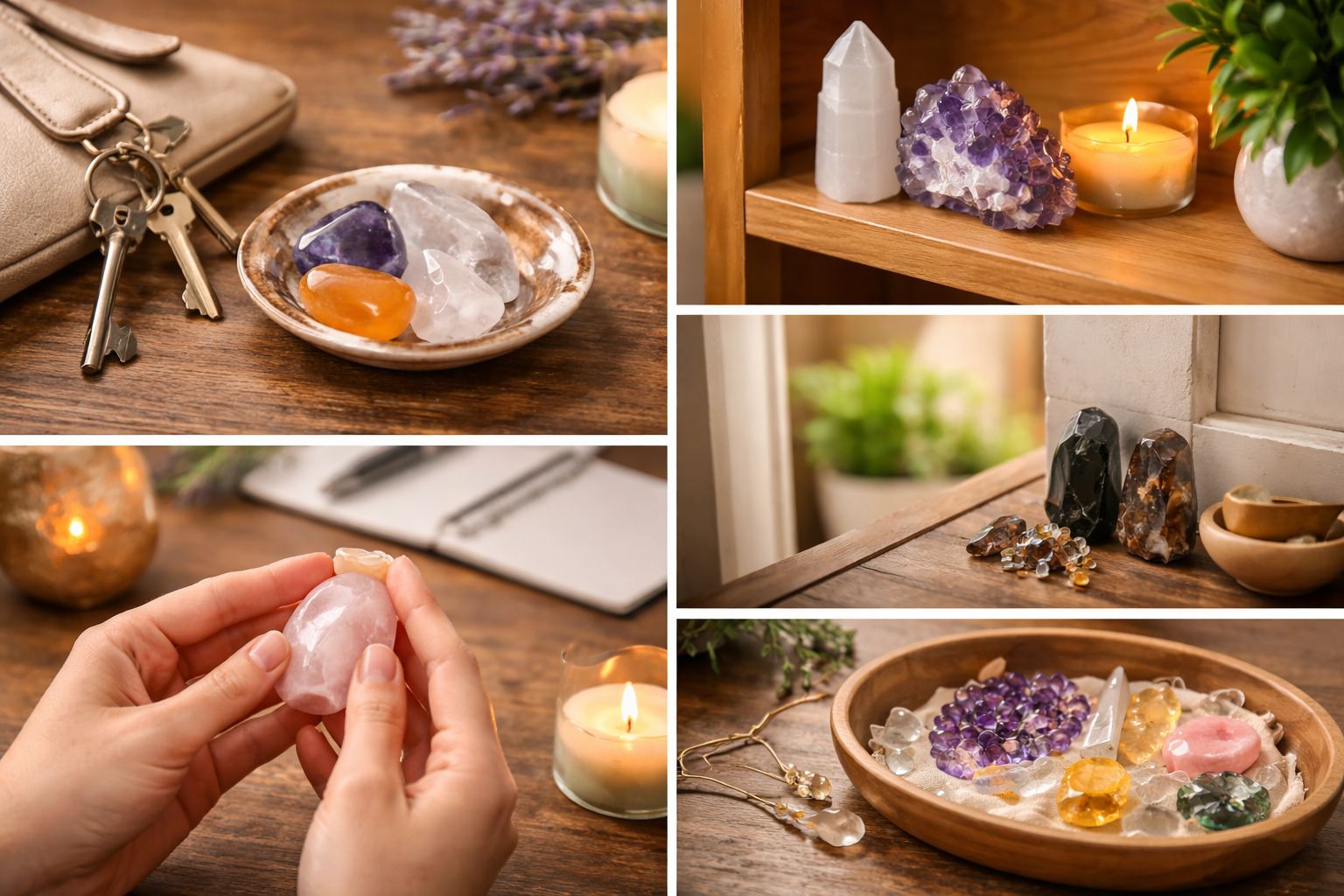
A crystal meaning gets more useful once it shows up in a repeatable action. You do not need a complicated ritual. You need a method you will actually keep doing.
Match the form to the job
- Tumbled stones: best for pockets, bags, or quick daily carry
- Palm stones: good for sitting, breathing, or winding down
- Rough pieces or clusters: better for rooms, desks, and shelves
- Jewelry: useful when you want the reminder on your body all day
That is why selenite often works better on a shelf than in a pocket. And why black tourmaline makes sense near a doorway, desk, or bag.
Use one sentence of intention
You do not need a script. One plain sentence is enough.
- “I want less noise in my head tonight.”
- “I want steadier boundaries at work.”
- “I want a softer inner voice this week.”
The sentence matters because it keeps the crystal meaning tied to your actual life, not to abstract spiritual wallpaper.
Stick to one simple method
Hold the stone for a minute before bed. Keep it on the desk where the tension happens. Carry it in the same pocket for seven days. Place it by the front door. That kind of repetition teaches you more than a dozen scattered rituals.
If you want a fuller routine without overcomplicating it, how to use crystals for healing lays it out in a very usable way.
Cleanse with low-drama methods first
Moonlight, sound, dry wiping, and simply setting a stone aside for a reset are all easy starting points. I prefer boring methods here, honestly. They are easier to repeat, and they avoid the internet habit of treating every stone like it can be dunked, smoked, salted, and baked without consequence.
Material matters. The Oxford University Museum of Natural History’s mineral hardness guide lists gypsum at hardness 2 and quartz at hardness 7. That is a big gap, and it helps explain why quartz-family stones are more forgiving while selenite-type cleansing pieces need gentler handling.
Amethyst and rose quartz are both quartz-family stones, so they can handle normal home use fairly well. Selenite is a different story. Keep it dry, keep it out of rough everyday carry, and treat it more like a room tool than a fidget stone.
Care box: if a crystal is soft, flaky, or polished into a delicate wand or plate, do not treat it like a pocket coin. That is how nice-looking stones end up chipped and sad.
What Crystal Practice Can Support, and the Mistakes That Make It Feel Flimsy
There is a grounded way to use crystals, and then there is the breathless version where every stone promises everything. One of those feels steady. The other falls apart the second you ask a basic question.
The grounded version treats crystal meanings as tools for focus, ritual, reflection, and emotional cueing. A stone can help you slow down, name a need, build a habit, or create a sense of steadiness around a room or routine. That is real in the sense that you are really doing it. It is not the same as proving that a stone can medically treat a condition.
The National Center for Complementary and Integrative Health says non-mainstream practices should not be used as a substitute for conventional medical treatment or as a reason to postpone seeing a health care provider. That is the line worth keeping. Crystal practice can sit beside journaling, prayer, meditation, or other personal rituals. It should not stand in for proper care.
Five mistakes make crystal work feel thin fast:
- Treating every label like hard truth. Meanings are guides, not laws.
- Buying by trend or color only. Pretty is fine. Pretty is not a plan.
- Using too many stones at once. You learn more from one clear test than from a crowded tray.
- Trusting mystical copy over material facts. Know what the stone actually is.
- Using crystals as a stand-in for care. That is where a supportive practice crosses into shaky ground.
If you want one simple rule to keep, keep this one: pick by job, then by tone, then by form. That rule will save you from most beginner confusion.
FAQ
Are crystal meanings based on science or symbolism?
Mostly symbolism, tradition, and lived practice. The mineral facts are real, but the meaning assigned to a crystal, like calm or protection, is not the same thing as a scientific proof of metaphysical effect.
Can one crystal have more than one meaning?
Yes. That is normal. A crystal can sit in more than one symbolic lane because traditions vary, color symbolism overlaps, and one stone can suit more than one emotional job. Clear quartz is the classic example.
How many crystals should a beginner start with?
One or two is enough. Start with the clearest need, test one stone for about a week, and only add another if it fills a different job. That keeps the meaning clear instead of turning your first try into guesswork.