The funny thing about crystal chakra wands is how often they get sold like magic remotes. You pick one up, it looks polished and mystical, and then the real question hits: is this a meditation tool, a bodywork tool, or just a crystal point with better branding?
If you came here asking what is a crystal chakra wand, the short answer is simple: it is a crystal tool used in chakra-focused spiritual practice, usually made from one crystal or a row of stones linked to the seven chakras. People use it for meditation, intention-setting, gentle energy work, and sometimes light body placement. That plain answer is true, but it is also a little incomplete.
The part most pages skip is the bit that changes whether the wand feels helpful or just decorative. Shape matters. Stone layout matters. And the goal you bring to it matters even more.
- What a crystal chakra wand is, and what it is not
- Why people use one, and what you should realistically expect
- How single-crystal, seven-chakra, pointed, and rounded wands differ
- How to choose a wand that fits your actual goal
- How to use one on yourself without making the routine fussy
- How to care for it without damaging the stone
At a glance
| If this is your goal | Best starting choice | Why it makes sense |
|---|---|---|
| One clear emotional or meditation focus | Single-crystal wand | Less visual clutter and easier to pair with one intention |
| A symbolic all-chakra tool | Seven-chakra wand | Built around the full rainbow chakra map |
| Gentle body contact | Rounded end | Feels smoother on skin and less pokey in the hand |
| Placement, directing attention, altar use | Pointed end | Gives the tool a clearer directional feel |
| You tried one and felt nothing | 3 to 5 minutes, one wand, one intention | A stripped-down routine is easier to notice and repeat |
Note: Chakra work sits in the spiritual and wellness lane, not the medical one. A crystal wand can be meaningful, calming, or ritual-rich without being a substitute for healthcare.
What a Crystal Chakra Wand Actually Is, and What It Is Not
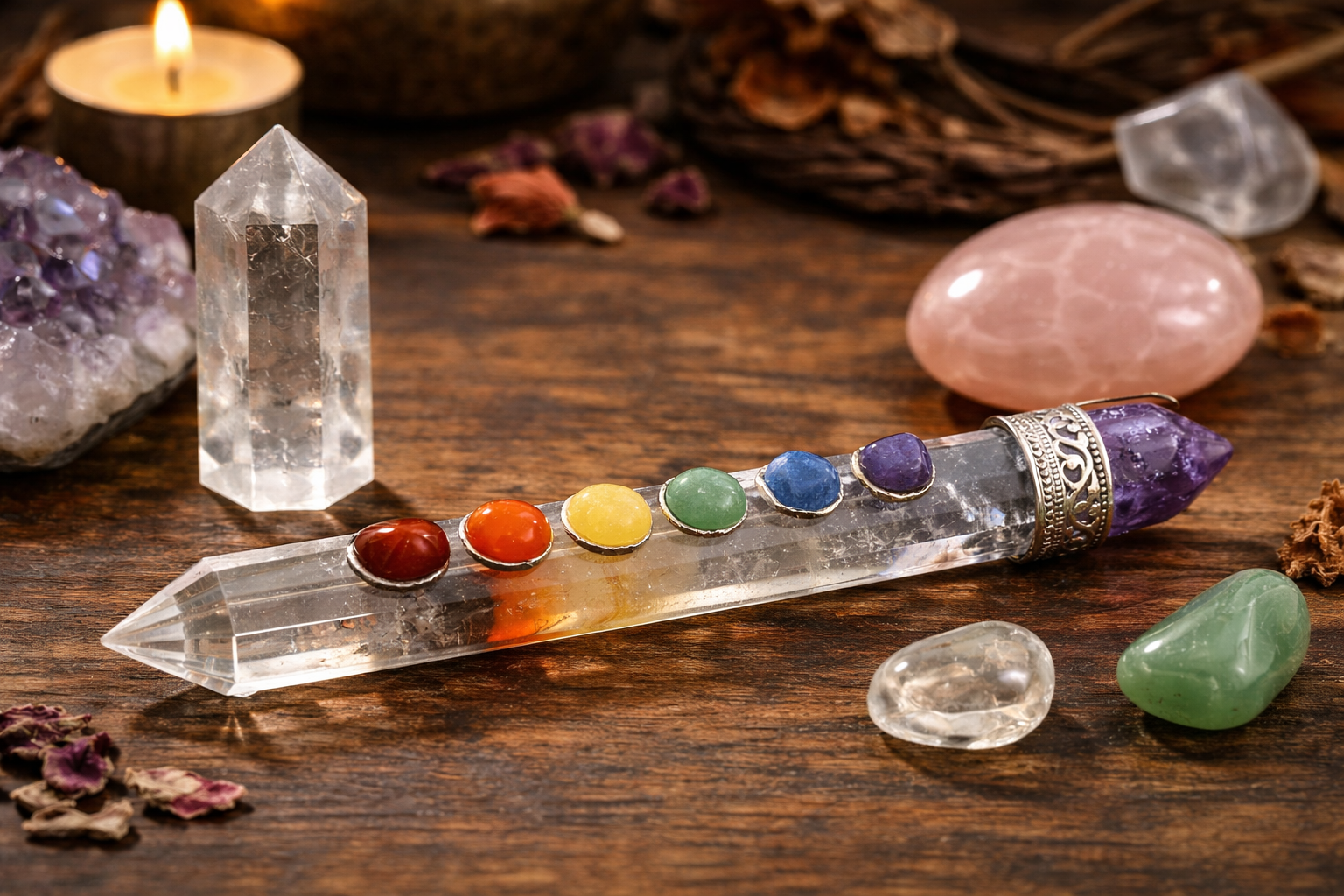
A crystal chakra wand is a shaped crystal used in practices built around the chakra system. Sometimes it is one stone, like clear quartz or amethyst, carved into a wand form. Sometimes it is a mixed-stone piece with seven crystals or coloured inlays meant to represent the root, sacral, solar plexus, heart, throat, third eye, and crown chakras.
Britannica describes chakras as centres of subtle energy in Indian religious and philosophical traditions, so the word “chakra” in the name tells you the symbolic map the tool belongs to. It does not mean the object has one fixed design or that every seller is using the term in exactly the same way.
That matters because a lot of listings blur the lines. I’ve handled pieces sold as “chakra wands” that were basically crystal towers with a nicer product name. Pretty? Sure. Comfortable to use for even two minutes? Not always.
What makes a wand a wand is not just the stone. It is the combination of shape, handling, and intended use. A tower is usually display-first. A palm stone is grip-first. A chakra wand sits somewhere in between, with more directional feel than a tumbles-in-a-bowl crystal and more ritual function than a plain decor piece.
Remember: “Chakra wand” is a practice label, not a strict geological category. Shops use the term loosely, so comfort and use matter more than the label on the tag.
Why People Use Crystal Chakra Wands, and What to Realistically Expect
People usually reach for a chakra wand for one of four reasons: meditation, intention-setting, chakra visualization, or gentle energy work. The object gives the hands something to do and the mind something to follow. That sounds small but it is often the whole point.
Cleveland Clinic explains the modern seven-chakra model as a system linking each centre with body areas, colours, and emotions, which is why many chakra wands are marketed as balancing tools instead of plain massage stones. The wand is acting as a symbolic pointer inside that system.
The National Center for Complementary and Integrative Health says meditation and mindfulness can help with stress and overall well-being for some people, even if the research quality varies from study to study. So the most grounded way to think about a crystal chakra wand is this: it can support a calming ritual, a focus practice, or a reflective pause.
The NHS notes that people can report benefits from complementary therapies for many reasons, including expectation and the care ritual itself. That is not the same thing as saying the experience is fake. It means the useful part may be the practice as much as the object.
That is where beginners often get tripped up. They expect a big energetic jolt, a sudden wave of heat, or some cinematic “activation” moment. More often the shift is quieter. You sit down faster. You breathe slower. You actually finish the five-minute check-in you kept putting off.
If the bigger question is less “what is it?” and more “how do I start working with chakras in a practical way,” a separate guide on how to heal a chakra with simple steps fits naturally after this page.
Important: A chakra wand is fine as a spiritual tool and a calming ritual aid. It is not a stand-in for therapy, medical care, or treatment for pain, trauma, or illness.
How a Chakra Wand Is Built: Single-Crystal, Seven-Chakra, Pointed, and Rounded Designs
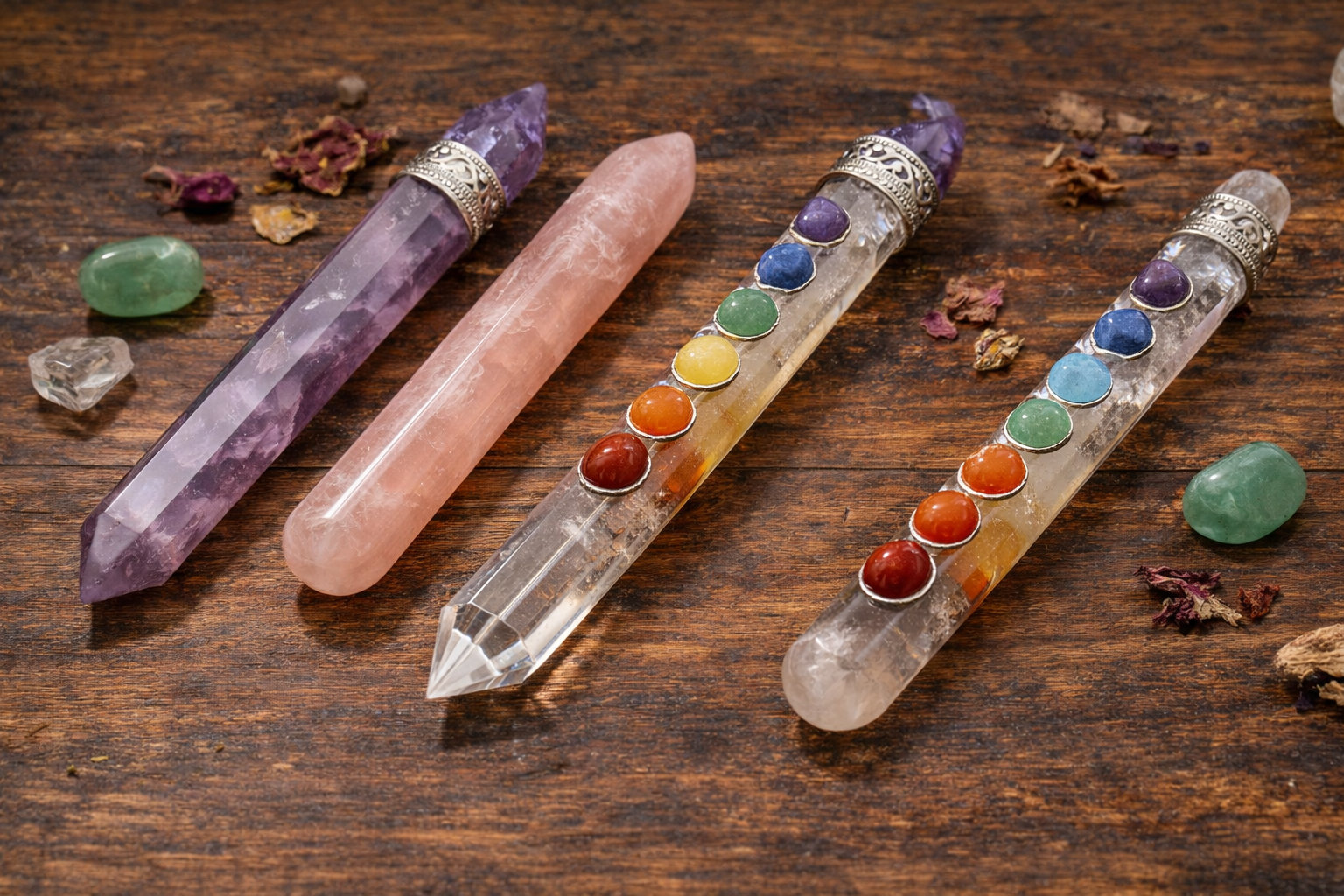
The easiest way to make sense of chakra wands is to look at two choices: stone layout and end shape.
Single-crystal wands use one mineral throughout. Clear quartz is a common starter because it is neutral-looking, widely available, and easy to pair with almost any intention. Amethyst leans meditative. Rose quartz leans soft and heart-led. Black tourmaline or smoky quartz often get chosen for grounding or boundary-focused work.
Seven-chakra wands stack or line up several stones in chakra order. They are popular for all-chakra rituals, altar display, and beginners who like the full visual system in one piece. A page on what the 7 chakra stones are makes that rainbow layout much easier to decode.
Then there is shape. A pointed end feels directional. People use it to mark placement, hover over a chakra point, or simply create a clearer sense of focus. A rounded end feels softer in the hand and on the skin, so it usually works better for gentle contact.
Double-terminated wands have points at both ends. They look striking and some people love them for symmetrical layouts, but they are not the obvious first pick for a beginner. One point is easier to orient. Two points can feel like you’re trying to decide which way the shoe goes on. A bit much for day one.
Quick rule:
- One crystal = one cleaner emotional or meditation lane
- Seven crystals = broad chakra symbolism in one tool
- Pointed end = direction and placement
- Rounded end = easier body contact and easier grip
Which Crystal Chakra Wand Makes Sense for Your Goal
The simplest way to choose a wand is to ignore the spiritual poetry for a minute and ask three blunt questions: What job do I want this to do? What tone do I want it to carry? What form will I actually use?
Job means the role. Grounding before bed is a different job from heart-centred journaling. A visual aid for meditation is different again. Tone means how the stone feels in practice. Rose quartz tends to feel gentler than black tourmaline. Form means whether you plan to hold it, place it, or keep it mostly on an altar.
I like this because it cuts through the common beginner trap of choosing by colour alone. That move is a lot like buying running shoes because the blue looks nice. You can do it, sure, but you have skipped the part where fit matters.
A faster way to choose
| Goal | Better wand type | Why |
|---|---|---|
| General meditation and flexibility | Clear quartz single-crystal wand | Easy starter, not locked into one emotional theme |
| Gentler heart work or self-soothing | Rose quartz rounded wand | Softer feel in both symbolism and handling |
| Focus, quiet, evening ritual | Amethyst single-crystal wand | Common meditation pick and easy to pair with breathwork |
| All-chakra symbolism in one object | Seven-chakra wand | Best match when the full chakra map matters more than one stone’s character |
| Gentle placement on the body | Rounded or rounded-point hybrid | Less awkward than a needle-sharp point |
If you are torn between several crystals, a guide to the best crystals for chakra alignment can help narrow the field without turning the whole thing into a giant crystal quiz.
My bias here is pretty plain: for most beginners, a clear quartz or amethyst wand with a comfortable shape beats a busy seven-stone piece. The all-chakra wand can be lovely, but one cleaner signal is easier to build a habit around.
How to Use a Crystal Chakra Wand on Yourself Without Turning It Into a Ritual Marathon
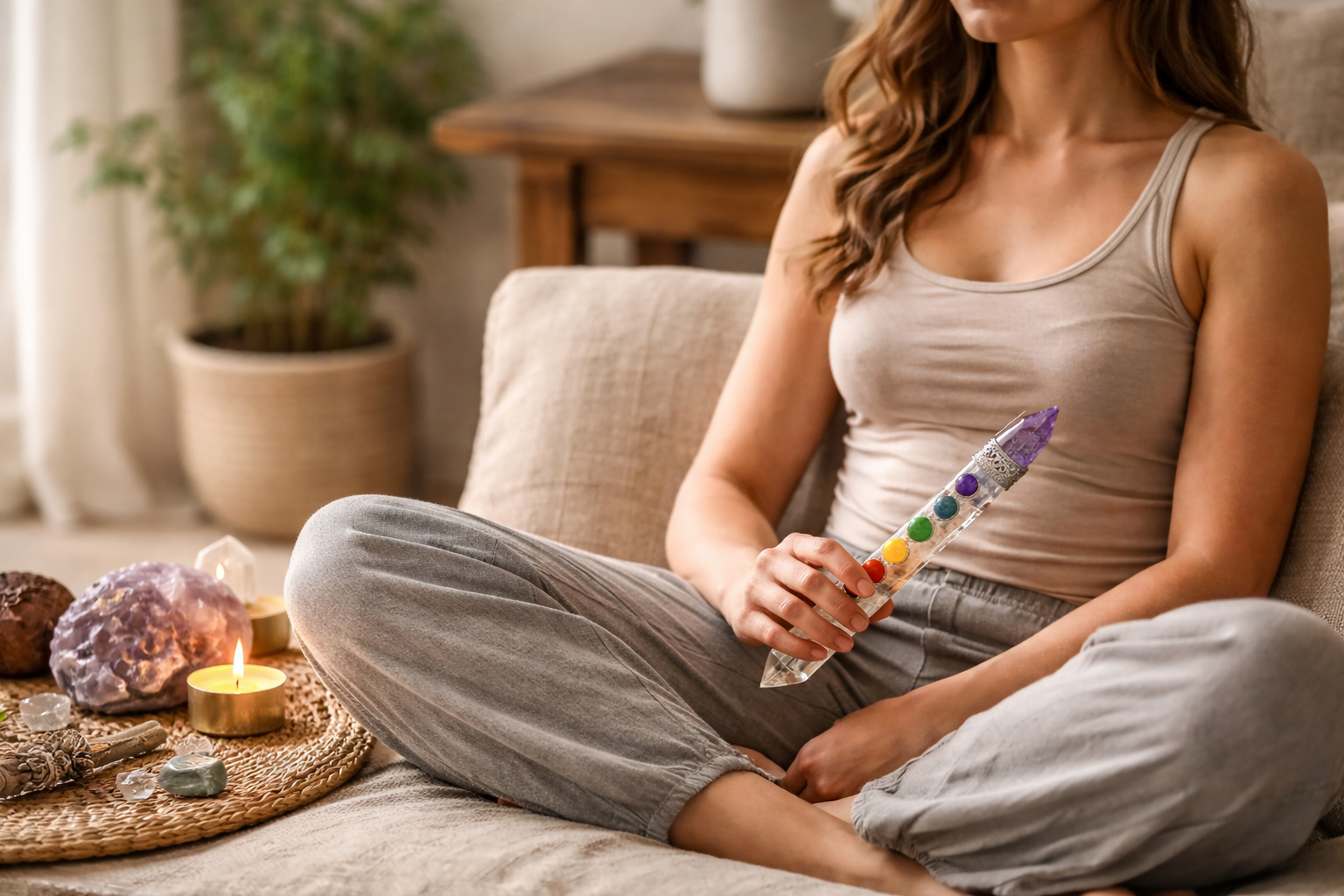
You do not need candles, bells, seven playlists, and a full moon to get something from a crystal chakra wand. A basic routine works better because you can actually repeat it.
Step 1. Set one intention and settle your attention
Sit or lie down somewhere quiet. Pick one plain intention such as “ground,” “soften,” “speak clearly,” or “slow down.” Then breathe for three slow cycles before you touch the wand.
Step 2. Choose one use mode and make it obvious
There are three beginner-friendly ways to use the wand. Hold it in one hand during meditation. Place or hover it over the chakra area you want to focus on. Or use it as a visual anchor while you breathe and notice what comes up.
Step 3. Stay with it for 3 to 5 minutes and notice one shift
That shift might be physical, emotional, or boringly practical. You might unclench your jaw. You might finally stop doom-scrolling. You might notice nothing dramatic and still feel a bit steadier after. All of those count more than chasing fireworks.
Step 4. End the session before it gets diluted
Put the wand down when the practice still feels clean. A short session with a clear stop point beats a 20-minute drift into “what am I even doing now?”
If crystal routines in general are still a bit foggy, this guide on how to use crystals for healing in beginner-friendly steps pairs well with wand work.
Pro tip: Rounded wands or softly finished ends are easier for body placement. Sharp polished points can feel symbolic and look great in photos, but in the hand they can get annoying fast.
Why Some People Feel Nothing at First, and How to Troubleshoot the Practice
This is one of the least-discussed parts of chakra wand use and honestly one of the most normal. Many people feel nothing obvious on the first try. No tingling. No warmth. No flood of emotion. Just a nice stone and some confusion.
That does not automatically mean the wand is wrong for you. It usually means one of four things happened.
- The goal was too vague. “Balance my energy” sounds nice but it is slippery. “Settle before sleep” gives your practice a target.
- The routine had too many moving parts. Wand, incense, music, affirmations, chakra colours, journaling, and moon water is a lot. A tool cannot do much when your attention is juggling six other things.
- The form did not fit the use. A long pointed wand can be awkward for relaxed self-use. A softer grip shape often works better.
- The expectation was too dramatic. Most first sessions are subtler than people expect.
Try a seven-day reset. Use one wand, one intention, and one short session a day. Write down one line after each use. Not a full journal entry. Just one line. “Felt calmer.” “Nothing.” “Cried for two minutes.” “Mind kept wandering.” That is enough data to notice whether the practice is helping or whether the tool is all aesthetics for you.
Try this instead of chasing sensations:
- Notice whether your breathing slows
- Notice whether meditation feels easier to start
- Notice whether one emotion becomes easier to name
- Notice whether you come back to the practice the next day
And if the whole experience stays symbolic rather than energetic, that is still a real use. Plenty of spiritual tools do their best work by shaping attention, not by producing a dramatic body sensation.
How to Cleanse, Store, and Care for a Crystal Chakra Wand Safely
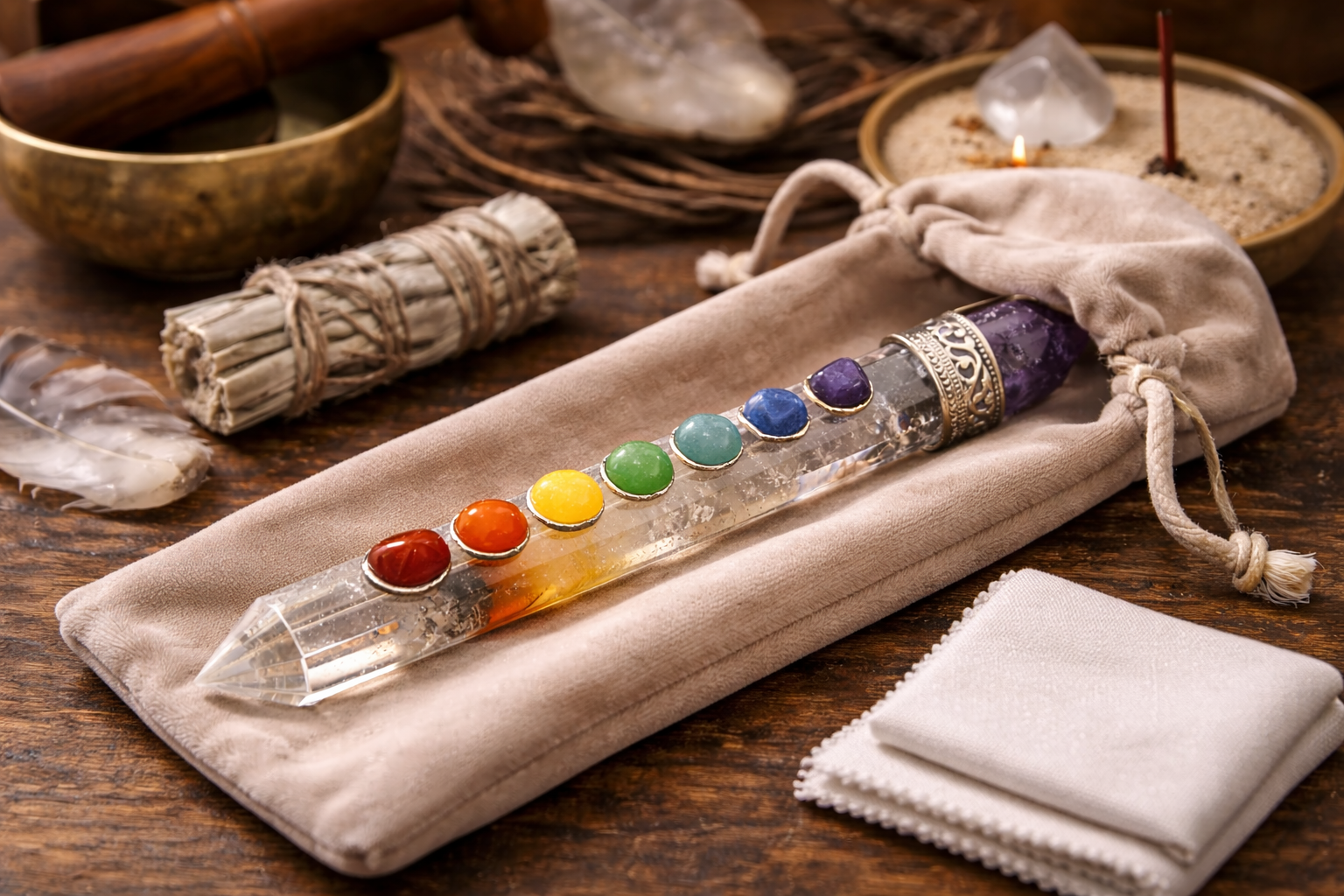
When people say “cleanse a crystal chakra wand,” they often mean two different things. One is energetic cleansing, which belongs to personal ritual. The other is physical cleaning, which belongs to stone care. Mixing those up is where bad advice starts.
If you do not know the mineral or how the wand was assembled, start with low-risk methods. Wipe it gently with a soft dry or slightly damp cloth. For energetic cleansing, go with no-contact options like sound, breath, intention, or moonlight rather than tossing it into water or full sun on autopilot.
GIA warns that amethyst can fade with prolonged exposure to intense light, which is one good reason blanket advice like “just leave all crystals in the sun” falls apart fast. The real answer changes with the stone. It also changes with the hardware. Some chakra wands use glue, metal fittings, or tiny chips set into a decorative channel, and those details do not always love water.
Storage is less glamorous but it matters more than people think. A polished wand rolling loose in a bag can chip, scratch, or pick up grime around the fittings. A soft pouch, a lined box, or a stable tray works better.
For a deeper breakdown of safe cleansing methods, the guide on how to cleanse crystals without wrecking them is the natural next read.
Safe default: If the stone is unknown or the wand has metal caps, glued parts, or a seven-stone decorative strip, skip harsh sun and avoid soaking it.
Common Crystal Chakra Wand Mistakes That Waste Money or Create Confusion
Buying the prettiest wand before deciding the job. A seven-stone wand can be gorgeous and still be the wrong fit if what you really need is a simple meditation anchor. Function first. Looks after.
Choosing by colour alone. Colour is part of chakra symbolism, yes, but it is not a full decision rule. Grip, shape, and how you plan to use the wand matter just as much.
Using seven intentions at once. This happens all the time with full chakra tools. You sit down to “balance everything” and end up with no clear focus at all. One session, one lane works better.
Treating every online crystal list like fixed law. Chakra systems and crystal pairings vary across modern spiritual practice. Small disagreements are normal. They are not proof that one chart is blessed and the rest are rubbish.
Making medical claims the tool cannot carry. A wand can support a ritual. It cannot replace qualified care. Mixing those two lanes is where trust goes off the rails.
If you want one simple rule to keep, use this: pick the wand that makes your practice easier to repeat. Not the one that makes the biggest promise.
Crystal Chakra Wand FAQ
Can any crystal point be used as a chakra wand?
Sometimes, yes. A crystal point can be used like a chakra wand if it feels comfortable in the hand and fits the practice you are doing. The catch is that many crystal points are cut for display, not handling, so they can feel awkward or too sharp for regular use.
How often should a crystal chakra wand be cleansed?
There is no fixed universal schedule. Many people cleanse after heavy use, after emotionally charged sessions, or once a month as a simple reset. Physical cleaning should happen whenever the wand is dusty, grimy, or has picked up residue from skin or storage.
Is a palm stone better for beginners than a chakra wand?
For some beginners, yes. A palm stone is simpler and usually easier to hold. A chakra wand makes more sense when direction, chakra placement, or the ritual feel of the object is part of the appeal. If you want something less formal and more pocket-friendly, a palm stone can be the easier start.