
You can hear the mistake before you can name it. The bowl squeaks, chatters, or gives you one thin note and then dies. Most of the time, the bowl is not the problem. The best mallet for singing bowl use changes with the bowl you own, the sound you want, and whether you plan to strike it, sing it, or do both.
For a frosted crystal bowl, a rubber or silicone option is usually the safest first pick. For a smooth-rim crystal bowl or chalice, suede often feels cleaner and less grabby. For a metal or Tibetan bowl, a suede-wrapped wooden striker is the old reliable choice for singing, while a felt head is nicer for soft strikes.
That is where most buying mistakes happen.
- Which mallet material fits crystal, metal, and smooth-rim bowls
- How size and softness change the sound
- When one mallet is enough and when two make more sense
- What to check before buying online
- How to fix scratchy, weak, or squealy sound fast
Fast Match
- Frosted crystal: start with a rubber or silicone mallet if you want easy activation and less contact noise.
- Smooth-rim crystal or chalice: start with suede if you want cleaner rim contact and more control.
- Metal or Tibetan bowl: start with suede-wrapped wood for singing and add a felt beater later if you care about softer strikes.
- One mallet only: buy for your main use first. A good singer is not always a good striker.
Best Suggestions Table (All products have been personally reviewed & tested by us! Click the buttons below to jump to the reviews.)
| Product | Best for | Action |
|---|---|---|
| MEINL Sonic Energy Crystal Singing Bowl Mallet – CSBM | Beginners with frosted crystal bowls | Check PriceReview |
| MEINL Sonic Energy Coated Crystal Silicone Rod – CSBRL | Quiet, detailed rim play on crystal bowls | Check PriceReview |
| MEINL Sonic Energy Crystal Singing Bowl Suede Mallet – CSBSMM | Smooth-rim crystal bowls and chalices | Check PriceReview |
| DharmaObjects Suede/Wood 1 Singing Bowl Mallet Tool | Metal and Tibetan singing bowls | Check PriceReview |
Tip: the “Check Price” button jumps to the product note first so you can see the use case before comparing current dealer pricing.
The best mallet for a singing bowl depends on the bowl you own
Here is the short answer again because this page should save you time, not waste it. The best mallet for singing bowl shopping is usually a rubber or silicone model for frosted crystal, a suede model for smooth-rim crystal, and a suede-wrapped wooden striker for most metal bowls.
That split makes sense once you remember what a singing bowl is. Britannica describes an idiophone as an instrument whose own body vibrates to make the sound, so the material touching the rim changes the friction, the attack, and the amount of chatter you hear right away.
If the bowl itself is still the bigger question, this guide to best singing bowls for meditation helps sort metal versus crystal before you spend money on a striker that will not fix the real mismatch.
Fast Match: If the bowl sounds bright and glassy, lean softer. If it sounds warm and layered, lean grippy. If it is large and stubborn, size and head mass start to matter as much as material.
I have done the classic beginner thing with crystal bowls and blamed the bowl when the supplied striker was the weak link. Swap to a better-matched mallet and the same bowl can stop feeling fiddly almost at once.
Match mallet material to the sound and feel you want
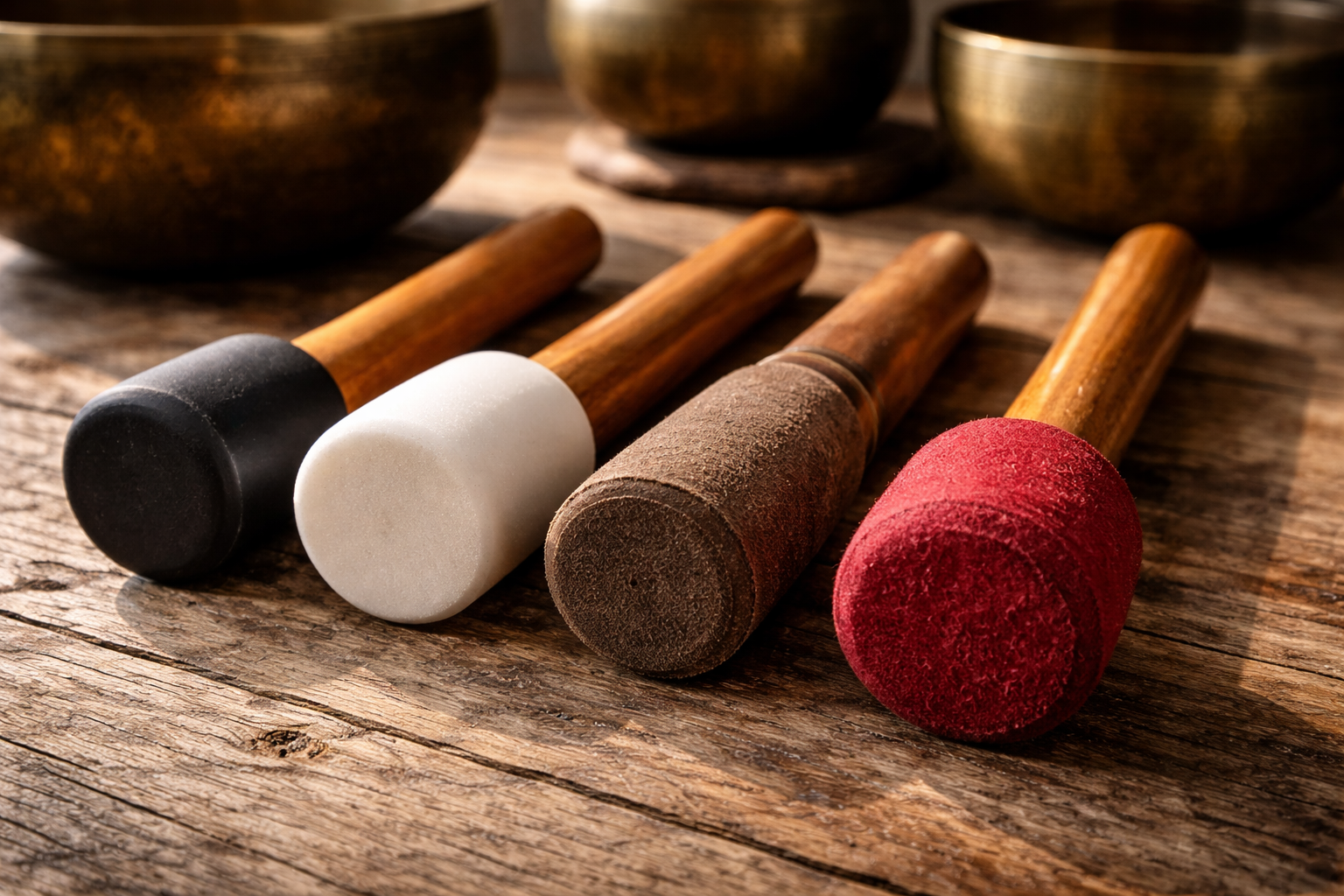
Material is the part everyone notices first and misreads first. People buy suede because it sounds premium or silicone because it sounds modern, then wonder why the bowl still feels off. The better question is simpler: do you want the bowl to start easily, sound cleaner, strike more softly, or give you more control on the rim?
Rubber and silicone usually help frosted crystal bowls speak faster. Suede often gives a more guided feel, which is lovely on smooth-rim crystal bowls and very dependable on metal bowls where you want a little grip on the rim instead of a slippery skate. Felt or wool heads are not much use for steady rim-singing, but they are nicer when you want a soft strike instead of a sharp ping.
| Material | Best use | What it sounds like | Watch for |
|---|---|---|---|
| Rubber | Frosted crystal, starter use | Easy start, solid strike | Can feel blunt on some smooth rims |
| Silicone | Quiet crystal rimming | Clean, detailed, low chatter | Can feel too slick on metal |
| Suede | Metal bowls, smooth-rim crystal | Controlled, textured, a bit warmer | Wrong suede on frosted bowls can drag |
| Felt or wool | Soft strikes | Rounder attack, less edge | Poor choice for sustained rim work |
Think of material choice like shoes. You would not pick hiking boots, tennis shoes, and dress shoes by asking which one is “best leather.” You would ask what ground you are walking on.
Before the product picks, here is how I tested them. I used a frosted crystal bowl for easy-start checks, a smooth-rim crystal bowl for clean circling, and a small metal bowl for control and grip. I listened for three things first: how quickly the bowl locked in, how much contact noise the mallet added, and how tired my hand felt after a few minutes.
MEINL Sonic Energy Crystal Singing Bowl Mallet – CSBM
Editorial rating: 4.7/5
Best for: frosted crystal bowls and first-time buyers who want a mallet that behaves on day one.
This is the least fussy of the four. The CSBM uses a soft rubber head and a wooden handle, and that pairing feels exactly like it sounds: firm enough to start a frosted bowl cleanly and soft enough that you do not get slapped with a bunch of contact noise on the first pass. You can tap with it, circle with it, and recover from a slightly awkward hand angle without the bowl turning difficult.
What I liked most was the balance. Some rubber-headed mallets feel toy-like or oddly top-heavy. This one sits in the middle, which matters more than people expect once you spend a few minutes keeping steady pressure on the rim. It is not the most refined choice for every smooth-rim crystal bowl and it would not be my first call for a metal bowl, but for a frosted crystal setup it does the simple stuff very well. If you only want one starter mallet for a white frosted bowl, this is the safest buy here.
MEINL Sonic Energy Coated Crystal Silicone Rod – CSBRL
Editorial rating: 4.8/5
Best for: players who care about quiet, detailed crystal bowl singing more than a punchy strike.
This is the pick I would hand to someone who keeps complaining about hiss, chatter, or that scratch-on-glass feel. The soft silicone coating glides with less fuss than a rougher surface and does a nice job keeping the mechanical noise out of the way so the tone can come through.
The tradeoff is plain. A rod like this is more of a rim player than a general-purpose beater. You can tap with it, sure, but the payoff is in the sustained note. On frosted bowls it feels clean and calm. On a smooth-rim crystal bowl it can be almost too polite if you actually want more bite under your hand. I also would not use it as my main tool for a metal bowl. Still, if a crystal bowl already sounds decent and you want it to sound quieter, cleaner, and more controlled, this is the one I would reach for first.
MEINL Sonic Energy Crystal Singing Bowl Suede Mallet – CSBSMM
Editorial rating: 4.6/5
Best for: smooth-rim crystal bowls, chalices, and players who want more tactile control than silicone gives.
This one is easy to underrate until you use it on the right bowl. On the wrong bowl, especially a frosted one that already has plenty of surface drag, suede can feel like too much of a good thing. On a smooth-rim bowl, though, it often lands in a sweet spot where the contact feels guided instead of slippery.
The feel is a little more textured than the silicone rod. You can sense the rim under your hand, which many players like because it helps them settle into steady pressure. The tone also has a touch more texture. Not worse. Just less glossy. I would buy this when the bowl is already quite responsive and you want control more than help starting the note. If you have an Essence-style bowl, a chalice, or any smooth crystal rim that feels too slick with silicone, this becomes a very persuasive option fast.
DharmaObjects Suede/Wood 1 Singing Bowl Mallet Tool
Editorial rating: 4.7/5
Best for: Tibetan and other metal singing bowls where rim grip matters more than whisper-quiet contact.
If you play metal bowls, this is the shape most people picture for a reason. A suede-wrapped wooden striker gives the rim a bit of grab and a bit of control, which is exactly what many Tibetan bowls want. The DharmaObjects model is simple, and that is part of the appeal. No gimmicks. No weird handle contour. Just a familiar striker that works the way these bowls tend to like.
In use, the feel is direct and reassuring. A metal bowl that sounds timid with a slick striker often wakes up with suede-wrapped wood. The tradeoff is that you will hear more of the contact than you would with a silicone rod on crystal. That is not a flaw. It is just a different interaction. This is also not my pick for frosted crystal bowls where the surface can already feel grabby. But for metal bowls and small meditation bowls, this is the one I trust most in the hand.
Match mallet size and softness to bowl size before you buy
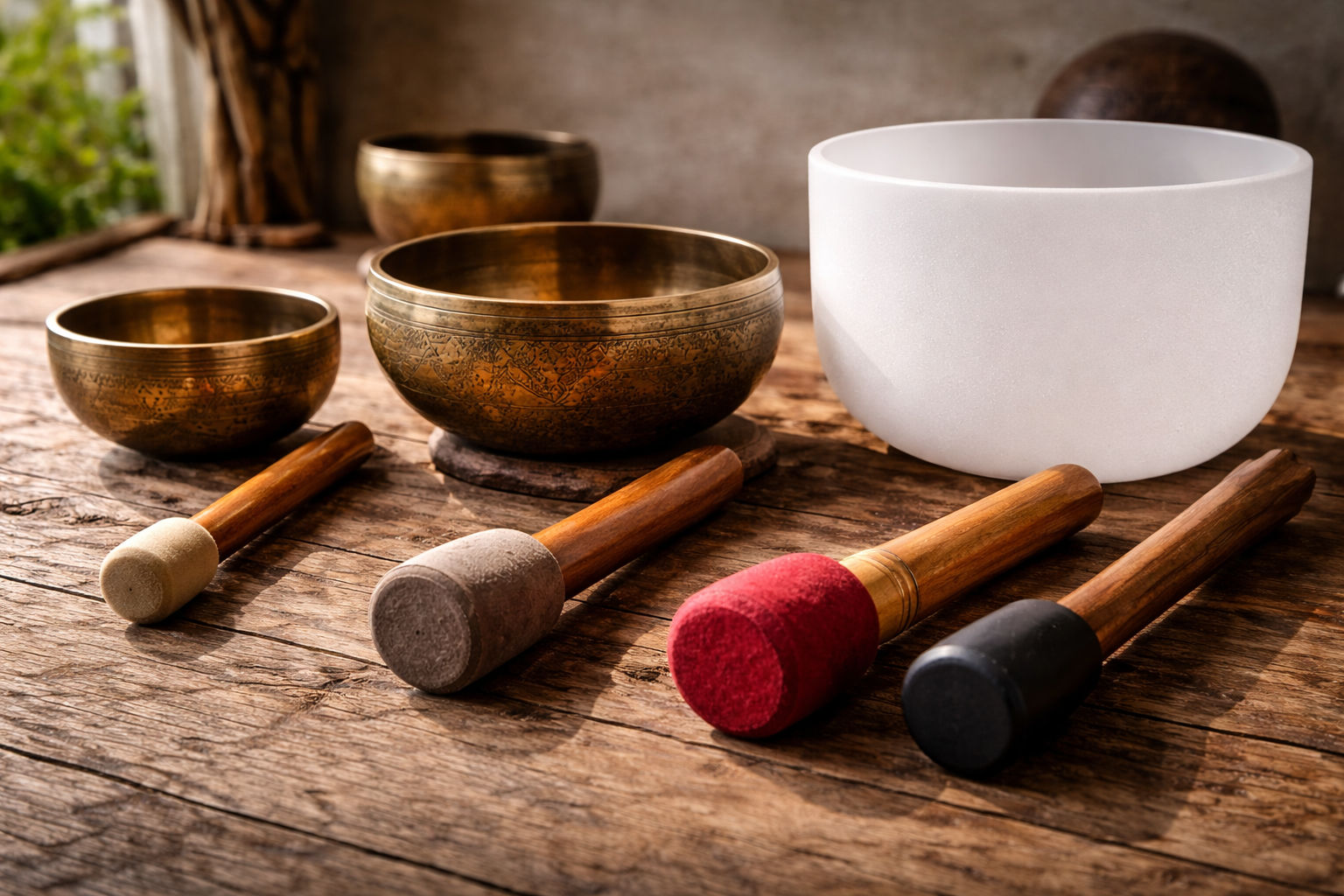
Material gets the attention. Size quietly decides whether the mallet feels natural or annoying.
A small bowl usually behaves better with a lighter, smaller head. If the head is too big, the bowl can feel pushed around instead of activated. A large bowl often needs more contact area or a little more head mass, otherwise the sound starts thin and you keep adding pressure to make up for it.
For medium bowls, a medium mallet is the safe middle lane. Some guides land around the 30 mm range for medium bowls because it gives enough surface contact without turning the tool into a club. That tracks with how these setups feel in the hand.
Fast Match: If a small bowl skitters or feels bossy, size down. If a large bowl sounds thin and stubborn, size up or move to a softer, broader head.
Softness matters alongside size. A large hard head can sound harsh. A large softer head can fill the note out. On the other side, a tiny soft head can make a small bowl feel sleepy and vague. If you are buying blind online, match the bowl size first and then choose the softer or firmer version by sound goal.
Choose for striking or singing, because one mallet rarely excels at both
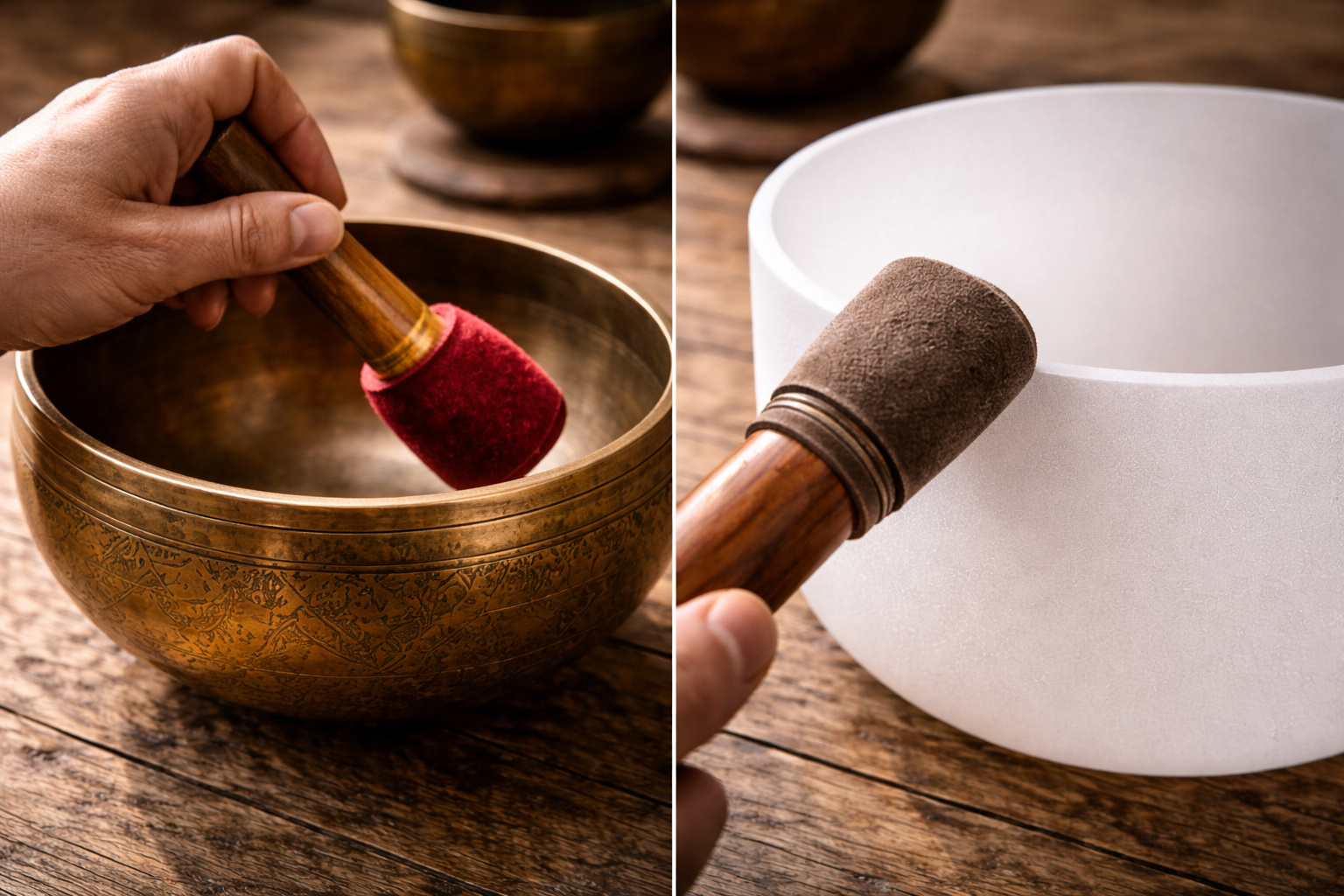
This is the fork in the road many buyers skip. Striking and singing ask different things from the tool.
For striking, a softer head usually sounds rounder and less sharp. Felt, wool, and some rubber tips are kinder here. For steady rim-singing, you need the surface to grip just enough to keep the bowl moving without adding a mess of chatter, so suede, silicone, and rubber start to separate by bowl type.
Metal bowls often like suede-wrapped wood for singing. Crystal bowls, especially frosted ones, often get along better with rubber or silicone for singing. Smooth-rim crystal bowls can flip that and feel better with suede. That is why one all-purpose mallet often turns into a compromise tool that does everything passably and nothing beautifully.
If your main use is a quiet meditation start and one gentle strike, one mallet can be enough. If you care about both a nice strike and a clean sustained note, two mallets usually makes more sense than chasing a mythical do-it-all stick.
Note: Buy for the sound you use every week, not the one you imagine using once a month. That tiny bit of honesty saves money.
Check these build details before you buy online
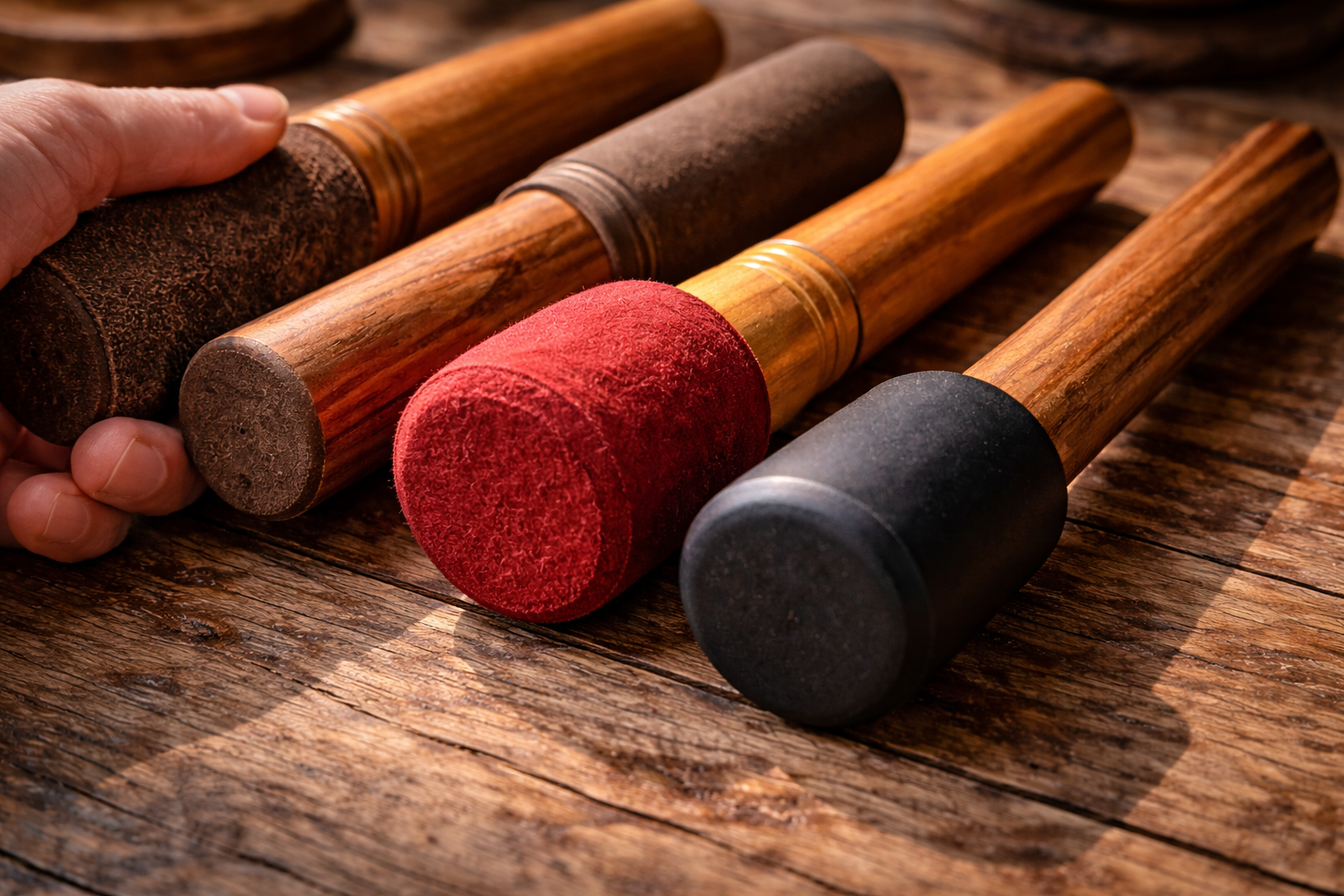
If two mallets look similar in photos, the sneaky differences are usually grip, balance, wrap quality, and head finish. That is what I would check first. Fancy listing language tells you almost nothing.
How we tested them
I used four criteria across the reviewed models: bowl compatibility, control and grip, contact noise, and strike quality. I also paid attention to the small annoyances listings never mention, like a handle that feels slippery after a minute or a head that makes you over-correct your wrist.
Then I used each on the kind of bowl it was built for and on at least one bowl it was not built for. That second pass matters. A good product shows its limits clearly. A mediocre one blurs into “kind of okay” until you realize you are working harder than you should.
What to look for in the photos and product copy
- Handle shape: too thin and it can feel twitchy. Too chunky and steady pressure gets clumsy.
- Balance point: if the head looks oversized for the handle, expect wrist fatigue sooner.
- Wrap or coating finish: rough seams and sloppy edges can add noise or wear faster.
- Head material: soft for gentler strike, grippy for rim work, mixed-use only if the bowl type matches.
- Bowl match in the listing: “for crystal” and “for metal” are not decoration. They are your first filter.
The thing I distrust most is ceremonial-looking gear with poor control. A pretty striker that slides in the hand is still a bad striker. Clear size, clear material, and a clear bowl match tell you more than a wall of mystical copy.
Pick the right mallet for your specific setup
If you just want the short list, here it is.
| Setup | Best starting point | Tradeoff |
|---|---|---|
| First frosted crystal bowl | Rubber-headed crystal mallet like the MEINL CSBM | Not the cleanest feel on every smooth rim |
| Quiet, detailed crystal singing | Silicone-coated rod like the MEINL CSBRL | Less satisfying as a main striking tool |
| Smooth-rim crystal bowl or chalice | Suede mallet like the MEINL CSBSMM | Can drag on frosted crystal |
| Metal or Tibetan singing bowl | Suede-wrapped wood like the DharmaObjects striker | More contact feel and less whisper-quiet rubbing |
| One-mallet-only buyer | Match the main use, not the dream use | One tool will always give up something |
If your bowl came with a thin generic stick and it feels weak, do not assume the bowl is low quality. A lot of starter bundles save money right there. Swap to the right mallet and the bowl often opens up in a very obvious way.
If hand fatigue is part of the picture, I would lean toward the best-balanced model in the right material rather than the most exotic-looking one. That sounds boring. It is also the pick you will still like after week three.
Solve the sound problems people blame on the bowl
When a bowl misbehaves, people blame the bowl, then their technique, and only later the mallet. The mallet is often higher on the suspect list than people think.
| What you hear | Likely cause | What to try |
|---|---|---|
| Scratchy hiss | Too much drag or dirty rim contact | Move to silicone or rubber for crystal, slow down, wipe the contact surface |
| Chatter or squeal | Uneven pressure, wrong angle, or a mallet that is too firm | Lower your speed and keep the pressure steady instead of pressing harder |
| Thin strike | Head too small or too hard for the bowl | Try a softer or broader head |
| Bowl will not sing | Mallet mismatch or too much speed | Switch material first, then slow the circle and keep contact steady |
| Bowl feels unstable | Oversized mallet or awkward support | Use a smaller head or set the bowl on a stable ring |
Two fixes get overlooked all the time. First, slow down. A bowl that chatters often needs calmer contact, not more force. Second, stop trying to force a frosted crystal bowl with suede just because suede sounds more serious. Sometimes the plain rubber head is the better tool. Full stop.
And yes, some bowls are easier to activate than others. If you have tried the right material, the right size, and a steadier pace and the bowl still feels stubborn, the bowl may just have a narrower sweet spot.
Use and care for the mallet so it sounds better for longer
Quartz is not a soft material. The National Park Service’s plain guide to the Mohs hardness scale lists quartz at 7, which is a handy reminder that the bowl can take more than people assume, but grit, rough seams, and dirty contact surfaces are still a bad mix on a nice rim.
Keep suede, felt, and silicone surfaces clean and dry. If the mallet head starts collecting dust, skin oil, or residue, the sound gets worse before the tool looks obviously dirty. A quick wipe with a dry soft cloth fixes more than most people expect.
For large crystal bowls, volume is worth a little common sense. The Centers for Disease Control and Prevention notes that repeated noise at 85 dBA and up can raise hearing risk. That figure comes from work settings, not bowl sessions, but the plain lesson still stands: if a big bowl is barking right next to your ear, back off and give it some room.
If the bowl is part of a meditation practice, that can be a lovely fit. The National Center for Complementary and Integrative Health says meditation and mindfulness practices are usually considered low risk, which is a saner frame than pretending the mallet itself carries special powers.
And if sound is part of a wider ritual shelf, these safe crystal cleansing methods are a useful companion piece because sound is one of the gentler no-contact options for mixed crystal collections.
FAQ
Can you use any mallet on a singing bowl?
You can use many mallets on many bowls, but that does not mean they are a good match. The wrong material can add scratch, make the bowl harder to start, or give you a thin strike. Start by matching the mallet to the bowl type first.
Do I need two mallets for one bowl?
Not always. If you mostly sing the bowl or mostly strike it, one well-matched mallet is enough. If you care about both a clean sustained note and a soft attractive strike, two mallets usually works better than forcing one tool to cover both jobs.
Can the wrong mallet damage a crystal bowl?
A normal mismatch is more likely to sound bad than cause real damage. The bigger risks are rough seams, dirty grit on the contact surface, and clumsy handling. Keep the mallet clean and stop using anything that feels abrasive or leaves residue on the rim.