
Pyrite is the crystal that makes sensible people open way too many tabs. One guide says rinse it. Another says bury it in salt. A third treats moonlight like a reset button for everything. If you’re wondering how to cleanse pyrite crystals without damaging them, start with dry or no-contact methods like sound, a short pass through smoke, a selenite slab, or sheltered moonlight. Skip water as a default, and skip direct salt too.
The material reason is pretty straightforward. Pyrite is an iron disulfide mineral, and mineral references describe how oxygen and moisture can trigger pyrite decay. That does not mean every piece falls apart the moment it gets damp. It means the usual “just rinse it” crystal advice is a lousy fit for pyrite.
The first time I cleaned a pyrite bracelet, the biggest help was not a ritual script. It was knowing what not to do.
- Which cleansing methods are safest for pyrite
- Why water, humidity, and salt cause so much confusion
- How to clean dusty pyrite jewelry without making a mess of it
- When sunlight or moonlight make sense, and when they don’t
- What to do if a pyrite piece got wet by accident
At a glance: the fastest safe pick
| If this is your situation | Use this first | Skip this |
|---|---|---|
| Raw pyrite stone or cluster | Sound, smoke, selenite, sheltered moonlight | Soaking, rinsing, wet wiping |
| Bracelet or ring | Dry cloth first, then sound or light smoke | Water, salt, harsh polishing |
| Small apartment or smoke-sensitive home | Sound or selenite | Heavy incense sessions |
| Mixed crystal collection | Sound or moonlight in a dry sheltered spot | Any method that is risky for the most delicate piece |
| Dusty display piece | Soft dry cloth or soft brush, then optional energetic cleanse | Scrubbing or damp cloths |
How to Cleanse Pyrite Crystals Safely
If you want the short answer, here it is: the safest way to cleanse pyrite is to keep the process dry and gentle. Sound is the easiest default. A few passes through incense or smoke works well too. Selenite is great when you want something passive, and moonlight works if the stone stays dry the whole time.
That covers most people. You do not need a complicated ritual, and you do not need to force pyrite through the same routine you use for quartz, clear or smoky. Pyrite does better when the method changes the atmosphere around it, not the surface of the stone.
Quick rule: If the method adds moisture, grit, or heat, it is probably the wrong starting point for pyrite.
Use sound first if you want the safest “set it and do it” option. Use smoke if you like ritual and you can ventilate the room. Use selenite if you want almost no effort. Use moonlight if the piece can sit on a dry indoor sill or another sheltered spot where dew and damp air are not part of the setup.
And yes, you can keep this simple. A single bell chime, one minute near a singing bowl, or an overnight rest on selenite is enough for most pieces. The routine that actually gets repeated beats the perfect one you never quite do.
Why Pyrite Needs a Different Cleansing Approach
Pyrite looks tough. It is metallic, angular, and often heavier than people expect. That look tricks people into treating it like a low-maintenance stone, when the real issue is not hardness. It is reactivity.
Collectors sometimes call the deterioration problem “pyrite decay” or “pyrite disease.” The name sounds dramatic, but the idea is plain enough: when oxygen and moisture get involved over time, some pyrite specimens can start to deteriorate. That is why a humid room, a damp cloth, or a moonlight session on a wet patio table is a bigger deal than it would be for many other crystals.
Not every specimen reacts the same way. Some stay stable for years. Some are fussier. That variability is exactly why broad water-safe advice is unhelpful here. If the risk gives you very little upside and a lot of downside, why pick it?
I think this is where generic crystal care goes off the rails a bit. It treats cleansing methods like shoes in one shared size. Pyrite is the stone that reminds you “medium” is not really a size if the fit is wrong.
Note: “Keep pyrite dry” does not mean panic if a single drop touched it once. It means do not build moisture into the routine on purpose.
Choose the Right Pyrite Cleansing Method for the Situation

The best method is not always the most spiritual-looking one. It is the one that fits your piece, your space, and your tolerance for risk.
| Method | Best for | Watch for |
|---|---|---|
| Sound | Most pyrite pieces, mixed trays, fast resets | Almost no material-care downside |
| Smoke | Short ritual cleansing, one or two pieces | Indoor air and scent sensitivity |
| Selenite | Overnight passive cleansing and charging | Needs a dry place and a stable surface |
| Moonlight | Dry indoor setups, group cleansing | Dew, damp air, outdoor exposure |
| Short morning sunlight | People who like a brief charging ritual | Heat and overexposure, so keep it short |
If you live in a small flat, sound or selenite is the easy winner. If the pyrite is part of a bracelet or ring, dry cloth plus sound is usually the cleanest path. If you are cleansing a whole mixed collection, go with the method that is safe for the most delicate piece in the group, not the toughest one.
That last rule matters more than people think. One water-sensitive or soft stone changes the whole plan. If you want a broader refresher on safe crystal cleansing methods, that bigger framework helps. For pyrite, though, dry and low-fuss still wins.
Use Sound, Smoke, Moonlight, and Selenite Without Guesswork
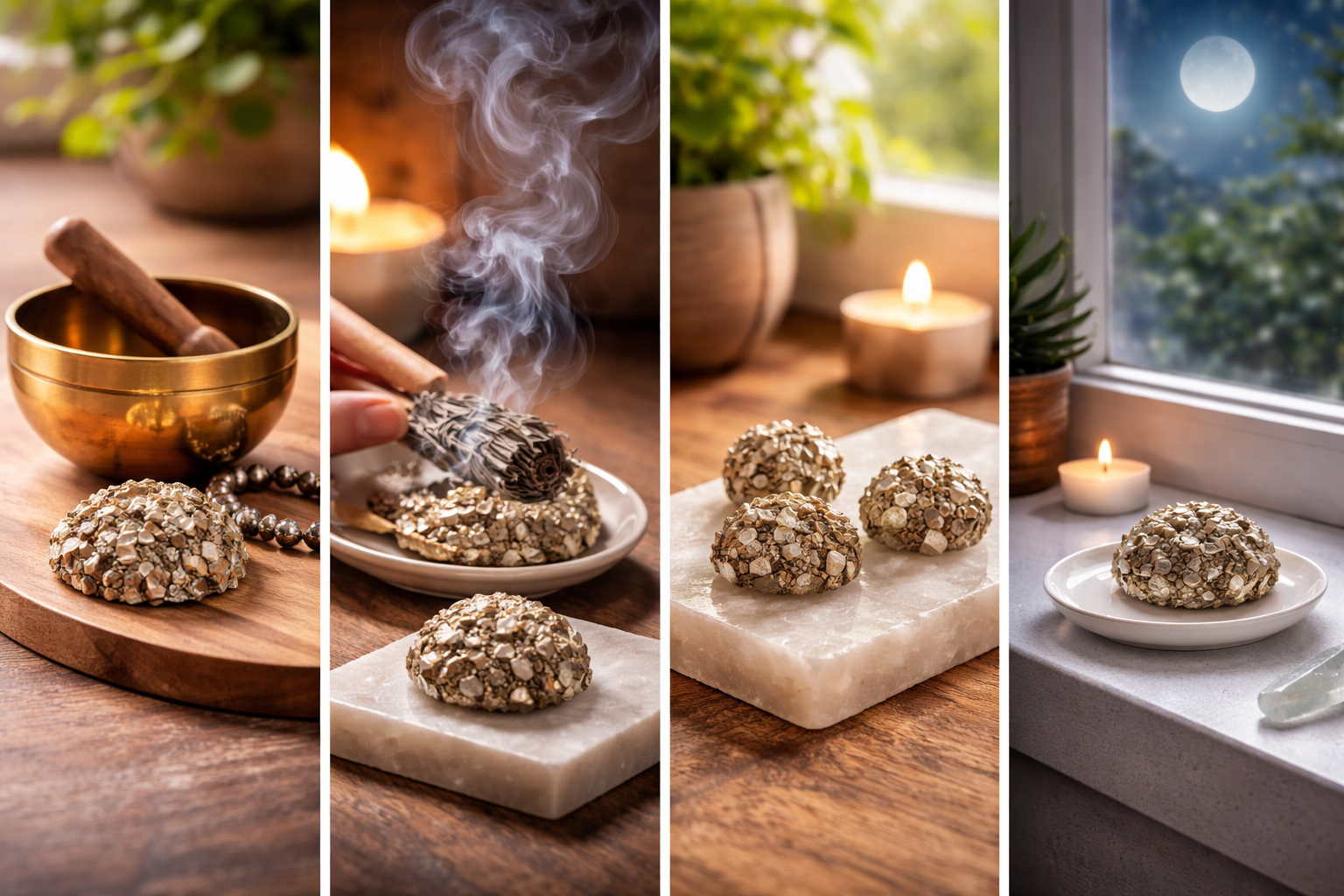
Here is the part people actually need: how to do each method without turning a five-minute task into a whole production.
Place the pyrite near sound and reset it fast
Set the stone on a clean, dry surface. Ring a bell nearby or use a singing bowl for one to three minutes. If the pyrite is in jewelry, place the piece beside the bowl instead of holding it over the rim where it could slip.
This is the method I reach for when I do not want to think. It works for raw pyrite, tumbled pieces, bracelets, rings, and mixed trays. No moisture, no grit, no drama.
Pass the stone through smoke and keep the session short
Move the pyrite slowly through smoke for about 30 to 60 seconds, or let a few calm passes drift over it. Do not camp it in a cloud like you are hotboxing a crystal. Short is enough.
That caution is not just me being fussy. The EPA notes that burning incense and smoke indoors adds particulate matter, and Cleveland Clinic warns that indoor smoke can irritate lungs and trigger asthma symptoms. So crack a window, keep the session brief, and skip smoke altogether if the home is scent-sensitive. A lighter option from this cleansing incense guide can help if you still want the ritual.
Set pyrite in moonlight and keep moisture out of the picture
Moonlight works best on a dry indoor windowsill or another protected surface. Leave the stone there for a few hours or overnight. A full moon is nice if you care about lunar timing, but it is not a rule you need to obey like a parking sign.
The catch is sneaky. Outdoor moonlight often means dew, damp patio furniture, or a cool surface that feels dry when it is not quite dry. Moonlight is gentle. Damp exposure is not.
Rest pyrite on selenite when you want the lowest-fuss option
Place the stone on a selenite slab or beside it for several hours or overnight. That is it. For a lot of people, this becomes the default because it is quiet, clean, and easy to repeat.
If you like to pair cleansing with charging, selenite and moonlight are the easiest pairings for pyrite. I would treat brief morning sunlight as optional, not standard. Ten to twenty minutes of gentle light is as far as I’d go, and only if the piece stays cool and dry.
Clean Dusty Pyrite and Pyrite Jewelry Without Using Water
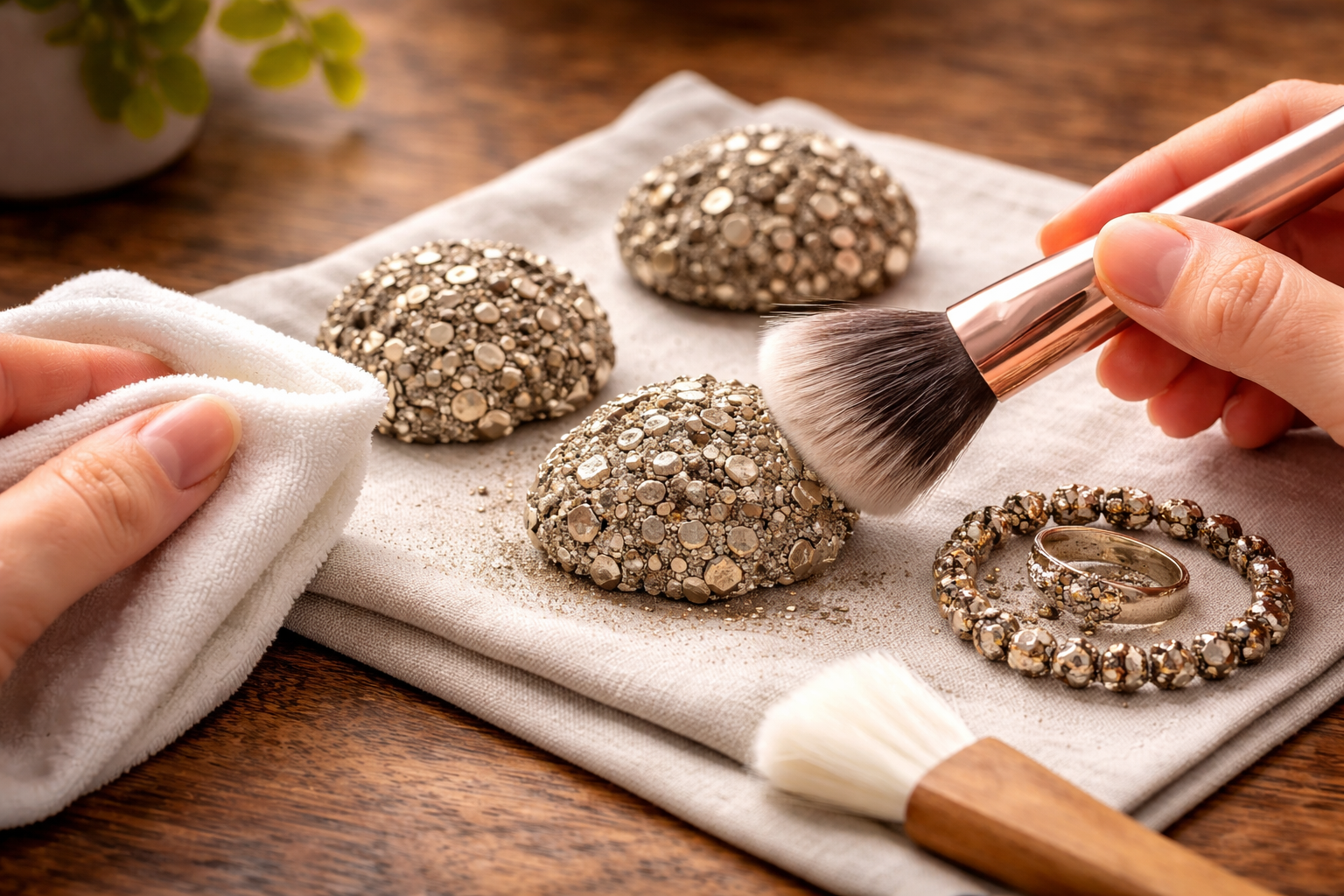
Sometimes “cleanse” is not really what you mean. Sometimes the piece is just dusty, fingerprinty, or a bit grubby from being worn. That is a different job.
For loose pyrite stones, start with a soft dry microfiber cloth. For clusters or rough pieces, use a very soft brush and light strokes. A clean makeup brush works nicely for this, funny enough, because it gets into the angles without grinding dust deeper into the surface.
Jewelry needs more care than a loose tumble. A pyrite bracelet or ring might include elastic, glue, plated metal, or tiny spacers that do not love moisture or harsh rubbing any more than the stone does. So keep the cleaning dry, then do your energetic cleanse with sound or a quick smoke pass.
Remember: “Least force first” is the right mindset here. Wipe, then brush, then stop. Do not escalate to scrubbing just because a mark looks stubborn.
If a piece starts showing powdery residue, cracking, or an odd weeping look, stop cleaning it and separate it from the rest of the collection. That is not the moment to get more hands-on. It is the moment to get gentler.
Avoid Water, Salt, and Damp Storage Before They Become a Bigger Problem
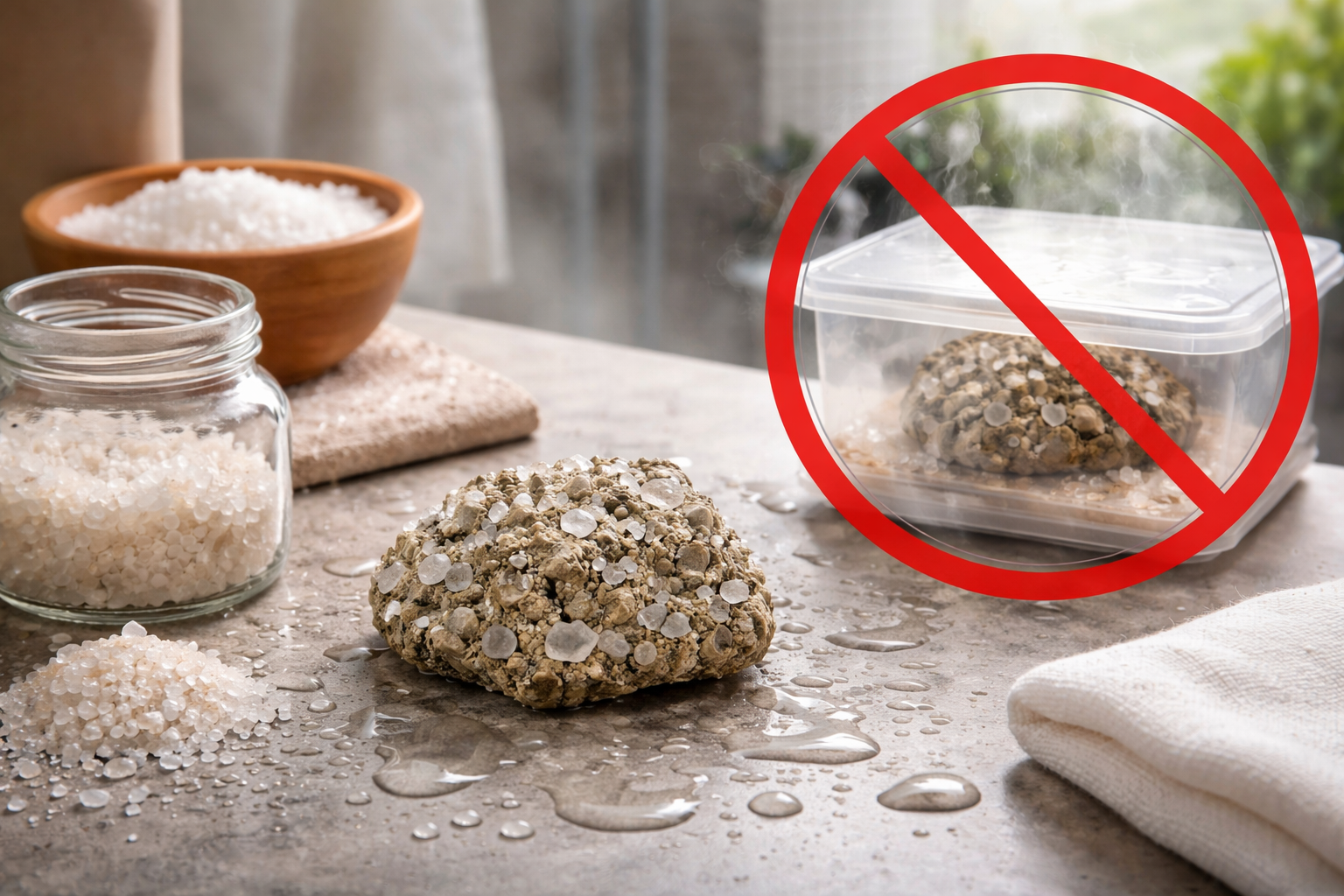
Water is the big one, but the fuller rule is “avoid moisture exposure that gives you little upside.” That includes soaking, rinsing, wet cloths, damp moonlight setups, humid bathrooms, and closed boxes that trap moisture around the stone.
Salt deserves its own warning because it still shows up in crystal care lists like it is a free pass. For pyrite, direct salt contact is not a smart default. Dry salt sounds safer than salt water, and yes, it removes one part of the risk. But it still adds surface contact, grit, and one more thing you have to clean off later. With pyrite, there is rarely a good reason to bother.
Storage matters more than many “how to clean pyrite” guides admit. A shelf in a steamy bathroom is worse than a quick sound cleanse in a boring bedroom. A moonlight ritual on a damp outdoor ledge is worse than no ritual at all.
If pyrite got wet once
- Pat it dry right away with a soft cloth
- Give it airflow in a dry room
- Do not seal it in a closed container while it is still cool or damp
- Watch for powder, cracking, residue, or worsening tarnish over the next days
One accidental splash is not the same as repeated wet cleansing. The better move is to stop the exposure, dry the piece, and not make the mistake twice. Pyrite is forgiving right up until it isn’t, and that line can sneak up on you.
Use a Simple Cleansing Schedule for New, Worn, and Display Pyrite
You do not need a dramatic lunar calendar for this. A simple schedule works fine, and it is much easier to keep.
- New pyrite: cleanse it once when it arrives
- Bracelet or ring worn often: about once a week, or after a rough week when it has been handled a lot
- Desk or altar piece: about once a month
- After heavy use: do one extra reset with sound, smoke, or selenite
If the piece sits on a desk because of why people keep pyrite for abundance work, monthly is plenty for most homes. If it gets picked up all the time, passed around, or worn daily, bump the routine up. That is less about dogma and more about common sense.
Charging can be paired with cleansing, but you do not need to do both every single time. A quick sound cleanse during the week and a longer overnight rest on selenite now and then is a very sane rhythm. Truthfully, “consistent and simple” beats “ceremonial and rare” almost every time.
The Mistakes That Make Pyrite Cleansing Harder Than It Needs to Be
A lot of pyrite trouble starts with advice that sounds harmless in the moment. These are the mistakes I see most often, and a couple I learned the annoying way.
- Following a general crystal guide without checking the exceptions. Pyrite is one of those exceptions.
- Using water because the stone looks sturdy. The look is misleading. Moisture is the issue, not whether the piece feels solid in your hand.
- Calling moonlight “safe” without thinking about dew. Indoor moonlight is one thing. Damp outdoor exposure is another.
- Reaching for salt because it sounds old-school and powerful. For pyrite, it is more hassle than help.
- Treating jewelry like a loose stone. Rings and bracelets come with metal, thread, glue, and plating in the mix.
- Using too much smoke in a closed room. A short pass is enough. More smoke does not make the cleanse more real.
- Making the ritual so elaborate that it never happens. Pyrite does well with plain, repeatable care.
The rule worth keeping: When in doubt, choose the driest gentle method that leaves the stone looking exactly the same when you are done.
FAQ
Can pyrite be cleansed in moonlight through a window?
Yes. That is one of the safer ways to use moonlight because the pyrite stays sheltered and dry. A full moon is optional. The bigger concern is moisture, not whether the moon is at peak drama.
Is sound cleansing enough for pyrite, or does it need charging too?
Sound cleansing is enough for many people and many pieces. If you like the idea of charging, pair it with selenite or a dry moonlight session. You do not need to stack three or four methods just to make it count.
Is dry salt safe for pyrite?
It is safer than salt water, but I still would not make it the default. Direct salt contact gives you little upside and more cleanup, more surface contact, and more room for mistakes than sound, smoke, selenite, or sheltered moonlight.