
Most people do not need another chakra color chart. They need a way to stop feeling scrambled, pick one practice that fits the problem, and stick with it long enough to notice a real shift.
Britannica describes chakras as psychic-energy centres in Indian traditions, and Cleveland Clinic notes that Western medicine does not treat them as measurable anatomical structures. So if you’re wondering how to heal a chakra, the most grounded answer is this: identify the life theme that feels most out of balance, choose one practice that matches it, repeat that practice for a few days, and judge progress by how you feel and behave, not by whether you had a dramatic spiritual moment.
The generic answer is too thin. “Meditate on the color and use a crystal” sounds nice, but it leaves out the part that matters. A scattered, fried nervous system needs a different first move than grief, shame, or a throat that locks up every time you try to say what you mean.
What you’ll get here:
- A quick way to tell which chakra needs attention first
- A method picker so you choose the right practice for the pattern
- A simple 10-minute routine that doesn’t turn into ritual clutter
- The mistakes that make chakra work feel vague and pointless
- A calm line between supportive spiritual practice and outside help
Fast pick: match the pattern before you pick the practice
| If this feels most true | Start here | First practice |
|---|---|---|
| Unstable, anxious, floaty, never settled | Root chakra | Grounding breath and slow movement |
| Emotionally shut down or all over the place | Sacral or heart chakra | Journaling, gentle breath, hand-on-body check-in |
| Flat, ashamed, indecisive, hard to act | Solar plexus chakra | Short energising movement and one clear commitment |
| You know what you want to say, but it sticks in your throat | Throat chakra | Write it first, then speak one honest sentence out loud |
This is the rule for the whole article: pattern first, chakra second, method third.
What healing a chakra actually means, and what it does not
When people say a chakra is “blocked,” they’re usually pointing at a repeating pattern. It might be fear that keeps you braced all day, grief that makes connection feel risky, or self-doubt that turns every decision into a swamp.
That matters because chakra healing is not about repairing a broken body part. It’s about bringing one part of your inner life into steadier balance through attention, movement, breath, reflection, and repetition.
Blocked usually means stuck or constricted. Underactive leans flat, numb, withdrawn, or low-energy. Overactive leans frantic, excessive, overexposed, or hard to regulate. Those are different states, and they do not respond well to the exact same practice.
Note: A chakra framework can be useful without pretending it is a medical test. If a symptom is persistent, severe, or changing daily life in a big way, treat that as a health question first.
Here’s the plain version. If your root chakra feels off, the work is not “stare at red and hope.” The work is building more steadiness in the part of life tied to safety and grounding. If your throat chakra feels off, the work is not only humming near your neck. It’s making truth a little easier to say.
That is where most chakra advice breaks.
It describes the symbol, but it skips the behavior. And behavior is where you feel change.
How to tell which chakra needs attention first
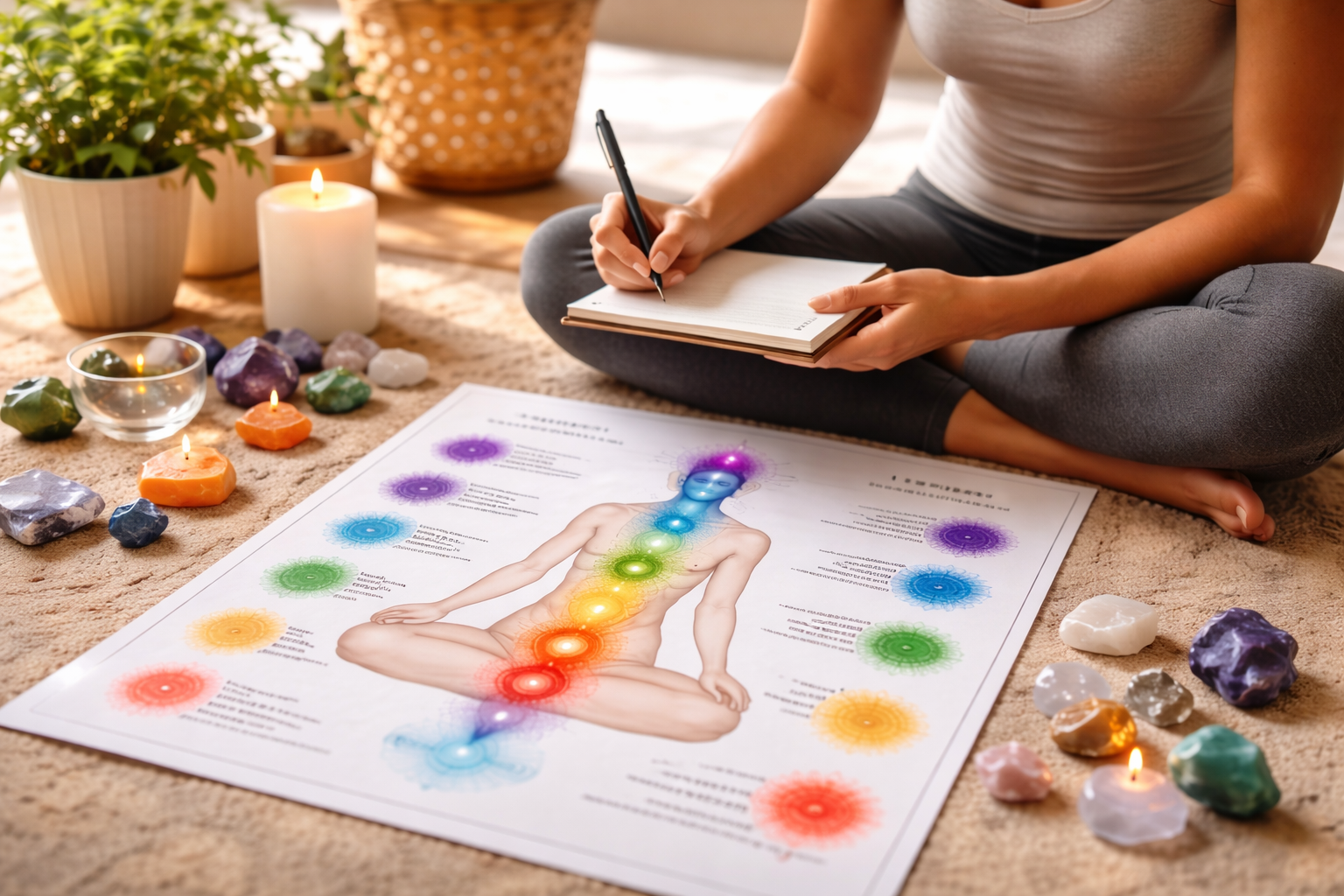
You do not need to diagnose all seven chakras before doing anything useful. That’s where a lot of people get stuck. They read three symptom lists, decide everything applies, and then freeze.
Start with one question: what pattern keeps showing up this week? Not once. Repeatedly.
| Chakra | Life theme | Common stuck pattern | Best first move |
|---|---|---|---|
| Root | Safety, steadiness, belonging | Anxious, untethered, always “on” | Slow exhale breathing, walking, lower-body grounding |
| Sacral | Emotion, pleasure, flow, intimacy | Numb, shut down, clingy, messy emotional swings | Gentle journaling, hip-opening movement, feeling without fixing |
| Solar plexus | Self-trust, action, boundaries | Low confidence, procrastination, overcontrol | Short posture reset, one clear choice, energising breath |
| Heart | Love, grief, openness, compassion | Guarded, resentful, overgiving, grief-heavy | Hand-to-heart breathing, forgiveness journaling, soft chest opening |
| Throat | Truth, expression, speaking up | Can’t say what you mean, overexplaining, swallowing anger | Write first, speak one sentence, hum or chant softly |
| Third eye | Clarity, intuition, pattern recognition | Foggy, overthinking, distrust of inner signals | Screen break, quiet sitting, one-page reflection |
| Crown | Meaning, connection, perspective | Spiritually flat, disconnected, chasing “big” experiences | Stillness, prayer or contemplation, less input |
A simple self-check helps. Ask:
- Where do I feel the most friction right now?
- Is that pattern flat and shut down, or edgy and overactive?
- Which chakra theme matches the pattern best?
If two chakras seem relevant, start with the one that would make daily life feel easier fastest. For most people, that means root, heart, or throat before anything more abstract.
Fast pick: If you’re trying to decide between two chakras, choose the lower and more practical theme first. Feeling unsafe, dysregulated, or tongue-tied will muddy almost everything else.
Why a chakra can feel blocked in the first place
Most chakra imbalances do not arrive like lightning. They build through repetition. Stress, conflict, burnout, heartbreak, people-pleasing, poor boundaries, lack of rest, and old survival habits can all harden into familiar inner postures.
A blocked chakra is less like a clogged drain and more like a habit loop your system keeps replaying. You brace. You avoid. You overtalk. You shut down. After a while it feels like “that’s just how I am,” but it often isn’t. It’s just the groove you’ve been walking in.
This is why random ritual piles often flop. If your real pattern is fear and overactivation, adding louder music, intense breathwork, and five affirmations may rev you up even more. If your real pattern is numbness, another soft meditation might keep you drifting when what you need is movement and a decision.
There’s another snag here. People sometimes use chakra language to skip the messy human part. They light incense, say the right words, and never deal with the conversation, grief, or boundary that is feeding the pattern.
Remember: Ritual can support change. It does not replace change. If the throat chakra theme is truth, then one honest sentence may do more than a week of pretending to feel “aligned.”
So ask a better question. Not “How do I clear all my chakras?” Ask “What keeps replaying, and what kind of practice would interrupt that pattern?”
The best chakra healing methods depend on the kind of imbalance
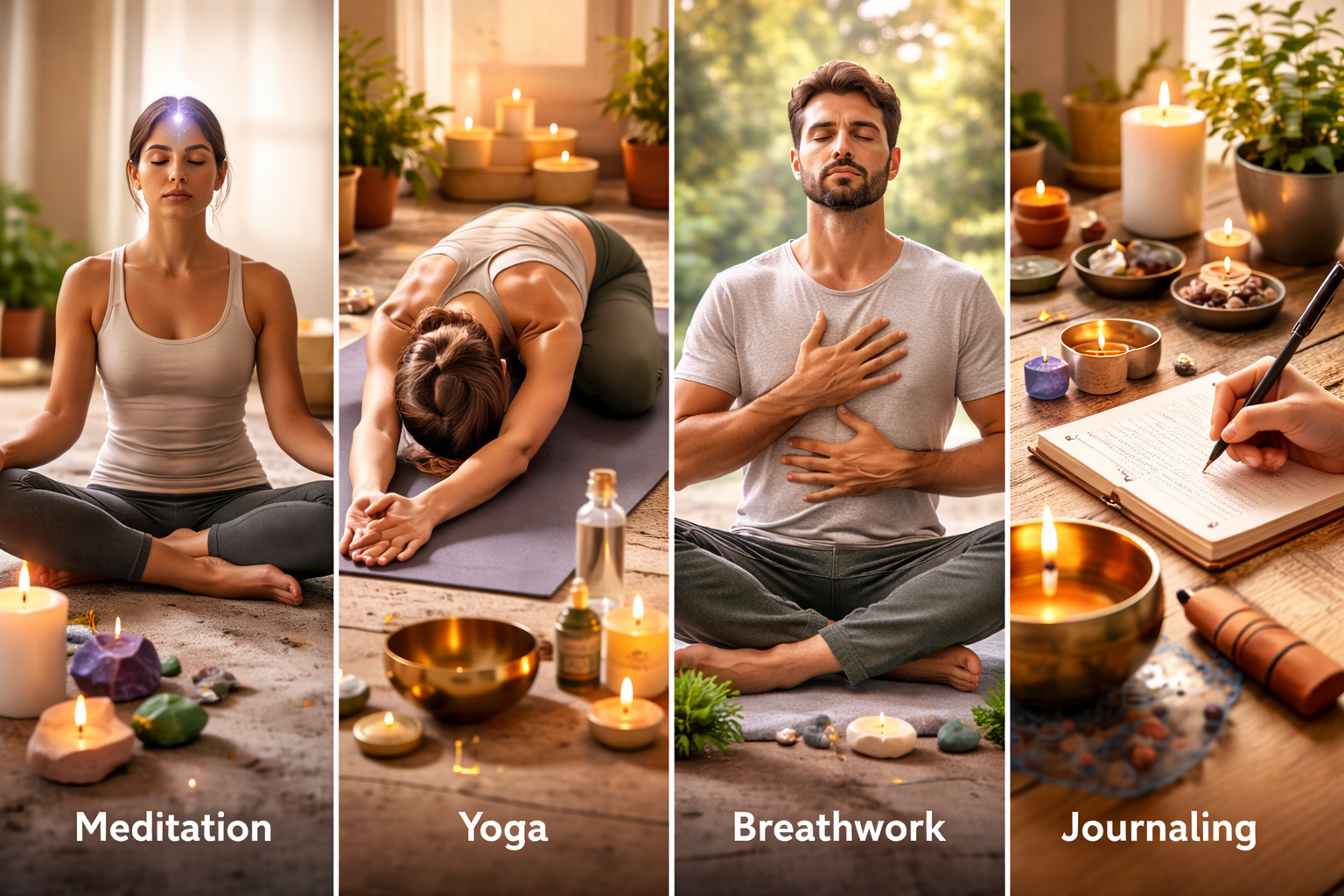
The strongest method is usually the one that matches the state you’re in. Calm-down practices help when you’re overactivated. Activating practices help when you’re flat or frozen. Reflective practices help when the pattern is emotional or relational. That sounds obvious, but lots of chakra advice skips it.
NCCIH says meditation and mindfulness may help with stress, anxiety, and insomnia for some people, while its yoga guidance points to help with stress management and mental well-being. So when chakra work feels useful, it often works through practices that settle attention, change breathing, loosen tension, and make patterns easier to spot.
| Method | Best for | Watch out for | Easy first use |
|---|---|---|---|
| Meditation and visualisation | Mental noise, fog, scattered focus | Can feel too floaty if you’re anxious or dissociated | 5 minutes, one chakra colour, one body area |
| Yoga or slow movement | Restlessness, shutdown, body disconnection | Hard sessions can overshoot if you’re wrung out | 3 to 5 poses with steady breathing |
| Breathwork | Fast stress, tight chest, feeling ungrounded | Intense methods can be too much for some people | Longer exhale than inhale for 2 to 3 minutes |
| Journaling and affirmations | Thought loops, shame, swallowed truth | Can stay too heady if you never bring it into action | One prompt and one sentence you believe |
| Sound, mantra, humming | Throat tension, focus, rhythm | Can feel performative if you overthink it | Low humming for 60 to 90 seconds |
| Crystals | Ritual support, symbolism, attention cue | Easy to mistake the object for the work | Hold one stone while breathing or journaling |
If you feel scattered and unsafe, start with root chakra work that gets you back into your body. Walking, squats, slow exhale breathing, or even standing with both feet planted will beat a long guided visualisation most days.
If you feel emotionally flooded, sacral or heart practices work better when they are gentle. Think hand on belly, hand on chest, soft music, and a few lines of journaling. Not a marathon emotional excavation on a Tuesday night.
If you keep swallowing words, throat chakra work gets better when it leaves the spiritual lane and becomes practical. Write the sentence. Read it out loud. Then say a shorter version to the person who needs to hear it.
Fast pick: Agitated and buzzy? Choose grounding or calming methods first. Flat and stuck? Choose movement or action. Emotionally tangled? Choose journaling plus breath. Unable to speak up? Add voice, not just silence.
Crystals can be lovely here, but keep them in their place. They’re props, cues, symbols, and sometimes comfort objects. Used that way, a guide to crystals for chakra alignment can help you choose a stone that matches the theme you’re working on. For a stripped-back routine, how to use crystals for healing shows how to keep one stone, one intention, and one simple action together.
If you like incense or smoke cleansing, keep the context in mind. The EPA explains that smoke-based indoor rituals add particulate matter to indoor air, so they are not the best fit for small rooms, smoke-sensitive homes, or anyone with breathing issues.
A simple 10-minute chakra healing routine you will actually repeat

The best routine is the one you do more than once. Not the one that looks mystical on paper.
Step 1. Name the pattern and narrow the target
Pick one chakra theme. Not three. Say it in plain language: “I feel ungrounded,” “I keep swallowing what I want to say,” or “I feel closed off and brittle.”
Step 2. Choose one method that matches the state
If the state is frantic, choose calming. If the state is numb, choose movement. If the state is relational or emotional, choose journaling with breath or hand-on-body awareness.
Step 3. Spend 5 to 7 minutes doing the practice
For root chakra work, that might be slow walking, a squat hold, or long exhales. For throat chakra work, it might be humming, shoulder rolls, then reading one honest sentence aloud. For heart chakra work, it might be three minutes of hand-to-heart breathing and two minutes of journaling what hurts.
Step 4. Add one sentence that turns the practice into action
This is where affirmations stop sounding like wallpaper. Pick a sentence you can believe today. “I can slow down.” “I can say one true thing.” “I do not need to earn rest first.” If the sentence feels fake, shorten it until it doesn’t.
Step 5. Check what changed before you move on
Ask: do I feel more settled, clearer, warmer, heavier, softer, or just a tiny bit less clenched? That is enough. Subtle counts.
Pro tip: One chakra, one method, one sentence, one short note afterward. That’s the routine. Once it starts needing ten objects and a playlist plan, it gets weirdly easy to skip.
If sitting still makes you itchy, skip it. Do this standing up. Walk slowly for five minutes, breathe out longer than you breathe in, then stop and name what is true. That still counts as chakra work.
How often to do chakra work, and what progress really looks like
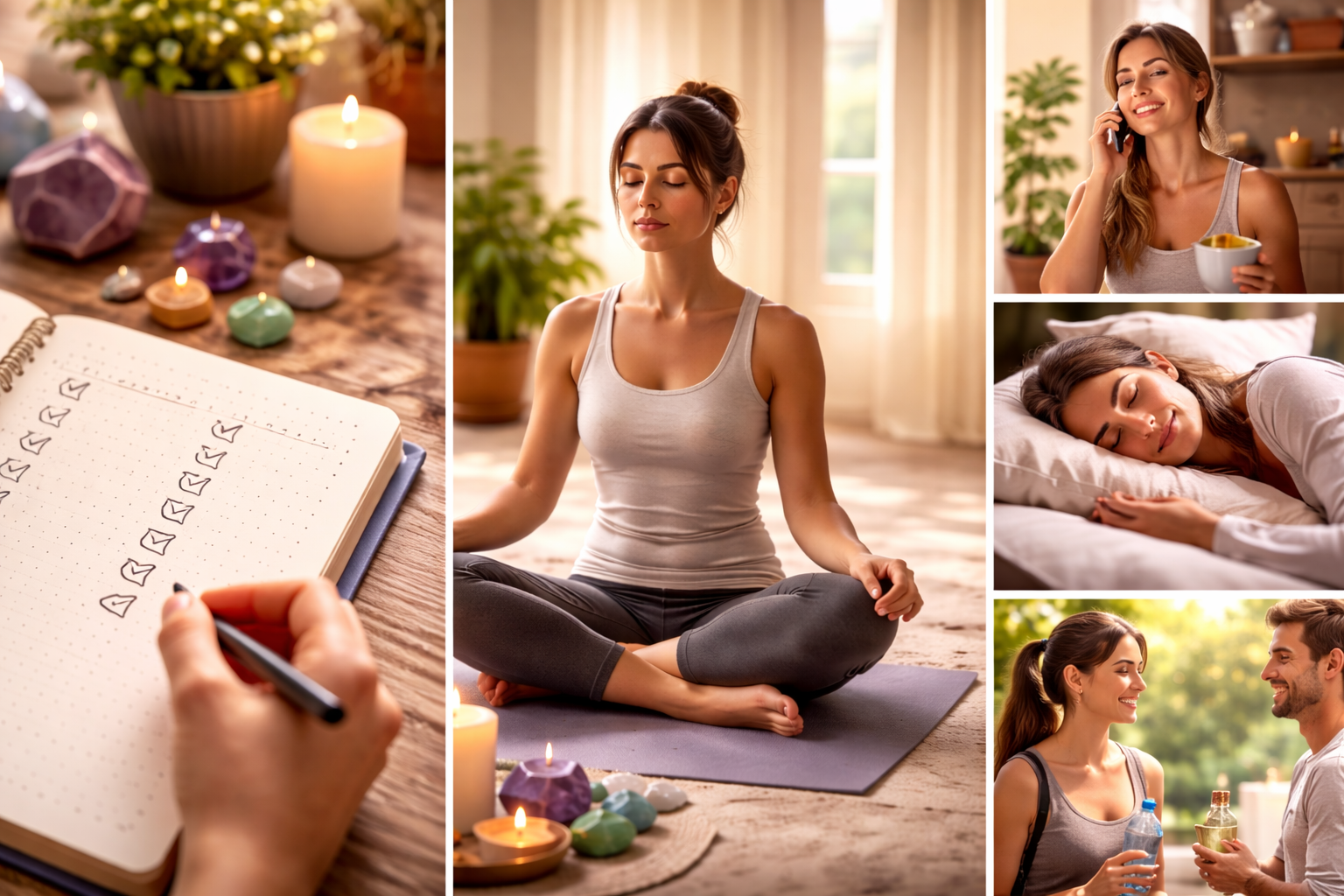
There is no fixed universal schedule for chakra balancing. Anyone who gives you a magic number is dressing preference up like law.
A sane starting rhythm is 5 to 10 minutes, 3 to 5 times a week with the same chakra and the same core method for several sessions. Daily is fine if it leaves you steadier. Daily is not a virtue badge.
What progress looks like is usually not flashy. You notice the pattern faster. You recover from stress with less drama. You speak a little sooner instead of bottling it up for three days. You stop needing the whole ritual to feel okay and start carrying the shift into the rest of your day.
This is the part people miss. They expect heat, tingling, tears, visions, or some big opening. Sometimes that happens. Sometimes nothing obvious happens at all, and the real sign is that you argued less, slept a bit better, or stopped spiralling after one wobble.
Fast pick: If a practice leaves you clearer, steadier, or more honest afterward, keep it. If it leaves you spun up, foggy, or weirdly detached, make it gentler or switch methods.
If you feel nothing, do not assume the practice failed. Check whether you changed methods too quickly, picked the wrong chakra, or chose something too abstract for the state you were in. A scattered mind often needs movement before meditation. A tight throat often needs writing before chanting. That’s not a setback. That’s better targeting.
The chakra healing mistakes that make everything feel vague
Trying to heal all seven at once. This is the big one. It sounds thorough, but it usually turns into dabbling. Pick the loudest theme and stay there for a bit.
Treating symptom lists like diagnosis charts. A stomach knot does not automatically mean solar plexus. A sore throat does not automatically mean throat chakra. Use the theme, not a body-part guessing game.
Choosing the prettiest ritual instead of the right method. A crystal grid might look lovely, but if the issue is pent-up anger and unspoken truth, journaling and one blunt sentence may do more.
Switching methods every time you get bored. Boredom is often the point where a practice starts turning into something deeper. Not always, but often enough that it is worth noticing.
Using only calming methods when the real problem is collapse. Some people do root chakra work by getting quieter and quieter when what they actually need is to walk, lift, stretch, and take up a bit more space.
Thinking intensity means progress. More sensation does not always mean more healing. Sometimes it means you overshot.
Remember: Piling on seven methods at once is like wearing every layer in your wardrobe and then wondering why you can’t move. Simple beats crowded nearly every time.
If chakra work has felt vague before, there’s a decent chance it was not because the whole framework is nonsense. It may be because the practice was too broad, too decorative, or too disconnected from the actual pattern you were trying to shift.
When chakra healing is supportive, and when outside help matters more
Chakra work can be a good reflective practice. It can help you notice patterns, settle down, reconnect with your body, and put words to something slippery. It should not be asked to do every job.
The same NCCIH review on meditation that notes possible benefits also says some people report unwanted effects, including anxiety, depression, or distress. That does not mean meditation is bad. It means “gentle” is not the same as “right for everyone.”
Outside help matters more when symptoms are persistent, intense, or knocking holes in daily life. Think panic that keeps coming back, dissociation, major depression, breathing problems, ongoing pain, trauma symptoms, or a sense that practice keeps making you feel less real instead of more present.
- If the practice makes you more distressed each time, scale back or stop.
- If your body symptoms worry you, see a clinician before assigning spiritual meaning to them.
- If emotional material is coming up hard and fast, a therapist or a trauma-aware teacher may help you hold it better.
Yoga, meditation, breath, journaling, chanting, crystals, prayer, contemplation, all of that can support you. But support is the right word. Not replacement.
If you keep that line clear, chakra healing gets better. Less fantasy. More honesty. And usually, funnily enough, more relief too.
FAQ
Can more than one chakra be blocked at the same time?
Yes. Patterns overlap all the time. Fear can affect the root chakra, then spill into the throat, heart, or solar plexus. The cleaner move is not to fix all of them at once. Pick the chakra that would make daily life feel easier fastest, then work there first.
Can chakra healing make you feel emotional or tired afterward?
It can. Slowing down, breathing differently, or finally naming what is true can bring emotion to the surface. Mild tiredness or tenderness can happen. If you feel sharply distressed, detached, or worse after practice more than once, make the method gentler or pause and get support.
Can you do chakra work without meditation?
Absolutely. Walking, stretching, humming, journaling, prayer, contemplation, and one honest conversation can all count. Meditation is one tool, not the whole toolbox.