
Most people hit the same wall. One page says the root chakra stone is red jasper. Another swears it is black tourmaline. A third tosses in ruby, and a simple question starts feeling slippery.
The short answer to what are the 7 chakra stones is this: the most common modern starter list is black tourmaline or red jasper for the root, carnelian for the sacral, citrine or tiger’s eye for the solar plexus, rose quartz or green aventurine for the heart, blue lace agate or lapis lazuli for the throat, amethyst or sodalite for the third eye, and clear quartz or selenite for the crown.
That list is useful, but it is not sacred law. Britannica describes chakra as a Sanskrit word meaning “wheel” and places the idea inside Hindu and Tantric Buddhist traditions, while the seven-color map most readers know now is a later, simplified wellness frame. So the real job is not memorizing one frozen list. It is knowing which stone fits the kind of support you want.
I’ve made the classic beginner move too: bought a rainbow chakra set, lined up seven stones, lay there for a few minutes, and thought, “Okay… now what?” The stones were not the problem. The missing piece was a way to choose.
- Which stones are most commonly paired with each chakra
- Why different lists keep giving different answers
- How to choose by goal instead of color alone
- How to use chakra stones without turning it into a whole production
- How to cleanse and store them without wrecking softer pieces
Start here in 30 seconds
| If this feels most true | Start with this chakra lane | Good first stone |
|---|---|---|
| You feel scattered, jumpy, or ungrounded | Root | Black tourmaline or red jasper |
| You feel flat, stuck, or creatively jammed | Sacral | Carnelian |
| Your confidence is wobbly or your will feels thin | Solar plexus | Tiger’s eye or citrine |
| You feel tender, guarded, or emotionally shut down | Heart | Rose quartz or green aventurine |
| You keep swallowing words or second-guessing what to say | Throat | Blue lace agate |
| Your mind feels foggy or overstimulated | Third eye | Amethyst |
| You want one flexible stone before buying more | Crown or broad-use starter | Clear quartz |
A handy rule: one stone for one week beats seven stones for one distracted afternoon.
What Are the 7 Chakra Stones? The Quick Answer and the Best Starter List
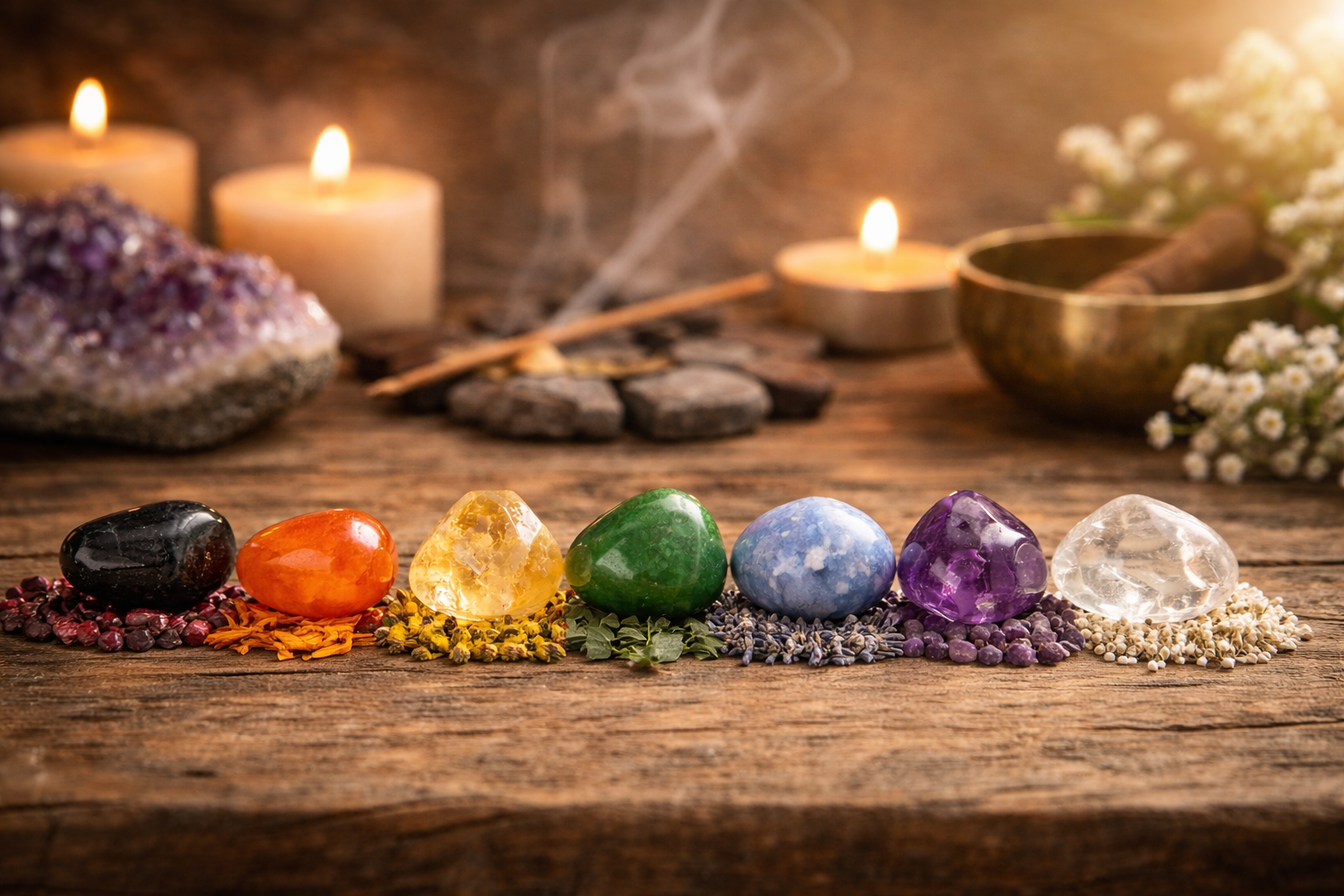
If you want the cleanest beginner mapping, use the list below and do not overcomplicate it on day one. You can refine later.
| Chakra | Body area | Common color lane | Best starter stone | Usually chosen for |
|---|---|---|---|---|
| Root | Base of spine | Red or black | Black tourmaline or red jasper | Grounding, steadiness, boundaries |
| Sacral | Below the navel | Orange | Carnelian | Creativity, desire, emotional flow |
| Solar plexus | Upper abdomen | Yellow | Citrine or tiger’s eye | Confidence, drive, self-trust |
| Heart | Center of chest | Pink or green | Rose quartz or green aventurine | Compassion, softness, emotional repair |
| Throat | Throat and neck | Blue | Blue lace agate or lapis lazuli | Expression, truth, speaking up |
| Third eye | Between the brows | Indigo or deep blue-violet | Amethyst or sodalite | Insight, reflection, mental clarity |
| Crown | Top of head | White, clear, or violet | Clear quartz or selenite | Stillness, spaciousness, spiritual focus |
Note: This is a strong starter list, not the only valid one. If another page swaps in garnet, moonstone, aquamarine, or fluorite, that does not make the whole map wrong.
The point of a starter list is not to flatten the topic. It is to get you moving without guesswork. Once you know the broad lane for each chakra, the next step is learning why the lists keep shifting.
Why the 7 Chakra Stone Lists Never Match Exactly
The short version: different lists are using different rules. Some match by color. Some match by the job the stone is thought to do. Some quietly follow what is common in shops and bracelets.
Cleveland Clinic describes the modern seven-chakra map as seven points along the spine linked with physical, emotional, and spiritual functions, while also noting that chakras are not recognized by Western science and can still work as a metaphor for balance. That modern map is why color plays such a big role in crystal pairings. It is familiar, visual, and easy to package. It is not the same thing as a fixed historical gemstone canon.
That is where most pages stop.
A better way to see it is this: choosing chakra stones by color alone is like buying shoes by color and hoping the fit sorts itself out. Color helps, sure. But fit matters more.
- Root can run red or black. Red jasper, garnet, ruby, black tourmaline, and hematite all show up because the root is tied to grounding and safety, not one exact shade.
- Heart can run pink or green. Rose quartz gives the soft, tender lane. Green aventurine gives the restorative, growth-oriented lane.
- Crown often splits three ways. Clear quartz, selenite, and amethyst all appear because crown work gets framed as clarity, spaciousness, or spiritual connection.
A guide on what different crystals mean helps sort the symbolism from the hype without locking the whole topic into one rigid chart.
Remember: two lists can disagree and still be useful. The better question is not “Which page is right?” It is “Which stone fits the kind of support I want?”
Choose the Right Chakra Stone by Goal, Not Color Alone
If you feel drawn to a stone because of its color, fine. That is a decent first signal. But if you stop there, you miss the actual choice.
I treat “blocked chakra” as shorthand for where the friction seems to collect, not as a diagnosis. That keeps the practice useful and keeps the claims honest.
Spot the friction
Start with the part of life that feels tight, flat, noisy, or off. Do not scan your whole personality like a malfunction report. Pick the one knot that keeps showing up.
If home, money, or your nervous system feels shaky, start with root stones. If the problem is creative dullness or emotional numbness, look at sacral stones. If the ache is confidence, personal power, or follow-through, solar plexus is usually the cleaner lane.
Pick the kind of support
The same chakra can hold very different stones because the tone of support changes.
| If this is the feeling | Try this kind of stone | Example |
|---|---|---|
| Scattered, unsafe, overstimulated | Grounding and boundary-heavy | Black tourmaline |
| Flat, shy, emotionally stiff | Warming and activating | Carnelian |
| Doubt, second-guessing, low will | Steady confidence | Tiger’s eye |
| Tender heart, grief, guardedness | Softening and comfort | Rose quartz |
| Fog, overthinking, too much mental static | Quiet reflection | Amethyst |
Choose a method you’ll repeat
A stone you wear or carry every day will shape your experience more than a perfect stone that stays in a drawer. I learned that the hard way. My “special” stones mostly sat on a shelf until I switched to one small piece I could actually keep in a pocket.
Start with one stone for one week. Carry it, sit with it for five minutes, and notice whether the pairing feels steady, soothing, or irritating.
A simple way to choose chakra crystals beats collecting seven more names that never get used.
Small rule, big payoff: if you cannot name the issue, start with root for grounding or heart for softening. Those two lanes cover a lot of beginner ground.
The 7 Chakras and the Stones Most Commonly Paired With Them
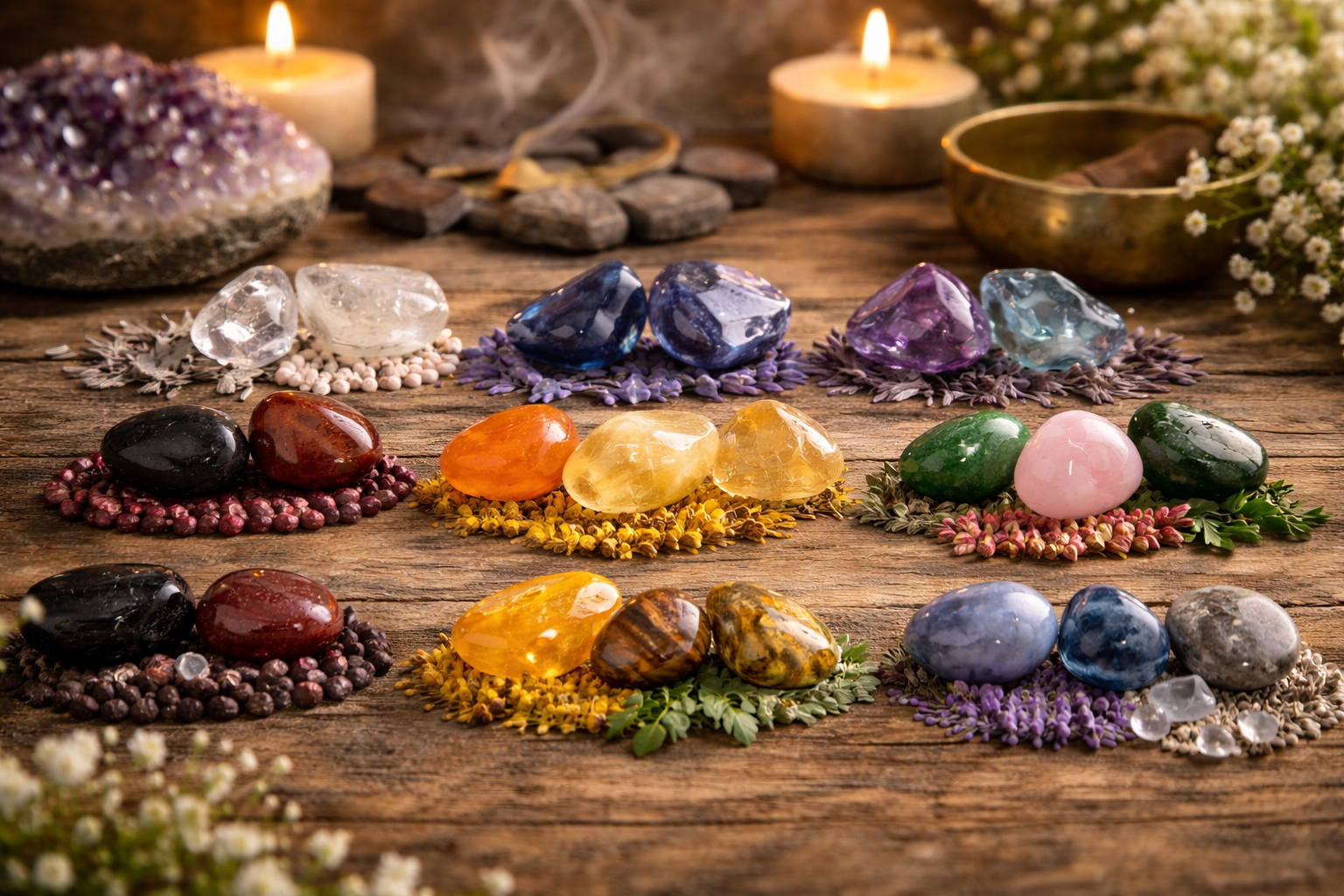
Here is the fuller map, with the tradeoffs that usually matter more than the raw list.
Root chakra (Muladhara)
Location: base of the spine. Color lane: red or black. Most common stones: black tourmaline, red jasper, hematite, garnet.
Black tourmaline is the classic grounding stone when life feels noisy, porous, or draining. Red jasper feels warmer and steadier, which is why a lot of people prefer it when they want courage without the heavy “shield up” feel. Hematite can work too, though some people find it denser and less forgiving.
Sacral chakra (Svadhisthana)
Location: below the navel. Color lane: orange. Most common stones: carnelian, orange calcite, moonstone.
Carnelian is the usual first pick because it has a lively, get-moving quality attached to it in modern crystal practice. Orange calcite often gets pulled in when the reader wants a lighter mood. Moonstone shows up on some lists because the sacral lane is not only about creativity. It is also about emotional flow, sensuality, and receptivity.
Solar plexus chakra (Manipura)
Location: upper abdomen. Color lane: yellow. Most common stones: citrine, tiger’s eye, yellow jasper.
Citrine is the brighter, more expansive pick in a lot of chakra crystal lists. Tiger’s eye is steadier, more grounded, and usually easier for confidence without a sugary “shine harder” vibe. Yellow jasper is gentler. A deeper look at solar plexus chakra stones helps when both citrine and tiger’s eye seem right for the same season.
Heart chakra (Anahata)
Location: center of the chest. Color lane: pink or green. Most common stones: rose quartz, green aventurine, malachite.
Rose quartz is the tender classic. It fits heartbreak, self-kindness, grief, and the softening side of heart work. Green aventurine fits recovery, renewal, and “let’s get moving again” energy. Malachite gets mentioned a lot too, though I would not push it as a first beginner pick when someone already feels raw. It has a stronger reputation and not everyone wants that tone first.
Throat chakra (Vishuddha)
Location: throat and neck. Color lane: blue. Most common stones: blue lace agate, lapis lazuli, aquamarine.
Blue lace agate is the softer, gentler throat stone. It suits shaky speech, over-explaining, or the feeling that your voice shrinks in the room. Lapis lazuli is more direct. It is the stone people tend to grab when the issue is truth, conviction, or speaking with a straighter back. Aquamarine often lands in the calm middle.
Third eye chakra (Ajna)
Location: between the brows. Color lane: indigo or deep violet-blue. Most common stones: amethyst, sodalite, fluorite.
Amethyst is the default here for good reason. It is familiar, easy to find, and tied in modern practice to reflection, intuition, and mental quiet. Sodalite leans more structured and thought-based. Fluorite gets pulled in when focus and mental sorting matter more than dreamy introspection.
Crown chakra (Sahasrara)
Location: top of the head. Color lane: white, clear, or violet. Most common stones: clear quartz, selenite, amethyst.
Clear quartz is the easiest crown starter because it is flexible and pairs well with almost anything. Selenite is often chosen for stillness and spaciousness. Amethyst crosses over from third eye to crown when the goal is reflection with a spiritual edge instead of pure blank-sky clarity.
A good shortcut: if a chakra has two common color lanes, like heart or root, the darker or denser stone usually gets framed as grounding or protective, while the softer color often gets framed as comforting or opening.
Use Chakra Stones in a Way That Actually Fits Daily Life
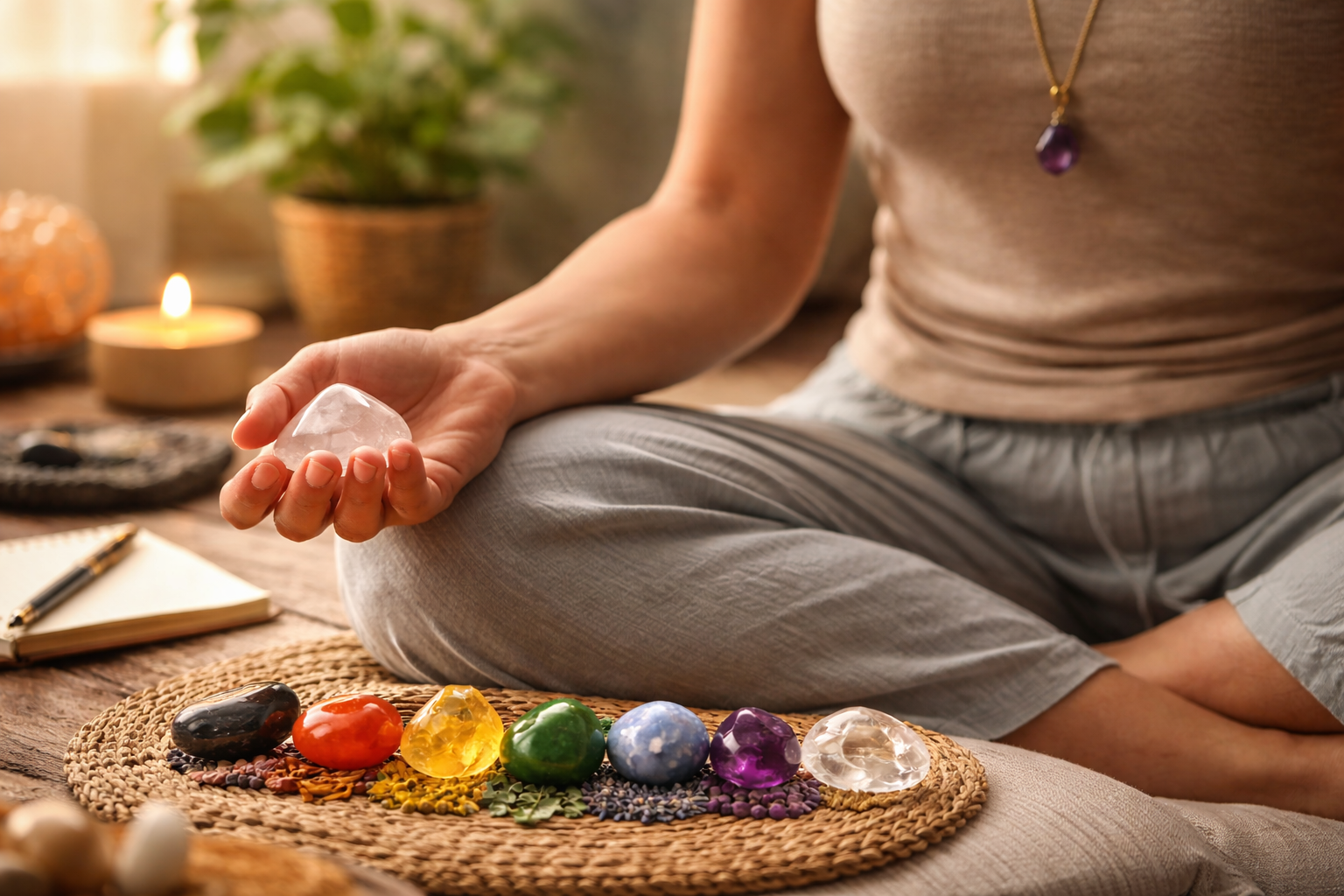
You do not need a perfect altar, seven candles, or forty-five minutes of silence. You need one method you can repeat without rolling your eyes at your own routine.
Hold the stone and narrow the focus
Sit down, hold one stone, and give it one job. Five to ten minutes is plenty. Name the chakra or the feeling, breathe slowly, and keep bringing your attention back when it drifts.
That structure matters. The National Center for Complementary and Integrative Health says meditation and mindfulness practices may have a variety of health benefits, which is one good reason to pair chakra stones with breath, stillness, or journaling instead of waiting for the stone to do all the work by itself.
Place the stone where the theme lives
Body placement can help because it gives your attention somewhere concrete to land. Root stones near the base of the spine or by the feet, heart stones near the chest, and throat stones near the collarbone all make practical sense inside the ritual.
If lying down with stones on the body feels like too much, place the stone nearby instead. A heart stone on a nightstand or a solar plexus stone by your desk still works as a cue.
Wear it when you need a reminder, not a ceremony
Jewelry is useful because it keeps the practice alive during actual life. A small pendant, bracelet, or pocket stone can do more than a big dramatic piece you never reach for. This is why throat and heart stones often work well as jewelry. They sit close to the theme they are meant to remind you of.
Carry one stone until the signal is clear
Trying all seven at once usually muddies the experience. Carry one stone for a few days, then ask a plain question: does this make me more settled, more aware, or at least more intentional? If the answer is no, swap lanes. No mystic guilt required.
For a simple daily routine, use one stone, one chakra, one sentence of intention, and one repeatable window of time. That is boring advice. It is also the advice people actually stick with.
Cleanse and Store Chakra Stones Without Damaging Them
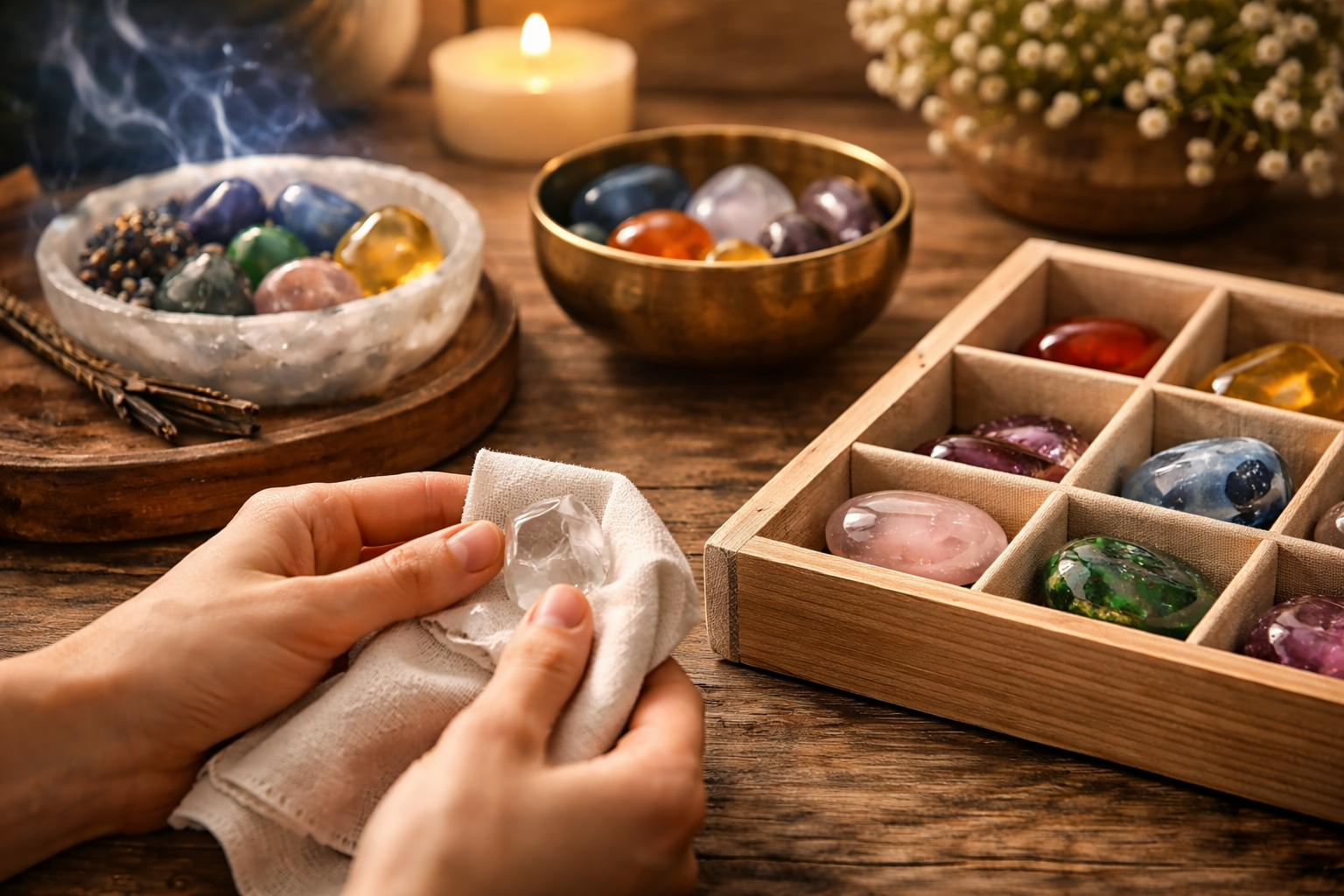
This part gets messy fast because crystal care advice travels by copy-and-paste. Water, salt, sun, moon, smoke, sound, rice, soil… after a while the stone is still sitting there and you are more confused than when you began.
Separate cleaning from cleansing
Cleaning is physical. Dust, fingerprints, skin oil. A soft dry cloth usually handles that. Cleansing is ritual language for resetting the stone after use. Charging is the extra step some people like when they want to reconnect the stone with a fresh intention.
Use the safe defaults first
If you are not sure what a stone can handle, stick with the low-drama options: sound, moonlight, a dry cloth, or a short smoke cleanse if that is already part of your practice. These methods are not flashy, but they are less likely to harm softer pieces.
Treat “selenite” like a delicate material
Mindat notes that selenite is a variety of gypsum and that the name is often used broadly, while satin spar gypsum refers to the fibrous form many crystal shops also sell under the selenite label. That matters because gypsum is soft. So the safe move is simple: treat selenite and satin spar gently, keep them dry, and do not assume they can handle the same care routine as quartz.
A fuller walk-through on how to cleanse crystals safely covers the methods that are easiest to repeat without damaging softer stones.
Good default: if you do not know the mineral for sure, skip water, skip salt, and treat it like it is delicate.
As for timing, skip rigid rules. Cleanse a new stone when it comes in, after heavy emotional use, or on a simple weekly or monthly rhythm if that helps you stay consistent.
What Chakra Stones Can Support, and What They Should Never Replace
Chakra stones can be meaningful without being magical medicine. That distinction matters.
A lot of what people like about chakra work is not hard to understand. A stone gives your attention somewhere to land. A chakra gives your feelings a shape. The ritual slows you down long enough to notice what is actually going on.
That does not make it medical treatment. Cleveland Clinic frames chakras as a wellness metaphor rather than a Western scientific model, and a 2025 randomized controlled study of 138 adults found that healing crystals did not reduce anxiety beyond placebo effects. In that study, believers improved whether they received rose quartz or a visually matched placebo, which tells you the crystal itself was not driving a unique anxiety-reducing effect.
I think that is the honest middle ground. If a rose quartz ritual helps you slow down, breathe, and treat yourself with a little more care, that can still be worth something. But a chakra stone should not stand in for therapy, medication, or medical care when those are needed.
Plain-English test: use chakra stones as a cue for attention, reflection, and intention. Do not ask them to do the job of a clinician.
Common Chakra Stone Mistakes That Make the Practice Feel Vague, Expensive, or Pointless
- Buying a full seven-stone set before you know your actual need. This is the fastest way to end up with a pretty pouch and no clear practice.
- Choosing by color alone. Yellow stones can share a chakra and still feel very different in use. Citrine is not tiger’s eye in a new shirt.
- Trying to work all seven chakras at once. That usually scatters attention. One chakra lane gives clearer feedback.
- Expecting a dramatic feeling on day one. Some readers feel calm right away. Others feel nothing for a while. Both are normal.
- Using rough cleansing advice on every stone. Water and harsh sun are not universal care methods.
- Turning “blocked chakra” into a diagnosis. It is better used as reflection language. It is not a medical label.
- Keeping the ritual symbolic and changing nothing around it. A throat stone works better when it sits beside one brave conversation. A root stone works better when it sits beside sleep, food, and actual steadiness.
The simple rule that saves most beginners from a lot of faff is this: one chakra, one stone, one method, one week.
FAQ
Can one bracelet really represent all seven chakras well?
It can work as a reminder piece, but it is rarely as clear as using one or two stones with a specific purpose. A seven-chakra bracelet is broad by design. That is useful for daily symbolism. It is less useful when you are trying to focus on one issue, like grounding, confidence, or speaking up.
Do chakra stones have to match the chakra color exactly?
No. Color is one guide, not the only guide. Root stones can be black or red. Heart stones can be pink or green. The better test is whether the stone matches the tone of support you want, such as grounding, softening, energizing, or clarifying.
What if I use a chakra stone and feel nothing?
That does not mean you chose “wrong.” Try one stone for a few days with one clear practice, such as five quiet minutes, journaling, or wearing it during a stressful part of the day. If there is still no connection, switch lanes. Go from color-first to goal-first. Root or heart is often the cleanest reset.