
You can spot a bad cleansing incense pick in about 30 seconds. You light it, the room goes from “reset” to “smoke alarm anxiety,” and now you’re fanning a window with yesterday’s mail.
For most people, the best incense for cleansing is not the strongest thing on the shelf. It is the scent and format that match the job. White sage and palo santo fit a deeper ritual reset. Frankincense and sandalwood fit steady, everyday clearing. Nag champa and lavender work better when you want the room to feel lighter, not blasted.
That sounds simple. It isn’t, not really. A lot of guides lump every cleansing incense into one pile, as if a tiny bedroom, a shared apartment, and a full-house post-argument reset all need the same smoke and the same mood. They don’t.
- Which incense works best for deep resets, daily clearing, meditation, and small spaces
- How to shop for natural incense without getting fooled by nice packaging
- Which real products are worth a look, and who should skip them
- How to burn cleansing incense without making the room feel stuffy or harsh
- What to watch for with white sage, palo santo, and indoor smoke
Best Suggestions Table (All products have been personally reviewed & tested by us! Click the buttons below to jump to the reviews.)
| Product | Best for | Action |
|---|---|---|
| Shoyeido Moss Garden | Best overall for daily cleansing | Check Price Review |
| Triloka White Sage Premium Incense | Best for a deep reset | Check Price Review |
| Triloka Palo Santo Incense | Best for a lighter uplifting cleanse | Check Price Review |
| Shoyeido Overtones Frankincense | Best for meditation and prayer | Check Price Review |
| Nippon Kodo Herb & Earth Lavender | Best gentle option for small spaces | Check Price Review |
| Satya Sai Baba Nag Champa | Best non-sage all-rounder | Check Price Review |
Tip: The review buttons jump to the detailed write-ups so you can decide faster.
Fast match matrix
- After conflict, guests, or a move: White sage, palo santo, cedar, or copal
- Daily home cleansing: Sandalwood or frankincense
- Small rooms or smoke-sensitive noses: Lavender, lighter sandalwood, or low-smoke Japanese incense
- If you hate sage: Nag champa, frankincense, or sandalwood
- Before meditation: Frankincense or sandalwood
Best Incense for Cleansing: The Quick Answer
If you want the short version, here it is: white sage is the classic pick for a hard reset, palo santo feels brighter and a little sweeter, frankincense and sandalwood are the best daily-use options, and lavender or nag champa are easier to live with if strong smoke wears you out.
That is the direct answer. The useful answer is a shade more specific.
When I test cleansing incense at home, the same pattern keeps showing up. The “best” scent changes with the room, the timing, and your tolerance for smoke. A strong white sage stick after a messy week can feel exactly right. Burn that same stick in a tiny office on a warm day and it feels like too much, fast.
| Incense type | Best for | Smoke feel | Beginner fit |
|---|---|---|---|
| White sage | Heavy reset, post-conflict clearing, ritual work | Medium to high | Fair |
| Palo santo | Uplifting cleanse, mood reset, gentle ritual | Medium | Good |
| Frankincense | Meditation, prayer, quiet clearing | Low to medium | Very good |
| Sandalwood | Daily grounding, bedroom use, steady home rituals | Low to medium | Very good |
| Nag champa | General cleansing, non-sage option, cozy ritual | Medium | Good |
| Lavender | Soft cleansing, evening wind-down, small spaces | Low | Very good |
Quick read: If you burn incense often, start with sandalwood or frankincense. If you burn it after a specific event and want a stronger symbolic reset, reach for white sage or palo santo.
Match the Scent to the Kind of Cleansing You Need
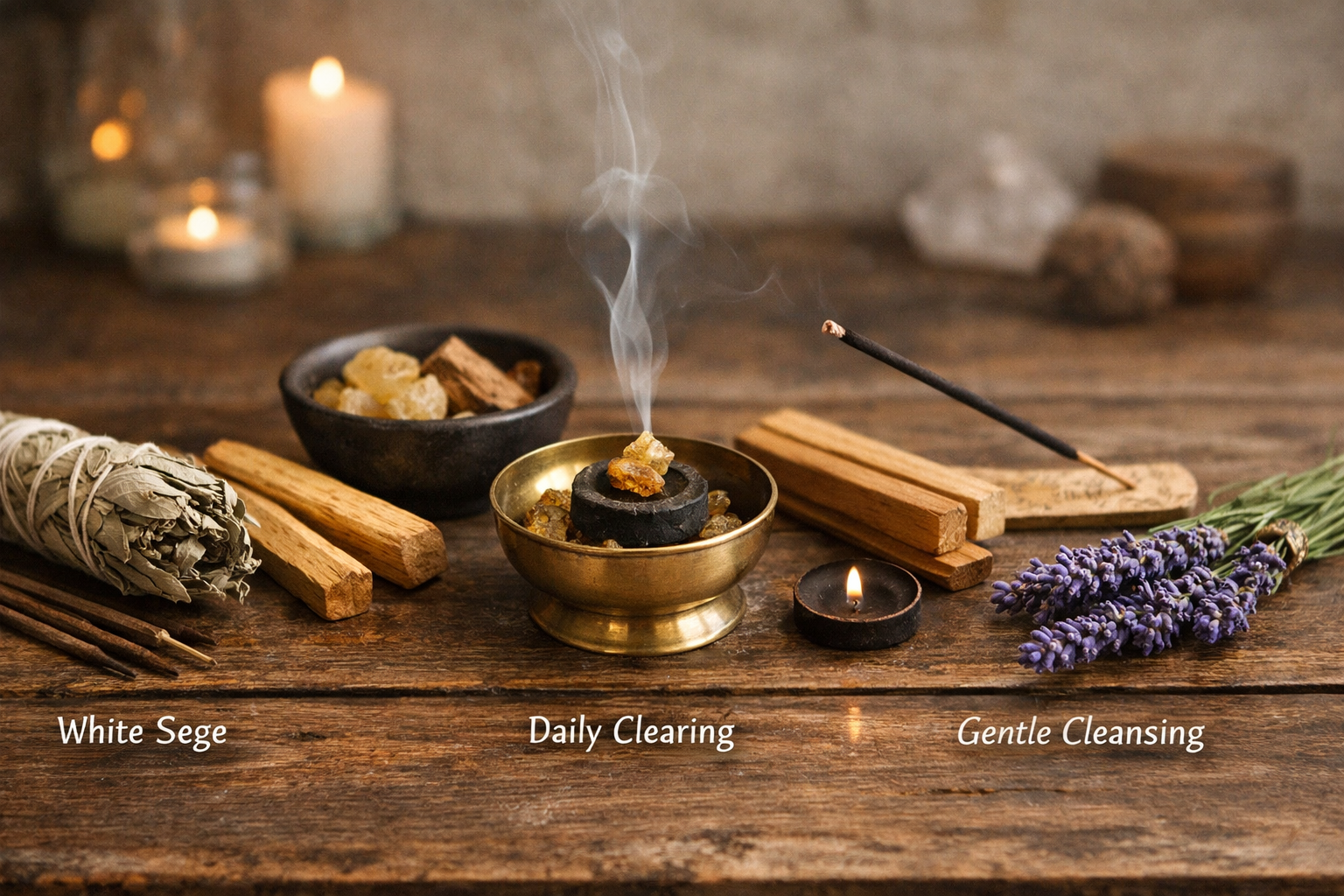
A better question than “What’s the strongest cleansing incense?” is “What am I trying to clear?” The answer shifts the shortlist.
For a deep reset: White sage, palo santo, cedar, and copal all fit that job. This is the category I reach for after a rough conversation, when a room has had too many people in it, or after unpacking in a new place. White sage has that dry, herbal, slightly commanding feel. Palo santo is woodier and brighter, with that sweet-citrus lift people either adore or find a little too cheerful for serious ritual.
For daily clearing: Sandalwood and frankincense win. They do not bulldoze the room. They settle it. Sandalwood is smoother and easier to burn often. Frankincense has more lift and a slightly resinous edge, which is why it fits meditation and prayer so well.
For cleansing with softness: Lavender and nag champa are much easier to live with if you want a ritual that blends into real life. You light it, the room feels better, and you do not feel like you have to narrate the moment in a whisper. Lavender is airy and familiar. Nag champa is warmer, sweeter, and more temple-like.
For protection-flavored ritual work: Myrrh, copal, and stronger resin blends can make sense, but this is where a lot of beginners overshoot. The logic is understandable. Stronger scent must mean stronger clearing, right? Not really. That is like buying hiking boots for a five-minute walk to the corner shop. You can do it. You just won’t enjoy it much.
The easiest way to choose
- If you want calm first, pick sandalwood.
- If you want clear air and clear head, pick frankincense.
- If you want “start fresh” energy, pick palo santo.
- If you want a ceremonial reset, pick white sage.
- If you want a softer non-sage route, pick nag champa or lavender.
Judge Cleansing Incense Like a Buyer, Not Just a Believer
Packaging in this category can be sneaky. Words like “pure,” “natural,” and “sacred” do a lot of work. Sometimes too much.
The way to cut through that is to judge incense on five things: ingredient quality, smoke level, scent balance, ease of use, and sourcing. That last one matters more than people think. If the incense is sold as white sage or palo santo, the brand should be able to say what it is, not just drape itself in mystical language and hope you won’t ask.
How we tested them
We tested these incense picks in three common settings: a small bedroom, a medium living room, and a short meditation session at a desk. Each one was judged on first-light harshness, how clean the middle burn felt, how long the scent lingered, how much smoke built up in a normal room, and whether the scent still felt good after repeated use. A lot of incense charms you once and annoys you by day three. That matters. We also looked at how easy each product is for a beginner to burn without fuss, and whether the brand gives any real sourcing or material clues instead of hand-wavy copy.
- Ingredient quality: Look for brands that say something concrete about woods, herbs, resins, or oils. Vague “fragrance blend” language is not a deal-breaker, but it does tell you less.
- Smoke level: This changes everything. A medium-smoke incense can feel rich in a big room and oppressive in a tiny one.
- Scent balance: Cleansing incense should smell clear, grounded, or purposeful. If it smells flat, syrupy, or aggressively perfumed, the ritual feel falls apart.
- Ease of use: Sticks are easier than resins. Low-smoke Japanese styles are easier than thick masala sticks for daily use.
- Sourcing: With white sage and palo santo, clear sourcing notes matter more than romantic branding.
If I had to give one shopping rule, it would be this: do not buy cleansing incense just for what it symbolizes. Buy for how it behaves when lit.
Pick the Best Incense for Cleansing by Use Case
Shoyeido Moss Garden
Editorial rating: 9.4/10
If you want one incense that works for most people, most rooms, and most routines, this is the one I would start with. Moss Garden leans sandalwood-forward, but it does not smell flat or dusty. There is a soft resin sweetness to it that keeps the scent from feeling thin. On first light, it stays controlled. No harsh blast, no “wow, this got intense quickly” moment. That matters when you are trying to clear a room before bed or after work, not stage a full ceremony.
In testing, this was one of the least fatiguing options over repeated burns. That sounds small. It isn’t. Some incense smells lovely once and then turns into background pressure when you use it three days in a row. Moss Garden stayed composed. It also worked well in a bedroom and a living room without forcing the windows wide open. That makes it a strong pick for daily home cleansing, light meditation, and anyone who wants a ritual that feels steady instead of dramatic.
The tradeoff is that it will not scratch the itch if you want a full ceremonial white sage style reset. It is not trying to. It is better for readers who want the room to feel settled, grounded, and freshly “put back in place.” If that is your lane, this one is hard to beat.
Triloka White Sage Premium Incense
Editorial rating: 8.9/10
This is the deep-reset pick. If your idea of cleansing incense is tied to a strong symbolic clearing, a “we’re starting over in here” moment, white sage still makes the most sense. Triloka’s version does a good job of giving that earthy, dry-herbal lift without collapsing into a murky smoke cloud. It is stronger than the sandalwood and lavender picks here, no question, but it is not sloppy.
What I liked in testing was its clarity. Some sage incense gets blunt and ashy. This one kept a fresher edge, which made it more usable for short intentional sessions. I would use it after having a lot of people over, after a tense week, or before re-setting a space that has felt heavy and stale. It carries a “line in the sand” kind of energy that softer incense does not.
The downside is obvious. White sage is not for every nose and not for every room. In a small apartment, one full stick can be a bit much. This is also a category where sourcing matters. If a brand sells white sage as pure ritual aesthetic and says nothing meaningful about respect or sourcing, that is a red flag for me. Use this one when you want cleansing to feel ceremonial. Skip it if you want something you can light casually while folding laundry.
Triloka Palo Santo Incense
Editorial rating: 8.8/10
Palo santo is a good answer for people who want cleansing incense to feel brighter, smoother, and less stern than sage. That is exactly where this product lands. The profile is woody, slightly citrusy, and warm without feeling sugary. When burned in a medium room, it lifted the mood faster than white sage and felt more welcoming. That makes it a strong choice for morning resets, pre-meditation rituals, or clearing a room before guests arrive.
During testing, this one sat in an interesting middle ground. It had more presence than the gentler Japanese-style incense, but it never felt heavy enough to dominate the room. The scent lingered in a pleasant way, too. Not “I can still smell it in my coat tomorrow” lingering. More like a soft trace that keeps the space feeling arranged.
The catch is that some readers expect palo santo incense to behave like burning actual palo santo wood. It doesn’t. Sticks are easier, cleaner, and more consistent, but they are still their own thing. If you want cleansing that feels warm and uplifting instead of strict or smoky, this is a smart pick. If you want the driest, most traditional reset feel, white sage still gets the nod.
Shoyeido Overtones Frankincense
Editorial rating: 9.1/10
Frankincense is one of those scents that gets described in lofty language and then handed to beginners with almost no context. The useful context is this: it is one of the best incense styles for cleansing when you want focus, stillness, and a sense of ritual without a huge smoke load. Shoyeido’s frankincense handles that job well. It smells resinous and gently bright, with a cleaner edge than sweeter blends.
In testing, this stood out before meditation and quiet reading. It helped the room feel “set” without pulling all the attention to itself. That is a bigger strength than it sounds. A lot of incense hijacks the session. Frankincense should frame it. This one did. It also burned more neatly than heavier Indian masala sticks, which makes it friendlier for people who are trying to bring cleansing incense into a regular weekday routine.
The tradeoff is that frankincense can feel a touch formal if what you really want is comfort. On a cozy rainy night, I would still rather burn sandalwood or a soft nag champa. But for prayer, meditation, journaling, and the kind of cleansing that feels like “clear the static so I can think,” this is excellent.
Nippon Kodo Herb & Earth Lavender
Editorial rating: 8.7/10
This is the pick for people who read cleansing incense guides and quietly think, “That all sounds nice, but I do not want the house to smell like a bonfire in a robe.” Fair. Lavender incense can still do the job when your main goal is to soften the room, break stale energy, and bring the space back to neutral. This one is low-smoke, easy to light, and very forgiving in smaller rooms.
What made it earn a place here was repeat use. In a bedroom or work corner, it felt clean and calm without becoming powdery or old-fashioned. Low-smoke incense is not always emotionally satisfying, and that is the rub. Sometimes it smells neat but not alive. This one kept enough body to still feel like a ritual, not just scented background air.
It is not the answer for heavy ceremonial clearing. If you have had a rough week and want a stronger symbolic reset, lavender will feel too polite. But for evening routines, apartments, shared spaces, and readers who get headaches from bigger incense, this is a very sensible buy. I would rather see a beginner use this often than buy an intense sage blend and stop burning incense altogether after two tries.
Satya Sai Baba Nag Champa
Editorial rating: 8.6/10
If you want a non-sage classic that still feels spiritual, familiar, and grounding, nag champa is the obvious lane. Satya’s version is the one most people mean when they say “nag champa,” and there is a reason it has stuck around. It gives you that warm floral-resin character that reads as temple-like without being too serious. In the right room, it feels comforting and centering.
In testing, this worked best when the goal was not “purge the room” but “reset the mood.” It was especially good after long workdays when the space felt mentally cluttered more than heavy. It also plays nicely with casual ritual. You can light it before journaling, while tidying, or before a short meditation and it does not feel over-produced.
The caution here is sweetness. Some people love the creamy, familiar warmth of nag champa. Others find it a little dense. If you are scent-sensitive or you prefer a sharper, cleaner burn, frankincense or sandalwood will probably suit you more. Still, for readers who want cleansing incense that feels inviting rather than austere, this remains a solid and very human choice.
If I had to narrow it down: Shoyeido Moss Garden is the best overall starting point, Triloka White Sage Premium Incense is the strongest ritual reset pick, and Nippon Kodo Herb & Earth Lavender is the safest bet for smoke-sensitive homes.
Choose the Form That Fits Your Space and Routine
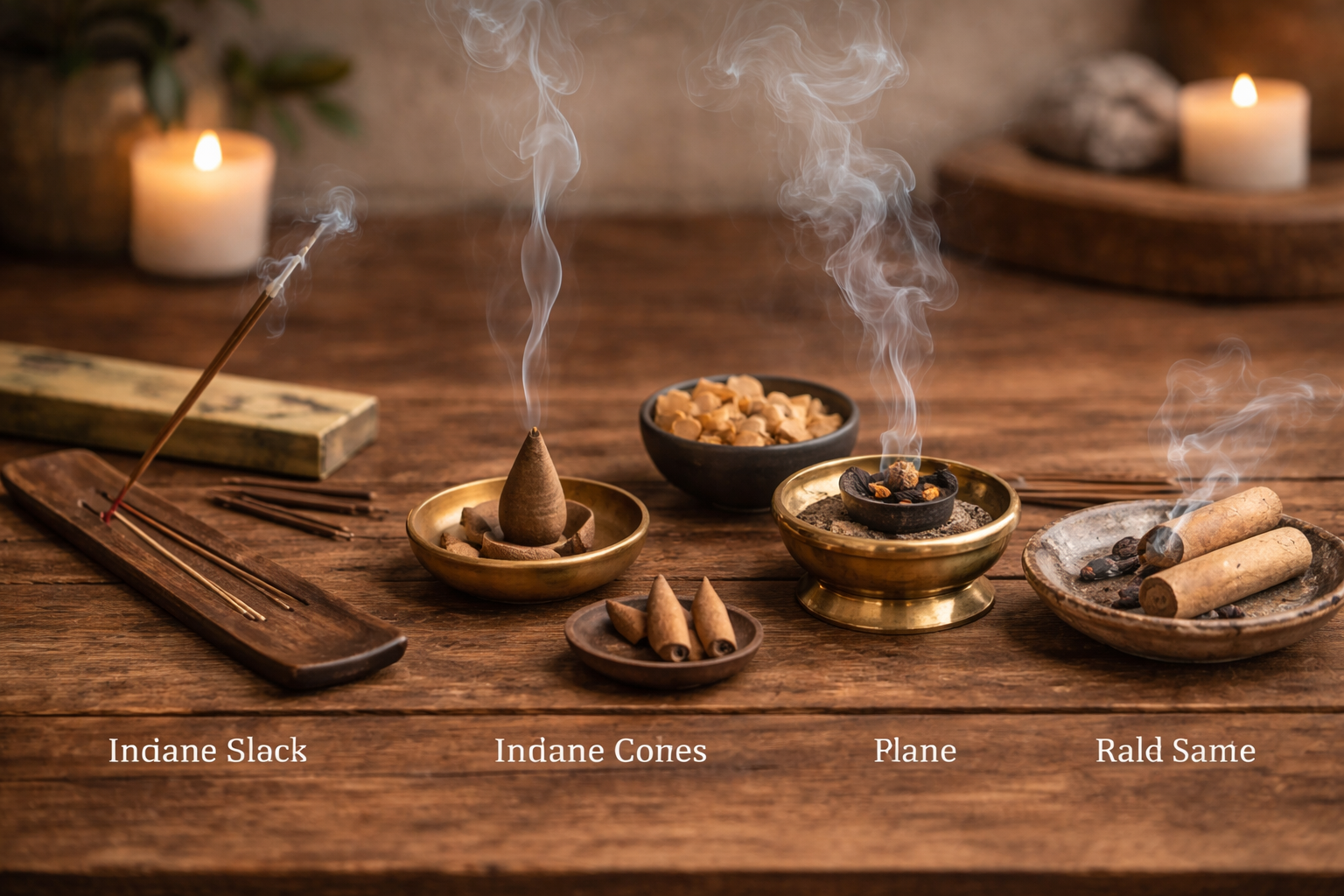
The form matters almost as much as the scent. Sticks, cones, resin, and wood pieces can all carry cleansing aromas, but they behave very differently once lit.
Choose sticks for the easiest daily ritual. They are the least fussy option, and they are what I would suggest for almost everyone starting out. You light one, place it well, and move on. If your plan is a simple home cleansing routine a few times a week, sticks make sense.
Choose cones when you want a shorter, punchier burn. Cones can smell richer and denser, which some readers love, but they also concentrate smoke faster. In small rooms, that can get cloying fast. Great for a quick burst. Not my first choice for beginners.
Choose resin when you want a ceremonial feel. Frankincense resin, copal, and myrrh on charcoal can be beautiful. They can also be messy, smoky, and weirdly high-maintenance if you just wanted ten quiet minutes. Resin suits slower ritual work more than everyday clearing.
Choose wood pieces when you want a more natural burn. Palo santo sticks sit here. They have charm and texture, but they are less consistent than incense sticks, so the ritual can feel more hands-on.
And yes, the burner changes the whole experience. A mismatched holder is one of those annoying little mistakes that can ruin the first impression. This is where a practical guide like Best Incense Burner Guide: 7 Smart Picks by Use Case can save you from buying the pretty wrong thing.
Use Incense So the Ritual Feels Clear, Not Cluttered
You do not need a complicated ceremony. You need a clean sequence.
Step 1. Open airflow and set the room up. Crack a window. Clear obvious clutter if you can. Not because incense needs a perfect room, but because a little airflow keeps the burn from getting stale and helps the ritual feel intentional.
Step 2. Light lightly and let the flame go out. One stick is enough for most rooms. Let the tip catch, then fan out the flame so it smolders. That first 20 seconds tells you a lot. If it already feels harsh, it is going to feel harsher in five minutes.
Step 3. Move through the space with a reason. You can walk the room, sit in one place, or pass the incense near a doorway or altar. What matters is that the action matches the mood you want. Clear the room. Settle the room. Reset after visitors. Keep it plain.
Step 4. Close the ritual and let the room breathe. Do not let incense burn on forever just because it can. A shorter burn in a ventilated room usually feels better than a heroic full-stick performance.
Remember: the goal is not to flood the room. The goal is to shift it.
Buy and Burn It Safely and Respectfully
A 2022 review in the Journal of Inflammation Research pulled together evidence showing that incense smoke can affect indoor air quality and irritate the respiratory system. Cleveland Clinic makes the same point in plainer language, noting that incense can trigger asthma symptoms and other lung issues in some people. So the practical conclusion is simple: ventilate the room, burn less than you think you need, and skip incense altogether if smoke tends to set you off.
Basic fire safety still matters, too. Put the burner on a heat-safe surface. Keep it well away from curtains, paper, and bedding. Put it out before sleep or before you leave. No drama here. Just common sense.
Now the respect piece. The USDA plant guide for white sage documents ceremonial use among Native peoples. The California Native Plant Society has also highlighted poaching and pressure on wild white sage populations. That does not mean you can never buy white sage incense. It means you should be choosy. If a seller leans hard on “sacred” language and says nothing useful about sourcing or cultivation, that is not a great sign.
Palo santo needs the same kind of adult judgment. Kew’s Plants of the World Online entry for Bursera graveolens helps with one basic point: this is a real, identified species with a native range from Mexico into northwestern South America. That sounds basic, but it matters. Brands should be able to tell you what they are selling. “Palo santo vibe” is not enough.
A quick sourcing check
- Does the brand identify the actual material clearly?
- Does it say anything concrete about sourcing or cultivation?
- Does the copy sound informative, or just mystical and vague?
- Would you still trust the product if the pretty packaging vanished?
Troubleshoot the Common Reasons Cleansing Incense Disappoints
“It smells harsh or synthetic.” That usually means one of three things: the incense is low quality, the room is too small, or you are burning too much. Try half a stick, more airflow, or a cleaner scent family like sandalwood or frankincense.
“It gives me a headache.” Go lower smoke. That often means Japanese-style sticks, lavender, or a lighter sandalwood. Thick cones and heavy masala blends are the first things I would cut.
“It feels too smoky for my apartment.” Shift the form, not just the scent. Sticks beat cones here. One short low-smoke stick with a cracked window can work surprisingly well.
“I do not like sage.” Fine. Plenty of people don’t. Frankincense, sandalwood, lavender, cedar, and nag champa can all support a cleansing ritual without that dry herbal punch.
“It doesn’t feel cleansing, just perfumey.” This usually happens when the scent is too sweet for the reason you are burning it. Move toward frankincense, sandalwood, palo santo, or cedar. Those profiles usually read clearer and more purposeful.
“I want something gentle for daily use.” Start with sandalwood or lavender. Daily cleansing should feel easy to repeat. If the ritual exhausts you, you will stop doing it.
One mistake worth avoiding: do not keep buying stronger incense to fix a mismatch. Most of the time, the problem is fit, not power.
If you like pairing incense with a simple grounding object on a desk or altar, healing crystals for stress, sleep, love, and protection can fit that kind of routine nicely. No need to pile on a dozen tools, though. One scent and one anchor is usually enough.
FAQ
What incense is best for cleansing negative energy if I do not like sage?
Frankincense, sandalwood, and nag champa are the best starting points. Frankincense feels clear and focused. Sandalwood feels grounded and steady. Nag champa feels warmer and more comforting. If you hate the dry herbal edge of sage, do not force it.
Is palo santo better than white sage for cleansing?
White sage is usually the stronger ceremonial reset. Palo santo is lighter, sweeter, and easier for more people to enjoy. If you want a serious “clear the room” feel, choose white sage. If you want cleansing with a brighter mood and a softer landing, choose palo santo.
What should I do if incense gives me a headache?
Burn less, ventilate more, and switch to a lower-smoke style. Lavender, lighter sandalwood, and many Japanese incense lines are easier to live with than thick cones or dense masala sticks. If smoke is a regular trigger, skip incense and use a smoke-free ritual instead.