
Sometimes the room feels off before you can explain why. You tidy the table, crack a window, light the first sage bundle you find, and five minutes later the space smells like a bonfire but still feels… crowded. That is usually the moment people think sage “didn’t work,” when the real issue was the match between the herb, the room, and the job.
For most homes, white sage is the best sage for cleansing negative energy when you want a deep reset. But that stock answer is only half useful. USDA’s plant profile identifies white sage as Salvia apiana, and the California Native Plant Society notes that it naturally occurs only in Southern California and northern Baja. That matters because white sage is potent, smoke-heavy, and widely sold in ways that can be murky. So the better question is not just “Which sage is strongest?” It is “Which sage fits this room, this moment, and this household?”
If you want the fast version, here it is: use white sage for a heavy reset, blue sage for a softer refresh, desert sage when you want a grounded, protective feel, and garden sage when you want a practical, homegrown option without the white-sage baggage.
What this guide will help you do
- Pick the right sage for heavy energy, light upkeep, or smoke-sensitive homes
- Buy more carefully and skip vague, over-marketed bundles
- Cleanse a room without turning it into a smoke box
- Know when a no-smoke ritual is the smarter call
- Finish the ritual in a way that leaves the space feeling settled, not just scented
At a Glance
| Type | Best for | Smoke level | Skip if |
|---|---|---|---|
| White sage | Post-conflict reset, new home, stale heavy rooms | High | You have pets, smoke sensitivity, or questionable sourcing |
| Blue sage | Gentler refresh, regular use, smaller rooms | Medium | You want a strong, unmistakable reset |
| Desert sage | Grounding, threshold cleansing, earthy feel | Medium | You dislike drier, earthier scent profiles |
| Garden sage | Practical home ritual, low-pressure use, homegrown bundles | Low to medium | You want the classic strong white-sage feel |
Best Sage for Cleansing Negative Energy: Quick Answer and Fast Chooser
If the room feels heavy after an argument, a draining visitor, a move, or a stretch of bad sleep, white sage is usually the strongest fit. It burns with a sharper, more assertive herbal scent, and in practice it tends to feel like a “clear the slate” tool.
If you want a lighter pass, blue sage is easier to live with. In small bedrooms and flats, I find blue sage lands better because it freshens the room without that dense, campfire-adjacent cloud that white sage can throw off.
Desert sage sits in the middle for many people. It feels more earthy and grounded, which is why some readers like it near front doors, home offices, or transitional spaces where the goal is steadiness, not a dramatic purge.
Garden sage, sometimes called common sage, is the practical sleeper here. If you grow herbs or want a simple smoke cleansing ritual without chasing the white-sage mystique, it can do the job just fine.
Fast rule: If the space feels emotionally stuck, go stronger. If the room just feels stale or you want a more regular ritual, go gentler. “Best” is not the same as “most famous.”
Choose White, Blue, Desert, or Garden Sage by Goal
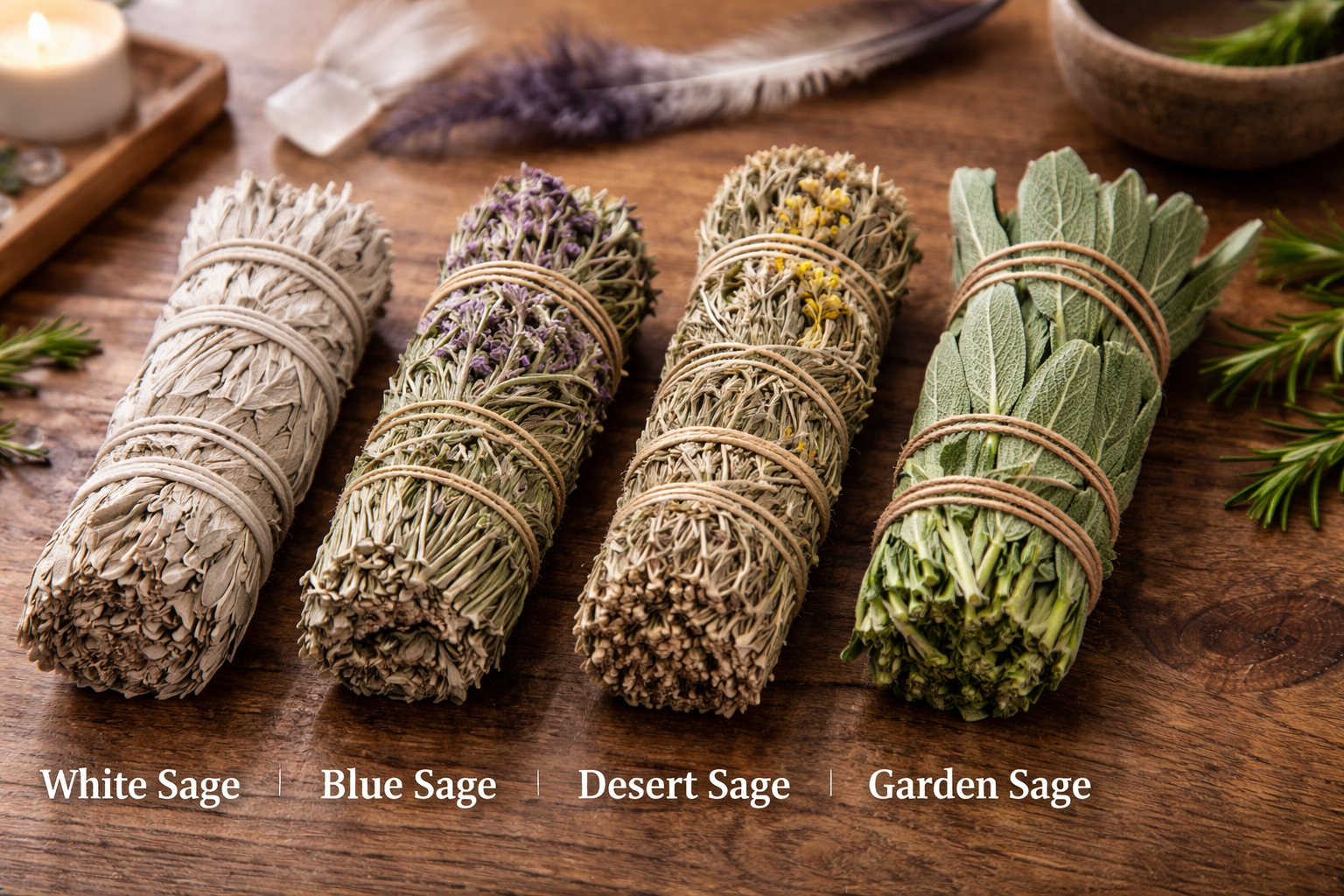
Start with the goal, not the herb. That is where people get tripped up.
White sage fits the deep-reset jobs. New home. Post-breakup room. The weird feeling after a tense family visit. It is the heavy boot in the hallway. Useful, but not what you wear to every occasion.
Blue sage works better when you want the room to feel lighter, not stripped bare. If you are cleansing after a long workweek, before meditation, or after a few houseguests, blue sage makes more sense for a lot of homes. It is gentler on the nose, and that matters more than people admit.
Desert sage is a good pick when the room does not feel “dirty” so much as unsettled. Front entryways, home offices, and corners that always seem a bit flat respond well to an earthy, grounding smoke. You are not trying to blast the room. You are trying to steady it.
Garden sage is the choice for people who want something accessible, familiar, and easy to source. It does not carry the same cultural weight or demand pressure as white sage, and that alone makes it a better fit for some readers.
- If you are brand-new to smoke cleansing, start with blue or garden sage.
- If the room feels truly heavy, use white sage once and see how the space responds.
- If strong smoke gives you a headache, do not force white sage just because the internet keeps repeating it.
A small but useful distinction: stronger is not always cleaner. In a tiny flat, white sage can feel like wearing hiking boots to a yoga class. Technically possible. Not the best match.
Buy Respectfully: How to Spot Clean, Credible Sage Before You Light It
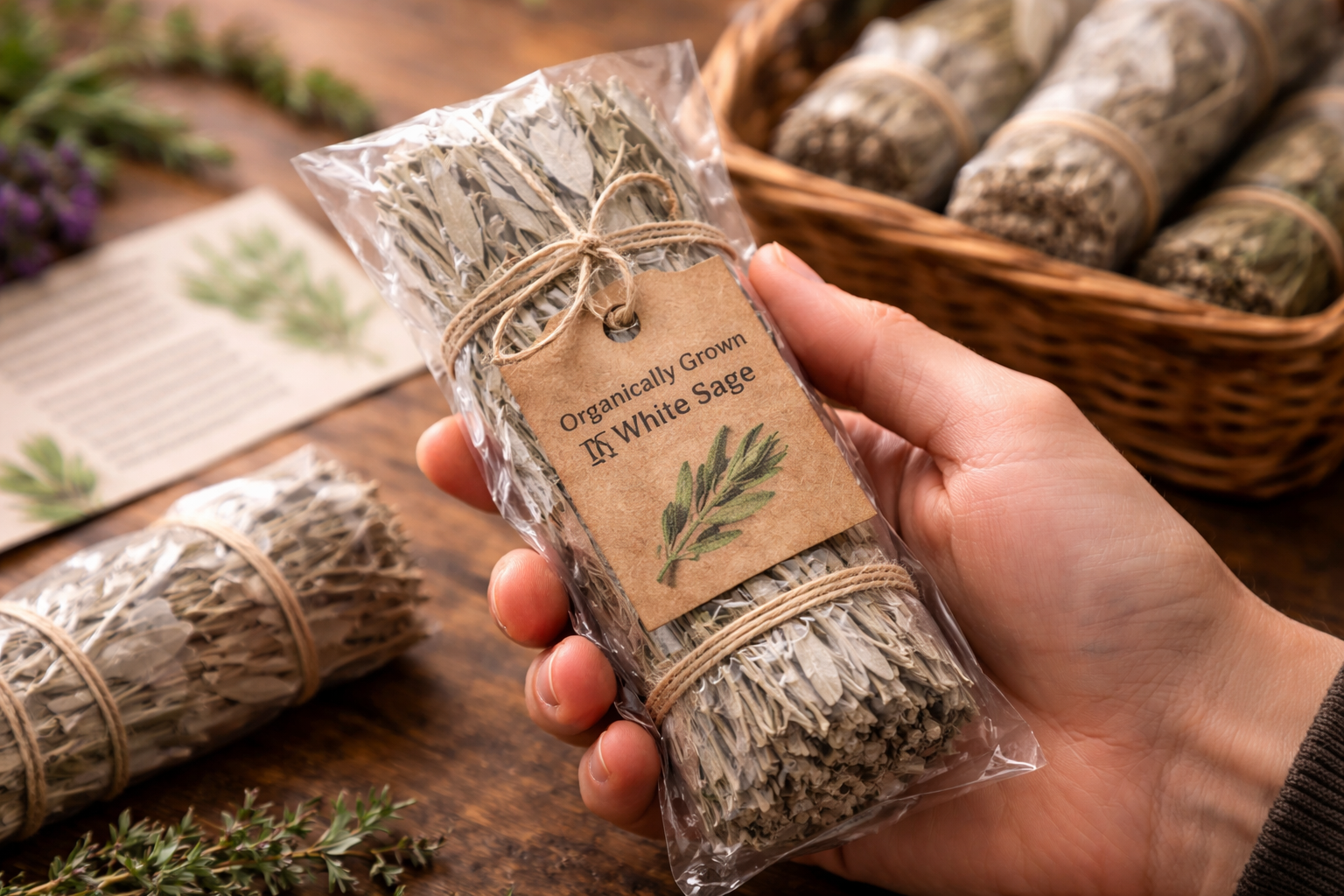
This part is not fluff. It changes the whole purchase.
The California Native Plant Society says metric tons of white sage are being poached to feed international demand. They also note that white sage is deeply tied to Indigenous communities in the only region where it naturally occurs. So if a listing leans on vague words like “sacred” and “powerful” but tells you nothing about cultivation, origin, or harvest, that is not a charming mystery. It is a warning sign.
Here is what a cleaner buy looks like:
- The seller names the plant clearly, not just “spiritual cleansing bundle.”
- The listing says cultivated, farm-grown, or gives real sourcing detail.
- The bundle looks dry and intact, not dusty, mouldy, or over-compressed.
- The seller does not hide behind mystical copy while skipping basic facts.
- The bundle size fits the room. A small bundle is enough for most homes.
And if the listing feels vague? Skip it. Garden sage, rosemary, lavender, or a no-smoke ritual is still a better move than buying a bundle you do not trust.
Remember: good sourcing is part of the ritual. If the bundle feels off before it is even lit, that feeling usually sticks.
Prepare the Space So the Energy and Smoke Have Somewhere to Go
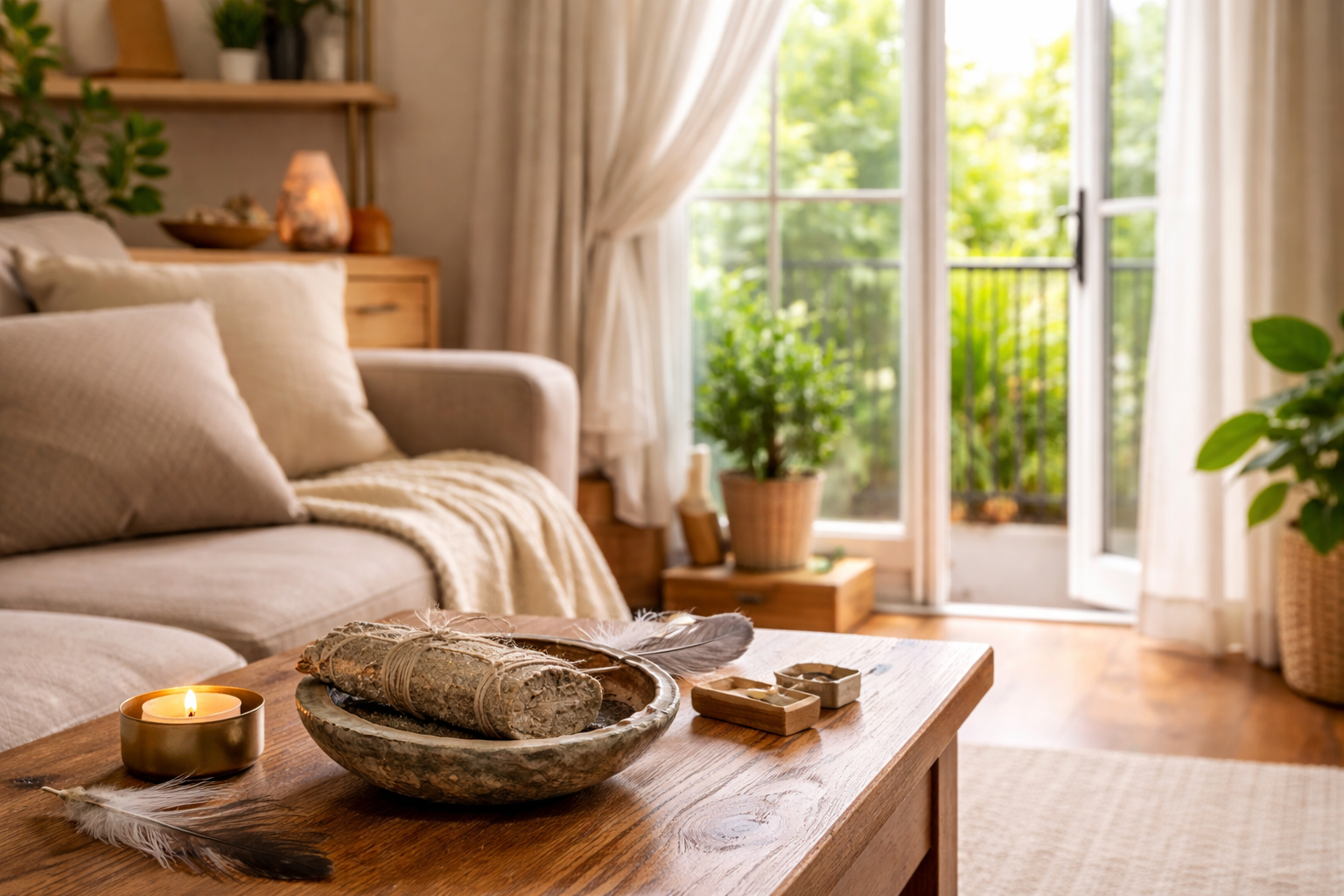
A rushed cleanse in a sealed room often feels cluttered, not calming. Preparation does half the work.
Clear surfaces to reduce visual noise. You do not need a spotless house. Just pick up the obvious mess, move yesterday’s mug, and make the room look like something new can land there.
Open a window or door to create an exit. That advice shows up everywhere for a reason. The US Environmental Protection Agency says smoke from burning materials adds particulate matter indoors. So the open window is not just symbolic. It also helps the room breathe.
Gather the boring gear. Use a fireproof dish, a lighter or match, and a spot where the bundle can fully go out. If you already use incense, a proper heat-safe holder matters more than the pretty photo, and this incense burner guide helps match the burner to the material.
Move pets, babies, and smoke-sensitive people out first. That is just common sense, and it saves a lot of regret.
Use less smoke than you think. Many beginners swing the bundle like they are trying to prove something. You do not need a rolling cloud. A steady smoulder is plenty.
Note: If the household already struggles with asthma, migraines, or stuffy air, treat smoke cleansing like occasional incense, not like a daily room spray.
Light the Bundle, Move the Smoke, and Close the Ritual Cleanly
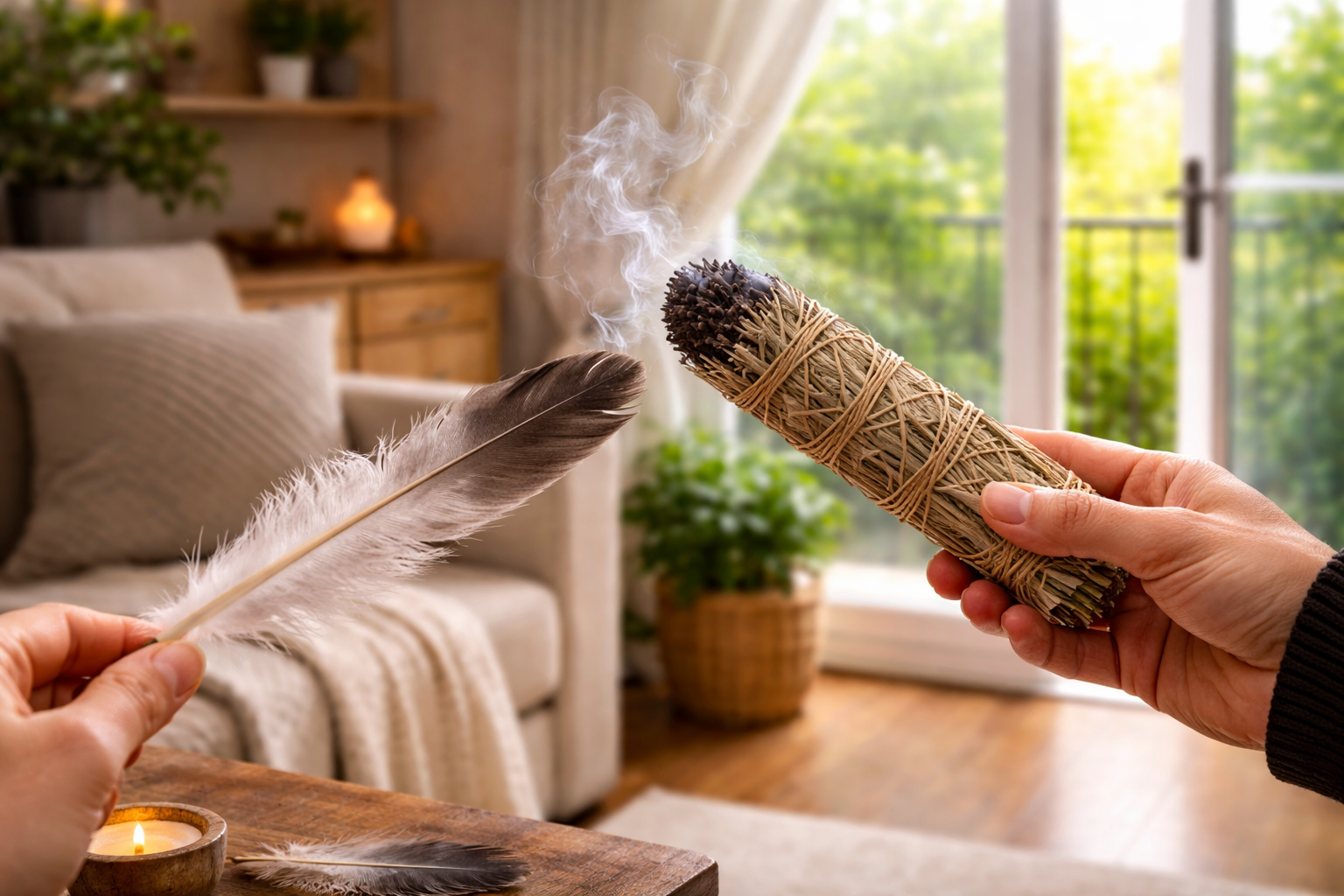
Light the tip, then let it smoulder. Hold the flame to the end until it catches, then gently blow out the flame so you have smoke, not open fire. If it goes out later, that is normal. Bundles do that. It is not a sign from the universe that the room has won.
Start at the entrance or with yourself. If you are cleansing the house after a rough day, beginning near the front door works well. If the heaviness feels personal, fan a little smoke around your body first, keeping it light and away from your face.
Guide the smoke into corners, thresholds, and stagnant-feeling spots. Corners, closets, near the bed, by the work desk, around mirrors, around the front door. Those are the spots people notice first. Move slowly. You are not racing the smoke around the room.
Say what the room is for now. It can be spiritual or plain. “Anything heavy can leave.” “This room is for rest.” “Only calm gets to stay here.” Short works better than grand.
Finish at the open window or door, then extinguish the bundle fully. Press the lit end into sand, a fireproof bowl, or earth until there is no ember left. No glow. No sneaky thread of smoke on the shelf twenty minutes later.
That last part matters. Half the ritual is the close.
Decide What Comes After the Cleanse So the Space Feels Different
A lot of guides stop as soon as the smoke clears. That is where the ritual can feel unfinished.
Once the room is cleared, choose what comes next. Quiet is one option. Sit for two minutes. Let the air shift. People skip this because it looks too simple, but it often does more than adding three extra tools.
If you want the room to feel brighter, use sound. A bell, a chime, or one of these singing bowls for a smoke-free cleansing ritual can lift the mood without piling on more smoke.
If you want the room to feel steadier, place one grounded object in it on purpose. A bowl by the entryway. A candle on the table. Or one of these healing crystals for grounding and protection where the energy tends to pool. That step sounds small, but it gives the room a “now what” answer.
Frequency is easier when you tie it to events, not to a rigid calendar. Cleanse after arguments, after illness, after moving, after visitors who leave a weird residue, or when the room simply feels stale. If you want a weekly ritual, use a gentler herb or a no-smoke method. Daily white sage in a closed flat gets old fast.
Good rule: clear the room, then give it a new job. Rest, focus, warmth, sleep, comfort. That second step is what makes the cleanse feel like it landed.
Use a No-Smoke Alternative When Burning Sage Is the Wrong Tool
Sometimes smoke is just the wrong call. No need to be noble about it.
If the house has pets, babies, shared ventilation, asthma, migraines, or one person who hates smoke with a passion, skip the bundle. The National Institutes of Health review on incense smoke describes respiratory effects and fine-particle exposure from indoor burning. Different material, same basic point: breathing smoke indoors is not neutral. Use that fact, then choose the ritual that fits the room.
Good no-smoke options include:
- Open the windows and speak the intention out loud
- Use a bell, chime, or singing bowl in each corner
- Wipe surfaces with a lightly scented herbal spray
- Place fresh rosemary, lavender, or bay by the door as a symbolic reset
- Declutter one area while naming what is leaving with it
I know, that last one sounds almost too ordinary. But pairing a small physical reset with a clear intention often works better than smoke in a household that is already overloaded.
No-smoke cleansing is not a lesser version. It is just a different tool.
Avoid the Mistakes That Make Sage Cleansing Feel Flat, Harsh, or Overhyped
Mistake 1: choosing by reputation alone. White sage is not wrong. It is just not the right answer for every room. A lot of disappointment starts there.
Mistake 2: buying the first bundle that looks spiritual enough. The more vague the sourcing, the less comfortable the ritual tends to feel. That discomfort is usually earned.
Mistake 3: making too much smoke. The Environmental Protection Agency flags smoke as a source of indoor particulate matter, so there is no prize for fogging up the hallway. A thin stream is enough.
Mistake 4: treating the ritual like a fix for a practical problem. If the room feels heavy because it is cluttered, because you have not slept, or because the argument is still unresolved, sage is not a magic eraser. Pair the ritual with one visible action.
Mistake 5: overselling the science. The widely cited 2007 medicinal smoke study did find a sharp drop in airborne bacteria in a confined space after medicinal smoke from a mix of plant materials and wood. That is interesting. It does not prove that a white sage bundle used in an ordinary bedroom “purifies the air” in the sweeping way social posts claim. Use the ritual for what it does well, which is structure, intention, and a felt reset. Leave the miracle language out of it.
Mistake 6: forgetting to close the ritual. Open window, smoke, done, rush away. That is how the room ends up smelling herbal but feeling unchanged. Finish on purpose.
Myth vs reality
Myth: The strongest-smelling sage is always the best.
Reality: The right sage is the one that fits the room, the goal, and the people breathing the air.
Myth: If the bundle keeps going out, the energy is fighting back.
Reality: Dense bundles often need relighting. That is a material issue, not a mystical plot twist.
If you have read this far, the answer is probably clearer now than when you searched it. White sage is still the headline pick for deep clearing. But the wiser choice, often enough, is the herb or ritual you can source cleanly, use safely, and repeat without turning your home into a smoke chamber.
FAQ
Can I use regular culinary sage from my kitchen or garden?
Yes. Garden sage can work well for a practical home ritual, especially if you grow it yourself. It will not smell or burn exactly like white sage, but that is not a flaw. For many readers, it is the more comfortable, lower-pressure choice.
Is sage cleansing safe around pets and children?
It is better not to burn sage around pets, babies, or anyone with respiratory sensitivity. Move them out of the room, ventilate well, and use less smoke than you think. If that still feels iffy, switch to a no-smoke ritual.
Does sage really clean the air?
One 2007 study on medicinal smoke from mixed plant material in a confined space found a strong reduction in airborne bacteria. That is not the same as proof that everyday white sage smoke purifies household air in a broad, reliable way. Treat sage as a ritual tool first, not as a replacement for ventilation or clean-air habits.