
You open five tabs, and within two minutes every necklace starts to sound like the same promise in a different metal. One says evil eye. One says hamsa. One throws in black tourmaline and a paragraph about “negative energy.” The question gets muddy fast.
If you’re looking for the best necklace for protection against evil, start with a simple blue evil eye necklace in sterling silver, solid gold, or good gold vermeil. That is the safest default for most people because the evil eye is the symbol readers usually mean when they want protection from envy, ill intent, or bad vibes aimed straight at them. A hamsa necklace makes more sense if you want a broader blessing-and-protection symbol. A crystal pendant works best when you already lean toward stone-based practices and want something less literal.
I’ve worn both the tiny blue-eye pendant kind and the chunkier hamsa styles, and the smaller evil eye piece always won on normal days. It caught on fewer collars, looked less costume-y, and never made me feel like I had to “dress around” the symbol. That matters more than people think. A protection necklace only helps if you actually keep it on.
- Which symbol fits the kind of protection you actually mean
- What metals and finishes are worth paying for
- When blue is the right call and when color lore gets silly
- What to do if the necklace breaks
- Which necklace type fits beginners, gifts, daily wear, and crystal-first shoppers
At a Glance: Pick the Symbol Before You Pick the Chain
| Necklace type | Best for | Watch out for |
|---|---|---|
| Blue evil eye necklace | Most first-time buyers, daily wear, classic protection symbolism | Cheap plating, flimsy chain, oversized charm |
| Hamsa necklace | Gift giving, broader blessing-and-protection meaning | Busy designs that feel heavy or too ornate |
| Hamsa with evil eye | Readers who want both symbols in one piece | Crowded pendants that snag and twist |
| Black tourmaline pendant | Crystal-first shoppers who want a quieter look | Sharp points, rough wrapping, less direct match to the query |
Fast rule: if you’re torn between symbolism and wearability, pick the simpler piece. You’ll wear it more.
Best Necklace for Protection Against Evil, the Short Answer
The short answer is plain: for most people, the best pick is a blue evil eye pendant on a clean, comfortable chain.
Encyclopaedia Britannica traces the evil eye belief across many cultures, and the Gemological Institute of America notes that evil eye jewelry, often in blue, remains the best-known protective jewelry motif today. That comes first. Then the conclusion follows: if you want the symbol most people already recognize as a protection amulet against envy or ill will, the evil eye is the cleanest match.
Use this quick rule:
- Choose an evil eye necklace if you want direct, classic protection symbolism.
- Choose a hamsa necklace if you want a wider meaning that folds in blessing, luck, and protection.
- Choose a crystal necklace if your practice already leans toward stones and grounding rituals.
Quick filter: symbol fit + metal quality + chain comfort. If one of those is off, the necklace will probably end up in a drawer.
The generic answer, “just buy what feels right,” sounds nice and usually leads to a weak purchase. Meaning matters, yes, but so does whether the pendant flips backward all day, whether the chain pinches your neck, and whether the finish goes dull after a month. The best protection necklace is not the loudest one. It is the one you keep wearing without fuss.
Choose the Symbol That Matches the Protection You Actually Mean
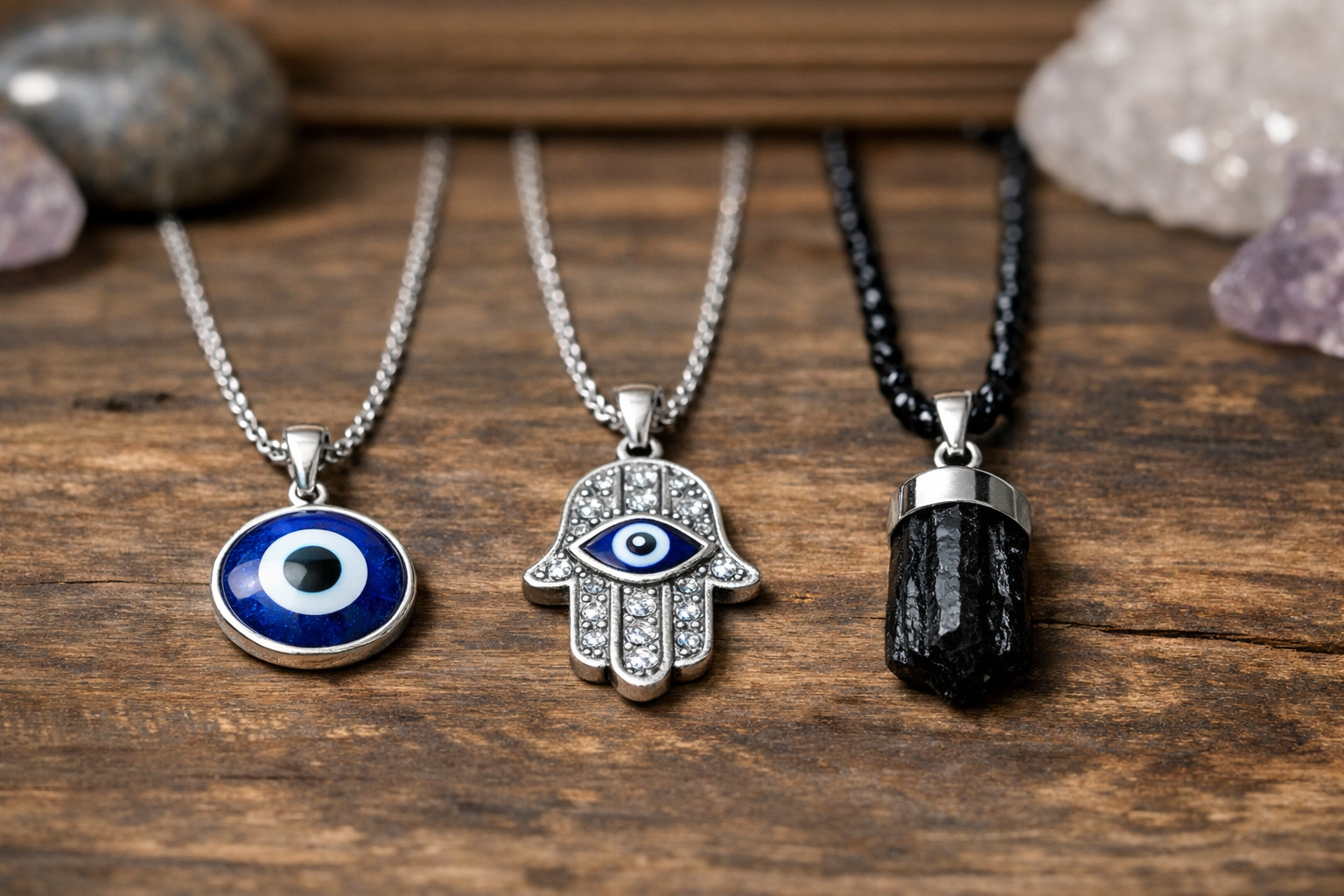
Start with the symbol, not the sales copy.
Britannica’s overview of the evil eye and the Gemological Institute of America’s coverage of evil eye jewelry both make the same point in different ways: the evil eye is tied to the idea of harmful envy, a glance loaded with jealousy or ill intent. So if that is the picture in your head, an evil eye necklace is the most direct match.
A hamsa necklace does a different job. The open hand symbol is usually read as protective, but it also carries a wider feeling of blessing, guidance, and warding off harm in a broader sense. That makes it a strong gift pick. It reads warm, not just defensive.
A combined hamsa-and-eye pendant sits in the middle. It can work well, though I think many of these designs get too busy too fast. When the hand, the eye, stones, and filigree all compete in a pendant the size of a coin, the necklace starts to feel like a charm rack.
If you are drawn to stones more than symbols, a black tourmaline necklace can make sense. It is a popular choice in crystal practice for grounding and energetic shielding, and it fits neatly beside broader protection content like best healing crystals for protection. Still, for this search, crystal pendants are the side road, not the main road.
Pick this if…
- Evil eye: you want the classic necklace for negative energy and envy protection
- Hamsa: you want a meaningful protection gift with softer, broader symbolism
- Black tourmaline pendant: you want spiritual protection jewelry without an obvious eye or hand motif
The mistake here is treating all protective necklaces like synonyms. They are close cousins, not clones. Pick the symbol that matches your reason for buying, and the rest of the article gets easier.
Buy Better Materials So the Necklace Feels Good and Lasts
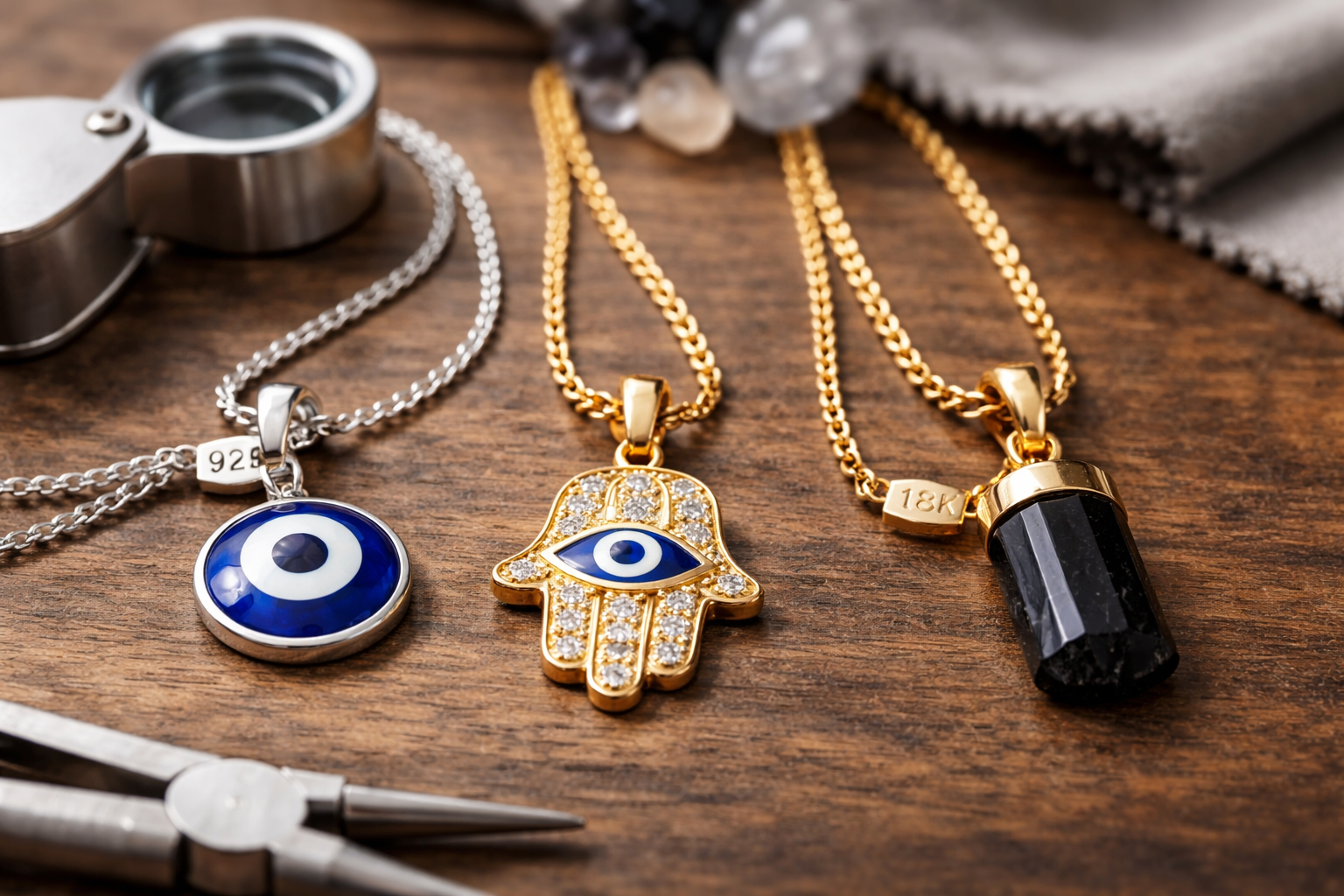
The Federal Trade Commission’s jewelry guide explains what terms like 14K, 18K, sterling silver, and vermeil actually mean, and that is the sort of boring detail that saves people from bad buys. Sterling silver should be marked 925. Vermeil is not just “gold-looking.” It is a sterling silver base with a real gold layer that meets set standards. Vague language like “gold tone” or “gold plated” tells you far less, and often that is the point.
That evidence comes first. Then the buying call is easy:
- If you want a strong daily-wear default, choose 925 sterling silver.
- If you want warmth and a nicer finish without jumping to solid gold, choose gold vermeil.
- If this is a long-haul piece you plan to keep for years, choose 14K or 18K gold.
I’d be a little careful with thin plating on a necklace you plan to wear in the shower, at the gym, and while sleeping. People buy a symbolic pendant wanting comfort and steadiness, then pick the one finish most likely to peel, fade, or irritate. It’s like buying sturdy boots with a paper sole. The front looks right. The part doing the work does not.
If your skin reacts to cheap earrings, take that as a warning sign. The American Academy of Dermatology points to nickel as a common trigger for allergic contact dermatitis. So if you have sensitive skin, look for nickel-free options and stick to sterling silver, higher-karat yellow gold, or other metals you already know your skin likes.
Small but telling details: lobster clasp over flimsy spring ring, smooth pendant back, chain that does not look hair-thin, and a mark such as “925” or a clear karat stamp.
For a protection amulet or talisman necklace, material quality does not make the symbol more “powerful.” It does something simpler and far more useful. It makes the necklace wearable.
Pick Color and Design Without Falling for Overcomplicated Lore
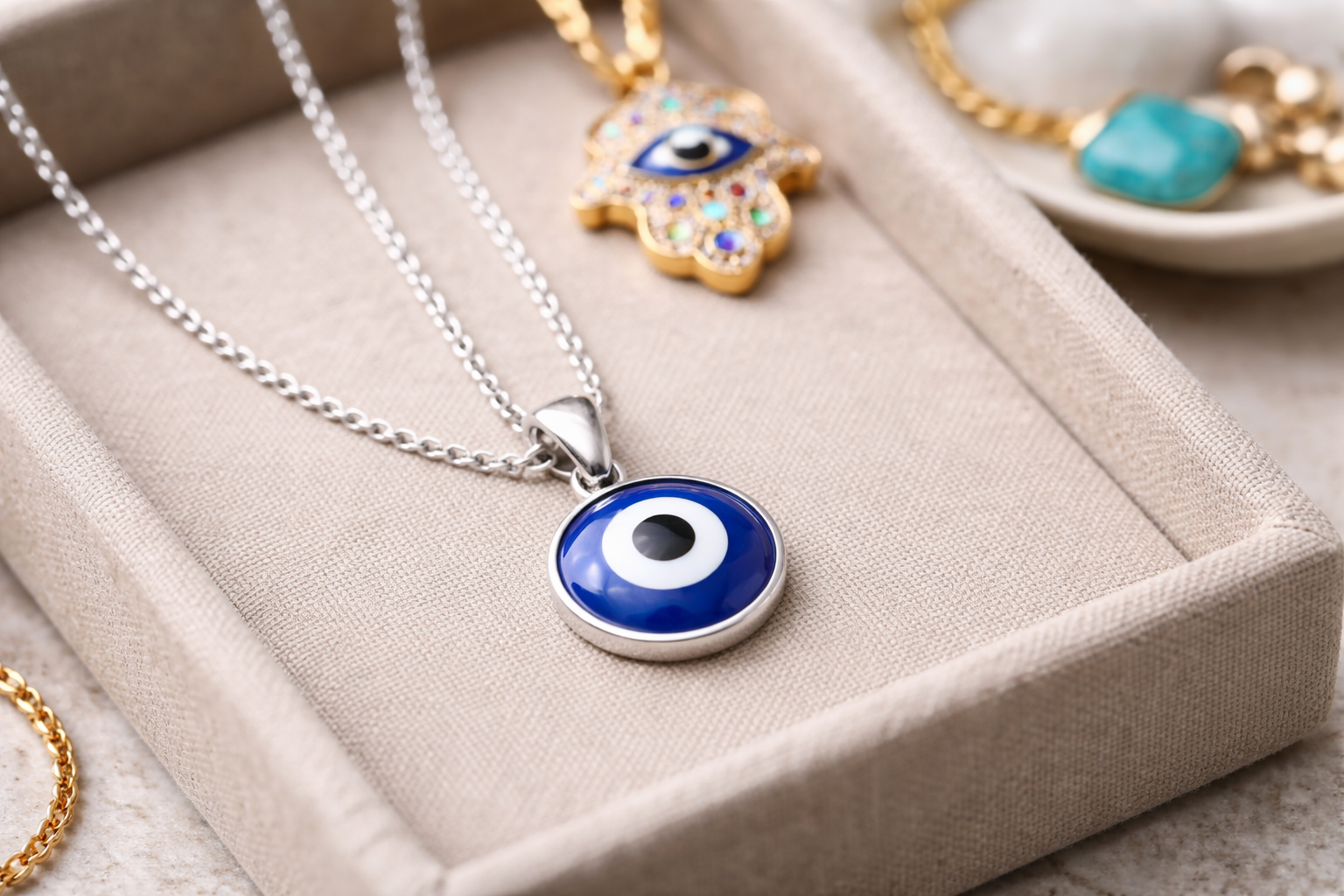
The Gemological Institute of America notes the long link between blue eye motifs and protective jewelry, which is why the classic blue evil eye necklace keeps winning. Blue is the safe default. If you feel overwhelmed by color charts, that is your exit ramp.
Some retailers attach specific meanings to every color, and some of those lists are fine as light symbolism. But they drift all over the place. One page says green means growth, another says balance, another says health, and soon the whole thing starts to feel like horoscope fridge magnets. Treat color meanings as soft flavor, not hard law.
For first-time buyers, a minimalist pendant usually beats an ornate one. A simple blue evil eye pendant in silver or gold will layer well, wear well, and still make sense a year from now. Ornate pieces can be beautiful, and I do like them for gifts or dressier styling, but they are easier to admire than to live with.
Good default design choices
- Blue or turquoise eye motif
- Small to medium pendant
- Flat or gently curved back
- Chain length that sits near the collarbone or just below it
If you want the strongest chance of getting it right the first time, choose blue and keep the design clean. That sounds almost too plain. It works because plain gets worn.
Match the Necklace to the Person and Situation
The “best” necklace changes once you attach it to a real person instead of a search term.
For beginners: pick a classic evil eye pendant in sterling silver. It is the easiest entry point, and it does not ask you to learn a bunch of symbolism before wearing it.
For gift giving: a hamsa necklace or a hamsa with a centered evil eye often lands better. It feels thoughtful and protective without reading like you are diagnosing the recipient’s life.
For daily wear: go smaller, flatter, and less pointy. This is where a lot of crystal pendants lose ground. Raw stone necklaces can look great in photos, but some twist, poke, or catch on knits. A smooth evil eye pendant usually behaves better on the body.
For spiritual-but-not-symbol-heavy readers: black tourmaline or a dark stone pendant can be the quieter pick. It still reads like meaningful jewelry, but it avoids the very literal eye motif.
And yes, you can buy one for yourself. That question comes up constantly. There is no universal rule that a protection necklace has to be gifted to “work.” In practice, self-purchase is common because meaning and intention usually start with the wearer. A gift can feel lovely. It is not a requirement.
Gift filter: if you are buying for someone else, lean toward a design that looks like good jewelry first and symbolic jewelry second. It gives the piece a longer runway.
I also like these necklaces for transition moments: travel, a new job, moving house, postpartum gifts, or a stretch where someone just feels wrung out. Not because the necklace fixes the whole season. It doesn’t. But objects that mark care and steadiness do have weight.
Avoid the Buying Mistakes That Make Protection Necklaces Disappointing
Most disappointment starts with one of five mistakes.
Mistake one: choosing the pendant and ignoring the chain. A lovely evil eye charm on a weak chain is like buying a great lamp with a dodgy plug. The part you notice is not the part that fails.
Mistake two: buying cheap plating for constant wear. If your plan is shower, sleep, gym, beach, repeat, then thin plating is asking for a quick finish fade.
Mistake three: thinking bigger means stronger. It doesn’t. A giant hamsa hand with stones all over it is not more protective than a small clean pendant. It is just bigger.
Mistake four: ignoring skin sensitivity. If cheap metal already gives you itchy ears, a bargain necklace around your neck is not likely to end well.
Mistake five: getting lost in symbolic trivia and skipping the basics. Some readers spend half an hour decoding whether navy blue means truth, calm, fate, or all three, and two seconds checking whether the clasp even closes cleanly. That is backwards.
Before you buy, check these three things
- The symbol matches your reason for buying
- The metal and finish are clearly described
- The necklace looks comfortable enough for repeat wear
The best necklace for negative energy is not the one with the longest product description. It is the one that clears those three checks without drama.
Wear, Care, and Replace It Without the Fear Spiral
The Gemological Institute of America has practical jewelry care advice that is much less mystical and a lot more useful. Perfume, lotions, chlorine, and rough storage can wear down jewelry fast, especially plated pieces and softer stones. So the first move is plain care: put the necklace on after fragrance, store it separately, and give it a gentle wipe now and then.
Then there is the big anxious question: what if it breaks?
Some people read a broken evil eye necklace as a sign that it “did its job.” That reading exists, and if it gives you comfort, fair enough. But necklaces also break because jump rings loosen, chains catch on sweaters, clasps fail, and plating wears thin. Both readings can sit in the same room. You do not need a fear spiral over a snapped chain.
Try this instead:
- If the chain broke but the pendant is fine, repair it.
- If the finish has gone patchy or the setting is loose, replace it.
- If the piece matters to you emotionally, keep the pendant even if you stop wearing it.
- If your skin gets red or itchy, stop wearing it and switch materials.
Calm rule: broken does not automatically mean ominous. Sometimes it just means the clasp was rubbish.
A protection necklace should feel grounding. If the piece is making you more jumpy than settled, something has gone off track.
The Best Protection Necklace Types by Use Case
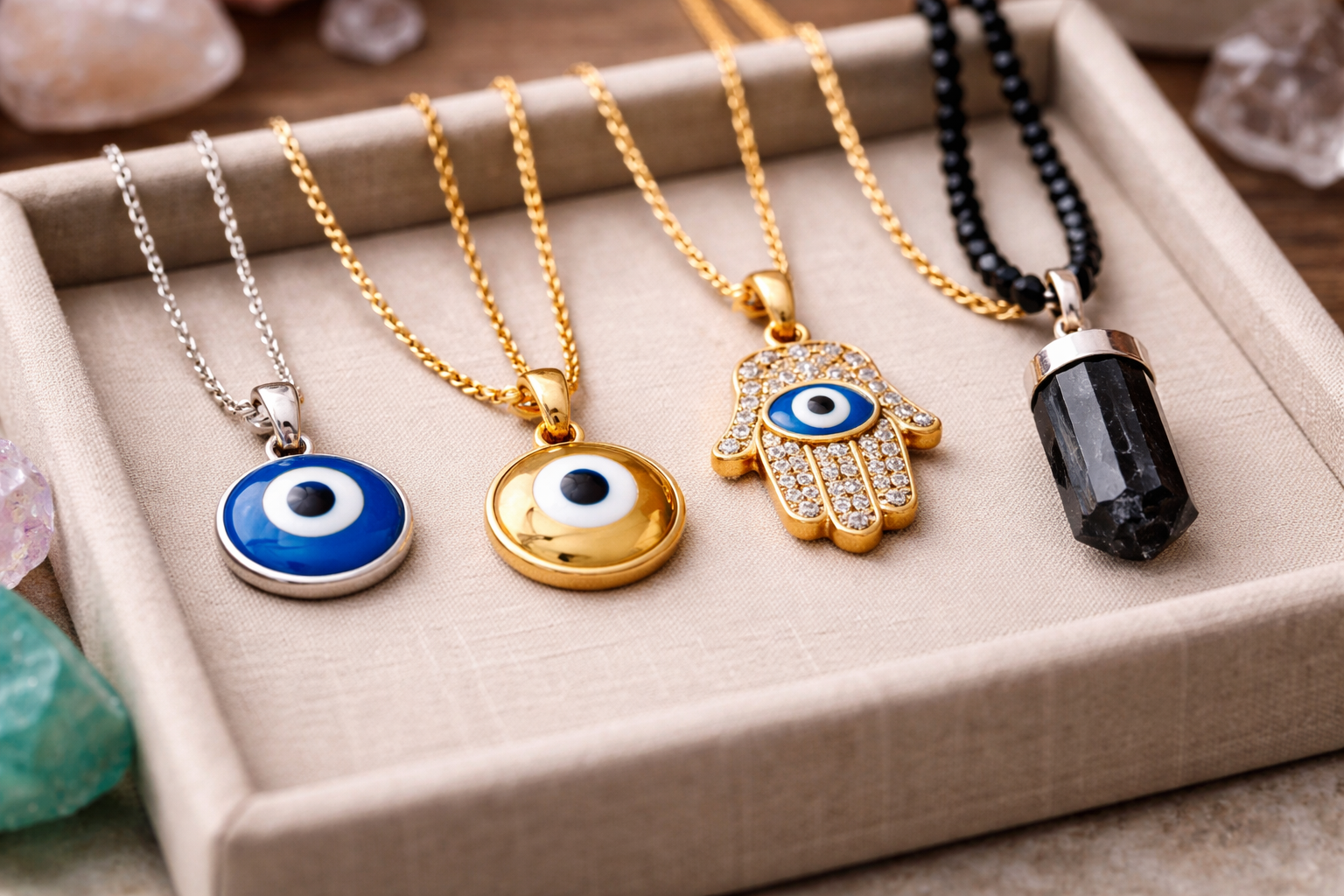
This is where the categories shake out into actual buying choices.
1. Classic blue evil eye pendant in sterling silver
Best for most first-time buyers. It has the clearest symbolic match to the query, and sterling silver gives you a strong mix of durability, comfort, and price sanity. Look for a 925 mark, a smooth back, and a chain that does not look thread-thin. The tradeoff is that this style is common, so it may feel less distinctive if you want something more personal.
2. Gold vermeil evil eye necklace
Best for readers who want the warmer look of gold without moving into solid gold territory. This can be a sweet spot. The FTC’s guidance on jewelry terms matters here because vermeil is a real category, not just shiny marketing language. The tradeoff is care. If you are rough on jewelry, vermeil asks for more restraint than sterling silver does.
3. Hamsa necklace with centered eye
Best for meaningful gifts and readers who want a broader protection symbol. This is the type I reach for when the piece is meant to say “may you be safe, steady, and looked after,” not just “ward off envy.” The tradeoff is style. Some hamsa necklaces are gorgeous. Some look a bit much by the third wear. Simpler is better here too.
4. Black tourmaline pendant necklace
Best for crystal-first shoppers who want a necklace for spiritual protection but not an obvious evil eye or hamsa symbol. A polished or neatly set tourmaline piece usually wears better than a rough wire-wrapped point. The tradeoff is fit to search intent. It can be a good protection necklace, yes, but it is a step away from the classic symbolism most readers are after.
My short list
| If you are… | Start here | Why |
|---|---|---|
| Buying your first protection necklace | Blue evil eye in sterling silver | Clean symbol match, easy to wear, hard to regret |
| Buying a gift | Simple hamsa or hamsa with eye | Protective, warm, and easy to read as thoughtful |
| Planning to wear it every day | Sterling silver or solid gold | More forgiving than thin plating |
| More drawn to stones than symbols | Black tourmaline pendant | Quieter look, strong fit for crystal practice |
If you still feel stuck, keep it very simple: pick a blue evil eye pendant in sterling silver. It is the least fussy answer, and for most readers that turns out to be the right one.
FAQ
Can men wear evil eye or hamsa necklaces?
Yes. Both symbols are widely worn across genders. If the concern is style rather than symbolism, choose a smaller pendant, a darker metal, or a simpler chain. The symbol does not belong to one gendered look.
Is a necklace better than a bracelet for protection?
Not by some fixed rule. A necklace usually wins on comfort and consistency because many people leave it on more often. A bracelet is easier to see and touch through the day, but it also takes more knocks. Pick the form you are most likely to wear.
Does a more expensive protection necklace work better?
No. Higher price can buy better metal, stronger construction, and nicer finishing. It does not make the symbol more protective. Price changes durability and comfort. It does not change the meaning you bring to the piece.