
You buy a new crystal, set it on the table, and open three tabs. One says water. One says salt. One says wait for the full moon. Ten minutes later, the crystal is still on the table and you’re somehow more confused than when you started.
If you’re wondering “how do you cleanse your crystals” without turning a simple ritual into guesswork, start with the gentlest methods: sound, a little smoke, moonlight, or resting the stone on selenite. Those are the safest defaults for most collections. Water, strong sun, salt, and burying in soil can work in some cases, but they are not where I’d start unless I knew the stone could handle it.
That split matters because most guides lump every method together, and that’s where people get burned. Sometimes literally. Sometimes with a faded amethyst or a softened selenite wand.
- Which crystal cleansing methods are safest when you’re not sure what stone you have
- How to tell cleansing, cleaning, and charging apart
- When water, sun, salt, and earth make sense, and when they don’t
- How often to cleanse new crystals, jewelry, pocket stones, and display pieces
- The mistakes that damage crystals fastest
Fast Pick: Start here if you want the low-risk path
| If this sounds like you | Use this method | Skip this for now |
|---|---|---|
| You don’t know the mineral | Sound, moonlight, or selenite | Water and salt |
| You have jewelry or a bracelet | Sound or gentle smoke | Soaking or burying |
| You live in an apartment | Sound, moonlight through a window, selenite | Heavy smoke in a closed room |
| You want one method for a whole collection | Sound or moonlight | Running each stone under water |
A plain rule works well here: if you don’t know the stone, treat it like a delicate one.
How Do You Cleanse Your Crystals Safely? Start With the Gentlest Method
The safest answer is also the least glamorous one. Start with methods that do not ask the crystal to survive water, salt, heat, or abrasion. That usually means sound, smoke, moonlight, or a no-contact method like selenite.
I’ve learned to start there because mixed collections are sneaky. A bowl might hold clear quartz, amethyst, rose quartz, a soft satin spar stick sold as “selenite,” and a bracelet with elastic and metal spacers. One rough rinse sounds harmless until one piece clouds, one fades, and the bracelet starts looking tired.
So yes, you can cleanse crystals in plenty of ways. But if the goal is a method that works across more stones with less risk, the gentle route wins.
Good default: Choose a method that changes nothing physical about the crystal. If the method could dissolve, fade, corrode, scratch, or warp something, save it for cases where you know the material can take it.
Cleansing, Cleaning, and Charging Are Not the Same Thing
This is where a lot of the confusion starts.
Cleaning is physical. You’re removing dust, fingerprints, skin oils, or shelf grime. Cleansing is the ritual or energetic reset people use after a crystal has been handled a lot, used in meditation, carried through a rough week, or brought home from a shop. Charging is what people mean when they want to “top up” the crystal or re-focus it toward an intention.
Think of it like a mug. Washing the mug is cleaning. Emptying old coffee and rinsing it out is closer to cleansing. Filling it with a fresh drink is charging. Same mug, different job.
You do not need all three every time. If a crystal is dusty from a shelf, physical cleaning may be enough. If you just bought a tumbled stone and it looks fine, a gentle energetic cleanse is usually the move. If you use crystals as part of prayer, meditation, or a monthly ritual, you might cleanse and then charge.
| Task | What you’re doing | Typical tools |
|---|---|---|
| Cleaning | Removing dirt or residue | Dry cloth, soft brush, very limited water when stone-safe |
| Cleansing | Resetting the crystal after use or handling | Sound, smoke, moonlight, selenite |
| Charging | Re-focusing or “activating” the stone | Intention, moonlight, ritual placement |
Choose the Right Cleansing Method for the Stone and the Situation
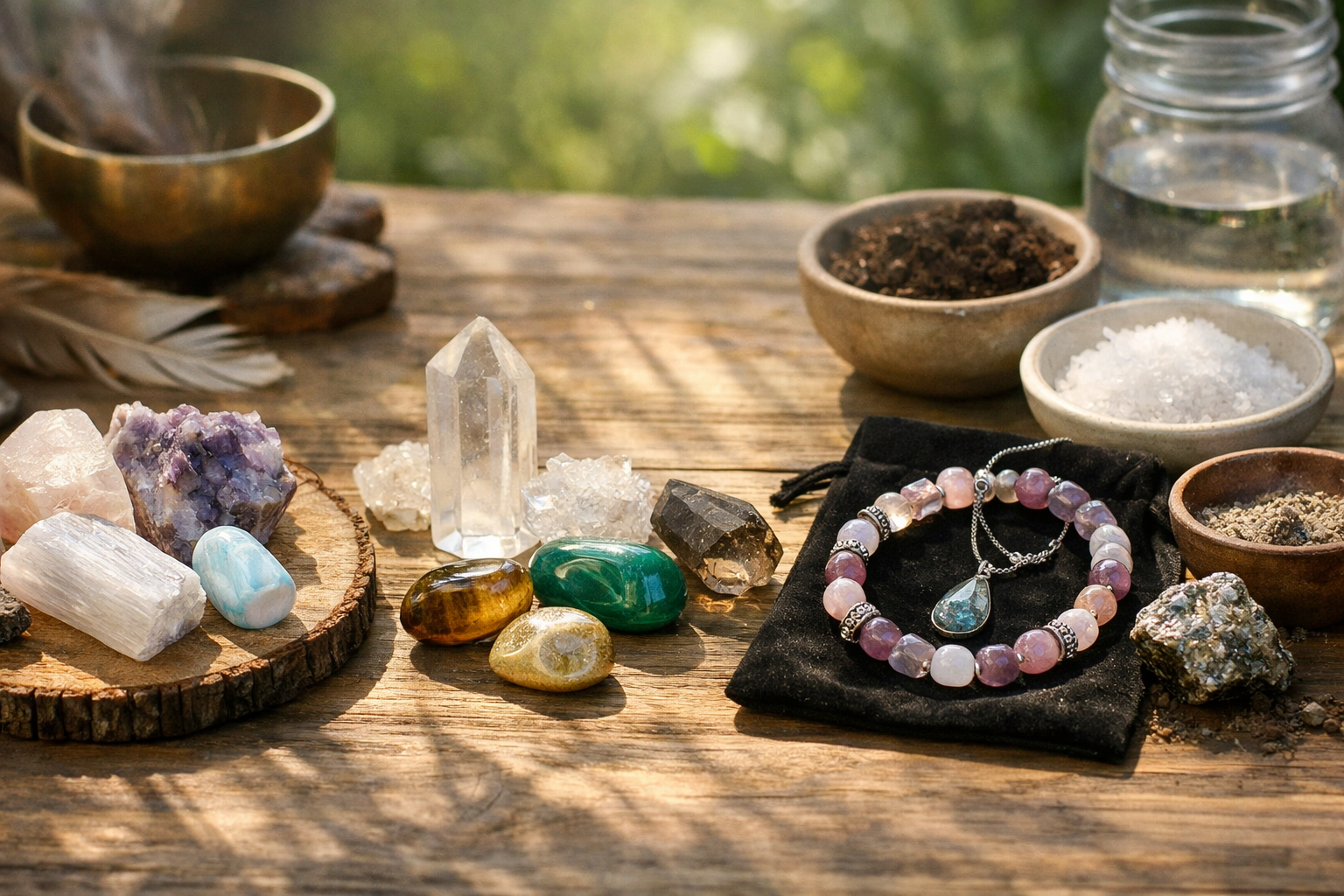
You do not need a huge crystal encyclopedia in your head. You need four quick questions.
Is the stone soft or porous? Can it fade in bright light? Is it loose, or set in jewelry? Do you want low smoke and low mess? Those questions get you to the right method fast.
When I test a cleansing routine on a mixed tray, I use a simple rule. If one piece in the group is delicate, the whole group gets a delicate method. That keeps you from treating every stone like quartz just because quartz is easygoing.
| Method | Best for | Skip if | Beginner-safe |
|---|---|---|---|
| Sound | Fragile stones, shelves, whole collections | You need absolute silence at home | Yes |
| Smoke | Loose stones, short rituals, intention work | Poor ventilation or smoke sensitivity | Yes, with care |
| Moonlight | Low-effort group cleansing | The setup exposes stones to moisture or theft | Yes |
| Selenite | No-contact resets, fragile pieces | You only have wet areas to store it | Yes |
| Water, salt, earth, strong sun | Specific stones in specific cases | You are not fully sure what the crystal is | No |
Fast Pick: If you know almost nothing about the crystal, use sound or moonlight. If the crystal is jewelry, use sound or very light smoke. If the collection is big, use sound or moonlight for the whole group.
Smoke, Sound, Moonlight, and Selenite Are the Safest Default Methods
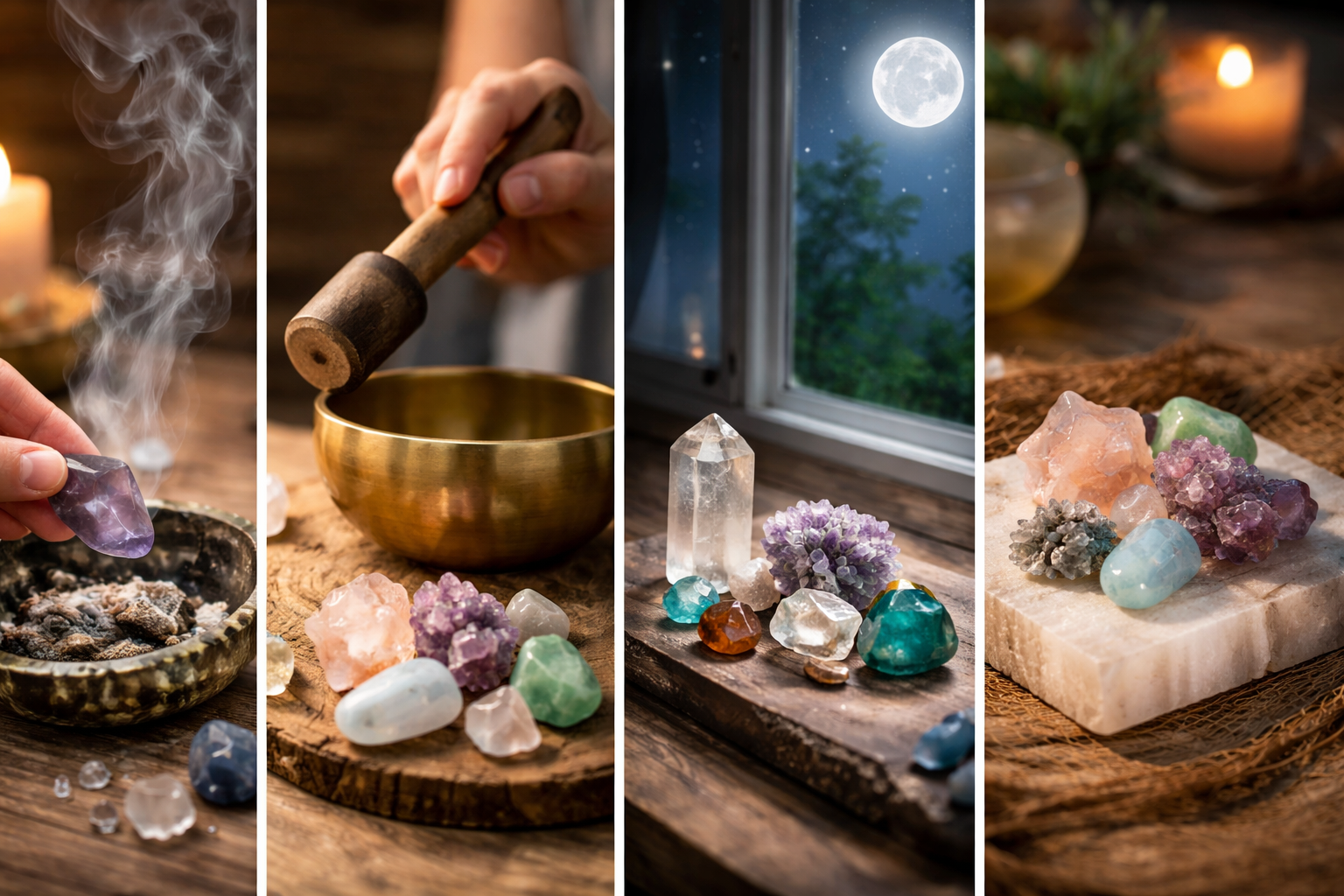
Smoke cleansing works because it is quick, flexible, and easy to pair with intention. You pass the stone through smoke for a short stretch, set a simple phrase in your mind, and you’re done. That makes it handy for new crystals, pocket stones, and small bowls on an altar or dresser.
Keep the smoke part sane. The United States Environmental Protection Agency notes that burning candles and incense indoors adds particulate matter to indoor air, so crack a window and keep the session short. If you’re choosing a smoke option, guides to best incense for cleansing or best sage for cleansing negative energy can help narrow the ritual side without turning the whole thing into a shopping spiral.
And one more wrinkle. If you use white sage, source matters. The California Native Plant Society has documented wild poaching concerns around white sage, so cultivated or carefully sourced alternatives are worth the extra thought.
Sound cleansing is the sleeper hit. A bell, chime, tuning fork, or singing bowl can cleanse a single stone or a whole shelf without touching anything. For fragile crystals and crystal jewelry, that is gold. I reach for sound when I have a mixed tray and zero interest in playing mineral roulette.
Moonlight cleansing is gentle and forgiving. Place the crystals on a windowsill or in a sheltered outdoor spot for a few hours or overnight. Full moon rituals are popular, sure, and they can feel lovely. But you do not need a full moon for moonlight to count. If you’re wondering about edge cases, this guide on which crystals cannot be charged in moonlight gets into the stones that need a bit more caution around moisture and exposure.
Selenite, often sold as satin spar in many crystal shops, is the lazy-person friend of crystal care. You rest a crystal on or beside it for a few hours or overnight. No flame. No smoke. No water. No fuss. That’s why it works so well for people who want a simple routine they can actually keep.
Simple timing that works: A short pass through smoke or a minute of sound is enough for a quick reset. Moonlight and selenite work better when you give them a few hours or overnight.
Water, Sunlight, Salt, and Earth Work Only in the Right Cases
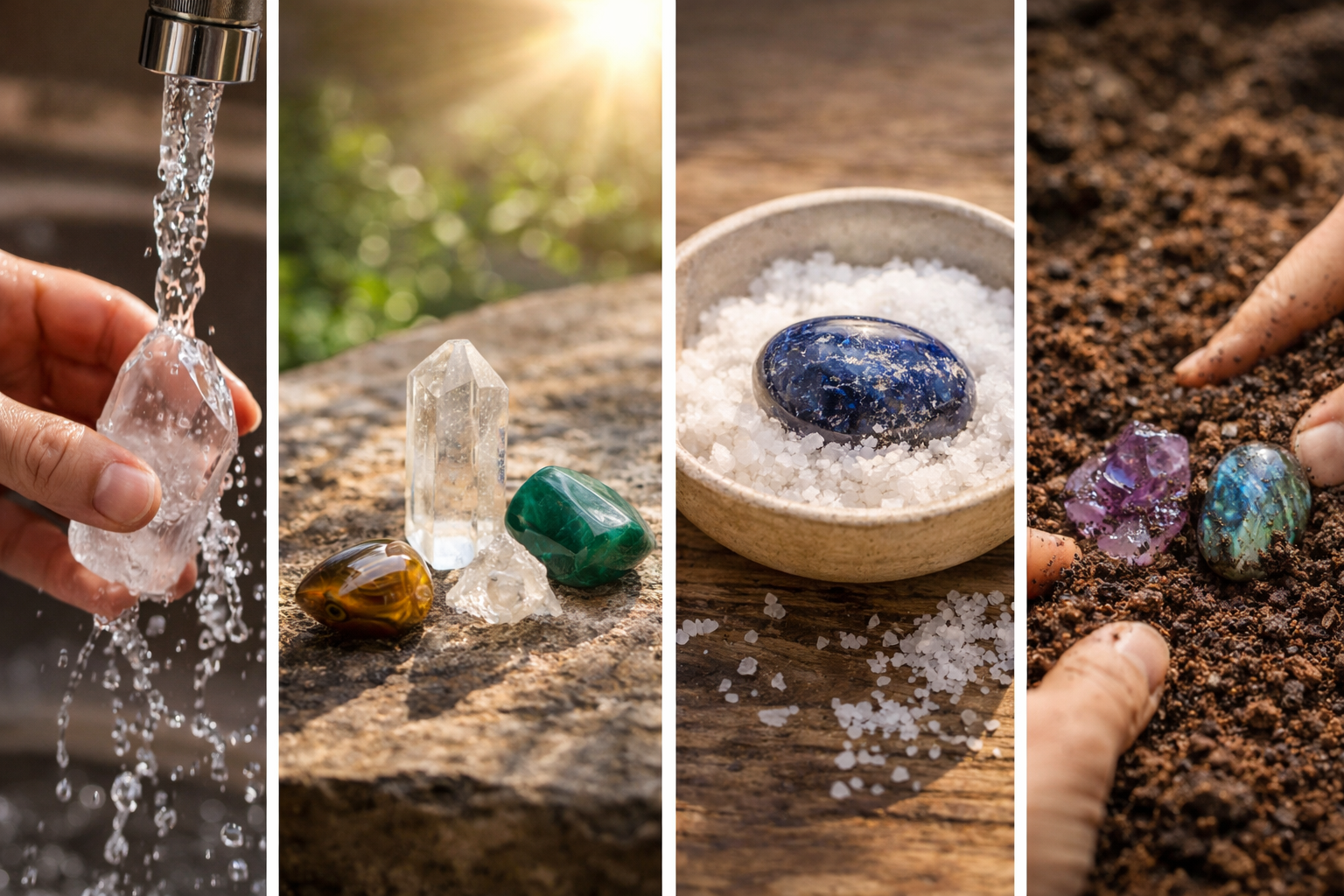
This is the part most listicles handle badly. They treat these methods like broad options, when really they are conditional tools.
Water can be fine for some hard, non-porous stones. Clear quartz is usually unbothered by a brief rinse. But water is not safe by default. The mineral entry for gypsum notes that it is soluble in water, and gypsum is the family behind many pieces sold as selenite. So no, you do not want to hold a selenite wand under the tap just because a generic guide said “natural water is cleansing.”
Sunlight needs the same caution. The Gemological Institute of America notes that some amethyst can fade with prolonged exposure to intense light. That does not mean sunlight is useless. It means sunlight is a selective method. A little soft morning light can be fine for some stones. Long, hot blasts on a windowsill are another story.
Salt is popular in spiritual circles because it carries a strong symbolic “purifying” reputation. Physically, salt can scratch, dry, or leave residue. On jewelry, it can be rough on metal parts and elastic. On softer stones, it can be a bad trade. I don’t recommend it as a default crystal cleansing method.
Earth or burying can feel grounding, and for sturdy loose stones it can fit a ritual well. But it is messy, easy to forget, and a bad idea for porous stones, polished sentimental pieces, or anything with glued or metal parts. Buried crystals can come back grimy, wet, or chipped. The ritual may be beautiful. The cleanup sometimes is not.
A good rule: If a method can change the crystal’s surface, color, or hardware, treat it as a special-case method, not a starter one.
How Often Should You Cleanse Crystals? Use a Simple Weekly or Monthly Rhythm
You do not need a rigid schedule. You need a rhythm that matches how the crystal is used.
For new crystals, I like one gentle cleanse when they arrive. That’s less about panic over “bad energy” and more about resetting a stone that has passed through a mine, factory, seller, shipping box, and maybe a dozen hands.
For daily-use crystals, like pocket stones, worry stones, bracelets, or pieces you use during meditation, once a week is a solid baseline. For display pieces that mostly sit on a shelf, once a month is enough for many people. And if you use a crystal during a rough emotional stretch, after travel, or after a lot of people handled it, a quick extra cleanse makes sense.
I like this because it gets rid of the guilt factor. You’re not failing some secret crystal exam if you miss the full moon. You’re just keeping a practice that fits actual life.
Fast Pick: A routine that doesn’t ask too much
- New crystal: one gentle cleanse when it arrives
- Pocket stone or bracelet: weekly
- Meditation or ritual crystal: weekly, or after heavier sessions
- Display piece: monthly
- After conflict, grief work, travel, or lots of handling: one extra reset
The Mistakes That Damage Crystals Fastest
The fastest way to mess this up is to follow one-size-fits-all advice.
Mistake one: soaking first and asking questions later. Water-safe is not universal. Soft stones, layered minerals, porous pieces, and anything sold vaguely in a mixed scoop should not get the automatic rinse treatment.
Mistake two: parking colored stones in strong sun. Pretty windowsill photos have caused a lot of avoidable fading. Amethyst gets the most attention here, but it is not the only stone that dislikes hard, prolonged light.
Mistake three: forgetting the hardware. Crystal jewelry is more than crystal. It has plating, metal wire, elastic, glue, clasps, and beads. Even if the stone could survive something, the bracelet might not.
Mistake four: using salt because it sounds ancient. Spiritual symbolism does not cancel material reality. Salt can be rough. So can damp soil.
Mistake five: filling a room with smoke for a one-minute task. Short is enough. A tiny bit of ritual usually beats a dramatic production.
Mistake six: treating clear quartz like it gives every other stone the same tolerance. Quartz is the easy friend in the group. Not everybody else is.
| Red flag | Skip this method for now |
|---|---|
| You don’t know the mineral | Water, salt, strong sun |
| It is a bracelet, necklace, or ring | Soaking, burying, salt |
| The crystal is soft, chalky, fibrous, or layered | Water and rough handling |
| The color is rich purple, pink, or otherwise fade-prone | Long, strong sun exposure |
A Beginner Crystal Cleansing Routine You Will Actually Keep
If you want something low-drama and repeatable, this is the routine I’d hand a friend.
Pick one gentle method and finish in two minutes
Use a bell, singing bowl, a little incense smoke, or moonlight. Don’t stack methods just because you can. One calm pass done regularly beats a complicated ritual you do once and forget.
Set a short intention and make it plain
Say something simple. “Clear what isn’t mine.” “Reset this stone for calm and focus.” “Let this return to neutral.” That is enough. You do not need a script that sounds like it came from a fantasy novel.
Place the crystal back where it will actually be used
That last part matters more than people think. After cleansing, put the pocket stone back in the pouch, return the bracelet to the tray, or move the meditation piece where you sit. If you like pairing the reset with what comes next, practical guides on how to use crystals for healing can help you turn the ritual into something you will still do next week.
Save the longer reset for once a month
Once a month, line up the stones you use most, give them a longer sound session or an overnight moonlight rest, wipe away dust if needed, and call it done. That’s tidy. That’s enough. That’s the part a lot of people skip because they made the routine too ornate.
Keep it boring on purpose: the best routine is the one you do without needing a perfect moon phase, a garden, three bowls of salt, and forty spare minutes.
Special Situations: Jewelry, Fragile Stones, Shared Crystals, and Apartment Living
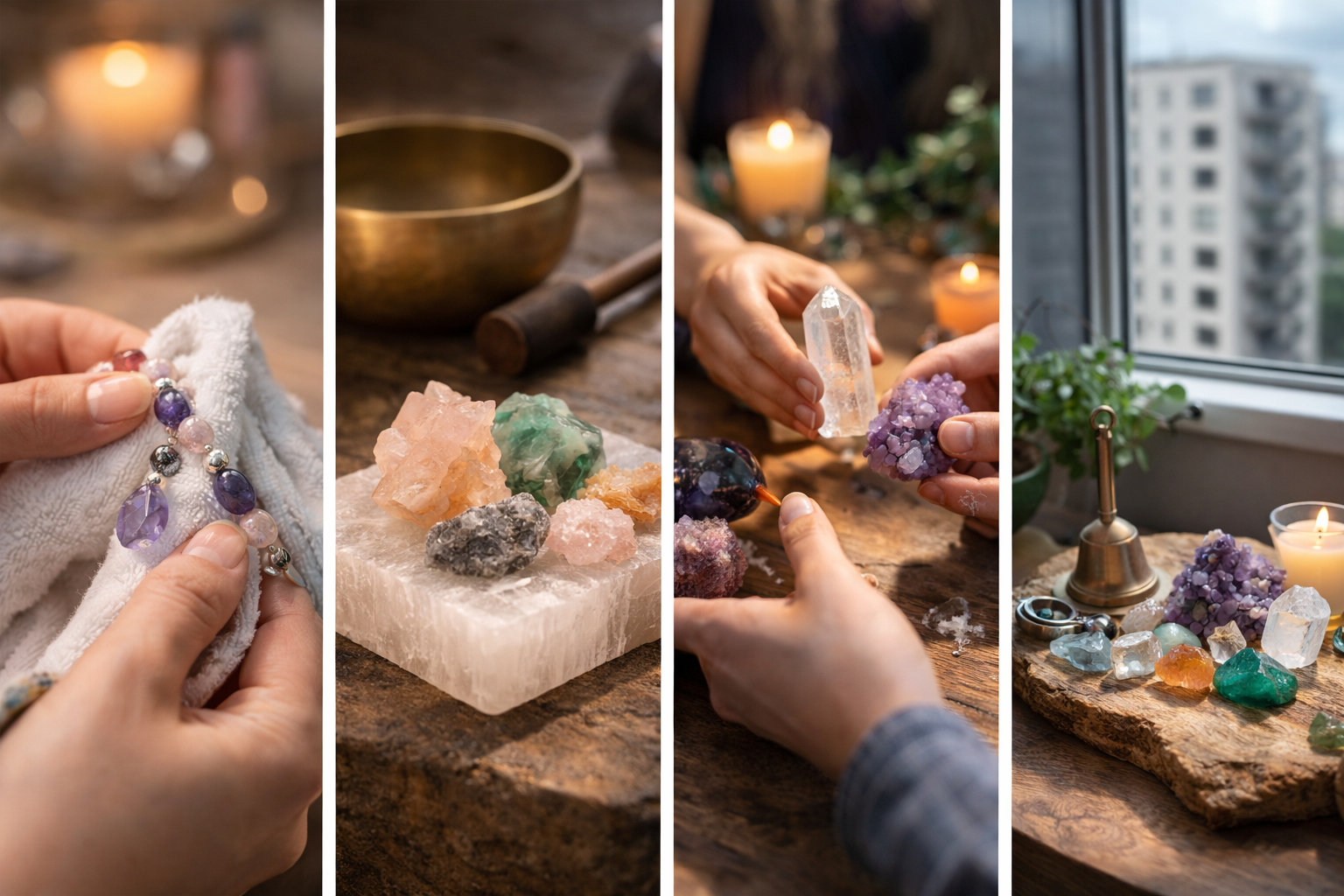
Crystal jewelry should be treated like jewelry first. Bracelets and necklaces are the place where sound wins by a mile. You avoid soaking elastic, dulling metal, loosening glue, or getting residue trapped around settings. A soft dry cloth for physical cleaning and sound or light smoke for energetic cleansing is usually enough.
Fragile stones want no-contact methods. If a crystal feels soft, chalky, fibrous, flaky, or just a little suspect, don’t get clever. Sound, moonlight, and selenite are your safer bets.
Shared crystals do not need panic-cleansing every time a friend touches them. But if a stone was handled all day in a shop, passed around during a reading, or used during a hard emotional session, a quick reset is reasonable. You are not scrubbing contamination off a countertop. You’re marking a boundary for your own practice.
Apartment living changes the method, not the ritual. If smoke is annoying, sound becomes your best friend. If outdoor moonlight is awkward, a clean windowsill works fine for many people. If the room is tiny and busy, selenite is a tidy “set it there and go to bed” option.
Large collections also change the method. You do not need to march twenty stones one by one through the sink. Group methods are your friend here. Sound for the whole shelf. Moonlight for a tray. Selenite nearby for the pieces you use most.
What Crystal Cleansing Can and Cannot Do
Crystal cleansing can be a meaningful ritual. It can mark a reset after a hard week. It can make meditation feel more intentional. It can help you slow down for two minutes and pay attention to what you’re carrying into the next part of the day.
What it cannot do is stand in for medical care or prove health effects by force of mood alone. A randomized study indexed by PubMed found that healing crystals did not outperform placebo in anxiety treatment. So the honest version is simple: crystal cleansing can matter as a spiritual or reflective practice, and that still leaves room to be clear-eyed about what the evidence does and does not show.
I think that honesty makes the ritual stronger, not weaker. You don’t have to make wild claims to say a practice helps you slow down, focus, or mark a transition. That’s already plenty.
FAQ
Can moonlight through a window cleanse crystals?
Yes. If the goal is a gentle moonlight reset, a clean windowsill works well for many people. The bigger concern is not “outdoor vs indoor.” It is whether the setup exposes the stone to moisture, heat, or the risk of getting knocked off the ledge.
Can you cleanse several crystals at the same time?
Yes, and sound or moonlight are the easiest ways to do it. Group cleansing works best when you choose a method safe for the most delicate piece in the set.
What can I use instead of sage to cleanse crystals?
Sound, moonlight, incense, and selenite are all good alternatives. If smoke is not practical, a bell or singing bowl is one of the cleanest, lowest-risk options.