You can spot a bad spell book list in about ten seconds. It throws a Wicca course, a giant encyclopedia, a protection manual, a seasonal ritual book, and some pretty coffee-table oddity into one pile, then calls all of them “best.” That is how people end up buying the wrong book first.
If you want the best spell books for actual practice, start with The Spell Book for New Witches if you are brand new, The Modern Witchcraft Spell Book if you want a broad and friendly all-rounder, and The Element Encyclopedia of 5000 Spells if you already know you want a big reference rather than a lesson plan. After that, the right pick changes fast. A Wicca-specific course book is a different buy from a grimoire-style reference, and both are different again from a protection manual or a seasonal spell collection.
I learned this the slightly annoying way. Years ago, I bought the book that looked the most “serious,” which turned out to be great at sounding old and mysterious and terrible at helping me do anything that week. The better route was boring, honestly. I picked one book that matched the job in front of me, not the identity I wanted to perform.
- Which spell book type fits a beginner, a curious dabbler, or a reader ready to go deeper
- Which books are worth buying first and which ones are better as a second or third purchase
- How to tell a usable spellcasting book from a decorative or overly dense one
- What tradeoffs come with Wicca books, broad witchcraft books, and giant reference works
- How to avoid books that use awkward ingredients, vague instructions, or too much fluff
Fast fit: start here if you want the short answer
- Brand new to spellwork: The Spell Book for New Witches
- Best broad starter: The Modern Witchcraft Spell Book
- Wicca-specific course: Buckland’s Complete Book of Witchcraft
- Best giant reference: The Element Encyclopedia of 5000 Spells
- Best for learning spellcraft itself: The Elements of Spellcrafting
- Best protection specialist: Protection & Reversal Magick
- Best seasonal pick: Spells for a Magical Year
Best Suggestions Table (Use the buttons to jump to the detailed reviews.)
| Product | Best for | Action |
|---|---|---|
| The Spell Book for New Witches | True beginners | Check Price Review |
| The Modern Witchcraft Spell Book | Best broad starter | Check Price Review |
| Buckland’s Complete Book of Witchcraft | Structured Wicca path | Check Price Review |
| The Element Encyclopedia of 5000 Spells | Deep reference use | Check Price Review |
| The Elements of Spellcrafting | Learning method, not just recipes | Check Price Review |
| The Witch’s Book of Spellcraft | Hands-on tool correspondences | Check Price Review |
| Protection & Reversal Magick | Protection and boundary work | Check Price Review |
| Spells for a Magical Year | Seasonal rhythm and month-by-month practice | Check Price Review |
Tip: pricing swings around too much to pin down here, so both buttons jump straight to the review and fit notes.
Best Spell Books at a Glance: Start With the Right Kind of Book
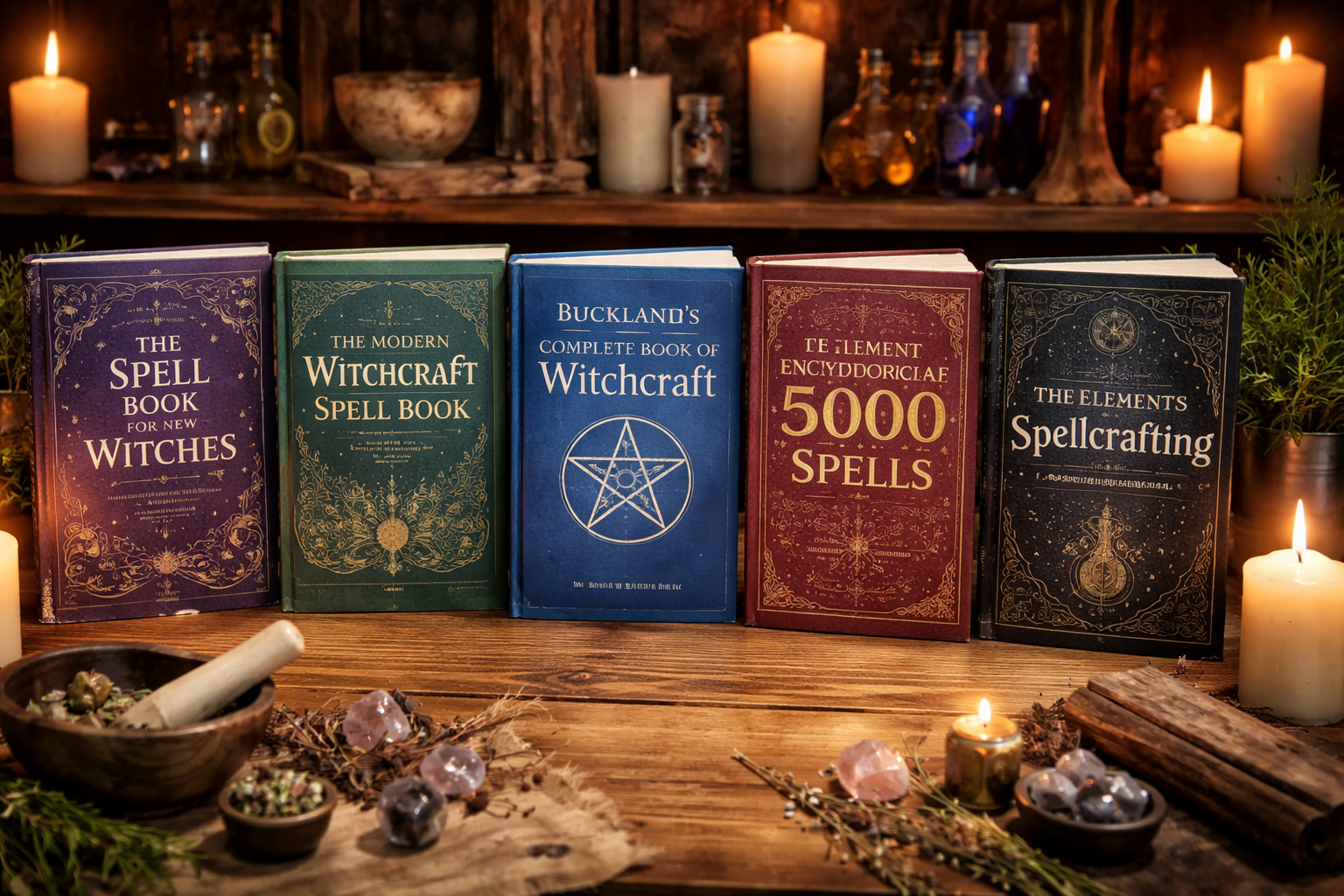
The fastest way to choose is to stop asking, “Which one is the best?” and ask, “What kind of book am I buying?” That sounds nitpicky. It is not. It saves money.
| If you want… | Start with… | Why it works | Skip it if… |
|---|---|---|---|
| A first book that actually teaches the basics | The Spell Book for New Witches | Clear language, low-friction setup, easy spell structure | You already know the basics and want deeper theory |
| A broad, modern all-rounder | The Modern Witchcraft Spell Book | Wide range of common spell categories in a friendly tone | You want one tight tradition only |
| A structured Wicca course | Buckland’s Complete Book of Witchcraft | Workbook feel, step-by-step path, classic Wiccan frame | You do not want a Wicca lens |
| A giant reference to browse and adapt from | The Element Encyclopedia of 5000 Spells | Huge range, strong for idea generation and comparison | You want a gentle first lesson |
| To write and adapt your own spellwork | The Elements of Spellcrafting | Pushes you past recipes into method | You still want hand-holding |
| Protection and reversal work | Protection & Reversal Magick | Focused, practical, and less fluffy than many niche books | You still need a general base first |
Remember: a recipe-style spell book, a Book of Shadows, and a historical grimoire are not interchangeable. They might share a shelf. They do not serve the same reader.
That is the trap behind most roundups. They rank books as if they are competing in one race, when they are really running different events. A beginner witch book is supposed to remove friction. A reference book is supposed to give range. A specialist title is supposed to go deeper, not broader. Once you see that, the shortlist gets much cleaner.
Use a 6-Point Filter Before You Buy Any Spell Book
Before any book made this list, I ran it through the same six questions. Not because that sounds tidy, but because it catches the books that look rich and mystical and then fall apart the minute you try to use them on a Tuesday night.
- Level fit: Can a beginner follow it, or does it assume prior practice?
- Path fit: Is it Wiccan, eclectic, folk-leaning, ceremonial, or mixed?
- Book type: Is it a manual, a reference, a workbook, or a niche specialist?
- Ingredient realism: Can you do anything from it without sourcing odd bits from three shops and a hedge at midnight?
- Structure: Can you find things fast later, or will you keep losing that one spell you meant to revisit?
- Trust: Does the author explain enough method that you know why a working is built the way it is?
I also judged these books the same practical way. I looked at the table of contents, sample pages, how spells are framed, how much setup the reader is expected to know, whether substitutions are allowed, whether the ingredients are normal enough to use, and whether the book still makes sense once the novelty wears off. For big reference books, indexing matters. For beginner manuals, tone matters. For niche books, I want depth, not one idea stretched thin over 200 pages.
Britannica’s overview of Wicca describes it as a modern Pagan religion, while Yale University Press’s description of Art of the Grimoire traces magic books from ancient papyri to modern paperbacks. That little bit of history changes how you shop. A Wicca book of spells sits inside a modern religious framework. A grimoire, in the wider historical sense, can be something much older, stranger, less beginner-friendly, and built for a very different practice.
Then there is the personal grimoire or Book of Shadows problem. Many new readers think they need to buy one polished object that will both teach them and become their private record. Usually, those are two separate things. Buy the teacher first. Build the notebook second. It is like learning from a cookbook before you start handwriting your own kitchen notes on greasy index cards.
Fast rule: If you want ready-made spells, buy a manual. If you want to adapt and build, buy a reference or spellcraft book. If you want one tradition only, make that a deliberate choice, not an accident of cover art.
Choose Beginner-Friendly Books That Teach the Craft Without Slowing You Down
A first spell book should feel like a calm teacher, not a locked cabinet. You want enough explanation to know what you are doing and enough movement to keep you from drowning in vocabulary before the fun part starts.
The Spell Book for New Witches
Editorial rating: 4.8/5
Fast fit: Buy this if you want a true beginner’s on-ramp. Skip it if you already know basic correspondences and want deeper theory.
This is the easiest first recommendation because it understands the beginner’s real problem. The problem is not “lack of interest.” The problem is too much fog. New readers need terms explained, basic structure shown, and early wins baked in. This book does that without talking down to you.
What I like most is its low-friction feel. The spell layouts are clear. The tone is steady. The ingredients are not constantly trying to prove how arcane they are. That matters more than people think. A book that asks for kitchen herbs, candles, water, written intention, and simple correspondences gets used. A book that treats every spell like a museum exhibit gets admired and ignored.
It is also good at helping you understand what a spell is doing. Not every beginner book manages that. Some hand over little rituals like recipe cards without giving the reader a clue why the timing, color, or ingredient choice is there. This one gives enough frame that you can start spotting patterns. That is how beginners stop being copyists and start becoming practitioners.
Its limit is also clear. Once you know the basics, you may outgrow it. That is not a flaw. That is a sign it is doing the first job well.
The Modern Witchcraft Spell Book
Editorial rating: 4.7/5
Fast fit: Buy this if you want one broad starter with lots of common-life categories. Skip it if you want one narrow tradition only.
This is the classic “best broad starter” pick because it sits nicely between too-basic and too-dense. It gives you range. Love, prosperity, protection, luck, timing, charms, simple rituals, common modern concerns. For a lot of readers, that is exactly what they want from a first or second book. They do not want one specialty yet. They want coverage.
The best part is that it feels usable. It is not pretending to be an anthropological document, and it is not trying to sound like a dusty grimoire found in a tower. It is modern in tone and practical in build. That means you can dip in, find a category, and see what a working looks like without feeling like you signed up for a semester-long course.
I tend to recommend it to readers who are still feeling out their path. Maybe Wicca will click. Maybe an eclectic witchcraft practice will click. Maybe they mostly want candle magic, moon phases, and home ritual. This book lets you test the waters without forcing a very narrow identity too soon.
Its weak side is that breadth comes before depth. You get a lot of territory, but not the same method-heavy training you get from a more advanced spellcraft book.
Buckland’s Complete Book of Witchcraft
Editorial rating: 4.5/5
Fast fit: Buy this if you want a structured Wicca path. Skip it if you want looser, more eclectic modern witchcraft.
This one stays on lists for a reason. It gives you a course-like path through modern Wicca, and that structure is still useful. Readers who like workbook energy, ordered progression, exercises, and a sense that they are moving through stages often do better with Buckland than with a more freeform spell anthology.
It is also a good corrective to a very common mistake: assuming all witchcraft books are basically the same. They are not. This book is openly shaped by Wicca, and that is the point. If that framework appeals to you, the book feels coherent and purposeful. The material connects. The tools, rituals, beliefs, and practice rhythm sit in one house.
Where people go wrong is buying it when they do not actually want Wicca. Then it feels stiff, older in tone, and more path-bound than they expected. I would not hand it to someone who just wants a modern spell book with flexible correspondences and an easy entry point. I would hand it to someone who says, “No, I want to study a system. I want the bones of a path.”
Think of it as a coursebook, not a casual browse book. That framing makes it much easier to judge fairly.
Move Up to Reference and Spellcraft Books When You Want More Than Recipes
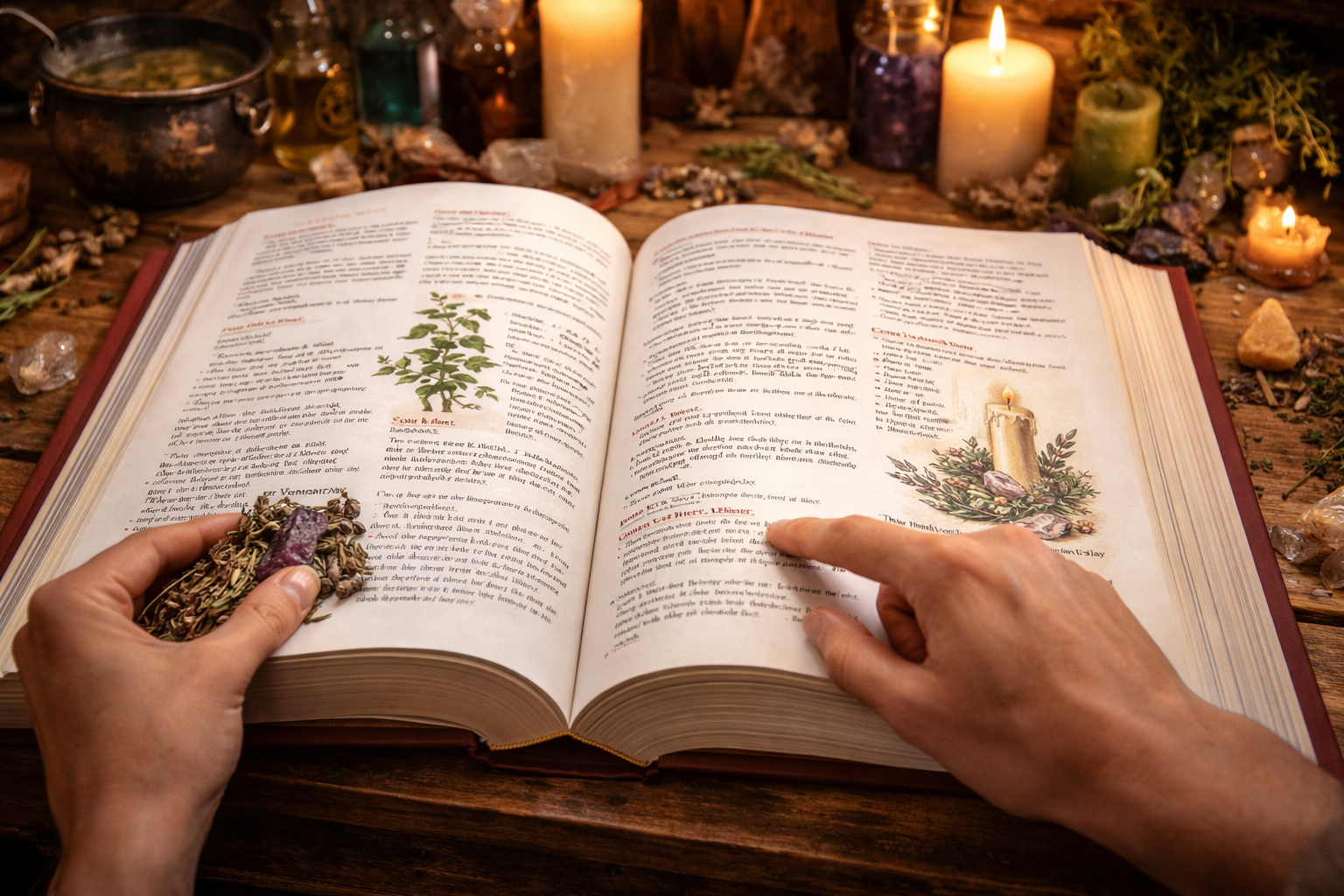
There is a clean moment when a beginner manual stops being enough. It usually happens when you find yourself changing a spell on instinct, mixing pieces from two different workings, or asking, “Why this herb and not that one?” That is when recipe books stop being the whole answer.
The Element Encyclopedia of 5000 Spells
Editorial rating: 4.9/5
Fast fit: Buy this if you want breadth, browsing power, and a huge idea bank. Skip it if you need a patient first teacher.
This book is a beast, in the good way. If what you want is range, this is the range pick. It is less “sit with me and learn from page one” and more “open to almost any angle of practice and start connecting threads.” That is why it is so often recommended and why it is also so often bought too early.
As a reference, it is brilliant. You can move through categories, compare types of workings, notice recurring patterns, and see how spell traditions echo one another. That is gold once you already know how to read a spell book. It becomes a working library in one volume. When I want to widen a line of thought, this is the kind of book I reach for. Not to obey it line by line, but to get my head moving.
As a first book, though, it can feel like being dropped into a giant market with no shopping list. There is so much there that a new reader can confuse abundance with clarity. The book is strongest when you already have a bit of framework in your head and want examples, variants, correspondences, and rabbit holes.
If you are ready for that, it is one of the best spell references you can own. If you are not, save it for book number two or three.
The Elements of Spellcrafting
Editorial rating: 4.8/5
Fast fit: Buy this if you want to understand how spellwork is built. Skip it if you still want a soft beginner hand.
This is where the conversation gets better. A lot of spell books teach you what to do. Jason Miller spends more time on how spellwork works as a craft. That difference is huge. It is the difference between following a recipe and learning how to cook.
What makes it strong is not sheer number of spells. It is the method underneath them. Timing, intention, layering, structure, focus, results, direction. You start thinking less like a collector of rituals and more like a builder. That shift matters if you want to write or adapt your own workings instead of forever swapping someone else’s ingredients in and out.
I would not throw it at a total beginner on day one. It asks more of you. You need at least a little tolerance for concepts and a little patience for cause-and-effect. But if you are already doing candle magic, simple protection work, or moon phase timing, this book can tighten your practice fast. It sharpens judgment.
That is why it earns a place here. Not because it is flashy, but because it changes the level at which you think about spellcraft.
The Witch’s Book of Spellcraft
Editorial rating: 4.6/5
Fast fit: Buy this if you want a hands-on bridge between correspondences and actual practice. Skip it if you want a giant encyclopedia.
This one works well for readers who already know they like tool-based practice. Candles, herbs, plants, crystals, oil, incense, stones. Not in a scattered “here is everything ever” way, but in a more usable, applied way. It is the kind of book that helps the shelf start talking to itself.
That makes it a smart pick for the reader who has some supplies already and wants better integration. Maybe you have candles. Maybe a few herbs. Maybe a handful of stones. The book helps those pieces stop feeling random. That is a meaningful upgrade from beginner witch books that keep everything very flat and general.
It also plays nicely with practical side-reading. When a chapter leans into crystals, pairing it with a grounded crystal guide like this healing crystals article helps narrow what to actually keep on hand instead of buying every pretty stone that shows up in a social post.
The limit is simple. This is not the biggest reference, and it is not the deepest theory book. It is a practical middle ground. For the right reader, that is exactly why it works.
Pick a Niche Book Only When the Niche Is Actually Your Practice
Niche spell books are not a bad idea. They are just a bad first idea for a lot of people. A protection book can be superb and still be the wrong first purchase. Same with a seasonal book. The question is whether that niche is your real practice or your current mood.
Protection & Reversal Magick
Editorial rating: 4.8/5
Fast fit: Buy this if protection, cleansing, and boundary work are already a steady part of practice. Skip it as a first book unless that is your one clear focus.
This is one of the few niche titles that I think earns its shelf space pretty fast once the reader knows why they are there. It has a job, and it does not pretend to be every other kind of spell book too. That is a compliment.
Protection work can get silly in the wrong hands. Too much theatrics. Too much curse chatter. Too much fear. What makes this book useful is that it stays practical. It treats protection as a craft area, not a dramatic personality trait. That alone makes it more grounded than a lot of the niche protection material floating around.
It is also good for readers who have bumped into the weak side of generic books. Generic books often give one cleansing bath, one basic ward, one smoke pass, and then move on. Fine for a starter. Not enough for someone who knows this is one of the main lanes of their practice. This book goes deeper and gives the subject room to breathe.
I still would not make it your first purchase unless your path is already protection-heavy. It is a specialist tool. The mistake is not buying it. The mistake is buying specialist gear before you even know the size of the room you are working in.
Spells for a Magical Year
Editorial rating: 4.5/5
Fast fit: Buy this if you like practice tied to the calendar, seasons, and recurring ritual rhythm. Skip it if you want one broad foundation text first.
Some readers do better when practice has a rhythm outside their own mood. That is where a month-by-month or seasonal book can be a real help. It gives shape to the year. It nudges you back into practice. It makes the calendar part of the altar instead of background noise.
Spells for a Magical Year works best for that kind of reader. It is not the book I would hand someone on day one, but it is a lovely second or third choice for anyone drawn to seasonal witchcraft, recurring ritual, moon work, festival timing, or just the comfort of having something to return to each month.
There is one thing to watch, though. Seasonal books can feel richer than they are if you are only reading them in snippets. Their value comes from repeated use across time. If you are not actually the kind of person who likes ritual rhythm, this kind of book can turn into a very pretty annual planner you never open. If you are that kind of person, though, it can become one of the most lived-in books on the shelf.
That is the right way to judge it. Not by how pretty the concept sounds, but by whether you know you will meet it again next month.
One clean rule: buy a niche book when the niche already shows up in practice. Not when the cover whispers to you from across the room.
Skip the Books That Look Magical but Do Not Actually Help
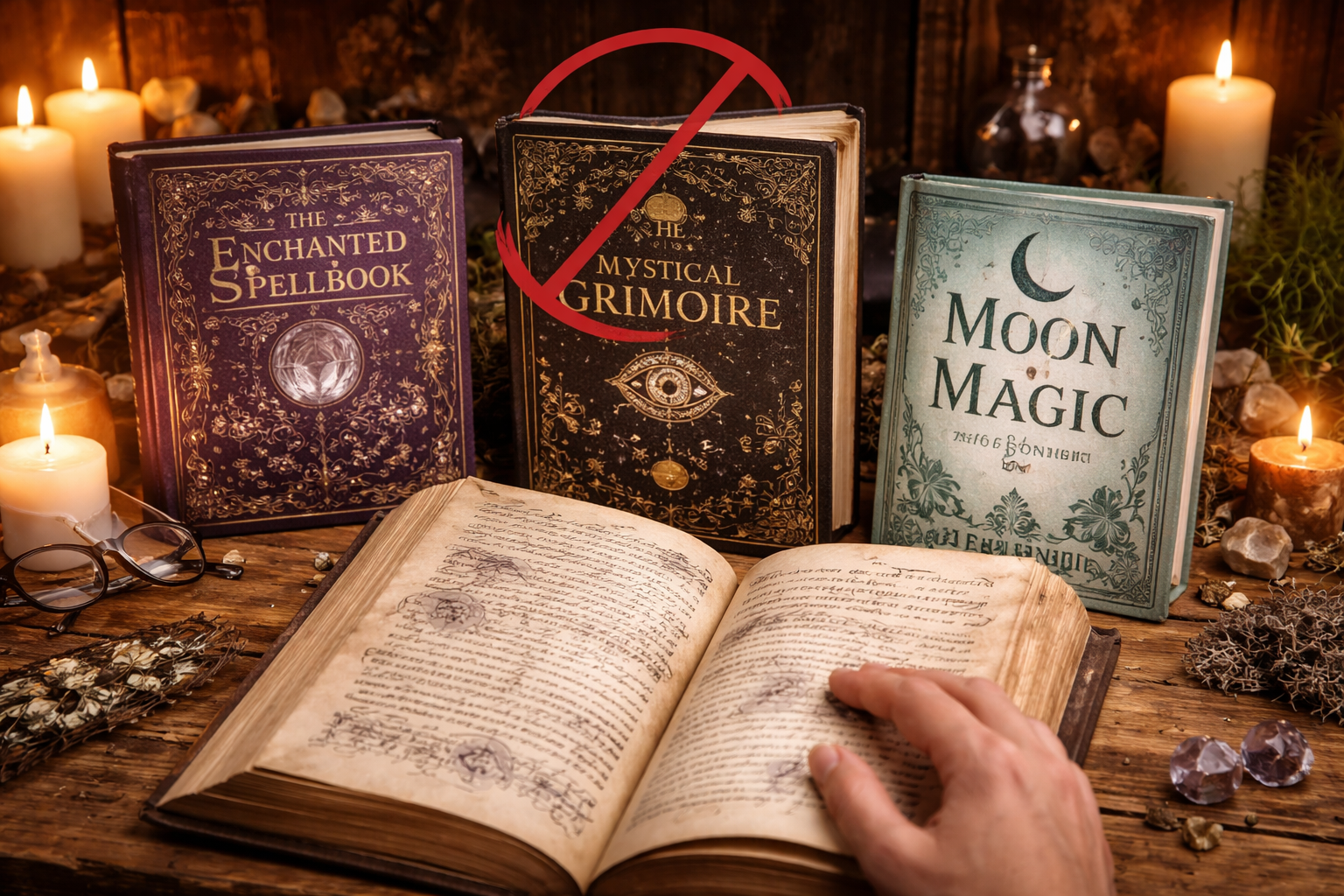
Some books are all aura and no traction. The spine glows. The chapter names sound great. Then you open it and realize it is mostly mood, recycled basics, or a pile of vague correspondences with nothing to do with them.
Here are the three weak-fit categories I would skip first:
- Decorative books with thin instruction. Lovely gift. Not much of a practice tool.
- Historical or ceremonial texts sold as first books. Fascinating, yes. Friendly, no.
- Fiction-adjacent “witchy” titles mistaken for manuals. Great shelf atmosphere. Wrong job.
The British Library’s note on a 16th-century Jewish potion book describes a manuscript with around 125 spells, healing potions, love charms, and amulets. That is a useful reminder that historical spell collections were real, varied, and often strange in form and context. It is also a reminder that historical magic books were not built for modern beginners browsing for a weekend candle spell. Different purpose. Different world.
So when I say “skip the dense old-looking thing,” I do not mean it has no value. I mean do not confuse value with fit. A historical grimoire can be fascinating and still be a lousy first purchase. Same with modern books that imitate that tone for drama. Mystery is not the same as depth. A good practical book reduces friction. It does not make you feel underqualified for opening the cover.
The 30-second flip test
- Can you tell who the book is for in half a minute?
- Can you find at least one working you could try this week?
- Are ingredients and steps named clearly?
- Does the author explain enough for you to follow the logic?
- Can you imagine using this book twice, not just owning it once?
If the answer to most of those is no, put it back. Or at least move it to the “later, maybe” pile.
Practice Safely With Herbs, Incense, Oils, and Ingredients

This part should be calm and plain. Spell books can be inspiring. They are not a free pass to burn, brew, ingest, or diffuse anything named on the page without checking what it is and who is around it.
The National Center for Complementary and Integrative Health points out that herbs and botanicals can interact with medicines and that the evidence base varies a lot from one product to the next. So if a spell book leans into teas, oils, baths, or herbal blends, treat that as ritual information first, not medical instruction. That matters even more in homes with pregnancy, nursing, children, pets, asthma, or regular medication in the mix.
Smoke is the other thing readers gloss over. The U.S. Environmental Protection Agency advises proper ventilation when burning candles and incense indoors. That sounds obvious until you notice how many books treat smoke as background decor. It is not. Open a window, think about placement, and use a heat-safe setup. A practical burner guide like this incense burner guide is a better companion to incense-heavy spell books than a tiny holder that dumps ash on the altar cloth.
- Do not ingest herbs or oils because a book lists them.
- Patch test skin products when relevant, and keep oils diluted and away from eyes.
- Check plant and oil safety around pets.
- Ventilate smoke-based work.
- Use flameproof surfaces and basic candle sense. Nothing dramatic. Just normal caution.
Practical note: a book can still be good even if you never use every ingredient exactly as printed. The better books leave room for judgment.
Build a Small, Smart Spell Book Library Instead of a Shelf Full of Regret
The smartest early library is small. One foundation book. One expansion book. Then stop and see what practice actually asks for.
Here are three starter stacks that make sense:
- Brand-new stack: The Spell Book for New Witches + The Modern Witchcraft Spell Book
- Builder stack: The Modern Witchcraft Spell Book + The Element Encyclopedia of 5000 Spells
- Method stack: The Spell Book for New Witches + The Elements of Spellcrafting
If your path is clearly Wiccan, swap in Buckland early. If protection work keeps surfacing, add Jason Miller later. If your practice is shaped by Sabbats, moon phases, and the seasonal wheel, then a calendar-based book makes more sense than another generic all-rounder.
The thing to skip at first is collecting identities. You do not need one book for herbs, one for candle magic, one for moon rituals, one for crystals, one for protection, one for dreams, and one faux-grimoire that makes the whole shelf look moodier. That is how people build a library they have not lived into yet.
A better plan is almost annoyingly simple:
- Buy one book that teaches.
- Use it long enough to notice what feels thin.
- Buy the second book to fill that gap, not to chase a new aesthetic.
That second step is where judgment shows up. Maybe you realize you need better reference support. Maybe you want a stronger grip on correspondences. Maybe you want seasonal rhythm. Maybe all your notes keep circling back to protection and cleansing. Fine. Now the next purchase has a job.
And that is really the whole argument here. The best spell book is not the most famous one, or the oldest one, or the prettiest one. It is the one that meets your practice where it actually is and gives you room to grow without wasting your patience.
FAQ
What is the difference between a spell book, a grimoire, and a Book of Shadows?
A spell book is usually a published guide or collection of workings. A grimoire can mean a broader historical or magical text, often less beginner-friendly and not always built like a modern how-to manual. A Book of Shadows is usually personal, meaning your own notes, rituals, correspondences, and records of practice.
Are Wicca books still useful if I am not Wiccan?
Sometimes, yes. Many Wicca books include useful material on ritual structure, Sabbats, correspondences, and spell timing. The question is whether you want that religious and symbolic frame. If you do not, a broader witchcraft or spellcraft book will usually feel less restrictive.
Do I need more than one spell book to start?
No. One good foundation book is enough to begin. The second book only makes sense once you know what your first one does not cover well enough for your own practice.