
You light the end of a white sage bundle, blow out the flame, and then it happens: the room fills faster than expected, the smoke alarm starts looking judgmental, and every guide you opened says some version of “clear negative energy.”
Helpful? Sort of. Complete? Not really.
If you’re asking “what is white sage smudge sticks used for,” the plain answer is this: white sage smudge sticks are commonly used for spiritual or symbolic cleansing of spaces, objects, and personal energy. People burn them before meditation, after arguments, when moving into a new home, when cleansing crystals or ritual tools, or when a room feels heavy, stale, or emotionally loaded.
The better question is whether white sage is the right tool for that moment. White sage is a strong smoke-cleansing tool, not a casual air freshener. Used well, it can mark a clean break between one mood and the next. Used badly, it can leave you with a coughing fit, a scorched bowl, and a room that smells like you tried to bless a campfire.
Here is what this guide covers:
- What white sage smudge sticks are actually used for
- When white sage makes sense, and when it is too much
- How to use a bundle without flooding the room with smoke
- How to think about culture, sourcing, and respect
- What to use instead if smoke is a bad fit
- The common mistakes that make sage cleansing feel harsh or hollow
At a glance: the white sage decision filter
| If your goal is… | White sage fit | Better move |
|---|---|---|
| A deep room reset after tension, grief, guests, or moving | Strong fit | Use one short pass with windows open |
| A light daily refresh | Often too much | Try incense, sound, fresh air, or a candle-free ritual |
| Meditation or intention-setting | Good if smoke is tolerated | Use a thin stream for 30 to 60 seconds |
| A home with asthma, pets, babies, or migraines | Poor fit | Use no-smoke cleansing, open air, sound, or tidying |
| Actual air cleaning | Not the right tool | Ventilation, cleaning, and indoor-air basics matter more |
What White Sage Smudge Sticks Are Used For
White sage smudge sticks are used for smoke cleansing. In everyday spiritual practice, that usually means passing fragrant smoke through a space, around an object, or near the body to mark a reset.
That reset can be emotional, symbolic, ritual, or sensory. It does not need to be dramatic. Sometimes it is as simple as opening a window, lighting the bundle, and deciding that the bedroom is no longer going to carry the mood of the argument that happened there two hours ago.
The most common uses are:
- Space cleansing: moving smoke through a room, flat, studio, or home after stress, visitors, illness, clutter, conflict, or a move.
- Meditation preparation: using scent and smoke as a signal that the next few minutes belong to quiet, prayer, journaling, tarot, breathwork, or reflection.
- Object cleansing: passing smoke around crystals, jewellery, altar tools, card decks, second-hand objects, or gifts that feel energetically “busy.”
- Personal energy reset: guiding smoke near the body before or after emotionally heavy conversations, public events, grief, or draining work.
- Threshold rituals: using sage around doors, windows, desks, or beds when a space needs to feel like it has crossed from one chapter into another.
Think of white sage less like bleach and more like a ceremonial reset button. Bleach makes a surface physically cleaner. White sage gives your mind and ritual space a clear marker: this part is over, this next part begins.
Simple rule: use white sage for a deeper reset, not because every room needs smoke every day.
A short pass is usually enough. If the room starts looking hazy, you have crossed from ritual into indoor barbecue. Open the window wider and stop.
Why White Sage Needs More Context Than “Clearing Energy”
White sage is not just “some sage.” It is Salvia apiana, often called California white sage. The California Native Plant Society describes white sage as a plant deeply tied to Indigenous communities in Southern California and northern Baja, which is also the only region where it naturally occurs.
That matters because many modern wellness shops flatten the whole thing into an aesthetic: beige bundle, pretty shell, vague promise of better vibes. The plant has a place, a history, and living communities connected to it.
The Native Governance Center’s guide to practicing wellness responsibly gives a useful check: ask where a practice comes from, who taught it, and whether the version being sold has been stripped from its context. That is a better starting point than treating “smudging” as a universal word for burning any herb.
Many people now use “smoke cleansing” when they are not practicing within a specific Indigenous tradition. That wording is not a magic fix, but it is more precise. It says what you are doing without pretending you inherited a ceremony you were never taught.
Note: You can talk about common modern white sage uses without turning many Indigenous traditions into one vague “ancient ritual.” That shortcut is where a lot of bad articles go sideways.
Sourcing belongs in this section too. The California Native Plant Society has warned that commercial demand for white sage and poaching concerns are tied together. So a bundle is not just a bundle. If it comes with no origin, no grower detail, and only mystical sales copy, that is missing information.
When White Sage Makes Sense, and When It Is Too Much
White sage works best when the ritual has a clear reason. Not a panic reason. A clean reason.
Use it when a space needs a strong symbolic reset: after an argument, after a breakup, after intense guests, after sickness, before a meditation circle, or when moving into a new place. It also makes sense when cleansing second-hand objects, crystals, altar pieces, or tools that feel like they are carrying too much story.
Skip it, or choose something gentler, when the problem is not really spiritual. A stale room may need an open window. A tense kitchen may need the dishes done. A bedroom that feels heavy after doomscrolling until 2 a.m. probably needs sleep more than smoke (annoying, but true).
| Situation | Use white sage? | Why |
|---|---|---|
| Moved into a new home | Yes, if ventilated | It marks a clean start and gives the room a new ritual association |
| After conflict or grief | Yes, with care | The ritual can help separate the event from the space |
| Small room with poor airflow | Usually no | Smoke builds fast and can feel harsh |
| Daily morning refresh | Often no | A lighter tool fits better |
| Asthma, pets, babies, or smoke sensitivity nearby | No-smoke is safer | The ritual should not cost someone their lungs for the afternoon |
If the room is small, one short pass is enough. Then open the window wider and wait 10 to 20 minutes before deciding whether the space feels better.
White sage is like hiking boots. Brilliant on rough ground. Odd for walking across the kitchen.
How to Use a White Sage Smudge Stick Without Overdoing the Smoke
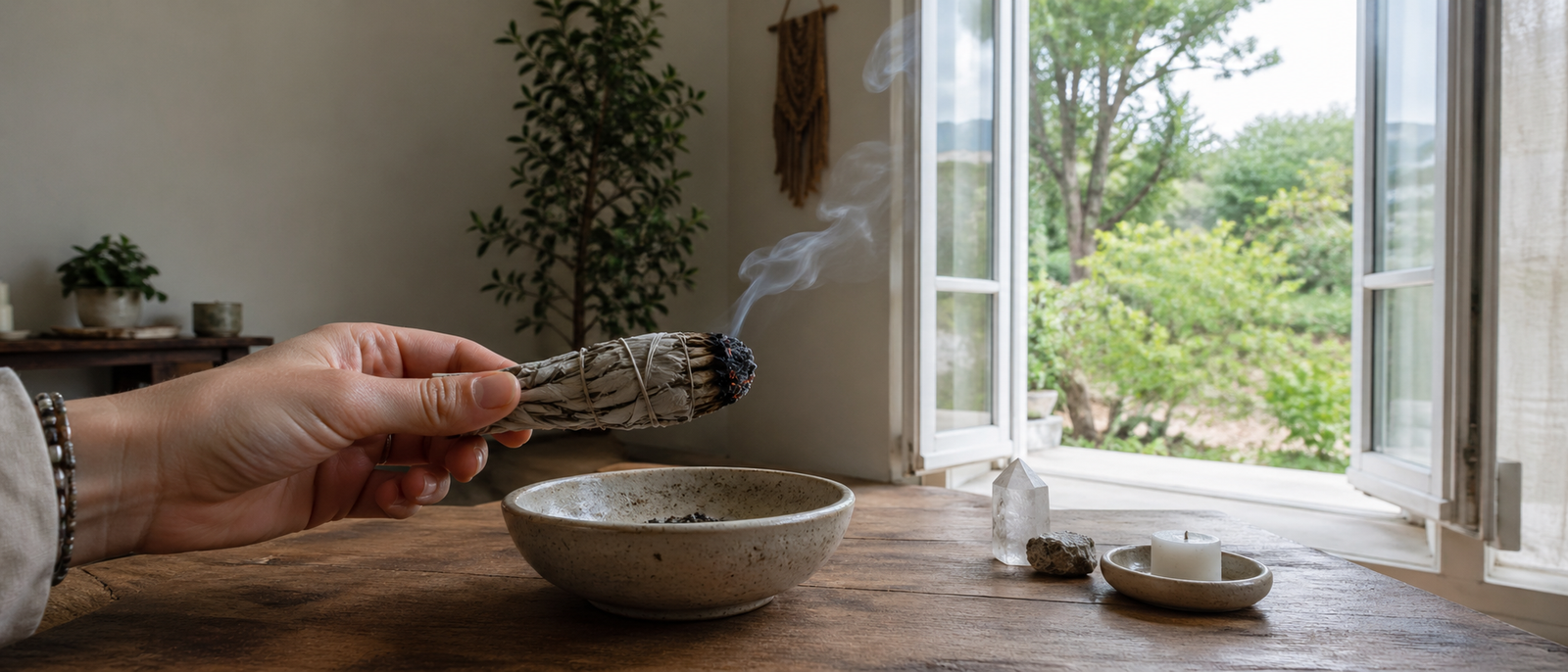
A good white sage ritual is simple. The room breathes, the smoke stays thin, and the intention is clear enough that you could say it without feeling silly.
Step 1. Open the room so smoke has somewhere to go
Open a window or door before lighting the bundle. This is practical and symbolic at the same time. The smoke needs a route out, and so does whatever mood you are trying to release.
Move pets out of the room. If someone in the home has asthma, migraines, smoke sensitivity, or a respiratory condition, choose a no-smoke method instead.
Step 2. Set one plain intention so the ritual has a job
Do not over-script this part. One clean sentence works better than a paragraph you found online and don’t believe.
- “This room is for rest.”
- “I release the heaviness from this space.”
- “This home is calm, clear, and protected.”
- “This object is reset for my use.”
The intention gives the smoke a role. Without it, you are mostly walking around with a plant ember.
Step 3. Light the tip and create a thin smoulder
Hold the bundle at the far end, light the tip, then blow out the flame. You want smoke, not fire. If a flame keeps catching, pause and let the tip calm down before moving.
A tightly packed stick can take a few tries. That does not mean anything mystical has gone wrong. It usually means the bundle is dense, slightly damp, or not lit across enough surface area.
Step 4. Guide the smoke through the places that hold the mood
Move slowly around doors, windows, corners, beds, desks, mirrors, and any object you are cleansing. You do not need to coat every inch. Aim for contact, not coverage.
For crystals or jewellery, pass the item through the smoke for a few breaths. For a whole room, a few minutes is enough in most homes.
Step 5. Extinguish the bundle until the ember is fully dead
Press the smoking end into sand, earth, or a heat-safe bowl. Do not use plastic. Do not drop it into a bin. Do not trust a bundle just because it stopped smoking for a moment.
Check it again after 5 minutes. White sage can hide a tiny ember in the packed leaves, which is exactly the sort of boring detail that prevents a real problem.
Common mistake: more smoke does not mean more cleansing. It often means a headache, irritated eyes, and a smoke alarm with a flair for drama.
White Sage vs Blue Sage, Palo Santo, Incense, and No-Smoke Cleansing
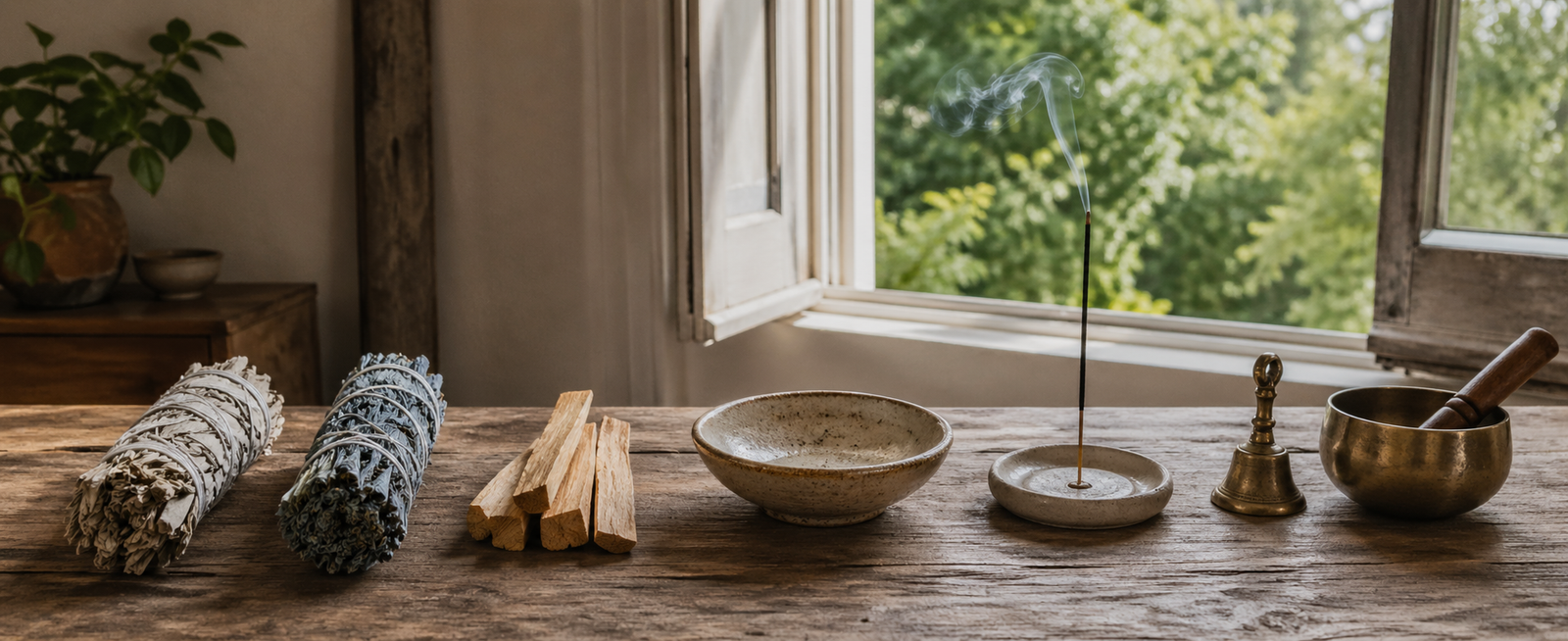
White sage gets treated like the default, but it is not the only tool. It is just the famous one.
If the real decision is which sage fits the job, the guide to the best sage for cleansing negative energy gives a tighter comparison. For a steadier burn and less bundle management, the guide to the best incense for cleansing is a better next step.
| Tool | Best for | Tradeoff |
|---|---|---|
| White sage | Deep resets, new homes, heavy emotional residue | Strong smoke, sourcing concerns, not ideal for sensitive homes |
| Blue sage | Softer room refreshes and gentler rituals | Less of that “deep reset” feeling |
| Garden sage | A practical, accessible herb option | Different scent and symbolism |
| Palo santo | Warm, sweet, uplifting rituals | Still creates smoke and has its own sourcing questions |
| Sage incense | Controlled burn and smaller rooms | Less ceremonial than a bundle |
| No-smoke cleansing | Pets, asthma, dorms, smoke alarms, shared housing | Requires more intention because scent is not doing the heavy lifting |
No-smoke cleansing can be as simple as opening windows, ringing a bell, clapping into corners, using a singing bowl, tidying the surface that feels “charged,” or saying the intention while touching the doorway. It can sound almost too simple. Then again, so is washing a cup. Simple still works.
If incense becomes the better fit, an incense burner guide helps match the holder to the material so ash, heat, and balance do not become the main event.
Quick rule: choose white sage for a heavy reset. Choose incense, sound, or fresh air for routine maintenance.
Smoke, Pets, Asthma, and Fire Safety Come Before the Ritual
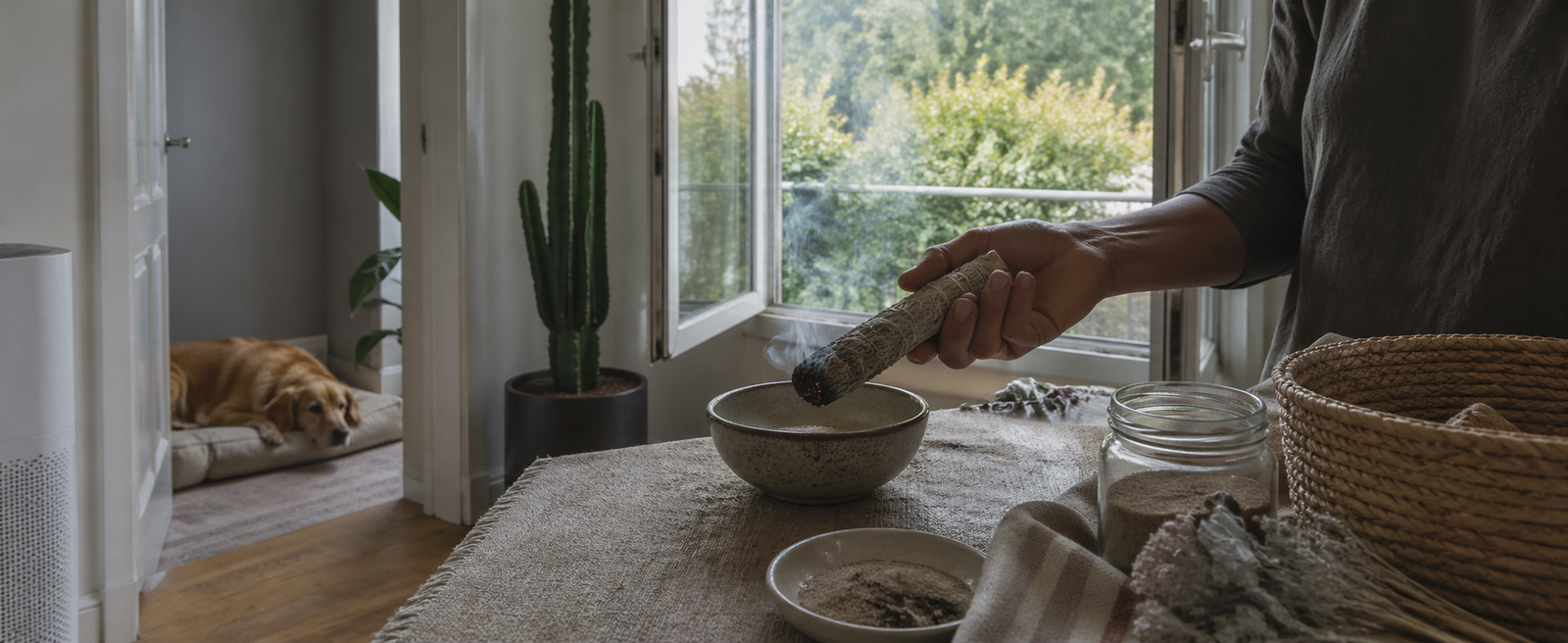
White sage smoke may feel spiritual, but it is still smoke. That one fact should shape how you use it.
The United States Environmental Protection Agency has identified candles and incense as indoor sources of particulate matter. The American Lung Association also advises reducing indoor particulate sources, including burning candles, incense, or other items indoors, especially when indoor air quality is a concern.
That does not mean everyone must avoid white sage forever. It means the ritual has to fit the room and the people in it.
- If someone has asthma, skip smoke.
- If pets are in the home, move them away and ventilate before they return.
- If the room is small, use less than you think.
- If there are babies, older adults, or respiratory issues nearby, choose a no-smoke ritual.
- If the smoke alarm is close, open the space first or use another method.
Fire safety is the unglamorous part. It is also where experience shows up. Keep the bundle away from curtains, bedding, papers, dried flowers, loose sleeves, and hair. Hold it over a heat-safe bowl when moving through the room.
When finished, press the tip into sand, earth, or a fireproof container. Then check again after 5 minutes. If you still see glow, heat, or smoke, it is not finished.
Safety note: A ritual that makes someone cough is not a deeper ritual. It is the wrong tool for that body, room, or day.
How to Buy or Source White Sage More Respectfully
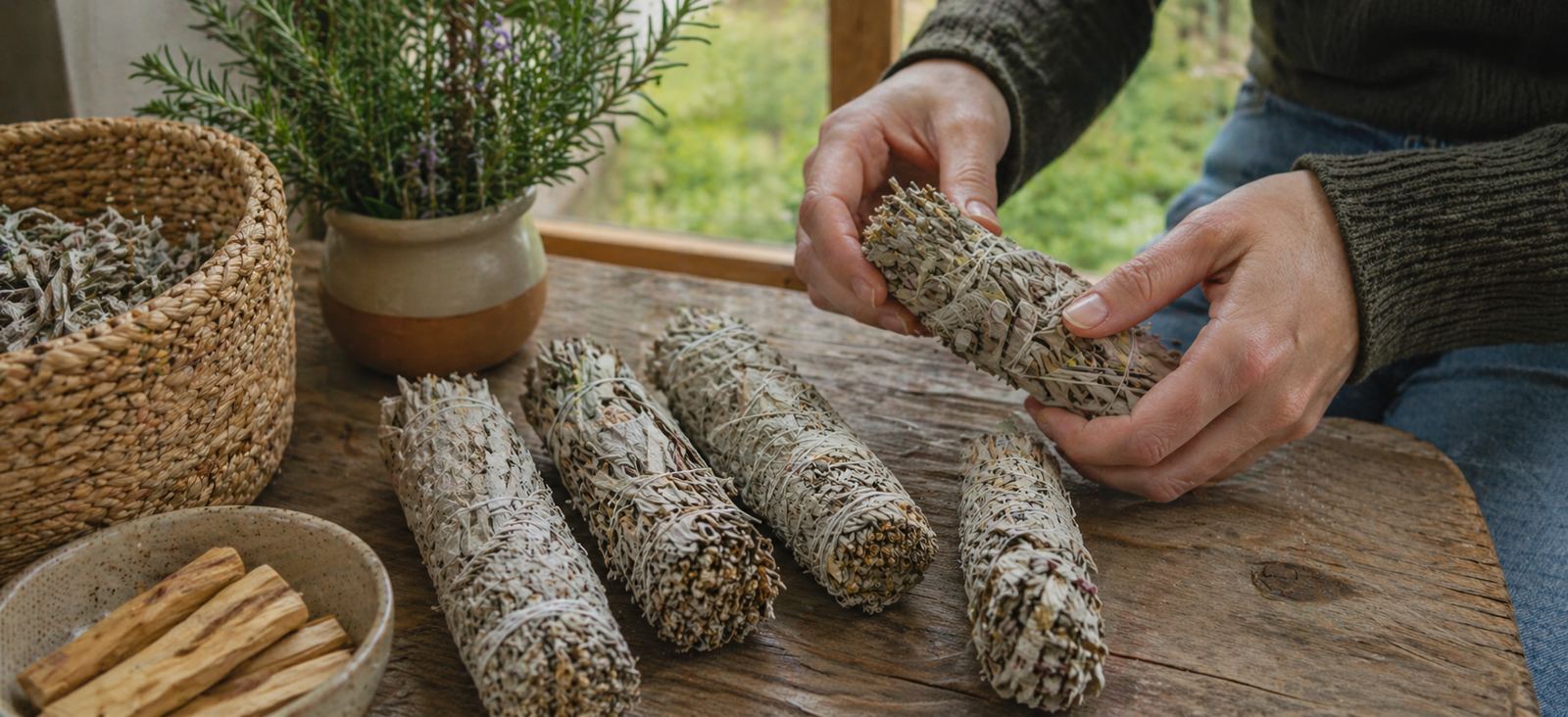
Because white sage is so popular, shopping for it can feel weirdly murky. One listing says “wildcrafted.” Another says “sacred.” Another says almost nothing except “powerful cleansing bundle.” Nice words, not enough detail.
Look for grown, cultivated, or farmed white sage with a clear origin. The plant name should be listed as Salvia apiana. The seller should say something concrete about where it came from or how it was harvested.
Be cautious with vague “wild-harvested” or “wildcrafted” bundles that do not explain the land, grower, permit, or harvest method. Vague copy is not mystery. It is missing paperwork.
A better white sage label usually tells you:
- The plant name, preferably Salvia apiana
- Whether it is cultivated, farm-grown, or otherwise traceable
- Where it was grown or sourced
- Who bundled it or supplied it
- How the seller thinks about harvest pressure and respect
If sourcing feels unclear, you do not need to force the purchase. Rosemary, lavender, garden sage, incense, bells, chimes, breathwork, and open-window rituals can all carry intention without leaning on white sage.
This is not about making the ritual heavy with guilt. It is about refusing the laziest version of the trend.
Common Mistakes That Make White Sage Cleansing Feel Harsh or Hollow
Most white sage problems come from mismatch. Wrong tool, wrong room, too much smoke, no clear intention, poor sourcing, or a safety step skipped because the ritual felt more interesting than the boring bits.
Using smoke when the room needs fresh air and a reset task
If a room feels off because it is cluttered, stale, or tense, white sage can help mark the shift. But pair it with one visible action: open the window, make the bed, clear the desk, empty the bin, or wipe the surface where the mood seems to gather.
Smoke plus no action can feel strangely hollow. Smoke plus one physical reset gives your brain something to believe.
Burning too much in a small room
A tiny bedroom does not need a dramatic cloud. Start with 30 to 60 seconds of smoke, then stop and ventilate. If you need to squint, you went too far.
Skipping the intention
White sage is not a remote control for the universe. It works better when you name the shift. “This space is for sleep” is enough. So is “I am done carrying that conversation in here.”
Treating white sage as a medical air purifier
The often-quoted 94% airborne bacteria study on medicinal smoke did report a large reduction in airborne bacteria in a specific study setting. That does not prove that burning a white sage bundle disinfects a normal living room, replaces cleaning, or protects anyone from illness.
Use the study with care. It is interesting. It is not a permission slip for wild claims.
Cleansing crystals without deciding what “clean” means
For crystals, jewellery, or second-hand objects, decide what you are clearing before you pass the item through smoke. Are you releasing old association? Preparing it for meditation? Marking it as yours?
If crystal cleansing is the main task, a guide on how do you cleanse your crystals will be more useful than trying to make one white sage ritual do every stone-specific job.
Leaving the ember half-alive
The least mystical mistake is the one that matters most. If the bundle is still hot, it is not out. Press it into sand or earth, wait, then check again.
| Myth | Reality |
|---|---|
| The strongest smoke works best | The right amount is what the room and people can handle |
| White sage disinfects the home | It is a ritual tool, not a replacement for cleaning or ventilation |
| A bundle going out means bad energy blocked it | It is usually packed tightly, damp, or not lit across the tip |
| Any white sage bundle is fine | Sourcing matters. Traceable, cultivated white sage is the cleaner choice |
Better rule: cleanse the space, then change one small thing in it. Open the blinds. Clear the chair. Move the old cup. Let the ritual land somewhere physical.
FAQ
Can I reuse the same white sage smudge stick?
Yes. Reuse it if the bundle is dry, intact, and fully extinguished after the last session. Store it somewhere cool and dry, away from loose paper, fabric, and heat.
What does it mean if my sage keeps going out?
It usually means the bundle is packed tightly, slightly damp, or not lit evenly across the tip. Relight it, let the flame catch for a few seconds, blow it out, and keep the smoke thin. Do not assume it is a bad omen by default.
Does white sage actually clean the air?
Do not treat white sage as an air purifier. Some research on medicinal smoke is interesting, but it does not prove that a white sage bundle disinfects a normal home. For indoor air, ventilation, cleaning, and reducing smoke exposure matter more.