
Sometimes a room is tidy and still feels wrong. The dishes are done, the floor’s clear, and yet the place has that heavy, stale feeling that follows an argument, a rough week, or a string of visitors.
If you’re wondering how to use sage for cleansing, the short answer is this: open a window, light the sage until it smolders, move the smoke through the space with a clear intention, then put it out fully and let the room settle. That’s the backbone. What changes the result is the part most quick guides skip, which is choosing the right herb, using a sensible amount of smoke, and closing the ritual instead of stopping the second the bundle is out.
I’ve done this in big open rooms and in a tiny flat with a twitchy smoke alarm, and the difference between a calm reset and a smoky mess usually comes down to restraint. Less theatre, more method.
- the exact six-step ritual for a room, home, or self
- which kind of sage fits which job
- what to say if formal prayers feel awkward
- when to cleanse and when a no-smoke option makes more sense
- how to do it safely and source sage without being careless
At a glance
| Situation | Best move | Skip this |
|---|---|---|
| After conflict, a move, or lots of guests | Use a stronger cleanse with good airflow | Flooding the whole house with smoke |
| Small room or flat | Cleanse one room and keep a window open | Treating a studio like a farmhouse |
| Pets, children, asthma, smoke sensitivity | Use a very short session or a no-smoke ritual | Assuming natural smoke is harmless |
| You want gentler, regular use | Choose a lighter herb or a one-room reset | Using white sage every time out of habit |
How to use sage for cleansing in 6 simple steps
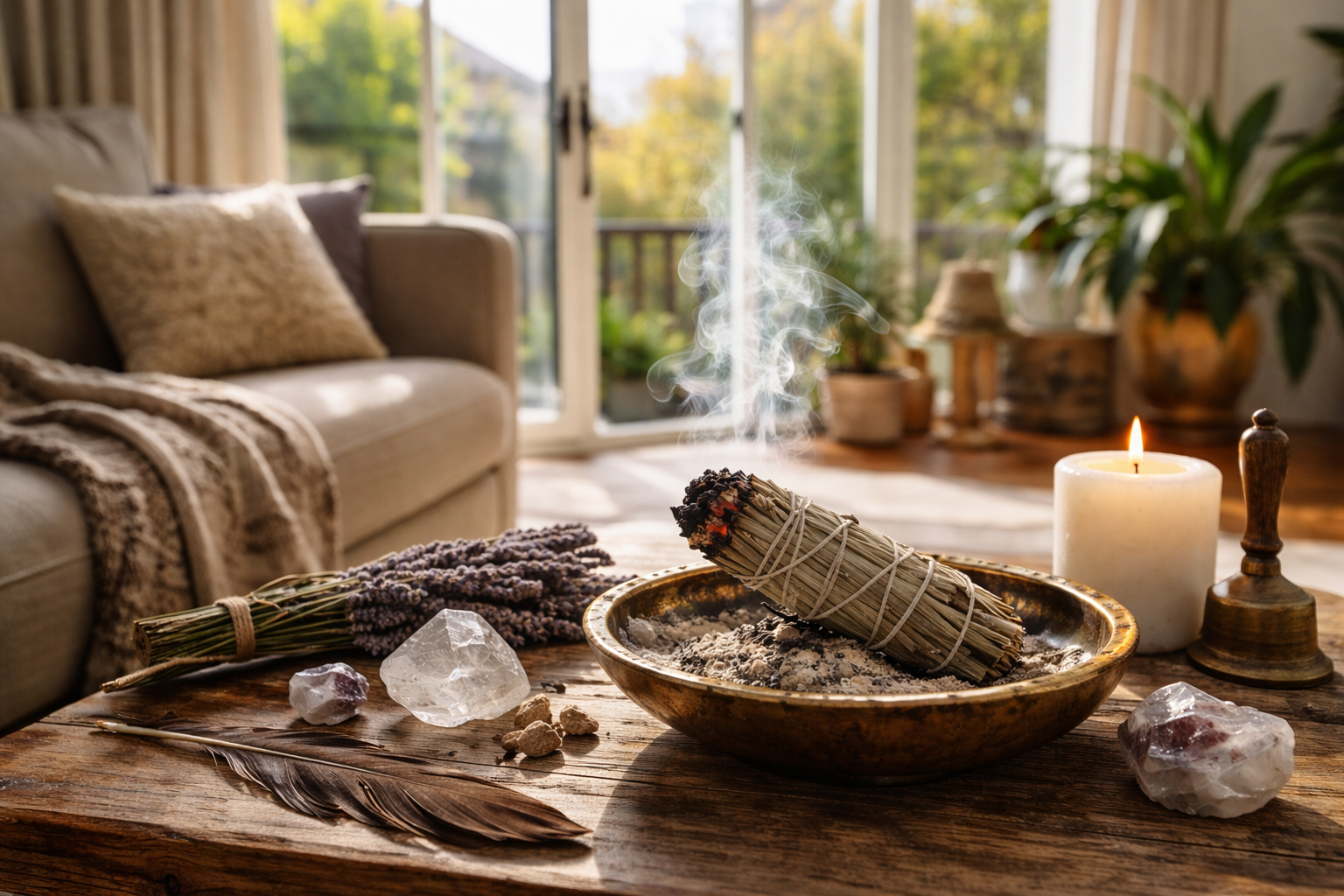
The ritual itself is not complicated. What helps is doing it in a clear order so the room feels intentionally reset instead of vaguely smoky.
Step 1. Open a window and give the smoke a way out
Start here before you light anything. A slightly open window or door gives the smoke somewhere to travel and helps the room feel less trapped. The indoor pollution sources that release gases or particles guidance from the U.S. Environmental Protection Agency is a good reminder that ventilation is not just ritual symbolism. It changes the air in the room.
Step 2. Set up a heat-safe base and decide what this cleanse is for
Use a fireproof bowl, dish, or a layer of sand in a ceramic container. Then get specific. “I want the room to feel better” is a start, but “I’m clearing tension from this space and inviting calm back in” works better because it gives your mind something to lock onto.
Note: Think in two moves: clear and invite. Clear the thing you do not want hanging around. Then name what should replace it.
Step 3. Light the sage until it smolders
Light the tip and let it catch for a short moment, usually around 10 to 20 seconds. Then blow out the flame so you have a steady ember, not an open flame. You want a ribbon of smoke, not a bonfire pretending to be spiritual.
Step 4. Move through the room slowly and hit the places that collect stagnation
Guide the smoke into corners, around thresholds, near windows, and by the front door. Those are the spots people most often focus on because they mark transition points. Move clockwise if that feels orderly to you, or just move with a path you can remember. The point is consistency, not choreography.
Step 5. Return to the starting point and put the sage out fully
When you’ve finished the space, return to the same doorway or window where you began. Press the smoking end into sand or the base of the bowl until it stops smoking. Don’t leave it to “finish itself.” That’s how ash ends up on a shelf and the whole mood goes sideways.
Step 6. Close the ritual so the room actually settles
This is the bit that many people skip. After the smoke is out, stand still for a minute. Breathe. Straighten a cushion. Ring a bell. Say one last line. I like something plain: “Only peace stays here.” Small, yes, but it marks the shift. A cleanse without a close can feel like opening a door and forgetting to shut it.
Which kind of sage should you use, and when is another option better?
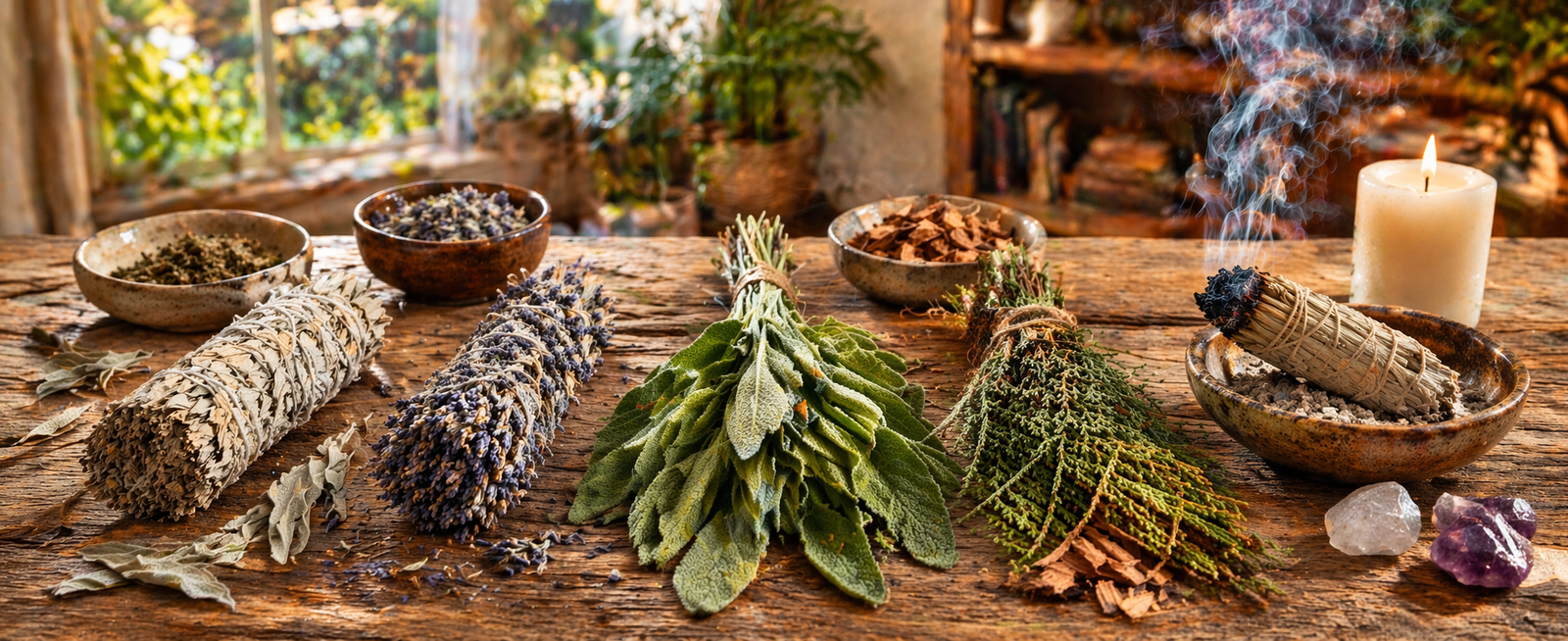
Not every cleanse needs the same herb. White sage gets the headlines, but it is not the automatic best choice for every room, every home, or every mood.
| Herb | Best for | Smoke and scent | Watch for |
|---|---|---|---|
| White sage | Deeper reset after conflict, a move, or a heavy-feeling space | Strong scent, more smoke | Sourcing and overharvesting concerns |
| Blue sage | Gentler regular cleansing and smaller rooms | Milder, lighter | Still smoke, still needs airflow |
| Garden sage | Simple home ritual when you want a practical everyday option | Herbal kitchen-garden scent, less dramatic | Not every tradition treats it the same way |
| Cedar or another alternative | Grounding, steadier mood, less “purge” energy | Varies by herb | Choose based on scent tolerance and source |
If the room feels dense after visitors, conflict, or a major life shift, a stronger herb can make sense. If you live in a compact flat or know strong smoke gives you a headache, a gentler herb is usually the smarter call.
I don’t love the habit of reaching for white sage every single time just because it’s the one people recognize. If you want a deeper comparison of scent, strength, and use cases, this guide to best sage for cleansing negative energy goes further without bloating this page.
Remember: match the herb to the job. Heavy reset, stronger herb. Everyday refresh, gentler herb. Smoke-sensitive home, use less or skip smoke altogether.
When to cleanse with sage, and how often is enough?
Most people do not need a rigid schedule. Sage works best when it answers a real moment in the room.
Good times to cleanse are easy to spot: after an argument, after guests leave, after moving into a new home, after illness, or after a long stretch where the place feels flat and crowded. A ritual done with a reason lands better than one done because a calendar said Tuesday.
That said, there is such a thing as overdoing it. If every low mood turns into a full-house smoke cleansing, the ritual starts to lose shape. It becomes background noise.
A cleaner rule is this: if the energy in the room feels stuck and a visible reset would help, cleanse. If the space just needs fresh air and a quick tidy, do that instead. Weekly can be fine. Monthly can be fine. Only after major shifts can be fine too. The right rhythm comes from the life of the room, not from trying to look devoted.
Pro tip: if you feel pulled to cleanse again and again, stop and check whether the room needs a ritual or whether you need rest, a conversation, or an open window. Those are not the same thing.
What to say while cleansing with sage when you want the words to feel natural
A lot of people stall here. They have the sage lit and then panic because every script they found online sounds borrowed, stiff, or like it belongs in a costume drama.
You do not need a grand speech. You need a sentence you believe.
The easiest structure is three parts: name the space, name what is leaving, and name what is welcome now.
- “I clear this room of tension and invite calm back in.”
- “I release what feels heavy here and welcome peace, rest, and clarity.”
- “Only kindness, honesty, and steady energy stay in this home.”
- “I clear my body and mind of stress and call my focus back.”
- “This home is safe, grounded, and at ease.”
The best lines are short because they sound like something a real person would say while smoke is drifting toward a window. You can pray if that feels right. You can stay secular if it doesn’t. Either way, natural language works better than reciting words that feel dead in your mouth.
One small trick that helps: say the line once before you start moving through the room, then once at the end. That bookends the ritual and gives it a shape people can actually feel.
How to adapt the ritual for one room, yourself, crystals, or secondhand items
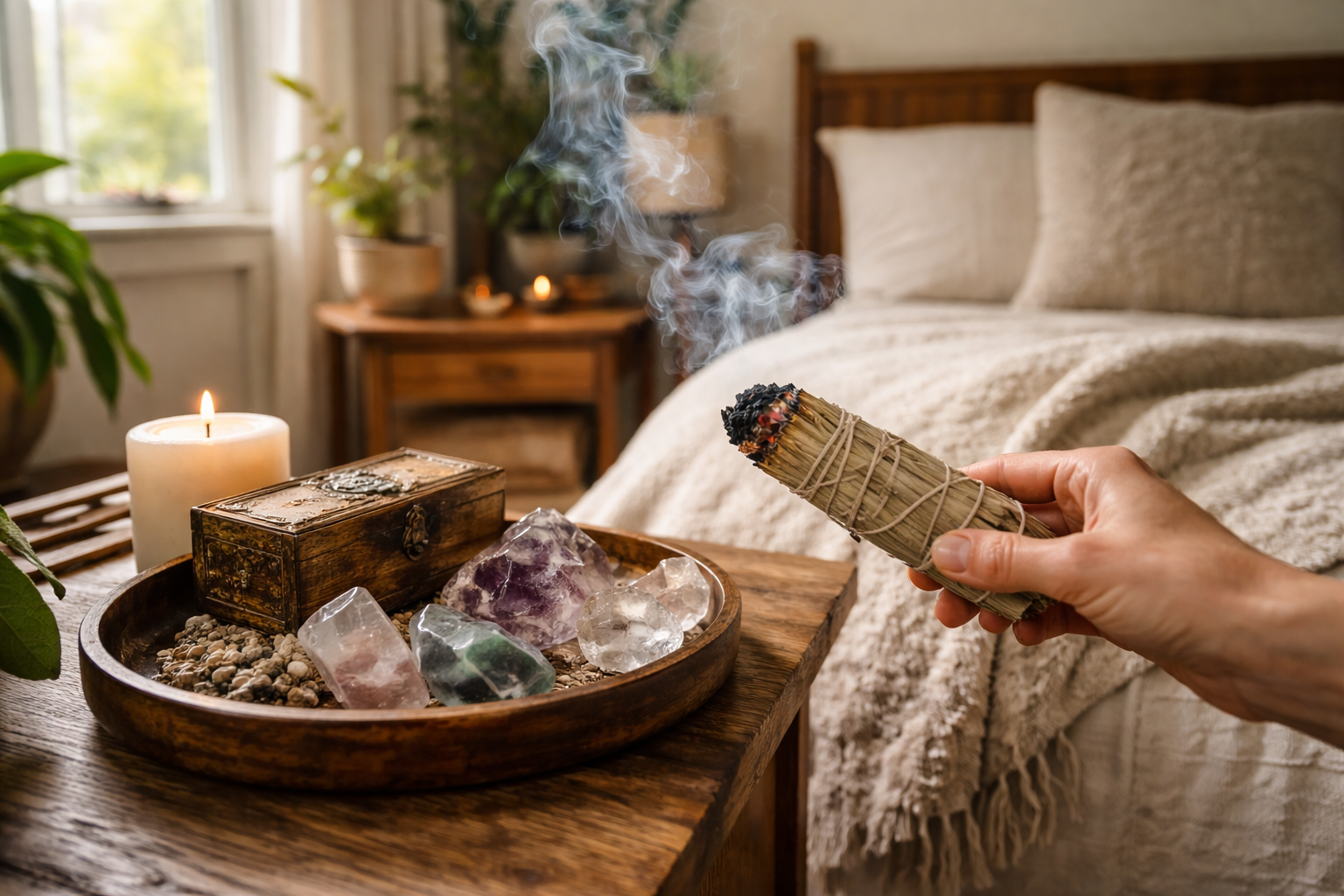
You do not need to cleanse an entire home every time. Sometimes one room is the whole story.
If a bedroom feels restless or a work corner feels cluttered in the head, cleanse that one space and stop there. Use less smoke. Move slower. One-room cleanses are often better in real life because you can actually pay attention to them.
For self-cleansing, keep the smoke at a distance and guide it around your body rather than into your face. Start near the feet and move upward, or begin at the heart and move out. Both are common. What matters is that the smoke brushes around you, not at you. If the room is small, this is one of those moments where less is more.
Smoke cleansing also works for objects. Secondhand furniture, vintage jewellery, old books, or a box of inherited things can all be passed lightly through the smoke. Same for decks, tools, and keepsakes that have picked up a weird charge. Don’t bake the object in smoke. One or two slow passes are enough.
Crystals are a common add-on here. Smoke is one gentle option for many stones, and a fuller guide to how to cleanse your crystals is useful if you want to choose between smoke, moonlight, sound, or other methods.
Note: If the target is small, the ritual should get smaller too. A single chair, crystal tray, or bedside table does not need enough smoke for a hallway.
How to use sage safely in flats, smoke-sensitive homes, and around pets or children
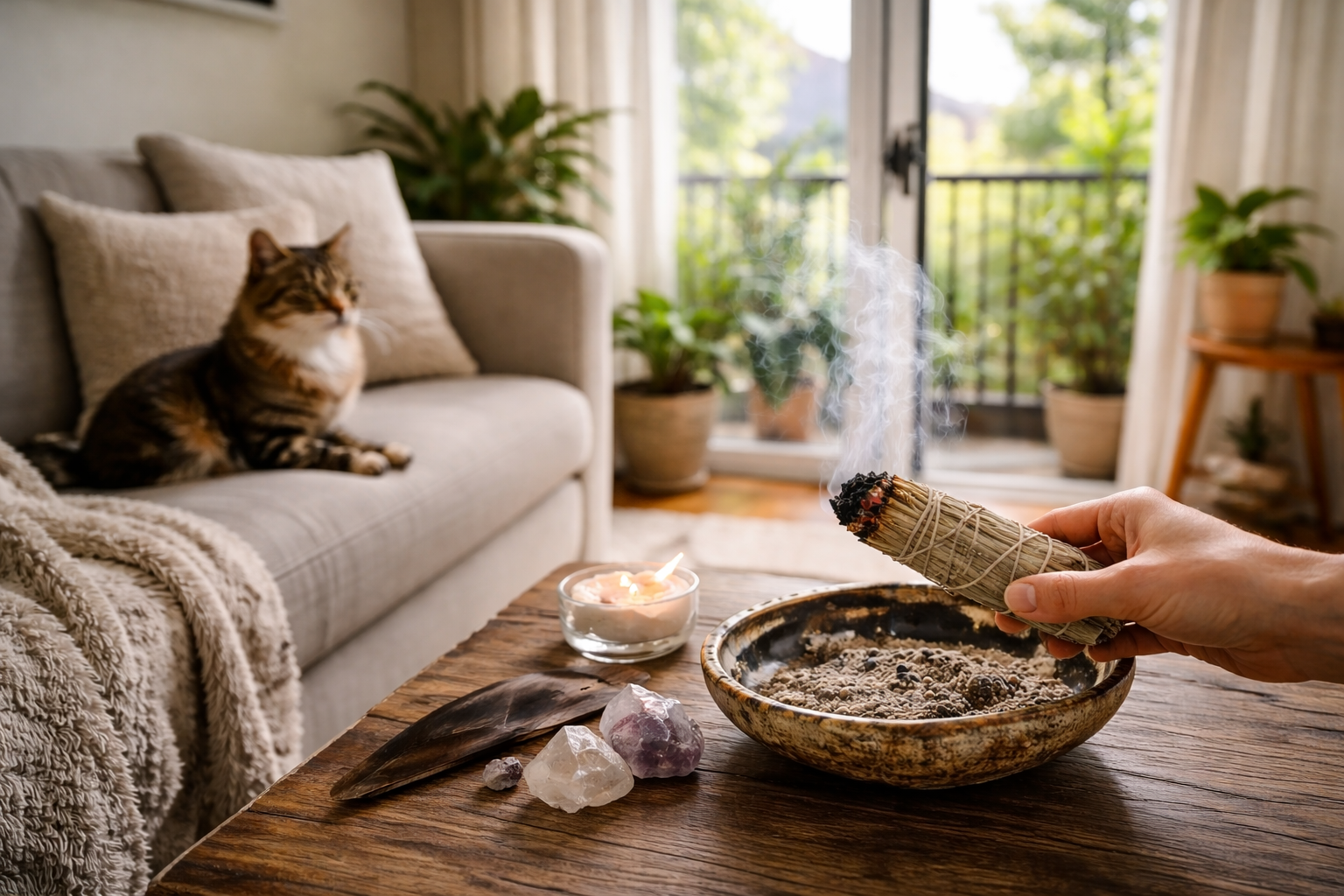
This is where generic advice tends to wobble. The room in your head might be a breezy house with high ceilings. The room you’re standing in might be a boxy flat with one window, a cat, and a smoke detector that screams like it’s on payroll.
The limit how often you use incense and other smoke-producing home fragrance products advice from Cleveland Clinic is worth taking seriously if anyone in the home has asthma, allergies, or lung sensitivity. And the National Academies’ review of how incense and candle burning can add fine particulate matter indoors is a good reminder that natural smoke is still smoke. Spiritual intent does not cancel physics.
If you live in a smoke-sensitive home, scale the ritual down. Open a window first. Use a smaller bundle or just the loose end of one. Cleanse one room instead of the whole home. Put the sage out early if the room gets hazy. Do not wave smoke toward pets, children, or anyone’s face. That’s not cleansing. It’s just irritating.
And if smoke clearly is a bad fit, skip it. A no-smoke ritual can still work beautifully: open the windows, speak the intention, use sound, wipe down the room, then finish with a cleansing spray or a few minutes of stillness. If a smoke-based alternative still appeals more than sage, a guide to the best incense for cleansing can help you choose something gentler.
| Home setup | Best practice | Better alternative if smoke is rough |
|---|---|---|
| Small flat | One room, one open window, short burn | Open windows plus spoken intention and a spray |
| Pets or children | Very light smoke and lots of distance | Sound cleansing or a non-burning ritual |
| Asthma or smoke sensitivity | Usually skip burning indoors | Ventilate, tidy, set intention, use no-smoke tools |
Why ethical sourcing and cultural respect matter when you cleanse with sage
Sage did not appear from nowhere as a lifestyle prop. The National Park Service notes that sage has longstanding physical and spiritual cleansing significance in Native traditions, which matters because it puts this practice back into a real cultural frame instead of treating it like a trend that dropped out of the sky.
Then there is the supply issue. The California Native Plant Society has warned that white sage is often sold through murky or poached supply chains, especially when the seller says almost nothing about where it came from. So if you choose white sage, take a minute and ask simple questions: Who grew it? Where was it harvested? Is the seller transparent or weirdly vague?
This is also why language matters a bit. General articles like this can talk about smoke cleansing with sage. That keeps the description broad and accurate. More specific Native smudging traditions belong to the people and communities that carry them. Respect doesn’t have to be stiff or scolding. It can be as basic as knowing what you’re using and not pretending every bundle on a shelf comes free of context.
If a gentler herb or a different cleansing method suits the space better, taking that route is not “less serious.” Half the wisdom here is knowing when not to copy the most dramatic version of a ritual.
Why sage cleansing sometimes falls flat, and how to fix the common mistakes
When people say a cleanse “didn’t work,” the cause is usually practical, not mysterious.
The bundle keeps going out. That often means it is packed tightly or was extinguished too aggressively after lighting. Let the tip catch properly, then blow out the flame once you have a real ember. If it still dies fast, relight and use shorter passes instead of expecting a long, constant stream.
The room gets too smoky. This is the most common rookie mistake. Use less sage. Open another window if you can. Cleanse one room instead of pacing the whole home like you’re fumigating it. I made this mistake once in a narrow hallway and, honestly, the only energy moving was me flapping a tea towel under the smoke alarm.
The ritual feels flat. Usually that happens because the intention was foggy or the close was missing. “Remove bad vibes” is vague. “I release tension from this room and welcome rest” gives the ritual a destination. Then close it. Stand still. Breathe. Let the space land.
The space still feels off after the cleanse. Sometimes sage is not the right tool for the actual problem. A room that feels bad because it is cluttered, stale, and overfilled with stuff may need cleaning, light, and a bin bag more than another pass of smoke. Ritual works best when it cooperates with the physical world instead of trying to replace it.
You are using the wrong intensity for the job. A full-home white sage cleanse for a mildly stale bedroom is like wearing hiking boots to pick up the post. It works, sure, but it is more than the situation called for.
Remember: if the ritual keeps missing the mark, change one thing at a time. Improve airflow. Use less smoke. Tighten the wording. Choose a gentler herb. Or pick a different cleansing method altogether.
The best sage cleansing ritual is the one you can actually do well. Clean air, a believable intention, and a calm finish beat a dramatic performance every time.
FAQ
Can I use sage cleansing in a flat with smoke detectors?
Yes, but keep it small. Open a window first, cleanse one room instead of the whole flat, and use a short burn. If the detector is very sensitive or the room has poor airflow, switch to a no-smoke ritual instead.
Is it okay to reuse the same sage bundle later?
Yes. Put it out fully in sand or a fireproof bowl, let it cool, and store it somewhere dry. A bundle is meant to be reused until it is spent.
What should I do with the ash after cleansing?
Once it is fully cold, the ash can go in the bin, in soil, or back to the earth if that fits the way you practise. The main thing is simple: make sure it is completely out before you move it.