
You can waste a weird amount of time staring at a tray of stones and still not know which one to pick. I’ve done it. Every crystal shop says half the shelf is “protective,” but that does not help when what you actually need is one stone for a draining coworker, a heavy-feeling bedroom, or the sort of commute that leaves you fried before 9 a.m.
If you want the short answer, start with black tourmaline. For most people, it is the best first pick because it feels grounded, it works well by a front door or desk, and it does not ask much of you. If that sounds a bit too stern, go with smoky quartz. If you want protection that leans calmer and more spiritual, amethyst makes more sense. Among the best protective crystals, those three cover most real-life situations without making the choice harder than it needs to be.
The generic answer stops there, and that is where most articles go flat. Protection is not one job. Sometimes you want a shield. Sometimes you want grounding. Sometimes you want a stone that takes the edge off a room without feeling like a spiritual cattle prod.
At a glance: pick by job, not hype
| Stone | Best for | Feels like | Skip it if |
|---|---|---|---|
| Black tourmaline | Boundaries, crowded spaces, front door, desk | Firm and steady | You want something soft and airy |
| Smoky quartz | Daily carry, grounding, low-drama protection | Gentle and stabilizing | You want a harder “shield” feeling |
| Amethyst | Sleep, calm, spiritual practice | Quiet and soothing | You need a strong grounding stone |
| Obsidian | Hard reset, sharper boundary work | Intense and cutting | You are new and already feel overloaded |
| Selenite | Space clearing and pairing with other stones | Light and clean | You want one standalone everyday protection stone |
Simple rule: if the stress is outside you, wear or carry the stone. If the stress lives in a room, place the stone there.
Best Protective Crystals at a Glance
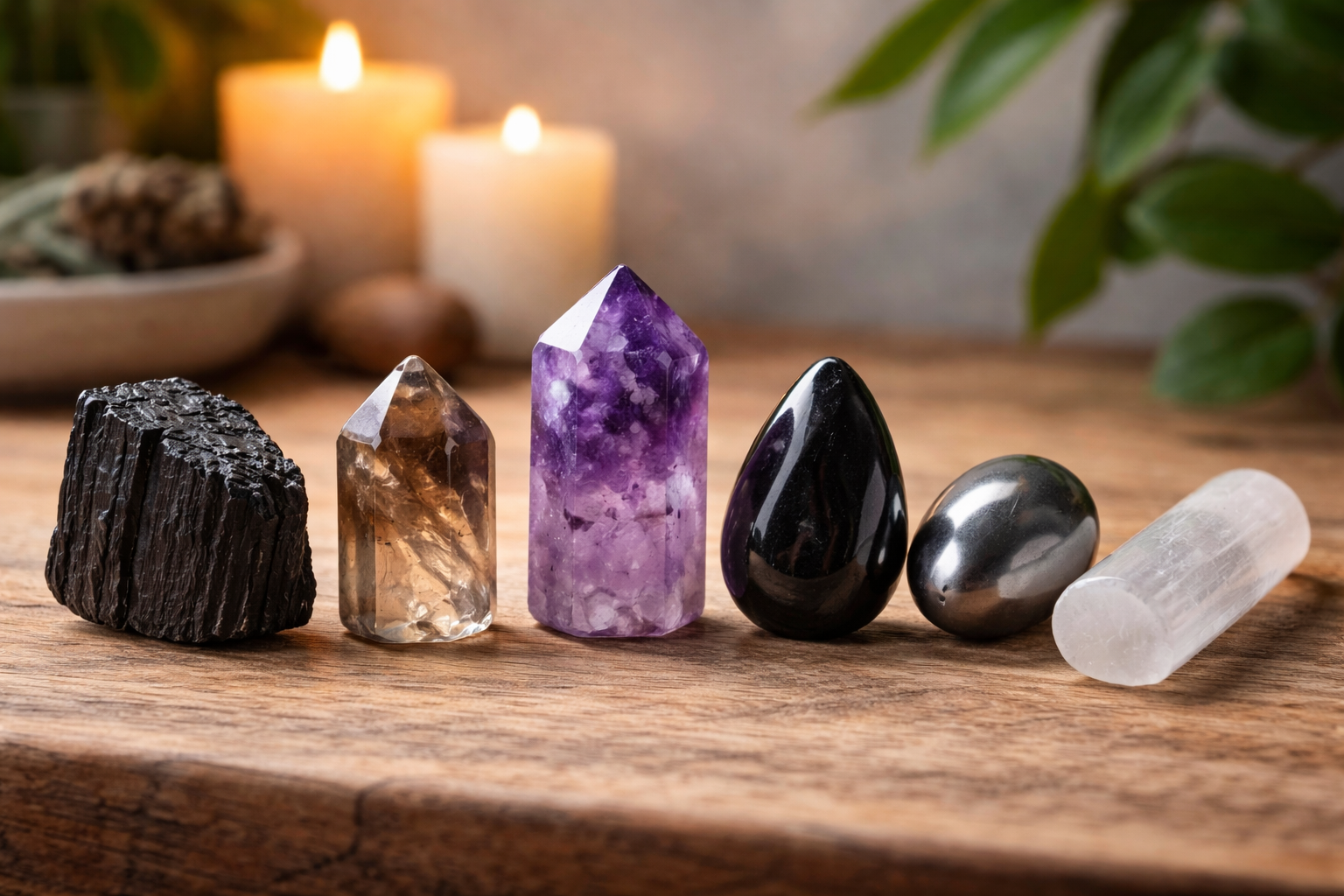
If you want a shortlist that actually helps, keep it to six stones.
- Black tourmaline for firm, general protection and clear boundaries
- Smoky quartz for grounding and low-friction everyday use
- Amethyst for calm, sleep, and spiritual protection
- Obsidian for sharper, more intense clearing
- Hematite for focus and grounded mental steadiness
- Selenite for clearing a space and supporting other stones
That is enough for almost everyone. Once a list creeps past seven or eight stones, it stops helping and starts feeling like a menu with too many pages.
I’ve found that people get more out of one well-placed crystal than a starter kit tossed in a drawer. A chunk of black tourmaline by the front door gets noticed. A smoky quartz palm stone in a coat pocket gets used. A lovely but random bundle of nine crystals often becomes shelf decor.
Fast pick: If this is the first stone, buy black tourmaline for the house or desk. Buy smoky quartz for daily carry. Buy amethyst for bedtime or prayer and meditation work.
How to Choose the Right Protective Crystal for Your Situation
The easiest way to choose is to stop asking, “Which crystal is strongest?” and ask three better questions instead.
Question 1: What problem are you trying to solve?
“Protection” covers a few different jobs. You might want help with draining people, a tense room, bad sleep, emotional spillover, or that buzzy overstimulated feeling that follows a packed day. Those are not the same thing, and the same stone will not feel right for all of them.
Question 2: Do you want gentle support or a harder edge?
Some stones feel like a padded jacket. Some feel like a locked door. That difference matters more than people think. Newer crystal users often buy the toughest-sounding stone, then stop using it because it feels too heavy.
Question 3: Will you wear it, carry it, or place it?
A stone only helps if it lives where the problem happens. A necklace helps on the train. A desk stone helps in a noisy office. A piece by the front door helps when a room keeps feeling “off.”
A quick decision grid makes this easier:
- External stress, strong boundaries: black tourmaline
- Internal frazzle, gentle grounding: smoky quartz or hematite
- Sleep and calm spiritual tone: amethyst
- Sharp clearing or truth-telling work: obsidian
- Space clearing and pairing: selenite
That is where many people get mixed up. They think calm and protection are the same job. Sometimes they overlap, but not always. If your issue is a crowded office and a coworker who drains the room, amethyst may feel nice and still not solve the main problem. If your issue is bedtime spiraling, black tourmaline can feel a little too stern.
For readers who realize the real need is grounding more than shielding, this guide to grounding crystals is a better next stop than another generic protection list.
Black Tourmaline vs Obsidian vs Smoky Quartz: Which One Fits Best?
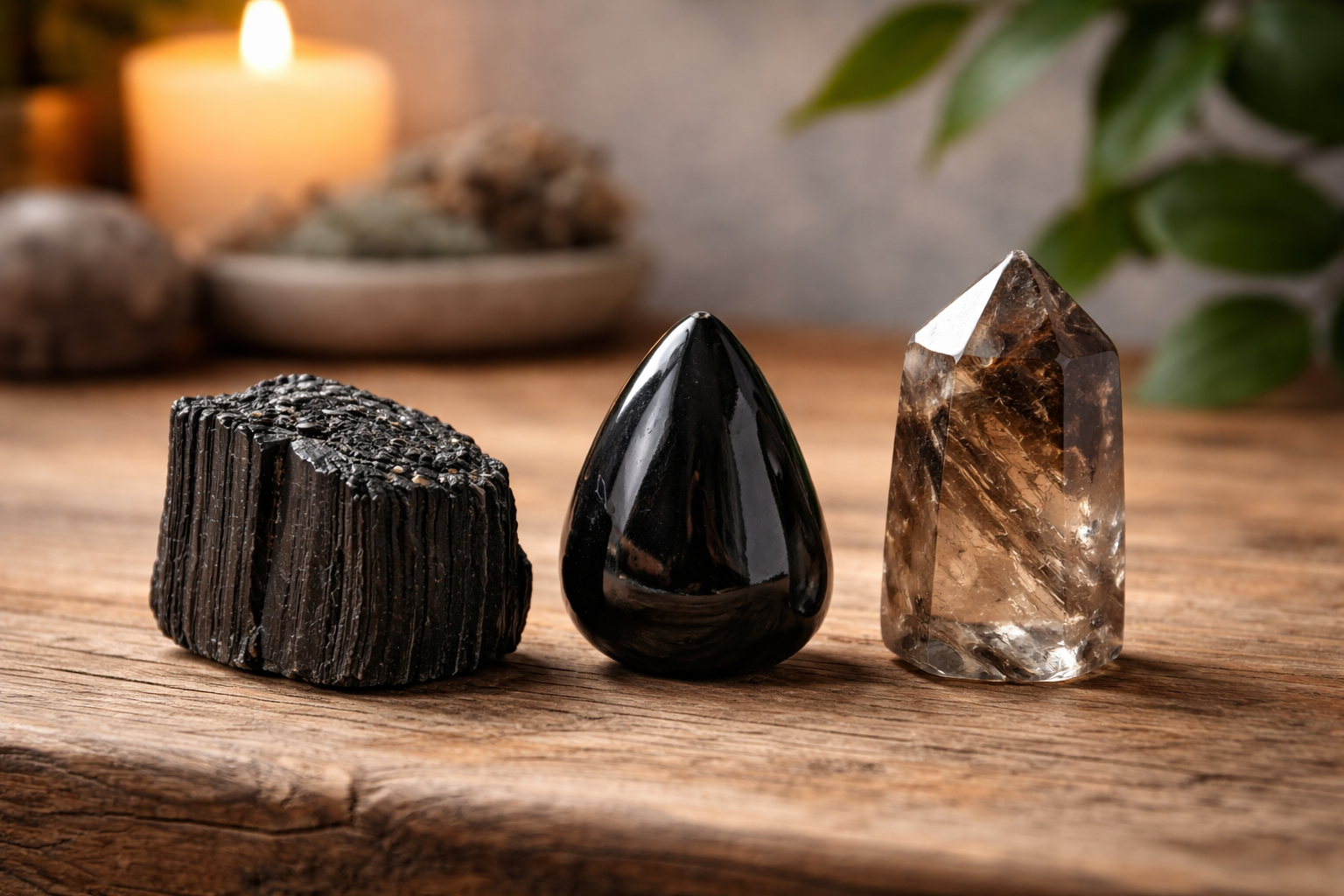
These are the three stones people mix up the most, and fair enough, because they all get filed under “protection.” They do not feel the same in practice.
Britannica identifies black tourmaline as the iron-rich tourmaline variety called schorl. That mineral fact does not prove metaphysical claims, of course, but it helps explain why so many crystal users treat it as the default grounding protection stone. In day-to-day use, black tourmaline feels like a raincoat. It is not glamorous. It is just good at showing up, taking the hit, and staying put. Put it by a door, beside a laptop, or on a work desk and it makes immediate practical sense.
Britannica describes obsidian as natural volcanic glass formed by the rapid cooling of lava. Symbolically, that tracks with how many people experience it: sharper, faster, less forgiving. Obsidian can be great when you want a hard reset or when you are doing reflection work that is meant to cut through denial. It is not the stone I hand to a beginner who already feels overloaded. It can feel like turning the lights on too brightly.
Smoky quartz sits in a different lane. It is still protective, but it tends to work by settling you into your own body and your own space rather than by building a hard perimeter. If black tourmaline is the raincoat, smoky quartz is the weighted blanket. You can wear it more easily, carry it every day, and forget about it until you need it.
Pick one like this:
- Choose black tourmaline if you want a safe first buy and your stress feels external.
- Choose obsidian if you already know you like intense clearing work and you do not mind a stronger feel.
- Choose smoky quartz if you want protection that blends into daily life and feels softer on the nervous system.
Most people should start with black tourmaline or smoky quartz. Obsidian is a good stone. It is just not the best default.
If the goal is calm plus focus rather than a firm shield, that earlier guide to grounding crystals fills that gap nicely.
The Other Protective Crystals Worth Considering
Amethyst earns its place because it brings calm into the protection conversation. That matters. A lot of people are not trying to fend off some dramatic evil. They are trying to sleep, settle prayer or meditation time, or stop carrying the tone of the day into bed. Amethyst is good there. I would not use it as my only stone for a chaotic office, but I would absolutely keep it on a nightstand.
Hematite is one of the better picks for people whose minds scatter under pressure. It is less about mystical shielding and more about bringing you back into your own lane. That can feel protective in a very plain, useful way. Less spiral. More floor.
Selenite is not my first suggestion for standalone daily protection, but it is excellent for clearing the mood of a shelf, entryway, or bedside area. It also pairs well with heavier stones. When a room feels stale rather than hostile, selenite often does the job without adding weight.
Labradorite tends to appeal to people who use language like “psychic protection” or “energetic boundaries.” That can sound airy, but the appeal is simple enough. Labradorite feels more intuitive and less grounding than black tourmaline. I like it more for personal practice than for room placement.
Clear quartz is useful, but it is over-recommended as a first answer. It is versatile and many people treat it as an amplifier, yet that flexibility can be the problem. When you need a clear job done, a more specific stone usually makes the decision easier.
One practical rule: support stones are nice, but the first buy should still match the main problem. Selenite is lovely. It is not the first stone I would grab for a draining office or a tense commute.
For a broader look at stones used for stress, sleep, love, and protection, this healing crystals guide is a useful companion piece.
The Best Protective Crystals for Home, Sleep, Work, and Daily Wear
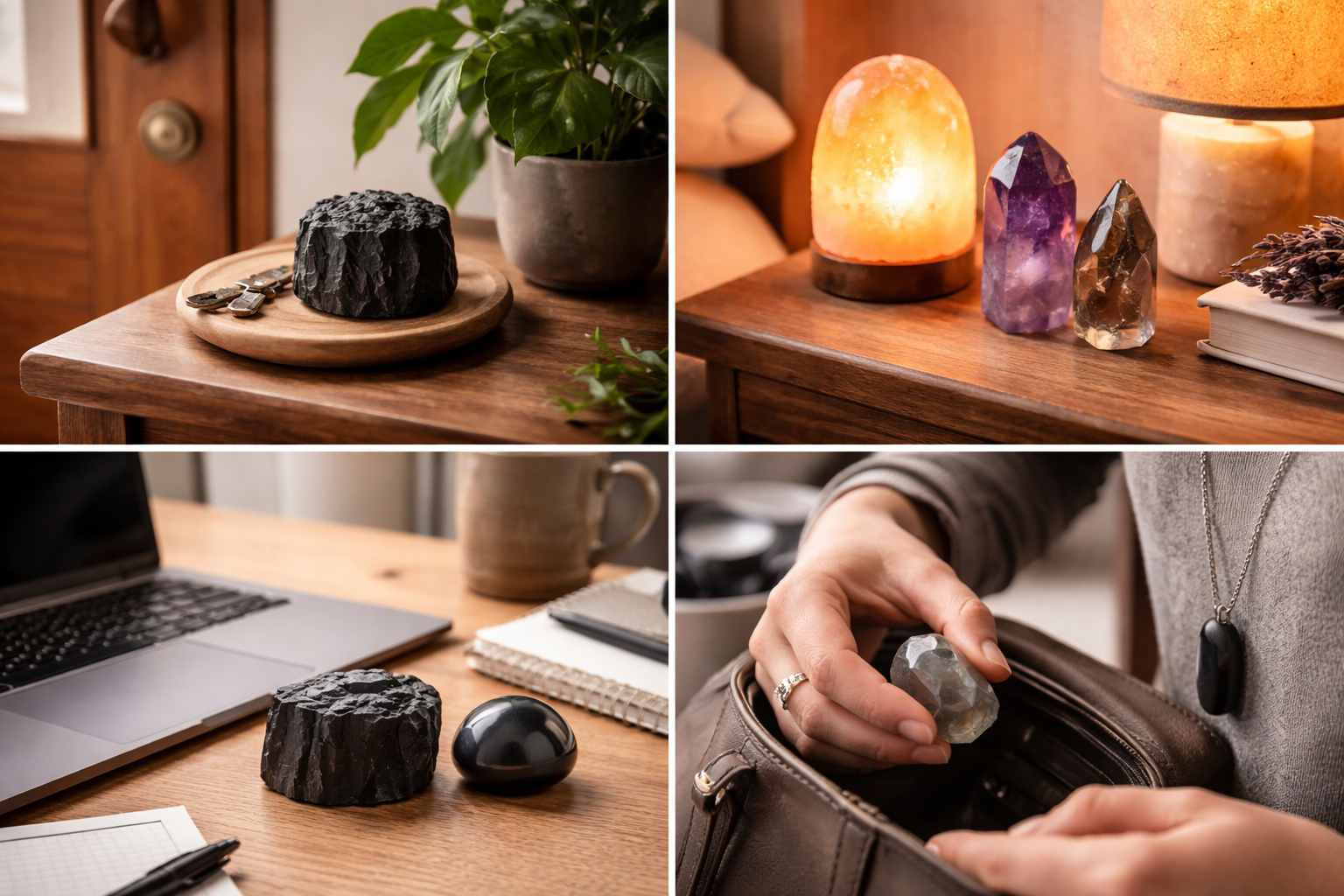
For home protection: start with black tourmaline by the front door, near the room that feels heavy, or beside a desk where tension tends to build. Selenite also works well in an entryway or on a shelf where you want the room to feel cleaner and less cluttered, spiritually speaking.
For sleep: amethyst is usually the smoother pick. It has a quieter feel than black tourmaline, and for many people it fits bedtime better. If sleep is tied to mental overdrive, smoky quartz can also work near the bed or in hand before lights out.
For work: black tourmaline and hematite are the two that make the most sense. One helps with boundaries. The other helps with mental steadiness. If meetings leave you jangly and you need to be composed rather than “shielded,” hematite can be the sleeper hit.
For commuting and crowded places: smoky quartz or black tourmaline in a pocket, pouch, bracelet, or pendant is more practical than a big raw chunk. This sounds obvious, but people buy for aesthetics and then end up with a stone that is nice on a shelf and useless on a Tuesday.
For daily wear: smoky quartz is easiest to live with. Amethyst jewelry works nicely for calmer spiritual support. Black tourmaline pendants are strong contenders too, especially if the day involves noise, tension, or lots of people.
The right placement follows the friction. If the problem happens at the threshold, use the entryway. If it happens in conversations, wear the stone. If it happens when the lights go out, move it to the nightstand.
Readers looking for a wearable option can compare a few stronger symbolic choices in this guide to a protection necklace.
Raw Stone, Bracelet, Pendant, or Palm Stone? Pick the Right Format
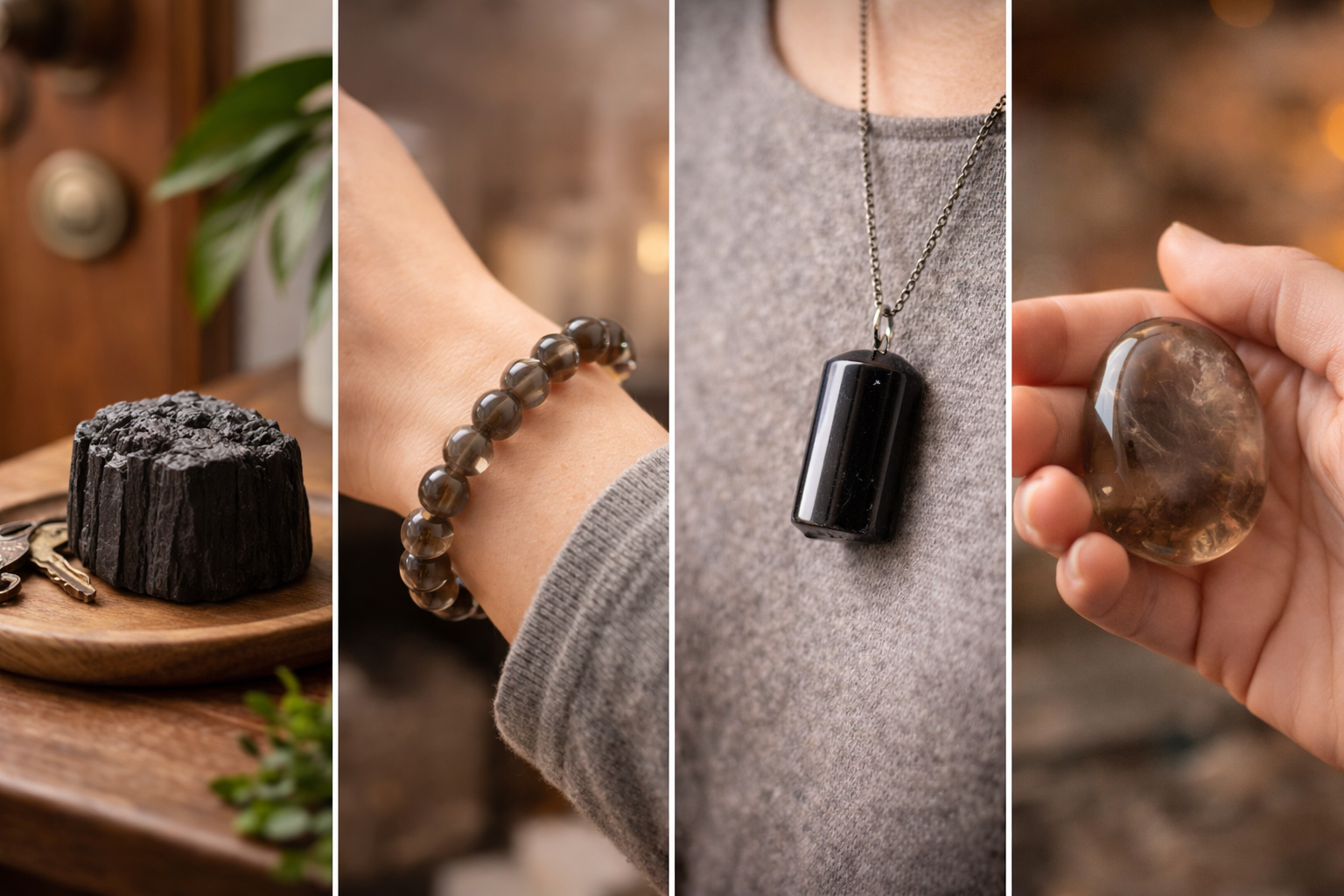
The format changes how a crystal works in ordinary life, and this gets skipped too often.
Raw stones are best for placement. A rough black tourmaline chunk by the front door makes instant sense. It stays put, it is visible, and it acts like a marker for the space. Raw stones are less useful when you need protection on the move.
Palm stones and worry stones are good for touch. That matters more than some crystal guides admit. If you tend to reach for something in your pocket when you are stressed, a smooth smoky quartz palm stone is miles more useful than a jagged raw point. I have seen this one win over plenty of skeptics. The stone becomes less about theory and more about what your hand does when your brain is busy.
Bracelets work for people who forget loose stones. They are not always the strongest-looking choice, but they are practical. If it is on your wrist, it comes with you. That beats a prettier stone that never leaves the shelf.
Pendants are my favorite wearable format for black tourmaline and amethyst. They sit close to the body and feel intentional without requiring a pocket or pouch. They also make more sense for people who hate things in their hands or on their wrists.
What to look for before buying:
- Clear stone labeling, not vague names like “black protection crystal”
- Real size details, because tiny stones often look large in photos
- A format that fits the job, not just the prettiest option
- Natural-looking color and texture, especially with quartz and amethyst
- Photos that show shape and surface, not just filtered close-ups
One small truth here: the best crystal format is the one you will keep near the problem. That is not poetic, but it is real.
How to Use Protective Crystals in a Way You Will Actually Keep Up
You do not need a complicated ritual. In fact, the more complicated the routine gets, the faster people drop it.
Use a crystal in the place where the pattern repeats. Carry smoky quartz when commuting. Put black tourmaline beside the laptop that seems to absorb every grim email. Keep amethyst on the nightstand if bedtime is where the mind starts sprinting.
One simple practice works well:
- Hold the stone and name the job. Keep it plain. “I want less noise from this room.” “I want steadier energy today.”
- Ground the body. The 5-4-3-2-1 grounding technique is a practical way to do that. Notice five things you can see, four you can feel, three you can hear, two you can smell, and one you can taste.
- Pair the stone with one repeatable action. Put it by the door, touch it before a meeting, or hold it for three slower exhales before bed.
That is boring advice, and I mean that kindly. Boring routines stick.
There is also a sensible middle ground between belief and cynicism. A crystal ritual can help because it gives attention a shape. It slows you down. It marks a boundary. It cues the body to settle. That does not make the experience fake. It just means the value often comes from the full ritual, not the mineral alone.
Keep it short: one stone, one place, one action. That is enough to see whether it is helping.
Cleansing, Care, and Buying Mistakes to Avoid
Cleansing advice gets messy fast because people repeat the same tip for every stone. That is a mistake.
Mindat identifies selenite as a variety of gypsum, and gypsum is a soft mineral. That is exactly why blanket advice like “just rinse all crystals in water” falls apart. Some stones handle casual physical cleaning well. Some do not. If a crystal is soft, flaky, or polished in a delicate way, treat it gently. Moonlight, sound, smoke, and intention are the safer all-purpose routes.
If smoke cleansing is part of your practice, this guide to the best sage for cleansing negative energy goes deeper without dragging this article off course.
There is also a trust issue worth being plain about. A 2025 randomized controlled trial on healing crystals and anxiety did not find a crystal-specific anxiolytic effect beyond placebo in that study. That does not mean crystals are pointless. It does mean they should not be sold as medical treatment. If a stone helps you pause, breathe, sleep better, or feel more contained, great. Let it be part of the practice, not the whole plan.
Three buying mistakes show up again and again:
- Buying by reputation alone. “Most powerful” is not the same as “best fit.”
- Buying the wrong format. A huge raw stone is poor daily protection if the stress happens outside the house.
- Buying vague listings. If the seller cannot clearly name the stone, show the size, and photograph it honestly, move on.
My own bias is simple. Start with one clear job and one dependable stone. The drama-heavy promises are usually the least useful part of the whole category.
FAQ
Can you use more than one protective crystal at the same time?
Yes, but keep the pair logical. Black tourmaline and selenite work well together for home use. Smoky quartz and amethyst make sense when you want grounding plus calm. Trouble starts when you pile on stones with no clear job and then cannot tell what is helping.
Can you sleep with black tourmaline or obsidian under the pillow?
You can, but many people do better with amethyst or smoky quartz at night. Black tourmaline can feel a bit stern for sleep, and obsidian can feel too intense. If you want to try them anyway, start on the nightstand rather than under the pillow.
Do protective crystals work if you are skeptical?
They still can be useful as cues for attention, grounding, and routine. If the stone reminds you to slow your breathing, reset after work, or mark the boundary between home and stress, that is real value. Skepticism does not cancel ritual. It just changes what you think is doing the heavy lifting.